
Nation
THE STATES

Lagos
The Catholic Archbishop of Lagos, Anthony Cardinal Okogie has called on the governor of Lagos State, Mr Babatunde Raji Fashola to immediately arrest the growing immorality and moral depravity in Lagos.
Okojie made the call Monday while reacting to a media report on the increase in strip clubs in parts of Lagos State, where girls danced stark naked, attracting a lot of patronage from men.
“Evil has taken over Lagos. The way things are going, when girls of between the ages of 15 and 25 dance nude and throw caution to the wind with boys and men watching them, then they are sending a strong signal to the society. It portends danger. We are sitting on a loaded gun”, said Okogie in a statement signed by the Director of Social Communications, Lagos State, Reverend Gabriel Osu.
Okogie called on Fashola to act now because the strinp clubs are on the increase, while those shut earlier have reopened with impunity and with change of name.
“I hope this is not making mockery of Lagos as mega-city, centre of Excellence and City of Aquatic Splendour,” he said.
He called for a ban on gambling in the state as well as prevent people from playing Kalokalo game, while under-aged girls should be disallowed from dancing naked in hotels.
“Parents should not allow girls who are supposed to be under their watchful eyes to patronise hotels. It is contrary to the feeling of the people of the state,” Okogie said.
According to him, the current trend amounted to a defiance of government and government, he said must do something to stem what he called the rising tide of evil sweeping across the state.
“Some VIPs are among them, some top civil servants are with them. They lured innocent girls into prostitution. We don’t want Lagos to be spoilt,” Okogie said.
Bauchi
A Bauchi High Court has restrained the State Signage and Advertisement Management Agency (BASSAM) from charging commercial banks in the state on their billboards and signages, after months of legal tussle between the 21 banks operating in the state and the agency.
Justice Haruna Tsammani of Bauchi High Court Four, ruled that the agency, established early this year to collect taxes on signages in the state, has no legal rights to do so and that the law establishing the agency was inconsistent with paragraph 1 (k)i of the 4th Schedule of the 1999 constitution and therefore unconstitutional, null and void.
Briefing newsmen after the ruling, counsel to the banks, Victor Dalbadal, said the banks believed that the agency was not the constitutional body vested with the powers to collect taxes on signages, saying it was the power of local government which the banks were paying to and had never defaulted.
It was gathered that commercial banks pay about N15,000 each to their host local government as tax on their signages before the establishment of the agency managed by a consulting firm, which demanded that they pay million of naira for the same purposes.
In January this year, all the 21 commercial banks closed their gates to customers for a day, to protest what they described as the exhorbitant and arbitrary fees being charged by BASSAM on their signages, billboards and other commercials around the state.
The agency however, declined to speak on the court rulling.
Zamfara
Zamfara State Director of State Security Services (SSS), Alhaji Mohammed Tanko Mingi, has said failure of political parties to fully co-operate with security agencies is the major reason for political thuggery in the country.
The problem, according to him, is more pronounced during election period when parties deliberately attack each other without recourse to laid down rules and regulations.
Speaking when he received executive committee members of Peoples Democratic Party (PDP) who visited him in Gusau yesterday, Mingi said tackling the menace of political thuggery had beenone of the greatest challenges.
Ningi said the only way security agencies in the state could effectively and efficiently work to rid the society of criminals is by getting first hand information about people of suspicious character living among members of the community.
Oyo
The Court of Appeal sitting in Ibadan yesterday sacked a member of the house of representatives representing Ibadan South-West/Ibadan North-West Federal Constituency in Oyo State, Hon Folake Olunloyo Shinoldo.
The three man appellate court removed Olunloyo-Oshinowo from the lower legislative chamber on the ground of irregularity and non-compliance to election rules. INEC had declared Olunloyo Oshinowo, People Democratic Party (PDP) candidate, winner of April 21, 2007 election. Action Congress (AC) candidate at the poll Dr Idayat Adebusuyi, had headed to the tribunal to contest the election which was, however upheld at the lower tribunal until the appellate court finally upheld the prayers of the AC candidate and ordered a re-run.
The appellant, among others wanted the Appeal panel to order that Olunloyo-Oshinowo did not win the election, and that INEC and the state Resident Electoral Commissioner were biased in their declaration.
She also wanted the court to return her as the valid winner of the election, or alternatively, cancel the election and order a fresh run.
The court of Appeal panel agreed with her that the election was indeed fraught by many irregularities. Reading the lead judgment, Justice Charles Ogunbiyi, said Adebusuyi, through her counsel, had been able to convince the panel that there was wide spread irregularities in the election and that INEC did not do its job of an umpire effectively.
Ondo
Ondo State government has banned viewing of television in all government offices. The decision was contained in a circular dated October 20, 2009 and signed by the head of service directing all commissioners, chief of staff to the governor, permanent secretaries and heads of department. The ban, the circular stated, was sequel to the discovery by government that television had become a major source of distraction in office, leading to low productivity among civil servants. The government observed that the situation was so bad that some members of the public were on routine visit to offices in various ministries, department even after the close of work to watch TV.
The government also banned the use of computer system for entertainment purposes, adding that TV sets in public offices are now restricted to waiting rooms of offices of the head of service, permanent secretaries or those of similar positions.
Kogi
In his continued efforts to boost healthcare delivery in the state, the Kogi State Governor, Alhaji Ibrahim Idris has approved the immediate employment of more medical doctors, nurses and consultants to meet the desired need of the people.
The governor disclosed this in Lokoja last weekend while taking delivery of five containers of medical equipment worth millions of naira from the United States of America.
Inspecting the consignment at the state Essential Drug Warehouse in Lokoja, Governor Idris directed the state Commissioner of Health, Dr Dorcas Onumijan to ensure equitable distribution of the equipment to all the existing health institutions across the state.
He said another five containers of same equipment that were also ordered from the US had already arrived Lagos and would soon be delivered to the state.
The governor who reiterated his commitment to the health sub-sector in view of its important role to human existence, promised to continue to provide enabling environment that would boost healthcare delivery services in the state.
Kwara
Governor Bukola Saraki of Kwara state has promised that all efforts would be put in place by the government to eradicate poliomyelitis in the state so as to achieve the Millennium Development Goals (MDGs).
This, he noted would go a long way in bringing healthcare delivery to the doorsteps of the rural people.
Saraki stated that at Kaima, the headquarters of Kaima local government council area of the state during the official commissioning of the newly upgraded hospital constructed at the cost of N76 million.
According to him, “poliomyelitis among the children should be totally eradicated as this would ensure steady growth, thereby accelerating the socio-economic development of the country.”
He said that the main thrust of the present administration is to provide effective and efficient healthcare delivery services to the people of the state and this would be pursued to the letter.
Abuja
The Court of Appeal, Abuja yesterday fixed November 12, for the adoption of written addresses in a suit filed by the All Progressive Grand Alliance (APGA) candidate in the April 14, 2007 governorship election against Martins Agbaso.
The court fixed the date after granting the two applications filed by his counsel, Patrick Ikwueto (SAN). Agbaso is appealing the judgment of a federal high court, Abuja, which struck out his suit seeking to compel the Independent National Electoral Commission (INEC) to announce the result of governorship election.
INEC cancelled the election which Agbaso believes he won, but INEC declared Governor Ikedi Ohakim then of Progressive Peoples Alliance (PPA) as the winner.
Dissatisfied with the court’s decision, Agbaso took his case to the court of Appeal whch assumed jurisdiction in the matter, after dismissing the preliminary objection filled by the respondents on February 26.
It summoned Ohakim and INEC to appear before it on the matter but the respondents appealed the verdict at the court of appeal. In its ruling delivered on September 29, Justice Dahiru Mustapha who led other justices queried the defendants for coming to court to file an appeal in a matter that had not been heard and decided to its merit.
The court, while striting out the motion, ordered an acceleration of the appeal. Yesterday, Ikwueto withdrew his motion seeking the leave of the court to appeal at the Supreme Court, which was granted.
Osun
Osun State police command yesterday said it had impounded some electoral materials allegedly smuggled into the state.
The materials included 300,000 copies of form EC 40A, Ballot Papers Account and Verification Statement. The materials according to the police investigation, did not have stamps and dates on the ballot papers account and verification statement.
State police command spokesman, ASP Clement Akinola said it was surprising to see such materials because the police was not aware of any election in the state that should warrant such movement of INEC materials.
But the driver of the Mazda Bus with registration number Osun XD 214 GNN, Mr Bonniface Ahmed, who allegedly brought in the materials claimed that they were authentic and therefore were not being smuggled into the state.
He said the contract for the materials was allegedly awarded to Jike International Investment Limited, Abuja to print for Independent National Electoral Commission (INEC) before its delivery in Osogbo, noting that one Chinedu’s wife was the contractor that handled the printing of the materials in Abuja.
Consequently, he said he was only asked to deliver the material to the state INEC office in Osogbo with the waybill attached to it.
Akinola said that the police should look into the matter so as to arrive at the truth behind the alleged smuggling of the materials into the state
However the state zonal director of store for INEC, Mr M. J. Oyegha confirmed that the materials belong to INEC.
He said since Osogbo is the zonal office for INEC, all INEC materials were not given police escort as required by the law, he said only sensitive INEC materials are usually accorded such escorts.
Oyegha stressed that materials form INEC headquarters to any of its zonal offices across the country may come without prior notice as it applies to the case in question.
Reacting to the development, the director of Research and Strategy of Action Congress (AC) in the state, Mr Sunday Akere said the materials are the ones that are likely to be tendered in the on-going retrial case of Governor Olagunsoye Oyimlola.
He observed that his party is about to conclude its case before the justice Garba Alli-led tribunal in due course while the PDP will soon open its own defence.
However, the Osun State chapter of the Peoples Democratic Party (PDP) yesterday chided the Action Congress (AC) in the state for raising false alarm.



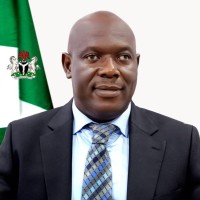
The Hydrocarbon Pollution Remediation Project (HYPREP) has commemorated the 15th anniversary of the release of the United Nations Environment Programme (UNEP) Environmental Assessment Report on Ogoniland, reaffirming its commitment to restoring the environment and improving the livelihoods of affected communities.
In a statement signed by the Project Coordinator, Prof Nenibarini Zabbey, to commemorate the anniversary, HYPREP described the anniversary as a significant milestone in Nigeria’s environmental restoration efforts, noting that the project has made remarkable progress in implementing the recommendations of the landmark UNEP report released on August 4, 2011.
The UNEP report had revealed extensive oil pollution across Ogoniland, severe environmental degradation, and serious public health risks resulting from decades of petroleum operations. It also recommended an initial $1 billion fund to commence the cleanup of the affected communities.
According to HYPREP, the Federal Government formally launched the Ogoni clean-up in 2016, while the Project Coordination Office was established in 2017 to drive the implementation of UNEP’s recommendations.
Zabbey said the current administration has continued to prioritise the project under the Renewed Hope Agenda.
Providing an update on the cleanup, the Project Coordinator disclosed that 30 of the 65 contaminated sites identified by UNEP have been fully remediated, while work is ongoing at several medium- and high-risk locations. It also stated that more than 1.5 million mangrove seedlings have been planted as part of what it described as the world’s largest restoration of oil-degraded mangroves, with over 1,000 hectares of shoreline already rehabilitated.
Zabbey further revealed that 49 Ogoni communities have been connected to potable water schemes through multiple water projects and booster stations aimed at providing safe drinking water across the region.
In the health sector, he said the 100-bed Ogoni Specialist Hospital in Kpite and the 43-bed Cottage Hospital in Buan are nearing completion, adding that several existing health facilities have been upgraded with modern medical equipment, while five ambulances have been donated to improve emergency healthcare services. The Project Coordinator also disclosed that a three-year human health biomonitoring study is being conducted in collaboration with the World Health Organization’s International Agency for Research on Cancer (IARC).
On economic empowerment, Zabbey stated that the Project has created more than 8,000 direct jobs and trained thousands of Ogoni youths and women in various vocational and technical skills, including software development, cybersecurity, aviation, commercial diving, seafaring, mechatronics, and creative arts. The project also reported awarding scholarships to more than 1,000 students, providing grants to small businesses, and supporting persons living with special needs through skills acquisition programmes.
The statement further highlighted ongoing legacy projects, including the Ogoni Power Project and the Centre of Excellence for Environmental Restoration, which it said is about 96 per cent complete. HYPREP also welcomed the recent designation of the Ogoni Wetland as a Ramsar Site of International Importance and pledged to continue promoting biodiversity conservation and sustainable management of the ecosystem.
Marking the anniversary, Zabbey said the progress achieved over the past 15 years demonstrates the collective commitment of government, development partners, stakeholders, and local communities to restoring Ogoniland. He called for renewed collaboration to sustain the cleanup effort, promote environmental sustainability, and support the long-term development of the region. 3
-

 News2 days ago
RSG Targets Nine Million Residents in Mosquito Net Distribution Campaign
-

 Oil & Energy2 days ago
Aiyedatiwa Signs New Electricity Bill
-

 Oil & Energy2 days ago
NLNG Commissions Research And Innovation Centre In RSU
-

 Maritime2 days ago
Marine Minister Commends President Tinubu On NPERA Bill Assent
-

 News2 days ago
KenPoly Holds Eight Convocations, August 29
-

 News2 days ago
RSG Begins Another Phase of Projects Commissioning Today
-

 News2 days ago
RMAFC Completes Revenue Sharing Review, Proposes New Pay
-

 Maritime2 days ago
NAGAFF Petitions IGP Over Alleged Maritime Police Harassment