
Editorial
Edugate: Intensifying Anti-Graft War

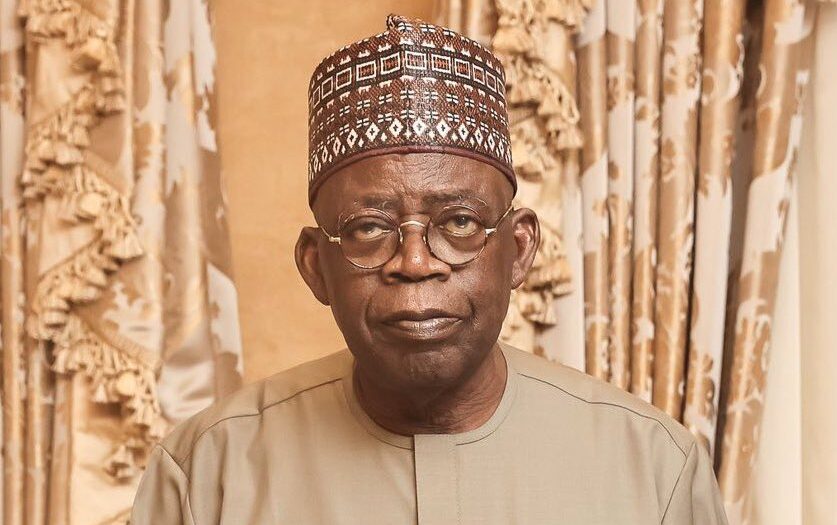
The prompt order issued by President Bola Tinubu to Nigeria’s anti-graft agencies for a comprehensive investigation into the financial operations of the Ministry of Humanitarian Affairs and Poverty Alleviation is not only commendable but a much-needed step towards tackling the systemic corruption prevailing in the nation. The resultant suspension of its minister, Dr Betta Edu, further signifies the gravity of the issue and the commitment towards rectifying it.
However, the scandal has evoked an underlying decadence that seeped deeply into the country’s socio-political fabric, demanding far more than sporadic actions to deal with isolated incidents. The President should seize the opportunity presented by the uproar arising from the opprobrium to instigate a full-scale anti-corruption crusade. He should conduct a thorough scrutiny of every government department and their financial affairs.
Edu reportedly directed the Accountant-General of the Federation, Oluwatoyin Madein, to execute a transfer of N585million to a private account. This account allegedly belongs to Bridget Oniyelu Mojisola, purportedly identified as the Project Accountant for Grants for Vulnerable Groups by the ministry. The matter took a new turn when Madein said she declined Edu’s request, citing the regulation that public money cannot be paid into private accounts.
The suspended minister was implicated in yet another leaked memorandum for allegedly authorising N72million to her aides as part of the 2023 grant for the vulnerable group programme in Kogi State. This funding was intended for expenses such as flight tickets, airport taxis, local running costs, and Duty Tour Allowance, even though the state does not have an airport. Moreover, several companies were reportedly paid about N3billion as consultancy fees for the verification of the National Social Register (NSR). More worrisome is a leaked memo indicating that the Chief of Staff to the President actually approved the expenditure of N3billion from the COVID-19 Palliative Fund for the payment of consultants hired by Edu to verify the NSR.
This raises numerous ethical questions: Why invest so much money in consultants when the nation struggles with fiscal deficits? Why hire consultants while local talents remain underutilised and jobless? And more importantly, is there a tangible return on investment that can be traced to these expensive consultancy services? The absence of satisfactory answers to these questions indicates a blatant erosion of governance’s ethical elements — fairness, justice, empowerment, and most essentially, accountability.
The reverberations caused by Edu’s conduct and her subsequent suspension by Tinubu, bring to the fore the ongoing tumult in the nation’s political architecture. This uproar presents a stark reminder of the corruption and lack of accountability that has pervaded the political space. Tinubu, compelled, perhaps by the commotion resonating across the country, suspended Edu. Following this, penultimate Tuesday, the Economic and Financial Crimes Commission (EFCC) interrogated her in Abuja. These events are emblematic of a renewed call for transparency in governance.
The President’s swift response may underscore his commitment towards promoting accountability in governance. But it also presents an opportunity for a cogent critique of the seemingly hasty action taken. Was this move just to assuage the outraged citizenry, or is it a signpost towards a sustained campaign against corruption and bad governance? While Tinubu’s action resonates with Nigerians and civil society organisations, it also raises questions about the transparency and accountability measures within his administration. That his Chief of Staff gave the nod for such expenditure leaves too many unanswered questions.
Even so, the EFCC’s subsequent interrogation of Edu in Abuja marks another noteworthy turn of events. This approach suggests a maturing investigative process geared towards achieving justice and equity. Simultaneously, it also indicates a potential shift in the fight against corruption within Nigeria. Again, we could argue that while such practices may lend credibility to the government’s commitment to transparency, they also expose underlying political intentions.
It is alleged that New Planet Project Limited, a company owned and operated by the Minister for Interior, Olubunmi Tunji-Ojo, has been linked to Edu’s malfeasance. Ojo was awarded a contract worth N438.1million to serve as a consultant for the reputedly fraudulent National Social Register project, which aimed to verify 11 million homes in Nigeria within a month. The anti-graft agency must investigate him to ascertain the level of his involvement. Like Edu, Ojo should be suspended to facilitate a thorough inquiry.
Scrutinising the Tunji-Ojo scandal earnestly might lead us to various contemplations. We might start by questioning the ‘conflict of interest’, as the line between Ojo’s private and public interests seems blurred. As Interior Minister and proprietor of New Planet Project Limited simultaneously, it spills the question of whether national interest is sacrificed for personal gain. The contract might as well have been a smokescreen to siphon public funds, hence harnessing the wheels of corruption.
The Humanitarian Ministry has arguably been bedevilled with corruption allegations. The immediate past minister, Sadiya Umar-Farouq, is being probed by the EFCC, over an alleged N37billion fraud. The funds, intended for the betterment of Nigerians, were laundered through a contractor’s 38 different bank accounts. In 2020, the Independent Corrupt Practices and Other Related Offences Commission (ICPC) said it uncovered N2.67billion meant for the ministry’s school feeding programme in private bank accounts.
Unfortunately for Nigeria, a bulk of the poverty alleviation funds are loans. The country had borrowed $800million from the World Bank to cushion the removal of petrol subsidies through cash transfers to 50 million vulnerable citizens. The leveraging of loans for poverty mitigation programmes puts the nation in a precarious financial position, primarily if these funds are not appropriately utilised or fail to yield the expected socio-economic outcomes. As William Feather once noted, “borrowed money is the most potent form of mythology”, and Nigeria’s increasing reliance on loans to fund poverty alleviation schemes epitomises this concern.
The Edu case presents an arduous challenge; however, it is a challenge that offers a momentous occasion for reform. The choices made by the President will either bring about a promising dawn or cast an ominous shadow over the nation’s retrospective reputation. Tinubu must remember that his decisions will not only affect him but also the future of an entire country. If he takes a firm and rightful stand on these corruption matters, he can reassure Nigerians and the international community that the fight against corruption has truly begun.
And honestly, Mr President must not leave anyone found culpable in his government, no matter how highly placed.



Nigeria stands at a critical juncture as the world marked World Press Freedom Day (WPFD) on May 3. This annual observance is a reminder that a free press is central to democratic life, good governance, and public accountability. For Nigeria, it is also a moment for sober reflection on how far the country has come and how far it still has to go in safeguarding the independence of its media.
World Press Freedom Day exists to highlight the fundamental importance of freedom of expression and to honour journalists who risk their lives in pursuit of truth. It underscores the idea that without a free press, societies cannot function transparently, nor can citizens make informed decisions. In countries like Nigeria, where democracy continues to evolve, the observance carries particular urgency.
This year’s theme, “Shaping a Future at Peace: Promoting Press Freedom for Human Rights, Development and Security”, places journalism at the heart of global stability. It emphasises that a peaceful society cannot be built on silence, fear, or manipulated information. Rather, it depends on the free flow of accurate, timely, and independent reporting.
At its core, the theme highlights the role of journalism in fostering accountability, dialogue, and trust. These are not abstract ideals. In Nigeria, where public confidence in institutions is often fragile, the media remains one of the few platforms through which citizens can question authority and demand transparency. When press freedom declines, so too does public trust.
Journalism serves as a foundation for peace, security, and economic recovery. Countries with robust media systems tend to attract greater investment, maintain stronger institutions, and resolve conflicts more effectively. Nigeria’s economic challenges, ranging from inflation to unemployment, require open scrutiny and informed debate, both of which depend on a free press.
However, the issue of information integrity has become increasingly complex in the digital age. Artificial Intelligence (AI) and online platforms have amplified the spread of misinformation and disinformation. In Nigeria, where internet penetration has grown rapidly, false narratives can travel faster than verified facts. This makes the role of credible journalism more vital than ever.
The challenge is not only technological but also ethical. AI-driven manipulation of information threatens to distort public discourse, influence elections, and deepen social divisions. In such an environment, professional journalism must act as a stabilising force, ensuring that truth prevails over sensationalism and propaganda.
Equally troubling is the safety of journalists. Across Nigeria, reporters face growing levels of online harassment, judicial intimidation, and physical threats. Self-censorship is becoming more common, as media practitioners weigh the risks of reporting sensitive issues. This trend undermines the very essence of journalism.
A particularly alarming incident involved a serving minister in the present administration, who openly threatened to shoot a journalist during a televised exchange. Such conduct, broadcast to the public, sends a dangerous signal that hostility towards the press is acceptable. It erodes the norms of democratic engagement and places journalists in harm’s way.
This year’s theme aligns closely with the United Nations Sustainable Development Goal (SDG)16, which promotes peace, justice, and strong institutions. Freedom of expression is a cornerstone of this goal. Without it, institutions weaken, corruption thrives, and justice becomes elusive. Nigeria’s commitment to SDG 16 must therefore include genuine protection for the media.
Historically, the Nigerian press has been a formidable force. From resisting colonial rule to challenging military dictatorships, our journalists have played a central role in shaping the nation’s political landscape. Today, however, that legacy appears to be under strain, as the media operates under what can best be described as a veneer of freedom.
Beneath this facade lies a troubling reality. Journalists are routinely harassed, detained, and prosecuted for performing their constitutional duties. Reports from media watchdogs indicate that dozens of Nigerian journalists face legal threats or arrest each year, often for exposing corruption or criticising those in power.
The Cybercrimes (Prohibition, Prevention, etc.) Act of 2015 has become a focal point of concern. Originally intended to combat cyber threats, it has increasingly been used to silence dissent. Sections 24 and 27(1)(b), in particular, have been invoked to target journalists, bloggers, and social commentators.
Although amendments introduced in February 2024 were meant to safeguard journalists, concerns persist. The law continues to be wielded in ways that stifle investigative reporting and restrict freedom of expression. Legal reforms must go beyond cosmetic changes to address the root causes of misuse.
To safeguard the future of journalism in Nigeria, decisive action is required. The Cybercrimes Act must be revisited to ensure it cannot be weaponised against the press. Law enforcement agencies must operate free from political influence, upholding the rule of law and protecting journalists’ rights. Civil society and international partners must also strengthen independent media through funding, training, and platforms for wider reach.
In this rapidly evolving world shaped by artificial intelligence and digital innovation, Nigeria faces a clear choice. It can either allow press freedom to erode under pressure, or it can champion a truly independent media landscape. The path it chooses will determine not only the future of journalism, but also the strength of its democracy and the peace it seeks to build.

-

 Featured2 days ago
WASSCE: RSG Distributes Science Materials To Secondary Schools
-
News2 days ago
Xenophobic Attacks: Nigerian Lives More Important Than Foreign Investment – Oshiomhole
-
Rivers2 days ago
MBA Forex Trial Adjourn To June 3, Amid Bereavement … As Court Declines Cost Application
-
News2 days ago
ActionAid Demands Probe Of Govs Using Public Funds For Campaign
-
Aviation2 days ago
Passengers Stranded As Delta Airline From Atlanta Route Back Eight Hours After
-
Business2 days ago
Customs Impound N2.35bn Cocaine, 15 Trailers of Rice
-
Politics2 days ago
2027: Bayelsa Senator Gets Critical Endorsement For Second Term
-
 Politics2 days ago
INEC Sets Rivers South-East Senatorial By-Election For June 20