
Editorial
Policing Emohua–Kalabari Road

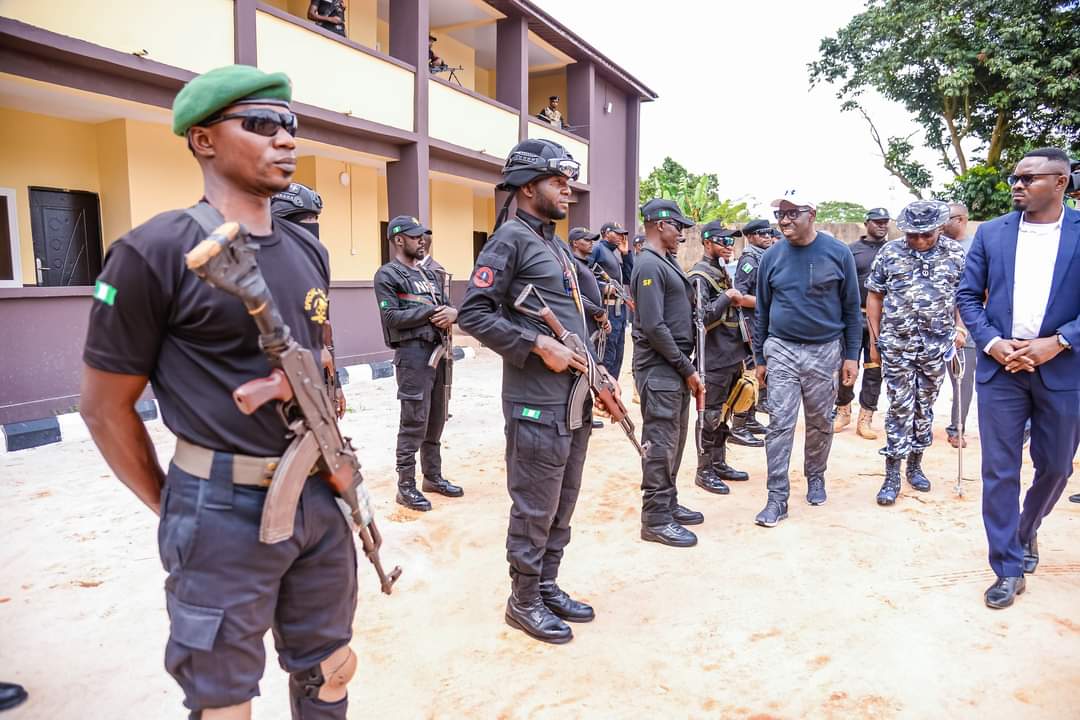
The sudden resurgence of kidnapping-for-ransom incidents targeted at commuters along the Kalabari–Emohua Road is, to say the least, disquieting. No less than a few persons have fallen victim to the nefarious act. Immediate steps must be taken to curb this growing trend. Last April, some passengers travelling to the coastal communities along the road in a commercial bus were abducted and held in captivity in the kidnappers’ den.
In May, this year, the Rivers State Police Command confirmed the kidnap of two occupants of a commercial vehicle transiting along the Emohua– Kalabari Road. The state Acting Police Public Relations Officer, Grace Iringe-Koko, confirmed the incident, stating that it occurred at the same spot where a similar kidnap ensued a fortnight ago. Despite realising the consistency of the crime, the police are unable to thwart it.
Recently, a bus driver identified as Salvation Taylor Harry was gruesomely murdered, while eight passengers were abducted in an attack on a commercial bus by baleful gunmen along the same Emohua–Kalabari Road. According to reports, the bus driver had taken off from Mile One park in Port Harcourt with the passengers on a trip to Buguma when the gunmen ambushed them.
Furthermore, early this year, unknown gunmen attacked soldiers reported to be on duty on the Emohua-Kalabari Road axis, killing one soldier and injuring two others. Informed sources said the incident happened early hours of the day at the boundary bridge between Asari-Toru and Emohua. It was also learned that the gunmen ambuscaded the victims. Soon after the event, the military authorities withdrew the soldiers on security duties at that location.
Several failed attempts have been made at abducting commuters on that road. Commercial vehicle drivers navigating the route claim that the terrible state of the Emohua-Kalabari Road facilitates the operations of the kidnappers. The drivers further assert that the road has wholly lost its integrity. Since the highway is owned by the Federal Government, it must act quickly to fix the bad portions to prevent the lawlessness in the area.
Following the incessant attacks, commercial drivers plying Port Harcourt to Degema/Abonnema and Buguma at the Abali Park in Port Harcourt City Local Government Area and Choba Park in Obio/Akpor Local Government Area made good their earlier threat to catalyze non-violent action against the persistent criminality on the Emohua–Kalabari– Road.
The drivers stalled movements from Port Harcourt to communities in Degema, Asari-Toru and Akuku-Toru Local Government Areas linked by the road. Residents of communities in the three local government areas who were to travel to Port Harcourt that day were also unfortunate, as they were caught in the protest with no vehicles to convey them. Some commercial drivers tried to disrupt the demonstration by returning to the road, but their vehicles were impounded.
People have always expressed fears about the absence of security on the Emohua–Kalabari Road, so much so that drivers at Port Harcourt, Choba, Abonnema and Buguma parks dread driving on the road late evenings, unlike in the past when the highway was always busy, sometimes until the next day, especially on weekends that witnessed beehives of activities.
The Emohua–Kalabari Road covers four local government areas namely; Emohua, Degema, Asari-Toru and Akuku-Toru. These four council chairmen should be able to liaise with security agencies on how to end the ugly situation. The chairmen of Degema, Asari -Toru and Akuku-Toru Local Government Areas in particular, whose people are worst hit by the activities of the hoodlums, should step up efforts to end insecurity in the affected area. They should emulate Governor Nyesom Wike who has shown capacity in that regard.
Although Nigeria’s local government council chairmen have no control over the security agencies in their territories, they head the Local Government Security Council, which is made up of all security agencies that operate within the councils. The law recognises local government chairmen as chief security officers of their localities, hence, are entitled to unaccountable monthly security votes. The four council chairmen must collaborate to end the menace.
The Rivers State Commissioner of Police, Mr Eboka Friday, must intervene now as the victims are law-abiding citizens who deserve protection from the government and law enforcement agents. Besides, they earn their legitimate earnings by making regular journeys on that route. We condemn the lackadaisical attitude of the police officers posted to provide security on the road. Rather than perform their duties, many of them extort money from commercial drivers, letting the criminals terrorising the area to operate unhindered.
These consistent kidnap occurrences on the Emohua–Kalabari Road may cause political fear mongering that perhaps may bring about poor participation in the processes leading up to the 2023 general election. In every sane clime, security has always been everyone’s responsibility. Therefore, we must all give maximum support and cooperation to the government and security agents to succeed in the endeavour. The military authorities have to reconsider their decision to permanently withdraw soldiers from the troubled spots.
The failure of security agents to respond promptly to kidnapping incidents on that road will continue to raise suspicion about their active involvement in this billion-dollar criminal enterprise. A fully equipped security outfit comprising people from the four affected councils must be established. This is more so as the Emohua campus of Rivers State University is situated along that road. There is a need for the students to be given a broad sense of safety and security while on campus to enable them to concentrate on their studies.
The Kalabari branch of the Ijaw Youth Council (IYC) should mobilise youths of the region to be involved in security obligations on the road in synergy with the Nigeria security operatives. They should be provided with the needed tools and logistics to secure that dangerous road. Politicians in the affected local government areas should empower the youths, bring them out of the creeks and engage them in the morally worthy cause of protecting their people.



Nigeria stands at a critical juncture as the world marked World Press Freedom Day (WPFD) on May 3. This annual observance is a reminder that a free press is central to democratic life, good governance, and public accountability. For Nigeria, it is also a moment for sober reflection on how far the country has come and how far it still has to go in safeguarding the independence of its media.
World Press Freedom Day exists to highlight the fundamental importance of freedom of expression and to honour journalists who risk their lives in pursuit of truth. It underscores the idea that without a free press, societies cannot function transparently, nor can citizens make informed decisions. In countries like Nigeria, where democracy continues to evolve, the observance carries particular urgency.
This year’s theme, “Shaping a Future at Peace: Promoting Press Freedom for Human Rights, Development and Security”, places journalism at the heart of global stability. It emphasises that a peaceful society cannot be built on silence, fear, or manipulated information. Rather, it depends on the free flow of accurate, timely, and independent reporting.
At its core, the theme highlights the role of journalism in fostering accountability, dialogue, and trust. These are not abstract ideals. In Nigeria, where public confidence in institutions is often fragile, the media remains one of the few platforms through which citizens can question authority and demand transparency. When press freedom declines, so too does public trust.
Journalism serves as a foundation for peace, security, and economic recovery. Countries with robust media systems tend to attract greater investment, maintain stronger institutions, and resolve conflicts more effectively. Nigeria’s economic challenges, ranging from inflation to unemployment, require open scrutiny and informed debate, both of which depend on a free press.
However, the issue of information integrity has become increasingly complex in the digital age. Artificial Intelligence (AI) and online platforms have amplified the spread of misinformation and disinformation. In Nigeria, where internet penetration has grown rapidly, false narratives can travel faster than verified facts. This makes the role of credible journalism more vital than ever.
The challenge is not only technological but also ethical. AI-driven manipulation of information threatens to distort public discourse, influence elections, and deepen social divisions. In such an environment, professional journalism must act as a stabilising force, ensuring that truth prevails over sensationalism and propaganda.
Equally troubling is the safety of journalists. Across Nigeria, reporters face growing levels of online harassment, judicial intimidation, and physical threats. Self-censorship is becoming more common, as media practitioners weigh the risks of reporting sensitive issues. This trend undermines the very essence of journalism.
A particularly alarming incident involved a serving minister in the present administration, who openly threatened to shoot a journalist during a televised exchange. Such conduct, broadcast to the public, sends a dangerous signal that hostility towards the press is acceptable. It erodes the norms of democratic engagement and places journalists in harm’s way.
This year’s theme aligns closely with the United Nations Sustainable Development Goal (SDG)16, which promotes peace, justice, and strong institutions. Freedom of expression is a cornerstone of this goal. Without it, institutions weaken, corruption thrives, and justice becomes elusive. Nigeria’s commitment to SDG 16 must therefore include genuine protection for the media.
Historically, the Nigerian press has been a formidable force. From resisting colonial rule to challenging military dictatorships, our journalists have played a central role in shaping the nation’s political landscape. Today, however, that legacy appears to be under strain, as the media operates under what can best be described as a veneer of freedom.
Beneath this facade lies a troubling reality. Journalists are routinely harassed, detained, and prosecuted for performing their constitutional duties. Reports from media watchdogs indicate that dozens of Nigerian journalists face legal threats or arrest each year, often for exposing corruption or criticising those in power.
The Cybercrimes (Prohibition, Prevention, etc.) Act of 2015 has become a focal point of concern. Originally intended to combat cyber threats, it has increasingly been used to silence dissent. Sections 24 and 27(1)(b), in particular, have been invoked to target journalists, bloggers, and social commentators.
Although amendments introduced in February 2024 were meant to safeguard journalists, concerns persist. The law continues to be wielded in ways that stifle investigative reporting and restrict freedom of expression. Legal reforms must go beyond cosmetic changes to address the root causes of misuse.
To safeguard the future of journalism in Nigeria, decisive action is required. The Cybercrimes Act must be revisited to ensure it cannot be weaponised against the press. Law enforcement agencies must operate free from political influence, upholding the rule of law and protecting journalists’ rights. Civil society and international partners must also strengthen independent media through funding, training, and platforms for wider reach.
In this rapidly evolving world shaped by artificial intelligence and digital innovation, Nigeria faces a clear choice. It can either allow press freedom to erode under pressure, or it can champion a truly independent media landscape. The path it chooses will determine not only the future of journalism, but also the strength of its democracy and the peace it seeks to build.

-

 Featured4 days ago
WASSCE: RSG Distributes Science Materials To Secondary Schools
-
News4 days ago
Xenophobic Attacks: Nigerian Lives More Important Than Foreign Investment – Oshiomhole
-
Rivers4 days ago
MBA Forex Trial Adjourn To June 3, Amid Bereavement … As Court Declines Cost Application
-
News4 days ago
ActionAid Demands Probe Of Govs Using Public Funds For Campaign
-
Aviation4 days ago
Passengers Stranded As Delta Airline From Atlanta Route Back Eight Hours After
-
Business4 days ago
Customs Impound N2.35bn Cocaine, 15 Trailers of Rice
-
Politics4 days ago
2027: Bayelsa Senator Gets Critical Endorsement For Second Term
-

 Politics4 days ago
INEC Sets Rivers South-East Senatorial By-Election For June 20