
Editorial
US Alert On ISIS, al-Qaeda

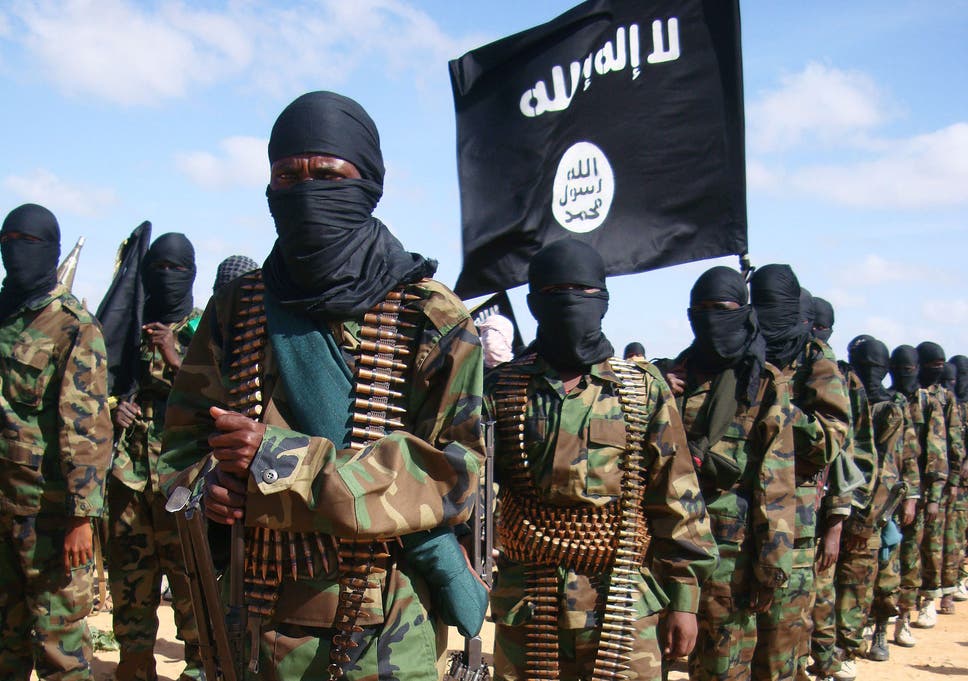
Recently, the United States alerted Nigeria that two of the most dreaded foreign insurgent groups, the Islamic State and al-Qaeda, were penetrating the North-western part of the country.
Commander of the US Special Operations Command, Africa, Dagvin Anderson, who issued the alert during a press briefing on August 6, said the group was also expanding to other parts of West Africa.
He said: “We have engaged with Nigeria and continue to engage with them in intel sharing and in understanding what these violent extremists are doing. And that has been absolutely critical to their engagements in Borno State and into an emerging area of North western Nigeria that we’re seeing al-Qaeda starting to make some inroads in.
“So, this intelligence sharing is absolutely vital and we stay fully engaged with the government of Nigeria to provide them an understanding of what these terrorists are doing, what Boko Haram is doing, what ISIS-West Africa is doing, and how ISIS and al-Qaeda are looking to expand further south into the littoral areas”.
The Tide considers the US alert as not only alarming and frightening, it is also instructive. It is an official confirmation that it is not yet Uhuru as the Federal Government wants us to believe. It clearly exposes the sham of the Federal Government’s claim that it had decimated the Boko Haram insurgents in the country.
It is common knowledge that for more than one decade, some parts of the Northern Nigeria, particularly the North East, have been held hostage by the Boko Haram insurgents with not less than 200,000 casualties recorded. As the North East was beginning to heave a sigh of relief, the insurgents found a new comfort zone in the North West, particularly Kaduna, Katsina and Sokoto States in recent times.
The reported entry of more dreaded terror groups like ISIS and al-Qaeda into the country is, therefore, a terrifying icing on the savagery and barbarity the country has been subjected to in the last one decade.
Regrettably, the reaction of the Nigerian military to the US warning, just like its singsong during each of the attacks, was abysmally poor and discouraging. Rather than truly take the warning as a wakeup call, the military took it with a pinch of salt, describing it as not new and further urged the citizenry not to panic.
Coordinator, Defence Media Operations (DMO), John Enenche, while briefing the press on the alert, said the alert was 10 years old, implying that the military was already aware of the incursion of foreign insurgents into the country, yet refused to budge. This carefree attitude gives away the Nigerian military as clueless, incompetent and incapable of bringing the insurgents down on their knees. It further exposes the inefficiency of the military in the area of intelligence gathering.
We note that contrary to the pretentious disposition of the Nigerian military that all is well, the US alert calls for serious concern, especially in the face of dehumanising killings that are currently taking place in Kaduna, Katsina and Sokoto States. The reported influx of foreign terrorists into the country is a stressor that should not be taken with a pinch of salt.
We, therefore, condemn the seeming lip service by the various arms of the nation’s security forces and demand for immediate overhaul of the security apparatus by the President. President Buhari cannot afford to continue to pay deaf ears to the call by many eminent Nigerians to reinvigorate the nation’s security apparatchiks.
We are also taken aback by the reaction of the Nigerian government to the alert. Although the Federal Government accused some Western countries of double standard, its response contained no good justification for the infiltration of foreign insurgents in the country.
The statement credited to the Minister of Information and Culture, Alhaji Lai Muhammed, that developed nations “cannot at one hand refuse to sell to us effective platforms to fight terrorism and at the same time accuse us of allowing terrorism to run down the continent” amounts to wishing away the alert.
While we appreciate the fact that the developed nations need to sincerely support Nigeria in its fight against insurgency and terrorism, we insist that the real efforts ultimately lie with the Nigerian government.
We share the US admonition that for international efforts to yield desired results in the fight against terrorism in Nigeria, the government must take the lead and build energy to coalesce around.
“So, no nation can come in and fix that problem for Nigeria. We can assist with that. The United States can assist, the United Kingdom, other countries can come in, many countries can come and assist with that partnership – but ultimately it takes leadership from Nigeria in order for us to focus our efforts”, Anderson said.
The Federal Government should, therefore, take the US admonition as a wakeup call and be more proactive in taming the influx of foreign terrorists into the country.
The Tide observes that the kid gloves with which the Nigerian government and the military prosecute Boko Haram insurgency may have emboldened other terror groups to find a fertile ground in Nigeria. We say this because if the government had decimated the Boko Haram the way it claimed it had done, the ISIS and other terror groups would not have contemplated entering the country.
It has, therefore, become more imperative for the Nigerian government to up its game and save the nation from further despoilation, orgy of violence and mindless bloodletting. The frequent alibi by the Nigerian authorities that it is on top of the game can no longer hold water in the present realities. It is futile for the government to continue to live in denial of the precarious security situation in the country.
We warn that treating security issues with levity could spell doom to the peace and corporate unity of Nigeria.
A word is enough for the wise.



Nigeria stands at a critical juncture as the world marked World Press Freedom Day (WPFD) on May 3. This annual observance is a reminder that a free press is central to democratic life, good governance, and public accountability. For Nigeria, it is also a moment for sober reflection on how far the country has come and how far it still has to go in safeguarding the independence of its media.
World Press Freedom Day exists to highlight the fundamental importance of freedom of expression and to honour journalists who risk their lives in pursuit of truth. It underscores the idea that without a free press, societies cannot function transparently, nor can citizens make informed decisions. In countries like Nigeria, where democracy continues to evolve, the observance carries particular urgency.
This year’s theme, “Shaping a Future at Peace: Promoting Press Freedom for Human Rights, Development and Security”, places journalism at the heart of global stability. It emphasises that a peaceful society cannot be built on silence, fear, or manipulated information. Rather, it depends on the free flow of accurate, timely, and independent reporting.
At its core, the theme highlights the role of journalism in fostering accountability, dialogue, and trust. These are not abstract ideals. In Nigeria, where public confidence in institutions is often fragile, the media remains one of the few platforms through which citizens can question authority and demand transparency. When press freedom declines, so too does public trust.
Journalism serves as a foundation for peace, security, and economic recovery. Countries with robust media systems tend to attract greater investment, maintain stronger institutions, and resolve conflicts more effectively. Nigeria’s economic challenges, ranging from inflation to unemployment, require open scrutiny and informed debate, both of which depend on a free press.
However, the issue of information integrity has become increasingly complex in the digital age. Artificial Intelligence (AI) and online platforms have amplified the spread of misinformation and disinformation. In Nigeria, where internet penetration has grown rapidly, false narratives can travel faster than verified facts. This makes the role of credible journalism more vital than ever.
The challenge is not only technological but also ethical. AI-driven manipulation of information threatens to distort public discourse, influence elections, and deepen social divisions. In such an environment, professional journalism must act as a stabilising force, ensuring that truth prevails over sensationalism and propaganda.
Equally troubling is the safety of journalists. Across Nigeria, reporters face growing levels of online harassment, judicial intimidation, and physical threats. Self-censorship is becoming more common, as media practitioners weigh the risks of reporting sensitive issues. This trend undermines the very essence of journalism.
A particularly alarming incident involved a serving minister in the present administration, who openly threatened to shoot a journalist during a televised exchange. Such conduct, broadcast to the public, sends a dangerous signal that hostility towards the press is acceptable. It erodes the norms of democratic engagement and places journalists in harm’s way.
This year’s theme aligns closely with the United Nations Sustainable Development Goal (SDG)16, which promotes peace, justice, and strong institutions. Freedom of expression is a cornerstone of this goal. Without it, institutions weaken, corruption thrives, and justice becomes elusive. Nigeria’s commitment to SDG 16 must therefore include genuine protection for the media.
Historically, the Nigerian press has been a formidable force. From resisting colonial rule to challenging military dictatorships, our journalists have played a central role in shaping the nation’s political landscape. Today, however, that legacy appears to be under strain, as the media operates under what can best be described as a veneer of freedom.
Beneath this facade lies a troubling reality. Journalists are routinely harassed, detained, and prosecuted for performing their constitutional duties. Reports from media watchdogs indicate that dozens of Nigerian journalists face legal threats or arrest each year, often for exposing corruption or criticising those in power.
The Cybercrimes (Prohibition, Prevention, etc.) Act of 2015 has become a focal point of concern. Originally intended to combat cyber threats, it has increasingly been used to silence dissent. Sections 24 and 27(1)(b), in particular, have been invoked to target journalists, bloggers, and social commentators.
Although amendments introduced in February 2024 were meant to safeguard journalists, concerns persist. The law continues to be wielded in ways that stifle investigative reporting and restrict freedom of expression. Legal reforms must go beyond cosmetic changes to address the root causes of misuse.
To safeguard the future of journalism in Nigeria, decisive action is required. The Cybercrimes Act must be revisited to ensure it cannot be weaponised against the press. Law enforcement agencies must operate free from political influence, upholding the rule of law and protecting journalists’ rights. Civil society and international partners must also strengthen independent media through funding, training, and platforms for wider reach.
In this rapidly evolving world shaped by artificial intelligence and digital innovation, Nigeria faces a clear choice. It can either allow press freedom to erode under pressure, or it can champion a truly independent media landscape. The path it chooses will determine not only the future of journalism, but also the strength of its democracy and the peace it seeks to build.

-

 Featured2 days ago
WASSCE: RSG Distributes Science Materials To Secondary Schools
-
News2 days ago
Xenophobic Attacks: Nigerian Lives More Important Than Foreign Investment – Oshiomhole
-
Rivers2 days ago
MBA Forex Trial Adjourn To June 3, Amid Bereavement … As Court Declines Cost Application
-
News2 days ago
ActionAid Demands Probe Of Govs Using Public Funds For Campaign
-
Aviation2 days ago
Passengers Stranded As Delta Airline From Atlanta Route Back Eight Hours After
-
Business2 days ago
Customs Impound N2.35bn Cocaine, 15 Trailers of Rice
-
Politics2 days ago
2027: Bayelsa Senator Gets Critical Endorsement For Second Term
-
 Politics2 days ago
INEC Sets Rivers South-East Senatorial By-Election For June 20