
Editorial
Lessons From Okonjo-Iweala’s Appointment

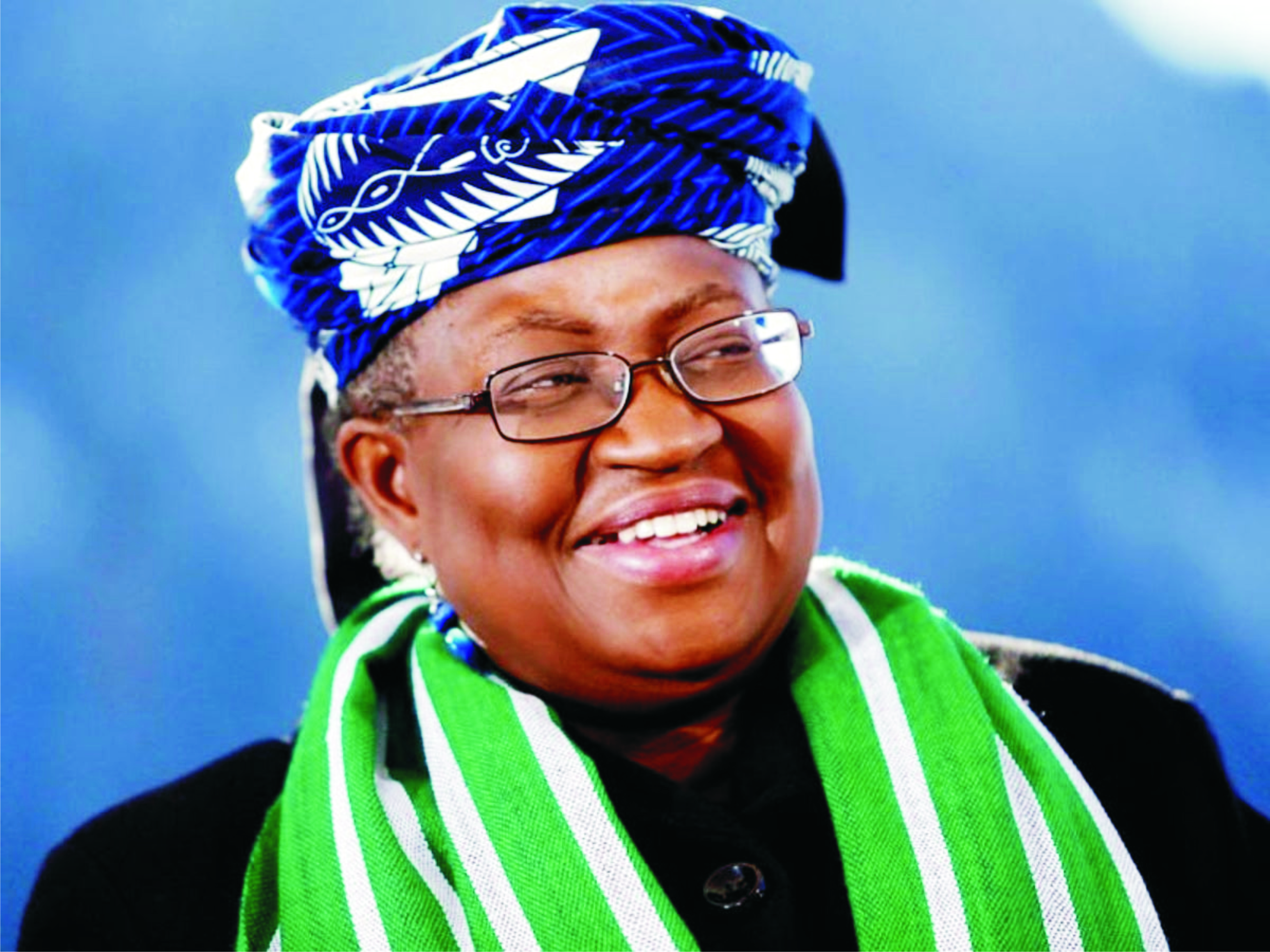
South African President, Cyril Ramaphosa, early this month announced the appointment of Dr Ngozi Okonjo-Iweala as a member of the expanded Presidential Economic Advisory Council (PEAC) put together by his government to rescue the country from its third recession since 2008. The country relapsed into recession at the end of December, 2019.
The council, chaired by Ramaphosa himself, and comprising local and international economic experts, was initially constituted on September 27, 2019, to “ensure greater coherence and consistency in the implementation of economic policy and ensure that government and society in general is better equipped to respond to changing economic circumstances”. It is also expected to advise the president and government more broadly, facilitating the development and implementation of economic policies that spur inclusive growth.
South Africa, the second largest economy on the continent has, in recent years, been rattled by a plethora of challenges, driven by lull in investor sentiment and lingering policy uncertainty, weak power, telecom and transportation sectors, and worsened by crisis in mining and manufacturing sectors. The problem is exacerbated by rising rate of official corruption, divisions in the ruling African National Congress (ANC), xenophobia nurtured by heightened unemployment and increasing insecurity.
Indeed, South Africa’s perilous public finance crisis has been engineered by four forces: stagnant economic growth; consistent tax revenue collection below forecasts; rising debt burden – the highest levels in post-apartheid era; and poor performance of state-owned enterprises, necessitating large-scale bailouts from lean government funds.
These have been triggered by three dynamics: slow recovery from shock of the 2008 global financial crisis; poor economic and public finance performance negatively affected by entrenched institutional destabilisation of Jacob Zuma’s presidency; and continued deterioration of economic indicators (growth and employment) along with further underperformance of revenue collection and public finances under the Ramaphosa government even with expansionary fiscal spending far above revenue generation. It is to address these challenges that Ramaphosa tapped Okonjo-Iweala to help rescue the country from economic doldrums.
The Tide joins millions of Nigerians and leaders across all continents in congratulating one of the world’s best economists and development experts on her meritorious appointment by Ramaphosa. We are proud to commend Okonjo-Iweala not just because she is a Nigerian and brilliant, but because her appointment represents a testament to her competence and experience. We say so because we are convinced that her pedigree and impeccable footprints in monetary and economic administration in Nigeria, many developing countries and at the World Bank stood her out for this sublime assignment.
The 1981 PhD graduate in Regional Economics and Development from Massachusetts Institute of Technology (MIT) spent 25 years of her career at the World Bank as a development economist, scaling the ranks to Number 2 position of managing director, Operations (2007-2011), with oversight responsibility for the bank’s $81 billion operational portfolio in Africa, South Asia, Europe and Central Asia. She spearheaded several World Bank initiatives to assist low-income countries during the 2008 – 2009 food crises and later during the financial crisis, and helped many recover from slow growth to robust economic state.
In 2010, she was Chair of the IDA replenishment, the World Bank’s successful drive to raise $49.3 billion in grants and low interest credit for the poorest countries in the world, and was also member of the Commission on Effective Development Cooperation with Africa. In the last two decades, she has served as senior adviser, executive director, director, chair or co-chair of more than 30 boards of world-class banks, academic and research institutions, development-driven organizations across all continents, including Harvard, Oxford, the Brookings Institution, African Union, World Economic Forum, United Nations, Rockefeller Foundation, Mercy Corps International; and in 2012, ran as the first-ever female candidate for president of the World Bank.
Okonjo-Iweala was a two-time minister of finance, serving under Olusegun Obasanjo (2003-2006), and Goodluck Jonathan (2011-2015). She was the first female to hold that position in Nigeria and her performance speaks for her.
During her first term, she spearheaded negotiations with the Paris Club of Creditors that led to the wiping out of $30 billion of Nigeria’s debt, including the outright cancellation of $18 billion. In 2003, she led efforts to improve Nigeria’s macroeconomic management, including implementation of an oil-price based fiscal rule where revenues accruing above benchmark oil price were saved in special “Excess Crude Account” which helped reduce macroeconomic volatility.
She also introduced the practice of publishing each state’s monthly financial allocation from the Federation Accounts in the newspapers, which increased transparency in governance. With support of the World Bank and IMF, she helped build an electronic financial management platform – the Government Integrated Financial Management and Information System (GIFMIS), including the Treasury Single Account (TSA) and the Integrated Payroll and Personnel Information System (IPPIS), helping to curtail corruption in the process.
As at December 31, 2014, the IPPIS platform had eliminated 62,893 ghost workers from the system and saved government about $1.25 billion in the process. Under the present administration, more than 70,000 ghost workers have been eliminated from the payroll system, and billions of Naira saved for investment in development initiatives. She was also instrumental in helping Nigeria obtain its first-ever sovereign credit rating (BB minus) from Fitch Ratings and Standard & Poor’s in 2006.
Under her leadership, the National Bureau of Statistics carried out a re-basing exercise of the Gross Domestic Product (GDP), the first in 24 years, which saw Nigeria emerge as the largest economy in Africa.
With her record, we think that Ramaphosa made the right decision by appointing Okonjo-Iweala as a member of the country’s PEAC, to help fix its economy and inspire growth and development by advising stable policies that encourage investment.
We, therefore, urge her to pragmatically bring her wealth of experience to bear in helping the South African Government make history by reviving an economy that has been in limbo for about 12 years. She had done it for Nigeria before; she can as well do it for South Africa.
On the other hand, we challenge all tiers of government in Nigeria to emulate the South African Government in placing merit and competence far and above nepotism and tribalism in recruitment and appointment into various offices in order to fast-track development of the country.
We think that the nation’s economy can do better if governments eschew parochial sentiments and implement inclusive policies that recognise hardwork and excellence.



Nigeria stands at a critical juncture as the world marked World Press Freedom Day (WPFD) on May 3. This annual observance is a reminder that a free press is central to democratic life, good governance, and public accountability. For Nigeria, it is also a moment for sober reflection on how far the country has come and how far it still has to go in safeguarding the independence of its media.
World Press Freedom Day exists to highlight the fundamental importance of freedom of expression and to honour journalists who risk their lives in pursuit of truth. It underscores the idea that without a free press, societies cannot function transparently, nor can citizens make informed decisions. In countries like Nigeria, where democracy continues to evolve, the observance carries particular urgency.
This year’s theme, “Shaping a Future at Peace: Promoting Press Freedom for Human Rights, Development and Security”, places journalism at the heart of global stability. It emphasises that a peaceful society cannot be built on silence, fear, or manipulated information. Rather, it depends on the free flow of accurate, timely, and independent reporting.
At its core, the theme highlights the role of journalism in fostering accountability, dialogue, and trust. These are not abstract ideals. In Nigeria, where public confidence in institutions is often fragile, the media remains one of the few platforms through which citizens can question authority and demand transparency. When press freedom declines, so too does public trust.
Journalism serves as a foundation for peace, security, and economic recovery. Countries with robust media systems tend to attract greater investment, maintain stronger institutions, and resolve conflicts more effectively. Nigeria’s economic challenges, ranging from inflation to unemployment, require open scrutiny and informed debate, both of which depend on a free press.
However, the issue of information integrity has become increasingly complex in the digital age. Artificial Intelligence (AI) and online platforms have amplified the spread of misinformation and disinformation. In Nigeria, where internet penetration has grown rapidly, false narratives can travel faster than verified facts. This makes the role of credible journalism more vital than ever.
The challenge is not only technological but also ethical. AI-driven manipulation of information threatens to distort public discourse, influence elections, and deepen social divisions. In such an environment, professional journalism must act as a stabilising force, ensuring that truth prevails over sensationalism and propaganda.
Equally troubling is the safety of journalists. Across Nigeria, reporters face growing levels of online harassment, judicial intimidation, and physical threats. Self-censorship is becoming more common, as media practitioners weigh the risks of reporting sensitive issues. This trend undermines the very essence of journalism.
A particularly alarming incident involved a serving minister in the present administration, who openly threatened to shoot a journalist during a televised exchange. Such conduct, broadcast to the public, sends a dangerous signal that hostility towards the press is acceptable. It erodes the norms of democratic engagement and places journalists in harm’s way.
This year’s theme aligns closely with the United Nations Sustainable Development Goal (SDG)16, which promotes peace, justice, and strong institutions. Freedom of expression is a cornerstone of this goal. Without it, institutions weaken, corruption thrives, and justice becomes elusive. Nigeria’s commitment to SDG 16 must therefore include genuine protection for the media.
Historically, the Nigerian press has been a formidable force. From resisting colonial rule to challenging military dictatorships, our journalists have played a central role in shaping the nation’s political landscape. Today, however, that legacy appears to be under strain, as the media operates under what can best be described as a veneer of freedom.
Beneath this facade lies a troubling reality. Journalists are routinely harassed, detained, and prosecuted for performing their constitutional duties. Reports from media watchdogs indicate that dozens of Nigerian journalists face legal threats or arrest each year, often for exposing corruption or criticising those in power.
The Cybercrimes (Prohibition, Prevention, etc.) Act of 2015 has become a focal point of concern. Originally intended to combat cyber threats, it has increasingly been used to silence dissent. Sections 24 and 27(1)(b), in particular, have been invoked to target journalists, bloggers, and social commentators.
Although amendments introduced in February 2024 were meant to safeguard journalists, concerns persist. The law continues to be wielded in ways that stifle investigative reporting and restrict freedom of expression. Legal reforms must go beyond cosmetic changes to address the root causes of misuse.
To safeguard the future of journalism in Nigeria, decisive action is required. The Cybercrimes Act must be revisited to ensure it cannot be weaponised against the press. Law enforcement agencies must operate free from political influence, upholding the rule of law and protecting journalists’ rights. Civil society and international partners must also strengthen independent media through funding, training, and platforms for wider reach.
In this rapidly evolving world shaped by artificial intelligence and digital innovation, Nigeria faces a clear choice. It can either allow press freedom to erode under pressure, or it can champion a truly independent media landscape. The path it chooses will determine not only the future of journalism, but also the strength of its democracy and the peace it seeks to build.

-

 Featured2 days ago
WASSCE: RSG Distributes Science Materials To Secondary Schools
-
News2 days ago
Xenophobic Attacks: Nigerian Lives More Important Than Foreign Investment – Oshiomhole
-
Rivers2 days ago
MBA Forex Trial Adjourn To June 3, Amid Bereavement … As Court Declines Cost Application
-
News2 days ago
ActionAid Demands Probe Of Govs Using Public Funds For Campaign
-
Aviation2 days ago
Passengers Stranded As Delta Airline From Atlanta Route Back Eight Hours After
-
Business2 days ago
Customs Impound N2.35bn Cocaine, 15 Trailers of Rice
-
Politics2 days ago
2027: Bayelsa Senator Gets Critical Endorsement For Second Term
-
 Politics2 days ago
INEC Sets Rivers South-East Senatorial By-Election For June 20