
News
RSUST Back On Track -VC …Amaechi Pledges Better Welfare For Varsity

Barely five years after the Vice Chancellor of Rivers State University of Science and Technology, Prof Barineme Fakae had embarked on an audacious mission to rescue the university from near extinction, Fakae says the institution has again bounced back on the track of academic excellence.
Making the declaration at the 24th convocation ceremony of the university over the weekend in Port Harcourt, the VC in his address entitled ‘RSUST: Back on Track”, said time was when the university, “out of 39 programmes, had only 8 fully accredited but today, I am glad to inform you that all the programmes of the university presented to National University Commission are presently fully accredited.” He added that two programmes, architecture and land surveying that suffered loss in 2005 would be attended to by the NUC accreditation team billed to visit RSUST on 28th of this month, and expressed optimism that the two programmes would record 100% accreditation.
Fakae also noted that out of 122 universities currently operating in the country, only 27 were qualified to be visited for institutional accreditation, and that RSUST was one of those qualified.
“Today, I am particularly glad to announce that the results just received show that following the institutional accreditation visit in December, 2011, this university has now been institutionally accredited and rated A in its category to operate for the next five years, after which it will be due for another visitation,” Fakae noted.
The RSUST VC remarked that in his administration’s quest to position the institution as a world class standard, infrastructural development, staff welfare, students’ matters, sports development and information and communication technology have received deserved attention, and commended the university’s visitor and Governor of Rivers State, Rt Hon Chibuike Amaechi for his tremendous support and encouragement without which the long list of projects carried out could not have been possible.
He, therefore, appealed for Amaechi’s continuous support to the institution to enable it complete the moot court project in the Faculty of Law to enable it escape the hangman’s rope of the council for legal education.
“The moot court is a special requirement for the next accreditation of our law programme. The status of this programme will be at risk if nothing is done about this building when the present accreditation expires in 2013, he said.
The VC appealed to ASUU, SSANU, NASU and NAAT branches of RSUST to embrace dialogue and exhaust all avenues for peaceful resolution to conflicts before contemplating and embarking on strike. According to him, it was when there is industrial harmony that the university would be able to keep to the calendar of its academic programmes that would enble lectures, research and staff promotion to go on uninterrupted.
Earlier in his address, Pro-Chancellor and chairman of the university’s Governing Council, Justice Adophus Karibi-Whyte had commended the graduands, pointing out that it takes commitment, dedication and hard work to be acknowledged as worthy in character and learning, He charged them to good ambassadors of the university as well as maintain continuous link with their alma mater.
Highpoint of the event was the granting of the VC’s request by Governor Amaechi to recruit staff to further strengthen the university’s workforce.
The VC had lamented the frustration in the system bottleneck that hindered the institution from employing needed staff to man critical areas, noting that the situation had become precarious as the department of medical laboratory science is at the verge of losing its professional accreditation as a result of paucity of personnel, especially teaching staff.
A total of 3,541 graduands received certificates, postgraduate diploma and higher degrees in various specialization.
Of the figure, 3,219 got first degrees, 85 postgraduate diplomas, 215 master and 22 doctorate degrees. Three graduates made the prestigious first class .
Meanwhile, Governor Chibuike Amaechi has pledged government resolve for better working conditions and manpower in the State-owned University of Science and Technology(RSUST).
Governor Amaechi made the pledge at the 24th Convocation ceremony of the university in Port Harcourt on Saturday.
Overwhelmed with the academic achievements of RSUST, Amaechi urged the Vice Chancellor of the university and management to sit with ASUU and negotiate a new condition of service, which includes determination of staff who do not live up to their expectation.
‘I will also implore the university to employ new academic staff. There is no university if there are no teachers’’, he stated.
He approved the completion of the moot court building of the Faculty of Law as it would enhance the quality of graduates from the department.
Amaechi, however advised management of the institution to devoid itself from politics “I don’t approve of the signboards I see around the campus comparing what is in the past to the present. Whatever achievements we have made we congratulate the Vice Chancellor for those achievements and let it remain as achievements,’’ he said.
The governor commended the industry and commitment of the Governing Council and the Vice Chancellor for overhauling the institution and being able to break the jinx of non-accreditation and clearing the backlog of students who were unable to graduate over the years.
Amaechi congratulated the graduands, and urged them to be the torch lights of the society. “Ideas rule the world, hence this convocation is an indication of the seriousness and commitment you have shown to your studies. Bring the same to bear as you go to the outside world ‘’, he remarked.
He lauded former Minister of Foreign Affairs, Hon Odein Ajumogobia for bagging the university’s honourary doctorate degree in law, observing that the award was in recognition of Ajumogobia’s hardwork and integrity even as he wished him well in his future endeavour.
Earlier, in his address, the Pro-Chancellor of the university, Justice Adolphus Karibi-Whyte had said that the institution was undergoing drastic changes, and expressed appreciation to the Governor for providing the moral and financial support to the university’s governing council.
Justice Karibi-Whyte said,’’ I wish to express our profound gratitude to your Excellency for your unparalleled and continued support to the Rivers State University of Science and Technology(RSUST). You are one Visitor to this university that has shown a thorough understanding of the peculiar problems of our university’’.
The Vice Chancellor, Prof Barineme Fakae said the convocation was coming six months after last year’s one to clear the backlog of 2010-2011, and promised that the next convocation would come up next year.’’
He noted that the university has made tremendous strides over the years with a full accreditation of all its programmes by the National University Commission(NUC). Currently, he said the institution has become a world class in infrastructure and ICT, as it was rated A in its category of universities by NUC.
Chris Oluoh & Kevin Nengia


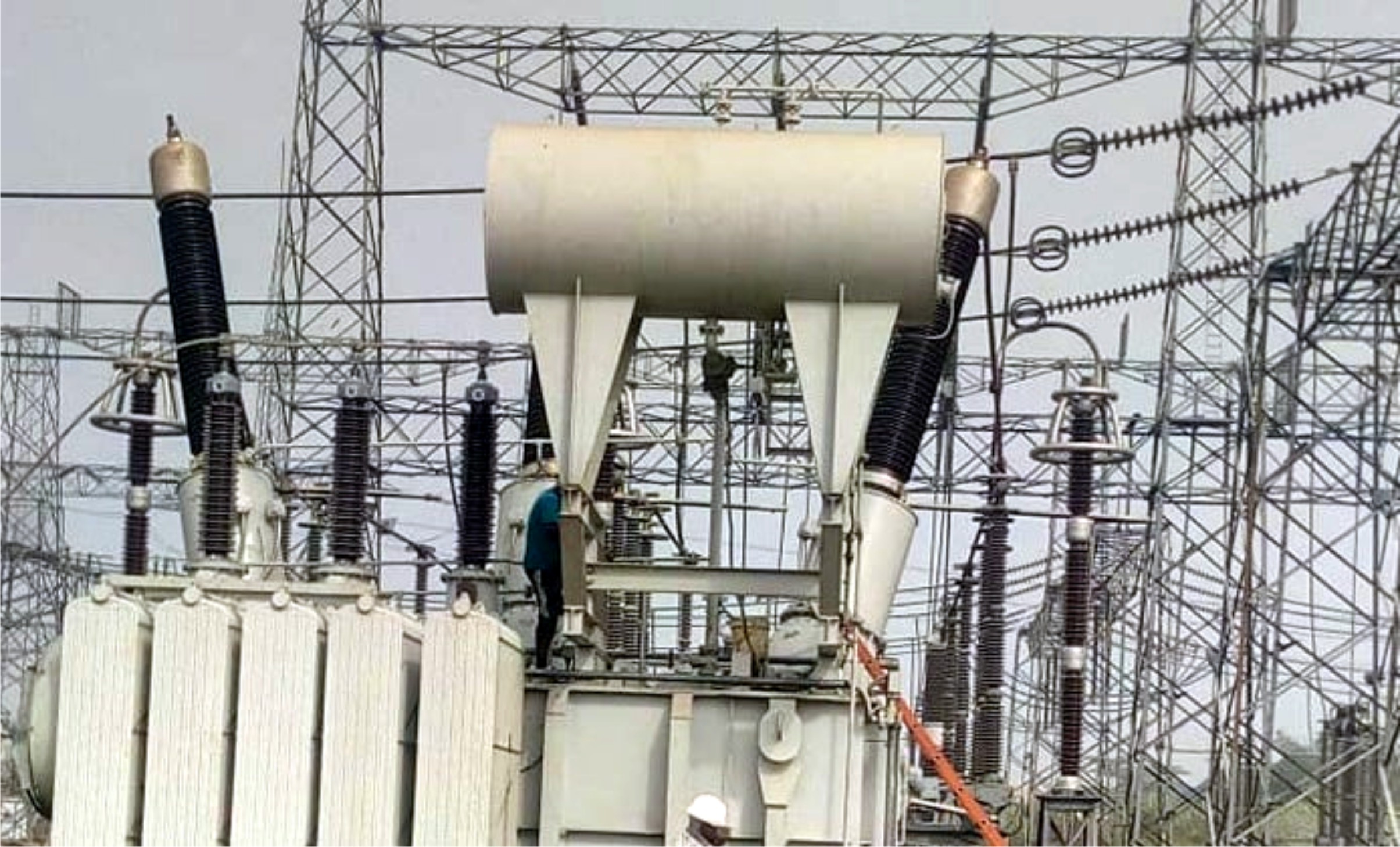
The Federal Government says it has invested more than N10tn in Nigeria’s electricity sector since its privatisation in 2013, but the intervention has yet to deliver the reliable power supply expected from the reform.
The Managing Director of FGN Power Company Limited, Kenny Anuwe, disclosed this yesterday at the sixth annual conference of the Power Correspondents Association of Nigeria, in Abuja.
The conference afforded stakeholders to examine the country’s roadmap to reliable and affordable electricity under the Federal Government’s ambition to grow the economy to $1tn by 2030.
Anuwe said the huge government spending has kept the industry afloat but stressed that public funding alone could not address the country’s electricity challenges, calling for increased private sector participation and alternative financing models to accelerate infrastructure development.
The conference was themed, “$1trn Economy: Nigeria’s Roadmap to Reliable and Affordable Power Supply.”
The disclosure raises fresh questions about the outcome of the 2013 power sector privatisation, which transferred the country’s 11 distribution companies and six generation companies to private investors, while the Federal Government retained ownership of the transmission network.
Despite successive government interventions, electricity supply has remained unstable, with inadequate generation, gas shortages, weak transmission and distribution infrastructure, mounting sector debts and poor investment continuing to undermine the industry.
Anuwe acknowledged that government funding had been significant but insufficient to meet the sector’s ambitions.
“Government has invested over N10tn in the electricity sector since the advent of privatisation. But is it enough? How much money is enough? If government didn’t invest that money, the industry would not be standing today.
“No matter how you look at it, no matter how critical you are about what government’s role is, if government did not put that money in, the industry would not be standing,” he said.
He, however, described the continued dependence on government funding as unsustainable, noting that the Federal Government was responsible for more than 95 per cent of new infrastructure investment in the sector.
“That’s not why we privatised. We have all kinds of excuses why that has happened. And a lot of them are legitimate. But it’s time for us to move from excuses to saying how do we fix it. It does not need the government to do everything. I believe that government cannot do everything,” Anuwe said.
He said the country needed simpler investment structures, predictable regulations, clear institutional responsibilities and commercially viable projects to attract private capital.
According to him, the FGN Power Company is targeting an investment structure that could attract 1bn, with the Africa Finance Corporation expected to match the amount.
He disclosed that the company’s ongoing Presidential Power Initiative projects were expected to deliver additional transmission capacity, with a target of 5,540 megawatts by 2029 and at least 60 per cent improvement in grid reliability.
The projects include a second batch of 12 Siemens substations and special projects involving Omotosho substations, which are expected to cumulatively deliver nearly 3,400MW.
Anuwe said most of the ongoing first-phase transmission substation and line projects were now expected to be completed in the first quarter of 2027, following delays.
He added that the company had secured financing for its pilot phase and was working with international technical and financial partners, including Siemens Energy, China Machinery Engineering Corporation and TBEA.
The Minister of Power, Joseph Tegbe, in his address, said the Federal Government had also developed a four-pronged roadmap to address the sector’s challenges through grid stabilisation, sector liquidity and sustainability, asset optimisation and expansion and enhancement of the national grid.
He said the government had raised N1.23tn under its N3.3tn plan to settle verified legacy debts owed to electricity generation companies.
According to him, more than 2.8 million electricity customers have been metered under the Presidential Metering Initiative, while additional transmission capacity exceeding 15,000 megavolt-amperes had been added to the national grid between 2023 and October 2026.
“Let me inform this gathering that we have developed a four-pronged roadmap to address
the power sector challenges comprehensively. These are Grid Stabilisation, Sector Liquidity
and Sustainability, Asset Optimisation, and Expansion and Enhancement of the grid. Central
to this plan is a corridor approach that prioritises major load centres for reliable, round-
the-clock electricity supply.
“A technical audit has been commissioned to establish a robust diagnostic baseline, identify critical constraints and guide the prioritisation, sequencing and
execution of interventions. The corridor approach gives this roadmap a practical industrial focus.
“In the past two months alone, I have commissioned newly installed substation equipment across Kumbotoso, Dankata, Mashi, Dan-Agundi, Apapa, Ijora, Ikeja, Biliri, Walalambe and other locations, adding over 1,300MVA to Nigeria’s transmission capacity. This has unlocked more power to the respective Distribution Companies for onward distribution to industrial and household customers,” Tegbe said.
He added that the government was adopting a corridor-based approach to improve electricity supply in major economic centres, beginning with the Lagos-Ogun axis and Abuja franchise area, which together account for more than 50 per cent of national electricity demand.
The minister said the proposed 24-hour electricity zones would align generation, transmission and distribution capacity with demand in industrial clusters, subject to technical readiness and commercial viability.
He also identified vandalism as a major threat to electricity infrastructure, disclosing that President Bola Tinubu had approved a coordinated anti-vandalism campaign involving security agencies.
Earlier, the Chairman of PCAN, Obas Esiedesa, said reliable and affordable electricity was indispensable to the country’s ambition of building a $1tn economy by 2030.
He urged stakeholders to move beyond identifying the industry’s problems and focus on practical solutions, particularly investment, infrastructure development and sustainable financing.
News
Fubara: Why We Engage Only Qualified Engineers, Indigenous Contractors On Projects …As Governor Bags NATE Platinum Award, Inducted Into Highest Membership Cadre

Governor of Rivers State, Sir Siminalayi Fubara, has stated that his administration engages indigenous contractors, qualified engineers and technologists in road and housing projects to ensure the delivery of standard and quality projects in the State.
Governor Fubara stated this yesterday while declaring open the 42nd Conference of Technologists in Engineering ( CONFOTECH) and Annual General Meeting of the Nigerian Association of Technologists in Engineering, (NATE), in Port Harcourt.
The conference saw the association conferring its Platinum Award on Governor Siminalayi Fubara and his induction into the highest membership cadre of NATE in recognition of his massive infrastructural development across Rivers State.
Governor Fubara, who was represented by his Chief of Staff, Mr. Sunny Ewule, expressed the readiness of his administration to the continued partnership and support for professional associations in promoting professionalism, building capacity and driving technological advancement.
He thanked the leadership and the entire membership of NATE for finding him worthy of their most prestigious award and honour, the NATE Platinum Award, and the accompanying induction into the highest membership cadre of the association.
“I consider this award not as a personal achievement but as a recognition of the collective effort of my administration and the good people of Rivers State in the area of infrastructure development and the deployment of engineering and technological solutions to advance the socio-economic development of the state, he said.
Governor Fubara noted that the theme of the conference: Safety, Regulation and Enforcement in Engineering: A Panacea to Industrial and Technological Growth in Nigeria, could not be more timely and relevant.
According to Fubara, no meaningful industrial growth can take place without safety, strong regulation, and enforcement, adding that it is for that reason that his administration has continued to insist on standard, quality delivery, and the engagement of qualified engineers, technologists and indigenous contractors in road construction, housing and other major developments across the state.
In his welcome address, the National President of the Nigerian Association of Technologists in Engineering (NATE), Engr. Dominic Udoatan, said the conference underscores a fundamental truth that safety, effective regulation and strict enforcement are indispensable to sustainable industrial and technological growth.
He urged government, regulatory bodies, employers and professional associations to work together to ensure competence, accountability and the protection of lives and property, while expressing the association’s sincere appreciation to Governor Fubara’s administration for its recognition of the importance of infrastructure, technical competence and technological advancement.

The Inspector-General of Police, Olatunji Disu, has warned officers of the Nigeria Police Force against engaging in partisan political activities, insisting that the Force would remain neutral before, during and after the 2027 general elections.
The IGP gave the directive during a strategic meeting with senior police officers, including Deputy Inspectors-General of Police, Assistant Inspectors- General of Police and Commissioners of Police, at the Force Headquarters, Abuja, last Wednesday.
He told the officers across the country to maintain regular interactions with journalists as part of efforts to tackle misinformation and fake news ahead of the elections.
He said sustained engagement with the media would strengthen public communication, promote transparency and help curb the spread of misleading information capable of undermining public confidence in the electoral process.
Disu assured that the Nigeria Police Force would not allow itself to be used by politicians or political parties, saying the Force remains committed to providing a level playing field for all participants in the electoral process.
“We will remain neutral, ensure the safety and security of the electorate before, during and after the election,” he said.
The Police Chief warned that any police officer found participating in partisan politics would face appropriate disciplinary and legal consequences.
On the protection of citizens’ rights, the IGP charged Commissioners of Police to ensure that all reported cases of human rights violations are properly documented, investigated and resolved within a reasonable period.
He also directed police commands and zones across the country to establish accessible and visible Complaints Response Units to enable members of the public report alleged abuses and obtain appropriate redress.
Disu emphasized the need to improve the welfare of police personnel, directing Commissioners of Police to ensure prompt payment of death benefits to families of fallen officers and personally visit such families to demonstrate the Force’s support and solidarity.
He highlighted some of the achievements recorded by the Force but maintained that more efforts were required to address prevailing security challenges, particularly banditry in parts of the country.
He also cautioned Commissioners of Police against travelling outside their respective states without obtaining express approval from his office.
The IGP thanked President Bola Tinubu for his continued support and commitment to strengthening the capacity of the police to combat crime and maintain national security.
King Onunwor
-
News1 day ago
RSG Reaffirms Commitment To STEM Education, Technological Advancement
-
Business2 days ago
‘NUJ, NPA’s Partnership Would Boost Port Producrivity, Economic Growth’
-

 News1 day ago
IGP Warns Police Officers Against Partisanship …Directs Regular Engagement With Journalists
-
Business2 days ago
Fire Threat Interrupts Asaba Air Peace Flight
-
 News2 days ago
Customs To Deploy AI, Scanners Against Snuggling
-
Business2 days ago
Fish Production Deficit, A Major Investment Opportunity – Minister
-
Business2 days ago
NCDMB, NLNG Unveil $9m For Professorial Endowment Research Chairs In Six Varsities
-

 Politics1 day ago
2027: INEC Begins Deployment Of Non-Sensitive Materials