
Politics
As Ekiti Governorship Poll Holds Tomorrow

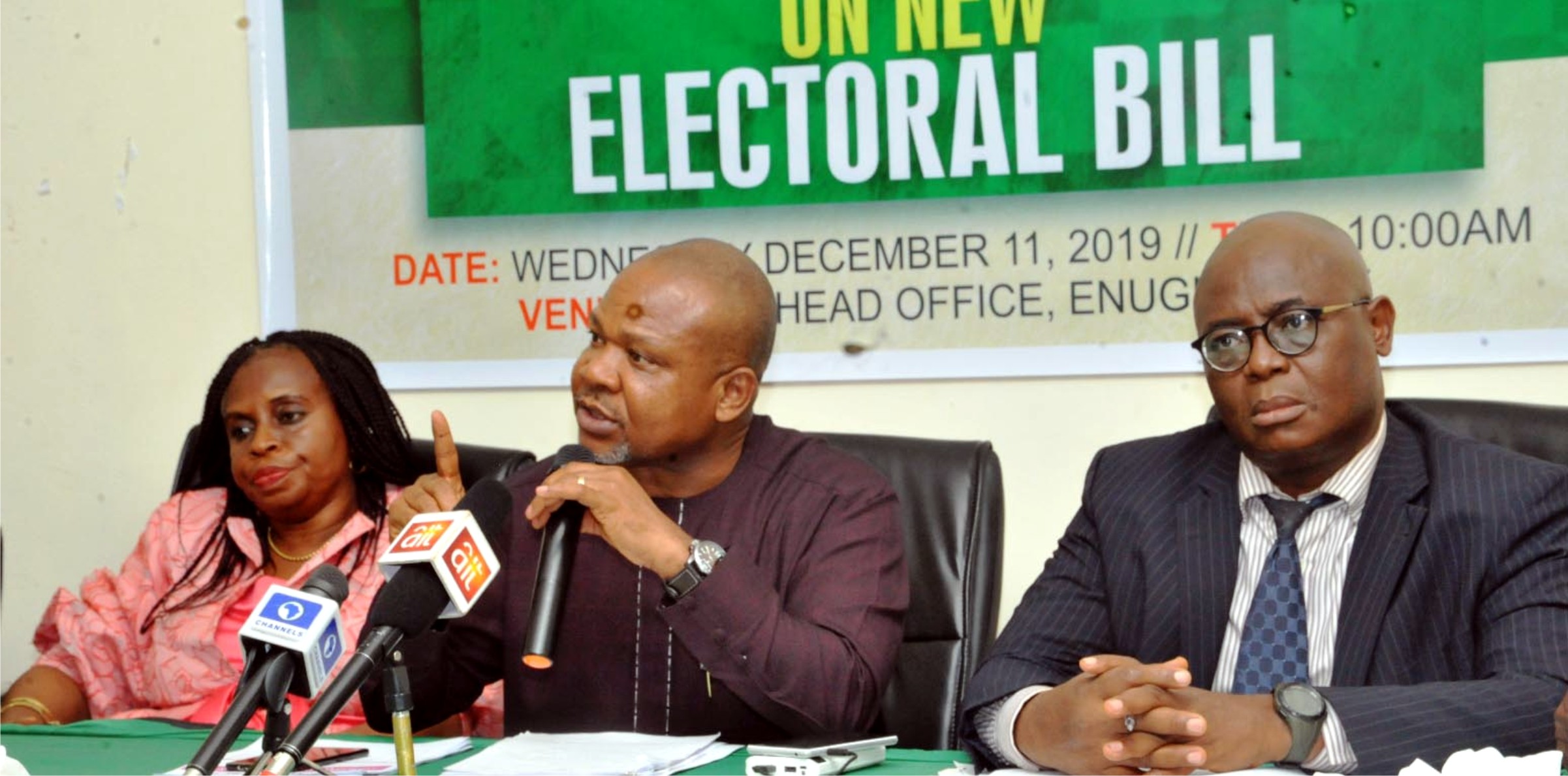
As the Ekiti State Governorship election holds tomorrow, the Independent National Electoral Commission, INEC, has declared its readiness to conduct a free, fair and credible election.
Credible poll depends on many variables and top on the list are safety and security of voters, election materials, electoral officials and freedom of voters to make their choice without let or hindrance, including financial inducement.
Contesting the poll for the governorship seat at Oke-Bareke in Ado-Ekiti are 16 political parties. Most of the parties have traversed the nooks and crannies of the state selling their candidates and manifestos to the people.
Prominent among the gladiators are Abiodun Oyebanji of the All Progressives Congress, APC: Olusegun Oni of the Social Democratic Party, SDP; and Bisi Kolawole of the Peoples Democratic Party, PDP.
Others are Wole Oluyede of the African Democratic Congress, ADC; Reuben Famuyibo of the Accord; Debo Ranti Ajayi of the Young People’s Party, YPP; and 10 others.
Worth mentioning is the first female governorship candidate in the state, Erelu Kemi Elebute-Halle of the Action Democratic Party, ADP. From the blast of the whistle for this race, she has been consistent and very visible, holding her own and fighting her way into reckoning in the male-dominated race. Despite the fact that all her party executive members from ward to state level decamped to the ruling party, she has been defiant and still on her feet.
The stake in this election is high. It is a three horse race. The coming of the Social Democratic Party, SDP, has changed the calculations from what could have been a straight fight between the two traditional rivals, APC and PDP. The two parties had hitherto maintained a seemingly balance of power, with almost equal followership but the reality on ground today is different. Segun Oni’s SDP draws followers and supporters from both parties and is presently a serious contender.
Ekiti and Osun governorship elections precede the 2023 presidential election, and both will serve as a litmus test of the popularity and general acceptability of the APC presidential flagbearer, Asiwaju Bola Ahmed Tinubu; and it will also signify the political relevance of the outgoing Governor, Kayode Fayemi.
To underscore the importance of Ekiti election, no fewer than 14 APC governors accompanied Tinubu to Ekiti, for the grand final mega rally to campaign for the governorship candidate of the party, apart from the National Chairman and Secretary of the party and other party bigwigs, including the former National Chairman Chief Bisi Akande.
Segun Oni, a former Governor of the state, between 2007 and 2010 is having his last shot at the governorship seat, having failed to stage a come-back on two different occasions through APC and PDP before finding an abode in the SDP.
Former Governor Ayo Fayose’s investment in this race is a fight for political relevance, since all politics is local, a successful enthronement of his protégé in Ekiti, will signpost a big come-back and a significant role in 2023 presidential election.
Signs preceding Saturday’s election are very ominous. Already two lives have been lost. Momentary peace, akin to the peace of grave yard has pervaded the state. Skirmishes, violent clashes among the three prominent political parties are being recorded on daily basis.
Since Monday, June 13 June, detachments of heavily armed soldiers have taken over strategic areas and flashpoints in the state, while combined forces, made up of men from the Nigeria Security and Civil Defence Corps, Police and Army constantly embark on patrols of major roads and highways in the state.
Undeterred by the tension in the state, the INEC has told the people of the state of its readiness to conduct a credible election.
Professor Mahmood Yakubu, on Tuesday, disclosed that four national commissioners and eight resident electoral commissioners had been deployed to Ekiti State ahead of the poll.
He said that 749, 065 voters representing 76 per cent out of the 988,923 registered voters in the state have collected their Permanent Voter Cards, PVCs.
He said: “Let me assure political parties and voters that the task of electing a new governor will be left in the hands of Ekiti voters. We won’t take any action that would put any party and candidate in a vantage position. We are going to do everything according to the constitution and provisions of the Electoral Act.
“To underscore how prepared we are, we have provided magnifying glasses and braile ballot papers for visually impaired citizens while the Bimodal Voters Authentication System Machines, BVAS, will be used for accreditation.
Similarly, Ekiti INEC Resident Commissioner, Dr Adeniran Tella, said the Commission would be deploying 10,269 personnel, and 3,346 BVAS equipment for the election.
The Inspector General of Police, Mr. Usman Alkali Baba, did not mince words when he declared that any threat to the nation’s bourgeoning democracy would not be tolerated.
Baba said 17,374 police personnel would be deployed to provide security cover for the June 18 governorship elections in Ekiti State.
The police Chief said: “All the 177 wards and 2,445 polling units will be manned by appropriate manpower. Let me say this, the massive deployment is not to scare the citizens, but to protect the sanctity of the ballots and the provisions of the Electoral Act.
This is apart from personnel from the National Security and Civil Defence Corps and other security agencies.
Baba dismissed the insinuation that the heavy security presence would create voters apathy saying that it would rather ensure large turnout of voters during the election
He assured the voters that adequate security personnel are on ground to ward off any security threat that can hinder them from exercising their franchise rights during the poll.
Political watchers are concerned that beyond rhetoric, the electoral umpire and the security agencies are not disclosing measures put in place to prevent financial inducement of voters, a development, which has gained currency in the recent political trajectory of the country. They said if the practice is not nipped in the bud, it could affect the outcome of the election.



The Independent National Electoral Commission (INEC) has extended the deadline for political parties to submit the list of candidates for the 2027 governorship and state Houses of Assembly elections from Saturday, August 8, to Tuesday, August 11, 2026.
The commission announced the extension in a statement issued on Saturday and signed by the National Commissioner and Chairman of its Information and Voter Education Committee, Mohammed Haruna.
According to INEC, the decision followed appeals by political parties for additional time to complete the submission process through the dedicated online portal.
“The submission window, which according to the revised Timetable and Schedule of Activities for the General Election was originally scheduled to close on Saturday, 8th August, 2026, has been extended to Tuesday, 11th August, 2026,” the commission said.
In a a related development, INEC announced the suspension of PVC collection in Osun State ahead of the August 15 governorship election.
The commission said voters who applied for replacement of lost, damaged or defaced Permanent Voter Cards would have until midnight on Sunday, August 9, to print downloadable copies of their cards.
The electoral body explained that the deadline was necessary to enable it compile data on downloaded PVCs and produce final statistics on the total number of cards collected ahead of the election.
INEC said PVC collection in Osun commenced at the Registration Area level from July 22 to 28, 2026, but was extended to July 31 following complaints about large crowds and difficulties experienced by voters at collection centres.
The exercise subsequently moved to the local government level and ran from August 1 to 7.
The commission also disclosed that replacement downloadable PVCs had been made available to voters in Odo-Otin and Ife Central Local Government Areas following the theft of cards during attacks on the two collection centres.
It stressed that the stolen cards could not be used to vote.
INEC reassured Osun residents of its preparedness for the August 15 governorship election.
“The commission reiterates that the stolen cards cannot be used to vote.
“INEC reassures the people of Osun State of its readiness to conduct a free, fair, credible and inclusive governorship election on 15th August, 2026,” the statement said.
The commission said the deadline, initially set for Saturday, 8 August, has been extended to Tuesday, 11 August 2026, following appeals from political parties for more time.
INEC also announced that the window for voters who applied to replace lost, damaged or defaced PVCs to download their replacement cards will close at midnight on Sunday, 9 August.
The move is to enable the commission compile final PVC collection figures ahead of the 15 August Osun governorship election.
INEC said replacement downloadable PVCs have also been provided to affected voters in Odo-Otin and Ife Central Local Government Areas after hoodlums carted away cards from two collection centres, stressing that the stolen cards cannot be used to vote.
The commission reaffirmed its readiness to conduct a free, fair, credible and inclusive election in Osun State.
Gov. Kefas made the remarks over the weekend at the Federal Medical Centre (FMC), Jalingo, during the flag-off of the second phase of the Renewed Hope Medical Outreach in Taraba State, organised as part of activities marking Prof. Yilwatda’s 58th birthday.
The governor commended Prof. Yilwatda for choosing to mark his birthday by providing medical care to people in need.
“What Professor Nentawe did is a powerful demonstration of what leadership should be,” Gov. Kefas said.
He assured that his administration would continue to support initiatives that complement government efforts to improve healthcare delivery and the wellbeing of residents.
Speaking at the event, Prof. Yilwatda called on Nigerian leaders to embrace the culture of giving and use their positions to touch the lives of the less privileged.
He said his decision to celebrate his 58th birthday in Taraba State was deliberate and informed by the needs of underserved communities, particularly people who face difficulties accessing healthcare because of distance and financial constraints.
According to him, the intervention followed a needs assessment and was extended across the three senatorial districts of the state.
He said the exercise commenced on August 3 at Takum General Hospital and covered the Federal University Teaching Hospital, Wukari; First Referral Hospital, Sunkani, Ardo-Kola Local Government Area; General Hospital, Bali; General Hospital, Gembu; and FMC Jalingo.
Prof. Yilwatda said the intervention provided medical services to thousands of beneficiaries, including people who required surgical procedures.
He said sustainable national development could only be achieved when strong institutions placed Nigerians at the centre of development.
“Leadership is about service,” he said, urging political and public leaders to make giving back to society an important part of their responsibilities.
He reaffirmed his commitment to serving Nigeria and its people, saying his personal vision was to make every day of his life useful to humanity.
“Every day that I live, the vision is: let it be useful to humanity,” he said.
The Taraba State Commissioner for Health, Dr. Bordiya Buma, commended the initiative, saying it was consistent with the Renewed Hope agenda and efforts to strengthen healthcare delivery in the state.
Dr Buma said the second phase followed the successful completion of the first phase, which was conducted simultaneously in six local government areas, with two LGAs selected from each of the three senatorial districts.
According to him, more than 10,000 patients were attended to during the first phase, including people with medical and surgical conditions.
He disclosed that 327 general surgeries, 71 eye surgeries and 575 dental procedures were carried out during the exercise.
The commissioner expressed appreciation to President Bola Tinubu for the Renewed Hope Medical Outreach and thanked Prof. Yilwatda for supporting the initiative and choosing Taraba State as a beneficiary.
The Minister of Health and Social Welfare, Prof. Muhammad Ali Pate, also commended Prof. Yilwatda for choosing Taraba State to mark his 58th birthday through a medical outreach.
Prof. Pate said making healthcare the centrepiece of the birthday celebration was significant because health affects everyone.
-

 News3 days ago
RSG Targets Nine Million Residents in Mosquito Net Distribution Campaign
-

 Oil & Energy3 days ago
Aiyedatiwa Signs New Electricity Bill
-

 Maritime3 days ago
Marine Minister Commends President Tinubu On NPERA Bill Assent
-

 Oil & Energy3 days ago
NLNG Commissions Research And Innovation Centre In RSU
-

 News3 days ago
KenPoly Holds Eight Convocations, August 29
-

 News3 days ago
RSG Begins Another Phase of Projects Commissioning Today
-

 News3 days ago
RMAFC Completes Revenue Sharing Review, Proposes New Pay
-

 Maritime3 days ago
NAGAFF Petitions IGP Over Alleged Maritime Police Harassment