
Business
External Reserves Hit Seven-Month Low- CBN …As Banks Tighten Forex Access

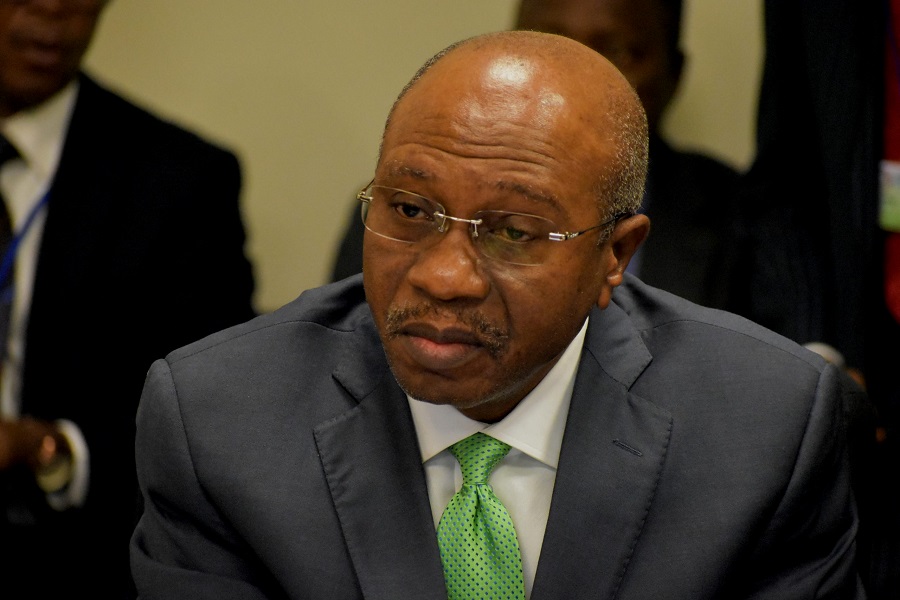
Central Bank of Nigeria (CBN) has said Nigeria’s external reserves has hit a seven-month low after falling to $38.57bn as at May 25, 2022,
Figures obtained from the CBN have revealed that the continuous decline in the country’s external reserves used to defend the naira value is making the banks tighten access to foreign exchange to travellers and other legitimate users as scarcity bites harder.
According to figures obtained from the CBN on movement in external reserves, the reserves, which had been fluctuating for weeks now, experienced its lowest of $39.01bn and $38.39bn on October 10 and 8, 2021 respectively.
Due to scarcity, many banks are extending waiting period to access forex for foreign trips, thereby denying travellers with urgent trips access to apply for Personal Travel Allowance or the Business Travel Allowance requests.
The banks have also been reducing the amount a customer can spend on the cards in dollar terms.
One of the leading Bank’s in Nigeria, Ecobank, in a release on Monday, had explained its current stand on retail foreign exchange transactions for international school fees, accommodation and upkeep payments as well as PTA/BTA requests.
The statement through the Head, Consumer Banking, Korede Adeniyi, said, “Due to current market trends, we require a 30-day window to complete requests for school fees, accommodation, and upkeep.
“In order to ensure smooth service and allow disbursement of PTA/BTA within the timeline, we request that applications are submitted with the required documentation.”
Access Bank also explained its stand in a mail to its customers on forex needs for international school fees, upkeep payments and PTA/BTA requests.
It stated that, “All requests are reviewed to ensure that they meet regulatory requirements. In addition, due to limited forex availability provided by the Central Bank of Nigeria, we require a 30-day period to fulfil requests for school fees, upkeep and rent payment.
“However, for PTA/BTA, we request that you submit your application 14 days before your proposed travel date to allow disbursement within the timeline.”
First Bank had earlier notified its customers of cut in dollar access in a mail titled, ‘Reduction of naira card cross border rate to $20’.
“Due to current market realities on foreign exchange, we’ve reviewed cross border transaction limits for the Naira Mastercard, Naira Credit Card, our Virtual card and Visa Prepaid Naira card further to $20 monthly. This will take effect on 1 April 2022. Also, International ATM withdrawals will not be allowed with our Naira cards at this time.
The CBN Governor, Godwin Emefiele, while giving reasons on dwindling reserves at the last Monetary Policy Committee meeting, noted that the gross external reserves declined moderately from $39.28bn at the end of March 2022.
“This was attributed to the weak accretion to the reserves from exports and the high cost of importation of refined petroleum products,” he said.



Business
Jonathan, Diri, Others Laud Firm’s Milestone in Bayelsa …Says Project Will Drive Industrialisation, Create Jobs



-

 News2 days ago
RSG Targets Nine Million Residents in Mosquito Net Distribution Campaign
-

 Oil & Energy2 days ago
Aiyedatiwa Signs New Electricity Bill
-

 Maritime2 days ago
Marine Minister Commends President Tinubu On NPERA Bill Assent
-

 Oil & Energy2 days ago
NLNG Commissions Research And Innovation Centre In RSU
-

 News2 days ago
KenPoly Holds Eight Convocations, August 29
-

 News2 days ago
RSG Begins Another Phase of Projects Commissioning Today
-

 News2 days ago
RMAFC Completes Revenue Sharing Review, Proposes New Pay
-

 Maritime2 days ago
NAGAFF Petitions IGP Over Alleged Maritime Police Harassment