
Business
Agriculture Remains Backbone Of Nigeria’s Economy – CBN

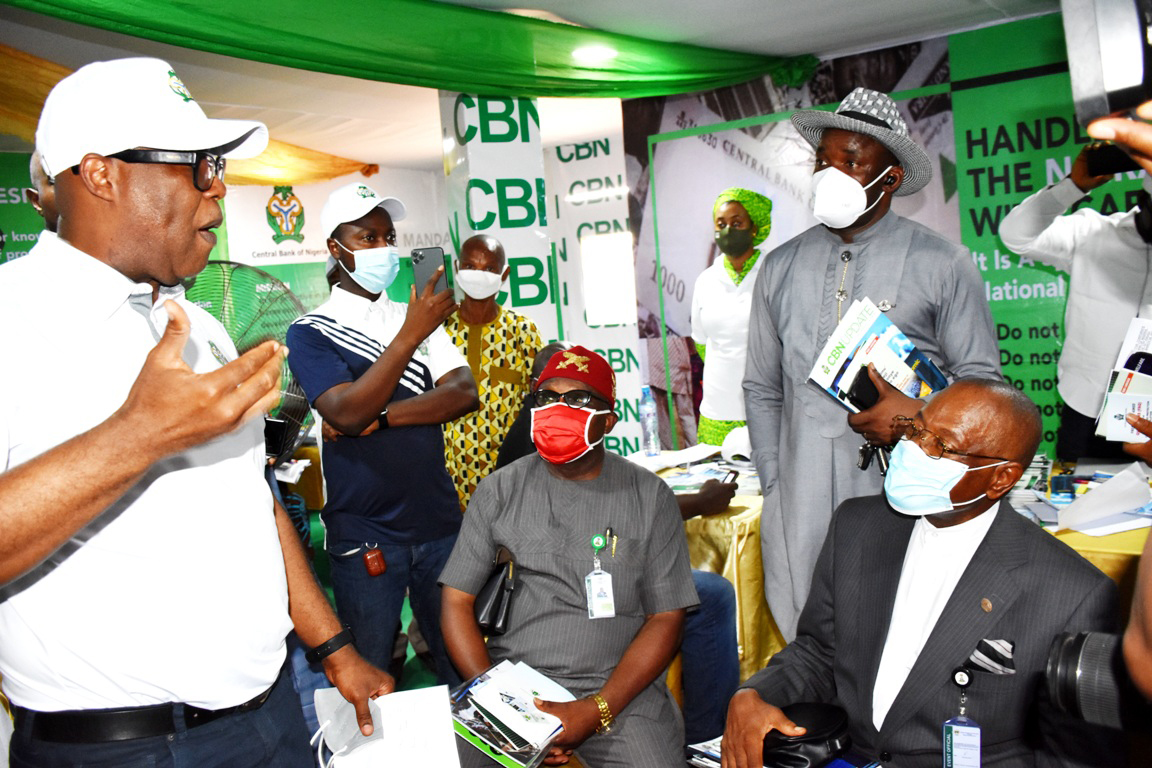
The Governor of Central Bank of Nigeria (CBN), Mr. Godwin Emefiele, says agriculture remains a strong pillar and saving grace for the Nigerian economy.
Emefiele said this recently while addressing journalists during an inspection tour of a palm plantation at Odighi Village in Ovia North East Local Government Area of Edo State.
The CBN Governor expressed satisfaction with the level of interest shown in agriculture and the tremendous impact the sector had had in the last six years.
He wondered how the country could have coped with the rising prices of food and commodity items across the world without the foresight to revamp agriculture.
Emefiele said the Central Bank had assumed a pivotal role in agriculture since 2015, when President Muhammadu Buhari directed that “we produce what we eat and eat what we produce”.
The apex bank had “come up with several initiatives aimed towards repositioning the sector with a view to creating employment opportunities as well as growing the Gross Domestic Product (GDP)”, he said.
Shortly after the assessment of farm, Emefiele attested to the giant strides already being recorded in the production of maize and cassava and expressed optimism that in the next 12 months, palm produce harvests would have commenced.
He acknowledged the significant role played by Edo State Government, under the leadership of Governor Godwin Obaseki, who, he said, had matched words with action by making sure that arable land was made available to those genuinely interested in agriculture.
He said the smallholder farmers could now cultivate and produce enough for their families and sell produce for loan repayment with ease.
Emefiele also commended the efforts of the promoting company, Agri-Allied Resources and Processing Limited and its parent company, Tolaram Limited, for heeding the clarion call by the CBN to source their critical raw materials locally.
He noted that the company had painstakingly embraced backward integration principle by acquiring farmland, measuring about 18,000 hectares, for the cultivation of oil palm, cassava, and maize, which are the critical raw materials used by the group.
Earlier, Managing Director of Agri-Allaied Resources, Mr. Madhukar Khetan, said the company had so far accessed a 10-year loan in the sum of N15 billion at single-digit interest rate with two-year moratorium, under the Commercial Agricultural Credit Scheme (CACS), for the project.
The farm currently has a workforce of about 1,000 .



Business
Jonathan, Diri, Others Laud Firm’s Milestone in Bayelsa …Says Project Will Drive Industrialisation, Create Jobs



-

 News2 days ago
RSG Targets Nine Million Residents in Mosquito Net Distribution Campaign
-

 Oil & Energy2 days ago
Aiyedatiwa Signs New Electricity Bill
-

 Oil & Energy2 days ago
NLNG Commissions Research And Innovation Centre In RSU
-

 Maritime2 days ago
Marine Minister Commends President Tinubu On NPERA Bill Assent
-

 News2 days ago
KenPoly Holds Eight Convocations, August 29
-

 News2 days ago
RSG Begins Another Phase of Projects Commissioning Today
-

 News2 days ago
RMAFC Completes Revenue Sharing Review, Proposes New Pay
-

 Maritime2 days ago
NAGAFF Petitions IGP Over Alleged Maritime Police Harassment