
Featured
PH Refinery Ends 2020 In Operating Losses Spends N19.215bn Admin Cost, N22.55bn On Salaries, Others

The Port Harcourt Refinery Company (PHRC) has ended the 2020 financial year with huge operating losses while amassing colossal expenses in administrative overheads and salaries and allowances of staff, without generating a dime.
The local refinery, which is managed by Ahmed Dikko, an engineer, reported no income in 2020 but incurred administrative expenses of N19.215billion while spending N22.55billion of payment of salaries, wages and other benefits to unproductive workers.
These revelations were contained in the current Nigerian National Petroleum Corporation (NNPC) Financial Report.
Worse still, the refinery, which is one of the subsidiaries of the Nigerian National Petroleum Corporation (NNPC) managed by Mele Kyari, employed average of 487 new staff members in 2020.
To show the high level of financial recklessness going on at the mismanaged refinery, the 487 new workers are being paid N3.93billion annually, indicating that each of them takes an average of N8.072million annually or N672,713 monthly.
The amount they earn monthly is about the annual salary of a normal Level 8 Federal Government worker.
Between 2019 and 2020, the refinery employed 1,162 new staff, paying N41.163billion in salary and wages, according to experts’ calculations of the company’s wage data on its financial statements.
Out of the 487 staff members employed in 2020, 430 were senior and management staff, amounting to 88.2 per cent, with huge financial implications.
Only 57 were junior staff members.
Also, out of 675 staff engaged by the refinery in 2019, 656 were management and senior staff, representing 97 per cent of the total, with huge financial implications.
“It is looking like jobs for the boys at our dear refineries. And I wonder, most of these guys are earning heavy wages,” US-based Financial Consultant, Ellam Ogochukwu said.
“Whoever is running that enterprise deserves to answer several questions,” she said.
Also, staff pension, gratuity and ‘long service award’ gulped N77.76billion in 2020 as against N63.41billion the previous year.
Surprisingly, under Dikko and Kyari, the PHRC’s unproductive staff were allowed to take car loans, compassionate loans and advances valued at N1.001billion in 2020.
The amount was N597.297million in 2019.
In 2020, this refinery, which made no revenue, incurred a comprehensive loss of N53.179billion.
In the previous year, the company made no revenue but incurred N50.530billion in comprehensive loss.
Between 2017 and 2020, the company comprehensively lost N241.609billion.
Its revenue within this period was merely N6.27billion.
“This refinery did not produce oil. What you have is that some people just iron their clothes, go to work and come back at the end of the day without adding to the productivity of the company,” Oil and Gas Analyst at Lagos-based Chapel Hill Denham, Mustapha Wahab said.
The NNPC Managing Director, Mele Kyari, is the chairman of Port Harcourt Refinery.
He is followed by Ahmed Dikko (MD); Babatunde Sofowora (Executive Director of Services); Reginald Udeh (Executive Director, Finance and Accounts); James Ifeanyichukwu Ajibo (Executive Director, Operations); and Awaisu Muazu (late, served till July, 2020).
These directors took N99.742million as emoluments in 2020, a 67 per cent increase from N59.650million they took in 2019.
In 2019, the Port Harcourt Refinery did not record any revenue.
Yet, it reported N25.19billion in expenses.
Six directors collected N59.65million in fees, meaning that each of them received an average payment of N9.94million a month in 2019.
According to the NNPC, names of the six directors in 2019 were: Group Managing Director of NNPC, Malam Mele Kyari; Managing Director Abba Bukar (who retired in March, 2020); Executive Director of Services, Babatunde S. Sofowore; Executive Director of Operations, Ganiyu Abiodun Owolabi; another Executive Director of Operations, Engr Abel N. Imonighavwe; and Executive Director of Finance and Accounts, Mrs Aramide M. Ekundayo.
Salaries, wages, allowances, redundancy and pension costs gulped N22.195billion.
What that means is that, on the average, each staff member received N32.88million in 2019 from a company that made no revenue.
This amounts, on the average, to N2.74million each month.
Total salaries and pays received by staff of Port Harcourt Refinery between 2017 and 2019 amounted at N80.57billion.
But revenues received by the company within the period were estimated at N6.27billion – implying that the NNPC sought N74.3billion from outside the refinery to pay staff salaries.
Rather than privatise the refinery, the NNPC chose to pump an equivalent of 4.5 per cent of Nigeria’s 2021 budget ($1.5billion) into the refurbishment of a refinery that comprehensively lost N206.069billion between 2017 and 2020.
Wahab said that the investment in the refinery made no sense.
“Dangote Refinery is coming on board and can process about 650,000 barrels per day of crude oil – highest in the world. NNPC has taken 20 per cent stake in Dangote.
“Why then are you resuscitating Port Harcourt Refinery? We have done the analysis at Chapel Hill Denham and found that government should be spending $3billion or more to ensure efficiency of the refinery. So, it does not make investment sense because you are not going to compete with yourself,” he said.
“Two, some countries are exiting low-carbon energy sources and migrating to clean energy. So, after rehabilitating Port Harcourt Refinery, for how long will you enjoy its benefits, given that your market is not just Nigeria but also those countries exiting what you intend to sell to them?”, he asked, urging the Federal Government to concession it for optimal benefits to the Nigerian economy.
Also, Oil and Gas Governance Consultant, Henry Ademola Adigun, said that the refinery was badly managed.
“The point is that the refineries are still badly managed. The faster the corporation becomes a limited liability company, the better,” Adigun said.
“You have a refinery not producing anything and not making revenues but salaries are being paid. How did the NNPC make the profit they said they made when the inefficiencies are there? The profit and loss do not show anything. They simply want to make it attractive to the stockman.”
He said there was no cost-cutting by the NNPC or the refineries, adding that there were also “no innovative efficiency, no restructuring or replanting and no cost-saving on salaries and wages.”
Former President of the Nigerian Society of Petroleum Engineers, Joe Nwakwue, said that the only thing that the corporation could have done was to sell off the refineries.
“If you have a factory and is not producing, you will have to pay the gate man and the even the insurance company.”
The PHRC was commissioned in 1965.
It was made up of two refineries: the old refinery commissioned in 1965 with capacity of 60,000 barrels per stream day (bpsd) and the new refinery commissioned in 1989 with an installed capacity of 150,000bpsd, according to the NNPC.
It has a capacity of 210,000bpsd with five process areas.
In 2000, the then government of Nigeria shut down the refinery for turnaround maintenance.
Other three refineries in the country were also expected to undergo a similar process, Oil & Gas Journal said.
As of that time, $364million had already been spent on endless turnaround maintenance (TAM) services.
About $25billion has been spent on turnaround maintenance in the past 25 years.
The Institute for Global Energy Research, in a 2004 article, said the barrage of corruption, poor management, sabotage and lack of the mandatory turnaround maintenance (TAM) every two years had made all the refineries inefficient, making them operate at about 40 per cent of full capacity.
The NNPC said in April, 2020, that it would hand over the four refineries in the country to a private firm to manage.
“We are going to get an O&M contract; NNPC won’t run it. We are going to get a firm that will guarantee that this plant would run for some time. We want to try a different model of getting this refinery to run. And we are going to apply this process for the running of the other two refineries.”
However, this has not happened.
Rather, the corporation has sought money to rehabilitate the failed refineries.
It has prided itself on cost-cutting efficiency, but its refineries have incurred humongous losses.
Analysts say NNPC has no cause to hold onto the running of the refineries, having shown no capacity to manage it.





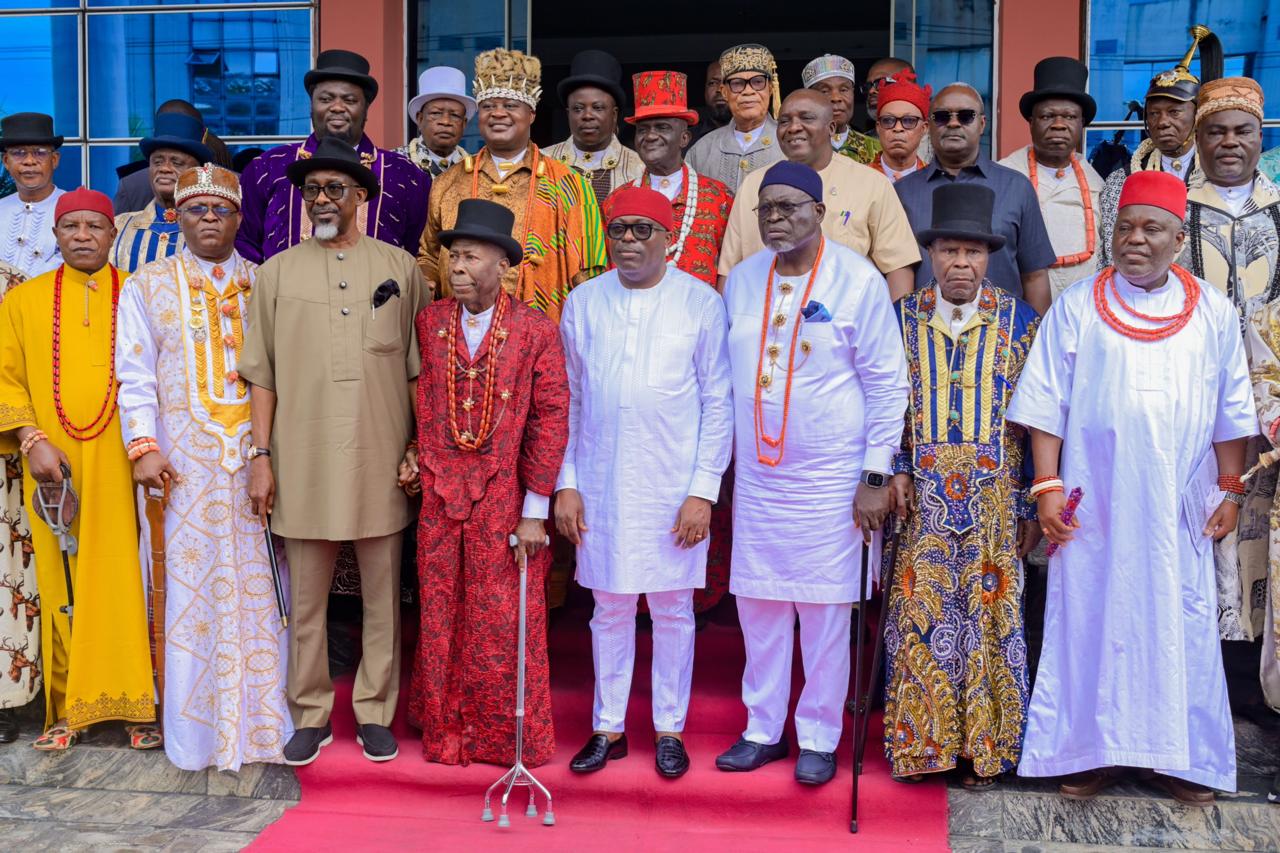
Fubara gave the charge on Wednesday while declaring open the 126th, 127th and 128th Combined Quarterly Meeting of the Rivers State Traditional Rulers Council, in Port Harcourt.
The governor said the primary function of traditional rulers is to administer justice and ensure fairness, saying their conduct must not lead to division and unmanageable crises.
“Let me therefore, request, if that is the right word to use, that please, as we are entering into this political season actively, everyone should ensure that your conduct promoted peace in your place. Your actions should not be what would lead to the division and multiple crisis that we cannot manage as a government.
“I think with that, we can all live as one and we can also continue to make this progress that we are trying with all our mind, our body and our soul, to ensure that we deliver to our dear State,” he said.
Fubara urged the royal fathers to abide by the oath and constitution they swore to before ascending their respective stools, in the interest of stability and progress of the State.
He also enjoined them to set aside individual sentiments and place the interest of Rivers State above personal considerations, noting that this principle has guided his own day-to-day governance of the State.
“I want to enjoin everyone to keep aside issues of individual sentiments and ensure that the interest of our state supersedes whatever thing that we have in our mind. This is not just what I’m saying here, it is what I’ve also practiced and displayed in my day-to-day life in the governance of our dear State,” he said.
On the appeal for improved welfare for traditional rulers, the governor clarified that the delay in actualising some of the requests they made in the past was not from the government but from the inability of the Council to put its house in order.
Fubara explained that the issue of stipends paid to the traditional rulers by the local government councils, was a statutory benefit provided for in the constitution and not what a state governor can change by mere verbal pronouncements.
He assured that he remains a man of his word and will fulfill his promises to the traditional rulers before leaving office, next year.
He reaffirmed his respect for the traditional institution as custodians of culture and the closest link to the people, thanking them for their prayers and support.
The governor urged the royal fathers to ensure that the combined quarterly meeting featured fruitful deliberations that will strengthen peace and development in the State.
Earlier, the Chairman of the Rivers State Council of Traditional Rulers and Paramount Ruler of Apara Kingdom, His Royal Majesty, Eze Chike Amadi Worlu Wodo, expressed profound gratitude to the State Government for its efforts in maintaining a cordial relationship with the traditional institution.
Wodo highlighted the importance of traditional rulers in conflict resolution, noting that their closeness to the people places them in a strategic position to mediate in disputes involving chieftaincy matters, family disputes and land ownership in their respective communities.
The royal father drew the attention of the State Government to some challenges affecting the performance of the traditional institution, particularly the lack of official utility vehicles and logistical support needed to discharge its responsibilities effectively.
He also appealed for improved monthly stipends and better welfare provisions to reflect prevailing economic realities.

The Airbus A330-200 carrying the president took off at 2:20 pm local time, yesterday.
Tinubu was seen off at the airport by the Governors of Kwara, AbdulRahman AbdulRazaq; Borno, Babagana Zulum; Kaduna, Uba Sani; Sokoto, Ahmad Aliyu; Jigawa, Umar Namadi; and Yobe, Mai Mala Buni.
Also present were the Secretary to the Government of the Federation, George Akume; the Attorney-General of the Federation and Minister of Justice, Lateef Fagbemi; and Nigeria’s Ambassador to Mexico, Reno Omokri, alongside other government officials.
Special Adviser to the President on Information and Strategy, Bayo Onanuga, had revealed this in a statement signed Wednesday titled ‘President Tinubu departs Abuja for Makkah to pray for the nation.’
According to the statement, the visit will afford the President an opportunity for spiritual reflection, devotion, and prayers for Nigeria’s peace, unity, stability, and continued progress.
“While in Makkah, President Tinubu will perform the religious rites associated with Umrah, seeking Allah’s guidance and blessings for Nigeria and its people,” the statement said.
Before departing Abuja, Tinubu commissioned some equipment acquired by the Nigerian Air Force for its operations at the Presidential Wing of the Nnamdi Azikiwe International Airport.
The President is expected to return to the country next week after completing the spiritual exercise.
Thursday’s visit to Makkah marks the second time Tinubu is performing Umrah since assuming office.
The President had previously visited the holy city in November 2023, shortly after the Saudi-African Summit held in Riyadh, where he also prayed for divine guidance in leading Nigeria.
The trip to Saudi Arabia is the latest in a series of foreign engagements by the President since he was sworn in on May 29, 2023.
Tinubu has visited more than 30 countries in over 50 unique and recurrent trips.
They include countries across Africa, Europe, Asia, the Americas, and the Middle East, including France, the United Kingdom, the United States, China, India, Germany, the United Arab Emirates, Qatar, South Africa, Kenya, Ghana, Ethiopia, Tanzania, Senegal, and several others, on a combination of bilateral, multilateral, and diplomatic assignments.
Meanwhile, Tinubu has unveiled PenCare, a national healthcare initiative designed to provide free medical services to pensioners, beginning with low-income retirees.
Tinubu, who was represented by the Secretary to the Government of the Federation, Senator George Akume, at the opening of the National Pension Week in Abuja, yesterday, said the initiative formed part of his administration’s welfare package for senior citizens.
PenCare is designed as a national retiree well-being programme aimed at improving access to essential healthcare, particularly for pensioners with limited financial resources.
In his address, themed “Pensions for All: Building a Secure Future Together,” the President said a strong pension system was both a social protection necessity and a pillar of economic transformation under the Renewed Hope Agenda.
He said the pension system could also mobilise long-term domestic savings, deepen financial markets and support productive investments.
Tinubu described pensions as an obligation to workers who had served the country, rather than a favour from the government.
“A pension is not a favour granted by Government. It is a wage earned, deferred and held in trust. It is a promise. And this Administration has resolved that the promise will be kept,” he said.
He added that the success of the pension system should be measured by the security and dignity it provided retirees, rather than the volume of funds accumulated.
“Above all, no Nigerian who has served this nation will be forgotten in retirement. Nigeria will keep faith with those who kept faith with Nigeria,” he said.
The President said his administration had taken steps to restore dignity, security and value to the Contributory Pension Scheme.
He also said he had approved a N758 billion Federal Government Pension Bond to settle accrued pension rights and strengthen the Pension Protection Fund.
“That was not an accounting exercise. It was an act of restitution to Nigerians who served their country and were made to wait for what they had earned,” Tinubu said.
Meanwhile, the Director-General of the National Pension Commission (PenCom), Omolola Oloworaran, has insisted that the June 30, 2027 deadline for pension fund administrators and custodians to complete their recapitalisation remains unchanged.
Oloworaran said the exercise was necessary to strengthen institutions responsible for safeguarding the retirement savings of millions of Nigerian workers.
“We are not changing our minds. The industry must move beyond the growth in pension assets to building institutions strong enough to safeguard the savings of millions of Nigerian workers.
“Size is what we have achieved. Strength is what we now demand,” she said.
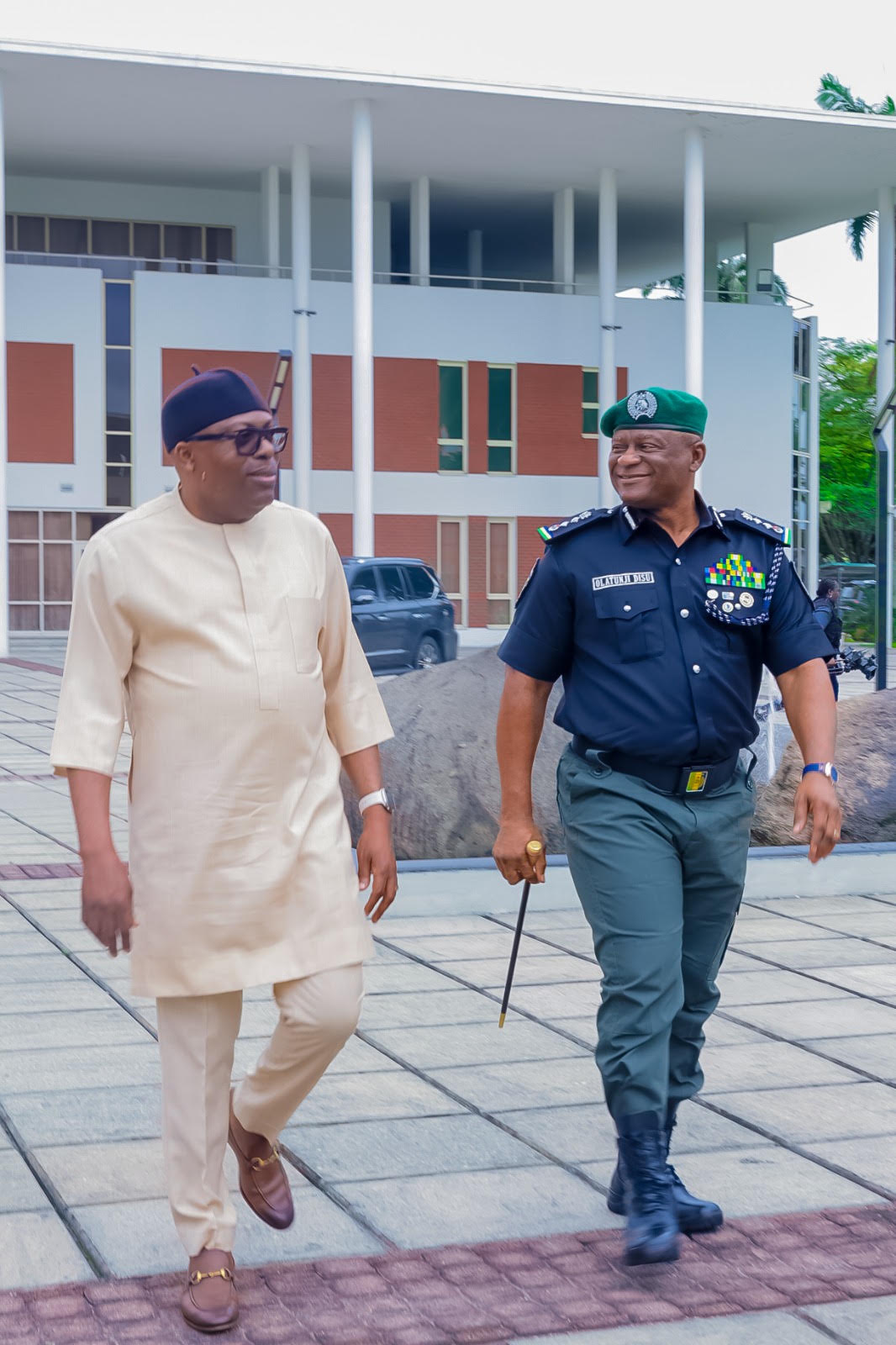
The Rivers State Government has called on stakeholders, community leaders, parents and relevant education authorities to intensify efforts to identify and enrol out-of-school children across Nigeria, stressing that every child deserves access to quality and inclusive education.
Governor Siminalayi Fubara made the call, yesterday, during the regional campaign on engaging community structures to promote the enrolment of out-of-school children and the regional flag-off of the 2026/2027 enrolment drive for southern states, held in Port Harcourt.
Represented by the Secretary to the State Government, Dr Dagogo Wokoma, Governor Fubara reaffirmed that education remains a fundamental pillar of sustainable development and emphasised the need to ensure that no child is left behind because of economic hardship, social background or other barriers to schooling.
He noted that expanding access to education was essential to promoting sustainable development, social inclusion and equal opportunities, enabling children to reach their full potential and contribute meaningfully to society.
The governor urged participating states and communities to translate their commitments into concrete and measurable actions by reaching vulnerable children, strengthening community engagement and encouraging parents and guardians to make their children’s education a priority.
He reiterated the state government’s commitment to initiatives aimed at expanding access to education, particularly for children excluded from formal schooling.
“Rivers State remains committed to supporting initiatives that expand access to inclusive and quality education, particularly for vulnerable children who may have missed the opportunity to attend formal schools,” Fubara stressed.
Also speaking, the Executive Secretary of the Universal Basic Education Commission (UBEC), Aisha Garba, described the growing number of out-of-school children as one of the major challenges confronting the education sector.
She called for a collective and collaborative approach among governments, communities, parents and other stakeholders to address the problem, stressing the need to ensure that no Nigerian child is denied the fundamental right to education.
The programme was organised by the Universal Basic Education Commission in collaboration with the Rivers State Government, as part of efforts to strengthen community participation and promote school enrolment across the southern states for the 2026/2027 academic session.
-
Rivers4 days ago
Don Seeks Repositioning Of Tech Education For Dev
-

 Education4 days ago
PAMO MEDICAL UNIVERSITY -Nullifies Arrest warrant on VC
-
Niger Delta4 days ago
PANDEF Seeks 50% Oil Derivation Allocation Increase
-

 Education4 days ago
IAUE MOVES TO END GHOST WORKERS SYNDROME AS 400 NEW NON-TEACHING STAFF UNDERGO MANDATORY ETHICS TRAINING
-

 News4 days ago
Fresh Ebola Scare As NCDC Records Two Cases
-
News4 days ago
Customs Partners EFCC, NDLEA, Others To Tackle Money Laundering, Terrorism Financing
-

 Politics4 days ago
2027: RIVERS GUBER CANDIDATES SIGN CHARTER TO PRIORITIZE CITIZENS’ DEMANDS
-
 Politics4 days ago
2027: South-East Govs Insist On Tinubu’s Re-election