Connect with us

Business

Inefficient Policies Impeding Power Sector Progress – Reps

Published

on

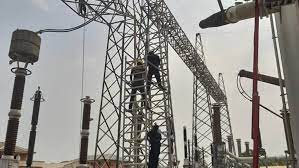
The House of Representatives Committee on Power, has attributed the crisis in the power sector to lack of efficient and dynamic policies.
The Chairman of the Committee, Rep. Magaji Aliyu, said this on Wednesday in Abuja, at the third annual general meeting of the Association of Rural Electrification Contractors of Nigeria (ARECON).
Aliyu said that the relocation of certain parastatals and agencies under the ministry of power to other ministries was an aberration and one which was causing confusion in the sector.
According to him, there must be a desired formula that ensures that irrespective of inherent politics, the Minister of Power must be allowed to drive power processes in the country without interference.
“Today, you will hear that a particular part of ministry of power has been shifted to another organisation, which I believe is an aberration of the concept.
“For example, Nigeria Bulk Electricity Trading Company, there is a tug of war, where does the organisation belongs, is it in power or is it in Ministry of Finance, there is an issue of Hydro-Power Development Authority is it going to the presidency, or is this going to power?
“I believe that there are political machinations not to allow power grow in this country.”
He said it was understandable that the sector had multi-dimensional problems which were evident in distribution, transmission and generation.
Aliyu said that the problems in the sector were enormous as Nigerians were paying for the power they did not consume, a situation he said was undesirable.
He, however debunked strongly the allegation that lawmakers interfere in the procurement process in contract awards to contractors, saying it was untrue.
Former Chairman, Mr Sam Amadi, Nigerian Electricity Regulatory Commission (NERC), said that that one of the ways to improve the sector was to promote local content law to help industrialisation to begin the manufacturing of the equipments needed.
According to him, if this is realised, it will help local manufacturers to optimise production, create wealth and jobs.
On tariffs, he said there was need for regulatory credibility and stability, adding that independent regulators help to attract more investors into the sector.
“If you set up a group like this and empower them, you can set up and use them to ensure that there is little or no project failure.”
He advised ARECON members to organise themselves to be a real trading section in the sector as was obtainable in other sectors of the economy.
Amadi, also said that as a major player in the sector, they should build their capacity to be a voice to determine how policies ensures the growth of the sector.
Chairman of ARECON, Mr Uchenna Akubuobi said that since privatisation in 2013, the sector was yet to satisfy the yearlings of electricity consumers in Nigeria.
He said that some of the factors militating against achieving power sector goals were low daily generation, weak transmission grid resulting in frequent system collapse and vandalisation of electricity infrastructure.
Others are poor funding by private investors after the take over of the acquired assets and Distribution Companies (DISCOs) incapacity to take load from transmission stations.
“ARECON is prepared to work with the government  to ensure that electricity gets to the rural communities within the shortest possible time.
“This will stem rural migration to cities and engender economic prosperity.”
He, however, urged the Federal Government to increase budgetary allocation to the Rural Electrification Agency to allow for more projects to the rural communities.
He added that a law should be enactedÎ to restrain any other government agencies from carrying out rural  electrification projects in any part of the country.

Continue Reading

Business

Cash Handouts Unproductive For Sustainable Agricultural Development – Engineer Kii

Published

on

Rivers State by its natural disposition is gifted with strategic economic advantage, particularly in  agricultural potentials and fortunes. This informs successive governments’ interest in  developing the agricultural sector, such as the School to Land Program, the Shongai Project, among several others.
The objective is to engender and leverage the sector  beyond mere subsistence practices into a full thriving economy, with the engagement and involvement of the youthful and productive population.
The Farm to Future Agro Based Training for Rivers youths by the present administration is notably one of the most pragmatic efforts of the Rivers State Government to engage the prospective creative capital of both the natural and human resources in the agricultural sector for sustainable development.
The concept, premised on the imperative of maximizing the huge agrarian prowess of the state, targets creation of sustainable livelihood for the teeming youth of the state. The project is also intended to achieve the chore needs of food sufficiency and job creation in the state.
This implies a significant deviation from the acculturised norm of expectations of financial benefits as the outcome of government programs and policies.
The tenets of the program are expressly difined in concept and practice as shown in the phases of its execution.
However, some beneficiaries of the project recently staged a protest, allegdging unpaid largesse, diversion of funds and perceived slighting by the Rivers State Ministry of agriculture. The said protest has stirred up concerns among stakeholders about how people view  government policies.
Many see the protest  as an attempt to create tension around the program and sabotage its original objectives.
Stakeholders and commentators are of the view that the Rivers State is in dire need of development in every critical sector, as such the  Ministry of Agriculture and its partners should be given the benefit of the doubt to implement the project to its logical conclusion without being hauled with accusations.
The former Commissioner for Agriculture, Engineer Victor Kii who was at the fore of driving the program has in a press statement debunked the allegations and sued for calm, restraint and understanding. Engineer Kii assured the participants that the empowerment phase will be implemented as soon as administrative normalcy is restored.
He commended the participants for their commitment and discipline during the training and urged them to uphold the norms of the program rather than misrepresenting its intentions.
Some pundits who commented on the recent development decried the fact that many people  still hold on to the notion that  incentives billed to create sustainable impact through skills based programs, should be given out as  largess, without adroit supervision of its utility function. This practice  has however created a culture of economic doldrum, dependency and servitude in the past.
Thus the idea of seen the Rivers Farm to Future project  as a mere quixotic experiment for cash benefits  without achieving set goals is counter productive. Such opportunistic thinking have stunted government efforts  over the years in achieving long term objectives of development.
As disclosed by the former commissioner for Agriculture in his detailed explanation, the Farm to Future project was strategically designed to address this culpable deficit in institutional planning and consolidation of results.
The former commissioner gave an  explicit description of the nexus of operation of the program.
As revealed by him;  ” The program is a strategic intervention to equip young people in Rivers with practical skills and to nurture a new generation of agricultural entrepreneurs. 500 beneficiaries received intensive agri business training in the first phase.”
 He pointed out that the program was conceived and designed in line with global best practices which de emphasizes indiscriminate cash handouts for beneficiaries. Rather it promotes practical engagements in agricultural activities and business initiatives.
At the end of the training in February, beneficiaries were encouraged either individually or in cooperative clusters to identify value chain for establishment of viable businesses.
They were also asked to produce structured business proposals for perusal and review by the ministry of agriculture and appointed consultants, after which successful proposals would be forwarded to the Bank of Agriculture with Rivers State Government providing guarantees.
The strategies for implementation include field inspections and evaluation for beneficiaries who had already commenced practical activities in identified locations.
The approach was to discourage the commonplace ideology of diverting funds meant for specific projects for unrelated purposes, thereby undermining the conscious exploration of creative potentials into long term benefits.
The process was however temporary interrupted by the dissolution of the Rivers State Executive Council and the ongoing renovation of the Rivers State Secretariat complex but the profound optimism and positive expectations that are the hallmark of the project remains sacrosanct.
Engineer Kii assures.
By: Beemene Taneh
Continue Reading

Business

NEM Insurance celebrates IWD 2026 with pledge to sustain support for women endeavour

Published

on

NEM Insurance Plc – the number one motor insurance provider in Nigeria, in a vibrant commemoration of the 2026 International Women’s Day (IWD), has reaffirmed its dedication to fostering an inclusive environment that empowers women to excel in their endeavours.
Speaking at the corporate headquarters in Lagos, the Chairman of NEM Insurance Plc, Tope Smart, stated that the company remains resolute in its mission to support women affairs, noting that their contributions are vital to the sustainability of the insurance industry.
Aligning with the global theme “Give To Gain,” Smart highlighted that the insurance provider views gender diversity not just as a corporate social responsibility, but as a core driver of innovation and high-level performance.
“Our commitment to female professionals at NEM Insurance is unwavering,” Smart declared. “We recognize that by ‘giving’ women the right tools, mentorship, and leadership platforms, the industry ‘gains’ unparalleled dedication and diverse perspectives that move the needle of progress.”
The multiple award winning underwriting company and one of the top three leading general insurance business companies in Nigeria, has remained focused in promoting and supporting women affairs.
Adding her voice to the celebration, the General Manager, Corporate Services, Mrs. Mojisola Teluwo, emphasized that the company’s gender-focused initiatives, such as the “She Means Business” contest, represent a practical approach to inspiring inclusion.
Mrs. Teluwo maintained that supporting women-led initiatives is a strategic investment in the fabric of society, rather than just a philanthropic gesture.
“At NEM Insurance, we believe that when a woman thrives, a family thrives, and the nation prospers,” Mrs. Teluwo stated. “The ‘She Means Business’ initiative is our way of moving beyond mere applause for women toward active, tangible support. We are proud to provide the financial catalyst needed for visionary women to turn their business aspirations into reality.”
To mark the occasion, the leadership outlined several key pillars of support:
Leadership Development: Targeted training programs to prepare more women for executive-level decision-making.
Inclusive Work Culture: Sustaining a workplace environment that balances professional growth with personal well-being.
Economic Catalyst: Providing grants and professional frameworks to help female entrepreneurs upscale their operations.
The event featured a series of internal sessions where female staff engaged in mentorship dialogues, focusing on career advancement within the evolving landscape of the Nigerian insurance sector and paint and Sip, which provided an opportunity for women to showcase their creativity.
Smart concluded by urging other industry stakeholders to prioritize the development of female talent, asserting that a more inclusive sector is a more prosperous one for all Nigerians.
Continue Reading

Business

Nigeria: Profit-Taking Persists as NGX Dips Marginally by 0.2%

Published

on

Trading on the Nigerian Exchange (NGX) closed slightly lower on Wednesday as profit-taking in selected equities continued to weigh on the market, dragging key performance indicators into negative territory.
Market data showed that the benchmark All-Share Index (ASI) declined by 0.09 per cent to close at 195,898.53 points, compared with the previous session’s level, as investors booked profits in some large and mid-cap stocks.
Consequently, market capitalisation shed N107.57 billion, settling at N125.75 trillion. Despite the marginal decline, the market still maintained positive returns, with the month-to-date gain standing at 1.6 per cent, while the year-to-date return moderated to 25.89 per cent.
The downturn was largely driven by losses recorded in stocks such as Presco Plc and UAC of Nigeria Plc, both of which declined by 10 per cent, alongside Dangote Cement Plc, which slipped by 0.6 per cent.
Market breadth closed negative, reflecting bearish investor sentiment, as 40 stocks recorded losses compared with 29 gainers, translating to a market breadth ratio of 0.7 times.
Among the top gainers were NGX Group Plc and Premier Paints Plc, which appreciated by 10 per cent and 9.9 per cent respectively. Other notable gainers included Omatek Ventures Plc, Prestige Assurance Plc and HMC Allied Plc.
On the losers’ chart, Presco Plc and UAC of Nigeria Plc led the decline with 10 per cent losses each, followed by Morison Industries Plc, LivingTrust Mortgage Bank Plc and SCOA Nigeria Plc.
Sectoral performance was mixed, with the Industrial Goods index leading the gainers after advancing by 1.42 per cent, while the Banking index recorded a marginal gain of 0.04 per cent.
Conversely, the Commodities sector topped the laggards, declining by 1.30 per cent. The Insurance index fell by 0.44 per cent, the Consumer Goods index dipped by 0.43 per cent, while the Oil and Gas index edged down by 0.06 per cent.
Activity level on the exchange weakened as investors traded a total of 671.27 million shares valued at N26.13 billion in 58,792 deals.
This represents a decline of 8.61 per cent in volume, 5.18 per cent in value and 9.31 per cent in the number of transactions compared with the previous trading session.
Wema Bank Plc emerged as the most actively traded stock by volume and value, accounting for 106.36 million shares worth N2.75 billion.
Analysts said the cautious mood in the market reflects continued portfolio rebalancing by investors following the strong rally recorded earlier in the year.
They noted that trading may remain mixed in the near term as investors react to corporate earnings releases and macroeconomic development.
Continue Reading

Trending