
News
Resources To Tackle Unemployment Buried In Ground, Osinbajo Claims

The Vice President, Prof Yemi Osinbajo, yesterday, lamented that resources that should be used to tackle unemployment in the country were buried in the ground in different parts of the country.
Osinbajo said unless the country gets the management of its solid mineral resources right, it would continue living in the terrible paradox of suffering in the midst of plenty.
The Vice President stated that during the maiden edition of the strategic engagement on sustainable mining with the theme, “Resurrecting Our Buried Prosperity”.
According to him, “So buried in the ground in various parts of Nigeria are riches that could ensure that no Nigerian is unemployed, underfed, or neglected.
“And this is not mere speculation because, before the discovery of oil, Nigeria developed its infrastructure, roads, rail, dams, provided free education in the western region for example, from the proceeds of minerals, agriculture and taxes.
“But with the discovery of oil, these incredible riches have remained buried in the ground for decades. In many parts of the country, you find illegal miners with poor equipment essentially scraping the surface of these deposits.
“Some better-equipped operators are able to do more, but they largely exploit cheap labour, and pay next to nothing in taxes or royalties, and cause environmental damage that is never remedied.
“It is clear that unless we get the management of our solid mineral resources right, we would continue living in the terrible paradox of suffering in the midst of plenty. The problems are numerous but solvable.
“The principal issue is that of the challenges of implementing the regulatory framework. While the Ministry of Mines and Steel has the legislative mandate to regulate mining in the country, many states and local governments have embarked on the imposition of their own rules and regulations on miners in their states, including issuance of Registration Permits, Community Development Agreements (CDA) and Memorandum of Understanding (MoU) on miners.
“Some state governments, in a bid to shore up their revenues, impose illegal fees, taxes, and levies on foreign and local licensed mining companies and operators.”
Osinbajo said the Federal Government required the cooperation of states, council areas and mining communities, for the mining sector to become adequately beneficial to Nigeria.
He also noted that Nigeria must put an end to the culture of exporting its raw materials, start maximising the advantages of refining raw products and exporting products with value added as this has more to offer in terms of job creation and others.
He submitted that the Federal Government would not be able to effectively regulate mining activities in the country without the active participation of the state and local council structures, explaining further that the centre must also ensure that appropriate incentives go back to the sources.
He emphasized the need for the Federal Government to ensure that mining communities receive adequate attention, both for residents and for the environment around the communities.
He said, “Mining revenues go to the Federation Account and is shared between the Federal Government, states and local governments. States where resources come from get 13% derivation in addition to their share.
“The Federal Government cannot effectively regulate mining without actively, and deliberately working with states, local governments and mineral-producing communities.
“The Federal Government, states and local government have to jointly develop working arrangements to ensure that mining is attractive to investors, profitable for states and local governments, not just from proceeds but also from personal income tax paid to states by mine workers and staff of mining companies.
“The communities where mines are located must also have some direct benefits aside from jobs for their residents. We must find a formula for compensating the communities for environmental degradation and erosion.
“There must also be a framework for ensuring that environmental degradation is remedied.
“We must discourage the export of raw minerals. Refining, processing, or beneficiation is the only real way to maximize our mineral wealth and create good-paying jobs and opportunities for our people.”
He noted that Nigeria was already globally a leading producer of tin, columbite and coal as of 1940.
He noted that potential coal reserves in the country are currently estimated to be as high as 3billion tonnes, adding that “much of our coal is high-grade clean and bituminous with a low sulphur and ash content.
“Even farther back in 1913, gold in commercial quantities had already been found in parts of Northern Nigeria and what is now Osun State. Bitumen was discovered as far back as 1900 mostly in the South-West Zone, the bitumen belt covering what are now Ondo, Ogun, Lagos, and Edo states and today with deposits in excess of 42billion tons we have the second-largest bitumen deposit in the world and almost twice our oil reserves.
“How about iron ore? We have the 12th largest iron ore deposit in the world, more than three billion tons. Besides, the Nigerian Geological Survey Agency (NGSA) confirms that Nigeria has over 44 mineral deposits in commercial quantities in over 500 locations across the 36 states and Federal Capital Territory of Nigeria. These minerals range from industrial and energy minerals, such as iron ore and coal, to gemstones, including sapphires, rubies, and emeralds.”
He, however, regretted that with the discovery of oil, these incredible riches have remained buried in the ground for decades.
“In many parts of the country, you find illegal miners with poor equipment essentially scraping the surface of these deposits. Some better-equipped operators are able to do more, but they largely exploit cheap labour, and pay next to nothing in taxes or royalties, and cause environmental damage that is never remedied.”
The Vice President also regretted frequent arrests and harassment of licensed miners and their workers, and closures of mining sites as a result of taxes enforcement by states only disincentive prospective investors in the sector and invariably jeopardize the efforts of the government to deepen the mining industry in Nigeria.
“There is no way this will ever benefit the majority of our people. Then there are the huge security concerns that always develop in the struggle for control of mineral resources in poorly regulated, unregulated, or ungoverned spaces. Almost invariably, these situations lead to criminal activities and particularly, the proliferation of weapons and armed groups. This is true historically and more evident now.
“On the African continent, we have ample examples of how resource extraction can trigger an increase in criminality. Here in Nigeria, armed banditry hiring and equipping of armed groups by illegal but powerful mining concerns in many resources-rich areas is clearly fuelled by the chaotic regulatory environment.
“It is for these reasons that this strategic engagement with the leadership of the 774 local governments is critical. It is apt and timely, especially as the Federal government through the Ministry of Mines and Steel seeks to fully implement its robust and wide-ranging remit in policy and legislation.
“This engagement will certainly help in explaining the regulatory framework to the governments at the community level where most of the mining activities take place. It will enable the ministry and other stakeholders to get direct feedback from the local government authorities and those who have to deal with these issues daily.
“But where are we today? In 2016, the Ministry of Mines and Steel Development in collaboration with industry stakeholders formulated the Roadmap for the Growth and Development of the Nigerian Mining Sector Industry. The road map addresses some of the tensions between the Federal Government and sub-national entities in relation to mining.
“The roadmap which identifies partnership with mining communities as one of the ‘critical levers of success’ states that ‘success in Nigerian mining requires partnership across multiple communities, stakeholders and institutions’ and also stresses that ‘the role of state governments as both co-investors and sector champions is critical’.”
It further asserts that “a sustainable growth model” for the sector can be found “only through government innovations and partner action e.g. community engagement mechanisms, shared investment and co-creation of opportunities.
“Section 19 of the Nigerian Mines and Minerals Act establishes the Minerals Resources and Environmental Management Committee (MIREMCO). In each state which is composed of representatives of the Federal, State, and Local Governments and is designed to serve as a platform for fostering synergy in mining operations across all tiers of government.
“Consequently, the Act accords communities of the status of co-investors in the development of mineral assets. The Minerals Resources and Environmental Management Committees are important in bringing order, fairness, inclusion, and equity to mining and its value chains.
“Mr. President has also mandated the Ministry of Mines and Steel Development (MMSD) to prioritize the orderly and efficient development of seven strategic minerals in the Mining Roadmap namely Coal, Bitumen, Limestone, Iron Ore, Barites, Gold, and Lead/Zinc ore to support local industries and for export of processed mineral products”, he explained.
He suggested that the ministry should lead the efforts for improved communication and information sharing among the tiers of government especially on the provisions of the Minerals & Mining Act, 2007 and its ancillary regulations of 2011.
In his remarks, the Minister of Mines and Steel Development, Olamilekan Adegbite, stated that the ministry was building two gold refineries in the country to increase the value of gold for the benefit of stakeholders.
Adegbite added that gold miners would be linked to formal markets through licensed precious metal buying centres.
He explained: “Through the ongoing Presidential Artisanal Gold Mining Initiative (PAGMI), we are organising, formalising, and equipping artisanal and small gold miners in Kaduna, Kebbi, Osun, Niger, Ebonyi, Sokoto, Gombe, and Ekiti.
“Miners of gold and other metals would be linked to formal markets through licensed precious metals buying centres. One of such initiatives was the recently launched Dukia-Heritage Bank buying centre.
“Two gold refineries, Kian Smith and Dukia Gold and Precious Metals Refining Company Limited, are currently being built to increase the value of gold in the country for the benefit of all stakeholders.”


News
Rivers DPOs Receive Awards For Outstanding Performance In Crime Prevention …As Students, Media Group Honour CSP Worgu, CSP Yusuf

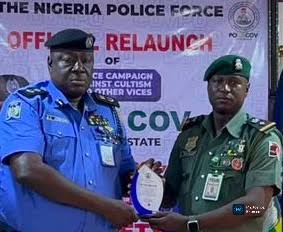
The beneficiaries are the DPO of Afam Police Division, CSP Endurance Worgu and his counterpart at Oyigbo Police Division, CSP Bello Yusuf.
CSP Worgu was honoured by a group of students under the aegis of Rivers State Graduate Students Associations for what they described as his commitment and outstanding performance in the discharge of his duties.
The students, led by Chidi John Enyie, Esq. said CSP Worgu was selected based on his track record and status as one of the longest-serving young DPOs of Rivers State origin.
According to the group, CSP Worgu has made significant contributions to the protection of lives and property in the area since assuming office following the #EndSARS period.
The students said they were particularly impressed by the improvement in community-police relations under his leadership, noting that professionalism had remained a key feature of his service.
Enyie represented by Comrade Briggs Soku, said the students community was pleased to identify with a Rivers indigene who had distinguished himself in the police force.
He said the students considered it necessary to encourage and celebrate CSP Worgu because of his achievements as a young Rivers man excelling in a profession that many people from the state were often reluctant to join.
Receiving the award at his office in Afam, CSP Worgu expressed gratitude to God and the students for finding him worthy of the honour.
The DPO said the recognition had boosted his morale and encouraged him to sustain his efforts towards maintaining peace and security in the area.
He said he least expected the honour, particularly because it came from the students, adding that the recognition would further motivate him to serve the people better.
CSP Worgu assured residents of Afam that the police would sustain the existing peace in the area.
He appealed to members of the public to support the police by providing credible and timely information, stressing that useful information from residents would make the job of security personnel easier.
Meanwhile, the Ikwerre/Etche Media Association has also honoured the DPO of Oyigbo Police Division, CSP Bello Yusuf, for his efforts in tackling criminal activities in the area.
The media group presented the award following the swift tracking and arrest of five suspected kidnappers who had allegedly terrorised residents of the Kom-Kom axis and other parts of Oyigbo.
The group commended CSP Bello for what it described as his determined efforts to restore confidence and security in the affected communities, particularly Kom-Kom and Obeama.
According to the group, the arrest of the suspects demonstrated the DPO’s commitment to tackling criminality and safeguarding residents.
The media association said residents had received the development with relief, noting that the police action had sent a strong message to criminal elements operating in the area.
Responding, CSP Yusuf appreciated the group for the recognition and reaffirmed that there would be no room for criminality in Oyigbo.
He also commended the media for its role in disseminating credible information to the public, saying the media had remained supportive of the police in the fight against crime.
CSP Yusuf warned criminal elements operating in Oyigbo to leave the area or be prepared to face the full weight of the law.
He assured residents that the police would continue to pursue criminals and work to dismantle their hideouts, regardless of where they might be operating.
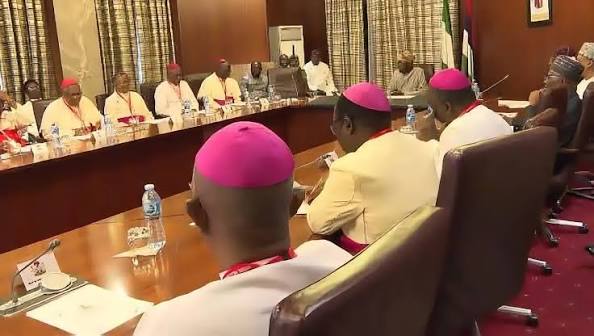
International President of the forum, Archbishop Lucky Aroh, disclosed this during the ordination and consecration of three new Bishops, as well as an award ceremony held in Port Harcourt.
Aroh said the performance of the APC-led Federal Government had endeared the party to the organisation, prompting the forum to declare its support for President Tinubu and other APC candidates in Rivers State.
He said the forum would support all APC candidates in the state during the 2027 elections and urged Nigerians to vote for the party.
Aroh, who is also the General Overseer of Caring Peoples Church, Port Harcourt, charged the newly consecrated Bishops to see their new positions as a great responsibility and dedicate themselves to the advancement of the kingdom of God.
He cautioned them against conduct capable of bringing their offices into disrepute, stressing that their activities would be closely watched by members of the public.
“As Bishops, the eyes of the public are on your activities. You must therefore conduct yourselves in a manner worthy of your calling,” he said.
Also speaking, the International Coordinator of the forum, Bishop Saint Robinson, urged the newly consecrated Bishops to work diligently towards winning souls for the kingdom of God.
Robinson, who was the guest speaker at the event, stressed that the activities of Bishops must at all times be guided by godly principles.
He also called on members of the church to support and cooperate with the newly consecrated Bishops in the discharge of their responsibilities.
The Secretary of the College, Apostle Elizabeth Ayadi Abaye, said the organisation was established to advance the kingdom of God and promote spiritual development.
According to her, the forum has organised several crusades, conferences, prayer meetings, ordinations, consecrations, enthronements, empowerment programmes and other spiritual development activities across the country as part of efforts to win souls for Christ.
Abaye said the organisation has members across the world and disclosed that more programmes had been scheduled to promote the spiritual development and wellbeing of humanity.
The three Bishops consecrated at the ceremony were Prince Alban Chike, Testimony Omenihu Shedrach and Prince Ifemena.
Among those honoured at the event were the Chairman of the Community Development Committee (CDC), Abali Community, Port Harcourt City Local Government Area, Manuchimso Prince Lemmy Wopara, and Clifford Oko Jaja, Coordinator of the 5,000 House-to-House for President Tinubu.
By: John Bibor
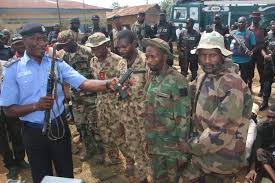
The State Commissioner of Police, CP Olugbenga Adepoju, disclosed this in Port Harcourt, recently during a press briefing at the Command Headquarters, where he said the arrests formed part of the operational achievements recorded by the Command between June and August 2026.
Adepoju said Atausi was arrested on August 10 by police operatives along Ada George, Port Harcourt, while dressed in military uniform and driving a Toyota Hilux painted in Army colours.
The Commissioner said investigation revealed that Atausi was not a member of the Armed Forces, adding that he was suspected to be a serial car snatcher, with three suspected stolen vehicles recovered from him.
He said the recovered vehicles included three Toyota Hilux vehicles without registration numbers and a Toyota Corona Premio with registration number BNY 380 ES, noting that the chassis and engine numbers of the vehicles had allegedly been tampered with.
Adepoju added that an axe and military accoutrements were also recovered from Atausi, as investigation continued into the circumstances surrounding the vehicles and other items recovered from him.
On the June 29 attack on police officers at Aluu Division, the Commissioner said three members of the gang allegedly responsible for the incident had been arrested by operatives of the Violent Crime Response Unit, VCRU-AKU.
The suspects, identified as Maduabuchi Emeka, 34, alleged gang leader; Doctor Chinedu Owhor, 42, and Kamachi Joe, 28, alleged armourer, reportedly led operatives to their hideout at Omagwa where two AK-47 rifles stolen during the attack were recovered.
Adepoju recalled that two police officers were killed during the Aluu attack, while others were wounded and one officer had his leg amputated, stressing that efforts were ongoing to apprehend the fourth suspect.
On kidnapping, the Commissioner said five members of a suspected kidnapping syndicate were arrested in Oyigbo Local Government Area, adding that they allegedly confessed to operations in Kom-Kom, Railway, Obeama and Afam communities.
He said two other suspects from the same network, Anele Ogbogu, 35, alleged to be the gang’s armourer, and Kenneth Eke, 38, were arrested on July 27, with one AK-47 rifle and one SMG rifle recovered.
The Commissioner further disclosed the arrest of suspects in connection with alleged firearm offences, armed robbery, cultism and one-chance robbery, with firearms, ammunition and other exhibits recovered during the operations.
Adepoju assured residents that the Command would sustain intelligence-led, proactive and community-oriented policing in collaboration with other security agencies, while urging members of the public to continue providing credible information that would assist the police in combating crime across Rivers State.
By; King Onunwor
-

 News4 days ago
RSG Targets Nine Million Residents in Mosquito Net Distribution Campaign
-

 Oil & Energy4 days ago
Aiyedatiwa Signs New Electricity Bill
-

 Oil & Energy4 days ago
NLNG Commissions Research And Innovation Centre In RSU
-

 Maritime4 days ago
Marine Minister Commends President Tinubu On NPERA Bill Assent
-

 News4 days ago
KenPoly Holds Eight Convocations, August 29
-

 News4 days ago
RSG Begins Another Phase of Projects Commissioning Today
-

 News4 days ago
RMAFC Completes Revenue Sharing Review, Proposes New Pay
-

 Maritime4 days ago
NAGAFF Petitions IGP Over Alleged Maritime Police Harassment