
Politics
Previewing Nigeria’s New Democracy Day

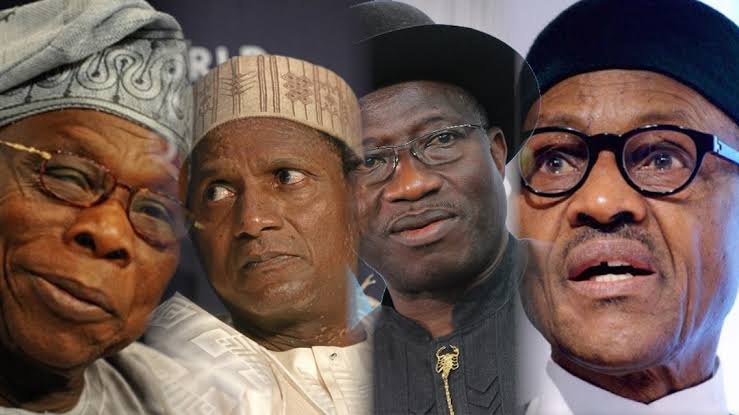
Since 1960, Nigeria has been on a faltering democratic journey. Some believe that the series of military intervention into the political landscape of the country, the first occurring barely six years after Independence, has dealt a big blow to democracy in the country, influencing democratic practices, maintenance of peace and tranquility and Nigeria’s democratic trajectory.
The democratic journey was truncated many times (1966 – 1979, 1979 – 1983, 1983 – 1985, 1985 – 1993, 1993 – 1999) but the journey continued in 1999 with the election of General Olusegun Obasanjo (rtd) as civilian president of the country heralding the current Fourth Republic. Remarkably, the military handed over to the newly elected leader on May 29, 1999.
The presidential elections of June 12, 1993 which was widely adjudged to be the fairest and freest election in the country’s history was annulled by the then leader of the military junta, General Ibrahim Babangida and the acclaimed winner, late Chief Moshood Abiola, was never declared. Rather, he was arrested and imprisoned for declaring himself the winner and subsequently died in prison.
It is now 22 years into the Fourth Republic and the journey is still sauntering. To commemorate the democratic election of Abiola, the federal administration of President Muhammadu Buhari had, in 2018, declared June 12 Nigeria’s new Democracy Day as against the former date of May 29, which marks the day the military handed over power to an elected civilian government in 1999, symbolising the beginning of the longest continuous civilian rule since Nigeria’s Independence from colonial rule in 1960, and ending the many decades of military rule in the country.
Buhari’s action was in recognition of the fact that Abiola actually won the 1993 presidential election and was therefore entitled to be seen as such, even if post-humously. The late Aare Onakakanfo of Yorubaland was also conferred with the national honour of Grand Commander of the Federal Republic (GCFR) in addition to having the national stadium in Abuja named after him.
The brief history is important in letting us know how the journey started and how it has been. But most importantly, it should help us assess the success of the movement so far and chart a way forward. To do so, we may need to ask the basic question, ”What is Democracy?” Of course, there are millions of answers to the question but I like the definition by an American Sociologist, Larry Diamond. He described democracy as a system of government with four key elements: i) A system for choosing and replacing the government through free and fair elections; ii) Active participation of the people, as citizens, in politics and civic life; iii) Protection of the human rights of all citizens; and iv) A rule of law in which the laws and procedures apply equally to all citizens.
Can we comfortably say that these key elements can be found in the democratic practice in Nigeria? Can elections in the country be considered to be free and fair? How about the killings, shootings, ballot box snatching, rigging and other crimes associated with elections in the country? In a truly democratic nation, the citizens participate in the election process, convinced that their votes will count and that, through the ballot, the necessary changes will be made in the society. Is that the case with Nigeria?
Another feature of democracy, according to Diamond, is protection of human rights of all citizens. Chapter five of the 1999 Constitution of Nigeria deals with the fundamental human rights of citizens vis a vis the right to life, right to dignity of human person, right to freedom of expression and the Press, right to peaceful assembly, right to freedom of movement and many more. Are Nigerian citizens enjoying these rights? Last year, some Nigerian youth organised a protest against police brutality and other ills in the land. The #EndSARS protest was peaceful until the government allegedly infiltrated the groups with political thugs, leading to violence, massive destruction, looting, killing and many more.
A similar scenario played out a few weeks ago in Kaduna State during the just-suspended Labour strike. The workers embarking on a legitimate protest over some scores they have to settle with the state government were seen being stoned by miscreants allegedly hired by the government all in a bid to shut the people up and put an end to the protest. The president of the Nigeria Labour Congress, Ayuba Waba, was even declared wanted by the Kaduna State Government. What about the ongoing feud between the social media giant, Twitter and the federal government which resulted in the ban of the microblogging platform in the country irrespective of the effect of such action on the citizens?
The issue of the protection of lives and properties of the citizens is also a big one. Human lives don’t seem to matter anymore in the country. People are being killed every day by bandits, killer herdsmen, unknown gunmen in different parts of the country, yet all the tiers of government whose primary responsibility is to protect the lives of the citizens appear helpless. Politics and other selfish interests seem more important to them than the safety and welfare of the people.
The issue of rule of law is a no-go area because, in Nigeria, it appears there is a set of rules for some people and another set for the rest people. Some have argued that the principle of rule of law, equality before the law, and separation has taken the back stage in the country. And I think this argument has some merit especially in view of the recent happenings in the country – the invasion of homes of judges, those in authority choosing the court ruling to obey and follow, the age-long denial of financial autonomy to the Judiciary which is the crux of the matter in the on-going judiciary workers strike and many more.
The truth is that democracy in the country which is currently under a serious threat can only be saved and entrenched when we as a people and government in Nigeria deliberately strive to adhere to the tenets of the popular government. The United States of America and other exemplary democratic countries in the world did not get to where they are today if rule of law and other principles that make democratic government tick and gratifying were jettisoned.
Suffice it to say that as Diamond’s definition of democracy indicates, the citizens have a big role to play in a democracy. They are expected to participate actively in politics and civil life. As citizens, we cannot continue to sit on the fence and allow a handful of people to determine our fate. The media, civil societies groups, various arms of government, academic institutions, trade unions, the youth, students, faith-based and traditional institutions all have roles to play in making our fragile democracy strong. Most importantly, we have to carry out our obligations as citizens. As John Kay admonished, “The people who own the country ought to govern it”.
Also Fernando Cardoso posits, “Democracy is not just a question of having a vote. It consists of strengthening each citizen’s possibility and capacity to participate in the deliberations involved in life in society”.
Over the years, Democracy Day had been dominated by events marking the inauguration of the President and state governors during which they recount their yearly milestone achievements. Other than lectures, talk shows and street processions by pro-democracy groups which are often very few and far between, there is hardly anything in the form of celebrating attainments in democratic governance.
Being the first time the Day will be celebrated separate from the May 29 Inauguration Day, it is expected that more colour will be added to the occasion. But again, that is if the current security situation and the attendant movement restrictions in many parts of Nigeria permit.
By: Calista Ezeaku



The commission announced the extension in a statement issued on Saturday and signed by the National Commissioner and Chairman of its Information and Voter Education Committee, Mohammed Haruna.
According to INEC, the decision followed appeals by political parties for additional time to complete the submission process through the dedicated online portal.
“The submission window, which according to the revised Timetable and Schedule of Activities for the General Election was originally scheduled to close on Saturday, 8th August, 2026, has been extended to Tuesday, 11th August, 2026,” the commission said.
In a a related development, INEC announced the suspension of PVC collection in Osun State ahead of the August 15 governorship election.
The commission said voters who applied for replacement of lost, damaged or defaced Permanent Voter Cards would have until midnight on Sunday, August 9, to print downloadable copies of their cards.
The electoral body explained that the deadline was necessary to enable it compile data on downloaded PVCs and produce final statistics on the total number of cards collected ahead of the election.
INEC said PVC collection in Osun commenced at the Registration Area level from July 22 to 28, 2026, but was extended to July 31 following complaints about large crowds and difficulties experienced by voters at collection centres.
The exercise subsequently moved to the local government level and ran from August 1 to 7.
The commission also disclosed that replacement downloadable PVCs had been made available to voters in Odo-Otin and Ife Central Local Government Areas following the theft of cards during attacks on the two collection centres.
It stressed that the stolen cards could not be used to vote.
INEC reassured Osun residents of its preparedness for the August 15 governorship election.
“The commission reiterates that the stolen cards cannot be used to vote.
“INEC reassures the people of Osun State of its readiness to conduct a free, fair, credible and inclusive governorship election on 15th August, 2026,” the statement said.
The commission said the deadline, initially set for Saturday, 8 August, has been extended to Tuesday, 11 August 2026, following appeals from political parties for more time.
INEC also announced that the window for voters who applied to replace lost, damaged or defaced PVCs to download their replacement cards will close at midnight on Sunday, 9 August.
The move is to enable the commission compile final PVC collection figures ahead of the 15 August Osun governorship election.
INEC said replacement downloadable PVCs have also been provided to affected voters in Odo-Otin and Ife Central Local Government Areas after hoodlums carted away cards from two collection centres, stressing that the stolen cards cannot be used to vote.
The commission reaffirmed its readiness to conduct a free, fair, credible and inclusive election in Osun State.
Gov. Kefas made the remarks over the weekend at the Federal Medical Centre (FMC), Jalingo, during the flag-off of the second phase of the Renewed Hope Medical Outreach in Taraba State, organised as part of activities marking Prof. Yilwatda’s 58th birthday.
The governor commended Prof. Yilwatda for choosing to mark his birthday by providing medical care to people in need.
“What Professor Nentawe did is a powerful demonstration of what leadership should be,” Gov. Kefas said.
He assured that his administration would continue to support initiatives that complement government efforts to improve healthcare delivery and the wellbeing of residents.
Speaking at the event, Prof. Yilwatda called on Nigerian leaders to embrace the culture of giving and use their positions to touch the lives of the less privileged.
He said his decision to celebrate his 58th birthday in Taraba State was deliberate and informed by the needs of underserved communities, particularly people who face difficulties accessing healthcare because of distance and financial constraints.
According to him, the intervention followed a needs assessment and was extended across the three senatorial districts of the state.
He said the exercise commenced on August 3 at Takum General Hospital and covered the Federal University Teaching Hospital, Wukari; First Referral Hospital, Sunkani, Ardo-Kola Local Government Area; General Hospital, Bali; General Hospital, Gembu; and FMC Jalingo.
Prof. Yilwatda said the intervention provided medical services to thousands of beneficiaries, including people who required surgical procedures.
He said sustainable national development could only be achieved when strong institutions placed Nigerians at the centre of development.
“Leadership is about service,” he said, urging political and public leaders to make giving back to society an important part of their responsibilities.
He reaffirmed his commitment to serving Nigeria and its people, saying his personal vision was to make every day of his life useful to humanity.
“Every day that I live, the vision is: let it be useful to humanity,” he said.
The Taraba State Commissioner for Health, Dr. Bordiya Buma, commended the initiative, saying it was consistent with the Renewed Hope agenda and efforts to strengthen healthcare delivery in the state.
Dr Buma said the second phase followed the successful completion of the first phase, which was conducted simultaneously in six local government areas, with two LGAs selected from each of the three senatorial districts.
According to him, more than 10,000 patients were attended to during the first phase, including people with medical and surgical conditions.
He disclosed that 327 general surgeries, 71 eye surgeries and 575 dental procedures were carried out during the exercise.
The commissioner expressed appreciation to President Bola Tinubu for the Renewed Hope Medical Outreach and thanked Prof. Yilwatda for supporting the initiative and choosing Taraba State as a beneficiary.
The Minister of Health and Social Welfare, Prof. Muhammad Ali Pate, also commended Prof. Yilwatda for choosing Taraba State to mark his 58th birthday through a medical outreach.
Prof. Pate said making healthcare the centrepiece of the birthday celebration was significant because health affects everyone.
-

 News3 days ago
RSG Targets Nine Million Residents in Mosquito Net Distribution Campaign
-

 Oil & Energy3 days ago
Aiyedatiwa Signs New Electricity Bill
-

 Oil & Energy3 days ago
NLNG Commissions Research And Innovation Centre In RSU
-

 Maritime3 days ago
Marine Minister Commends President Tinubu On NPERA Bill Assent
-

 News3 days ago
KenPoly Holds Eight Convocations, August 29
-

 News3 days ago
RSG Begins Another Phase of Projects Commissioning Today
-

 News3 days ago
RMAFC Completes Revenue Sharing Review, Proposes New Pay
-

 Maritime3 days ago
NAGAFF Petitions IGP Over Alleged Maritime Police Harassment