
Nation
Afenifere Faults Buhari’s Shoot-At-Sight Order In S’East


Apex Yoruba association, Afenifere, has described the shoot-on-sight order given to soldiers in the South-East by President Muhammadu Buhari as a move that would further threaten the unity and ruptured peace in the country.
The order, which was given to the soldiers who are predominantly Northerners without first exploring the option of dialogue, the association maintained, had further fuelled the suspicion that Buhari did not consider the life of another ethnic group sacred but that of Fulani, his kinsmen.
The leader of Afenifere, Chief Ayo Adebanjo, stated this in a statement signed by the association’s Publicity Secretary, Mr Jare Ajayi, yesterday.
With the inconsiderate order, Afenifere expressed fear that the “fate of the people of the South-East amid clear and present animus, arising from the deeds and words coming from Buhari, now appeared to be in a certain jeopardy.
“The rising hostility against the South-East zone since the beginning of the Buhari administration has now become a matter of great concern to Afenifere, as this reality should also become a major concern of other stakeholders in the Nigerian project”.
The Afenifere leader, who described the order as “artless and heartless”, said it was targeted at protesting Igbo youths.
Adebanjo also noted that from the moment Buhari became president, his “disposition toward the Igbo, a demonstration of his own admission of 95/5%, has been against the posting of northern soldiers to kill at every opportunity, Igbo youths, his mode of engagement in the South-East zone has been this decisive, no dialogue, no civil discourse, just the gun and bullet approach.”
Apparently sensing some foul play, Adebanjo observed that the same fate did not apply to Buhari’s Fulani ethnic group.
He said the Fulani as exemplified by the herders, was the fourth deadliest terrorist group as determined by Global Terrorism Index, the international body that monitors terrorism all over the world.
“Whereas Buhari allows his Fulani people to roam freely, killing, maiming, raping, protecting, prevaricating to the Fulani herders without a restraining order, the Igbo youths he orders his mainly northern military to kill on sight.”
In what Adebanjo described as a “devious plot”, he recalled the genocide in Benue a few years back in which the Fulani killed in their hundreds the innocent citizens of that state.
“Adebanjo, as one of the leaders of Southern and Middle Belt Forum that travelled to Makurdi on that occasion, observed firsthand the positive identification of the killers by the Benue State Government and despite the incontrovertible identity of the killers, all Buhari had to say to the governor, was, “accommodate your neighbour”.
”Adebanjo decried the situation where two sets of laws exist in this country — a set of laws where the Fulani go scot-free and another, that the life of others, especially that of the Igbo, does not matter.
“Take a look at the security council, no Igbo man is a member of Buhari’s security architecture… Is that how to run a multi-ethnic multi-religious country like Nigeria? The Afenifere leader asked pertinently”.
Earlier, the apex Igbo socio-cultural organisation, Ohanaeze Ndigbo, raised fresh worries over the directive to contain the tension when it condemned the “shoot on sight” order, insisting that it clearly confirmed the uneven handed way the Federal Government had been treating matters affecting the people of the zone.
Quoting an earlier report, Ohanaeze insisted that the way and manner soldiers were carrying out their duties in the zone in the guise of checking insecurity, indicated that a plot was afoot that could trigger “another pogrom and genocide in the zone.
“The pattern of deployment of northern military officers to the southeast lends credence to the above report. It was revealed that in preparation for the above, the Nigerian Army has posted Northern Muslims as commanders over its operations and brigades in Anambra, Imo, Abia, Akwa Ibom, Enugu, Benue, Edo, Delta, and Rivers states.
“In Anambra, the Cantonment Commandant of the 302 Artillery Regiment, Onitsha, is Col. Abdulsalam Sambo, a northern Muslim; in Imo, the Commander of 34 Brigade, Obinze, is Brig-Gen Ibrahim Tukura, another Muslim; in Abia, the Commander of 14 Brigade, Ohafia, is Brig-Gen M. Ibrahim, a northerner, while in Akwa Ibom, the Commander of 2 Brigade, Uyo, is Brig-Gen Faruk Mijinyawa, another northerner. This is truly worrisome”, Ohaneze had stated.
In his concluding treatise on the “shoot-on-sight order, the Afenifere leader also said, “one will assume that Nigeria is now a theatre of bloodshed as our streets are now lined with the blood of innocent Nigerians not paved with the gold Buhari promised Nigerians with his mantra of Change…
“With this draconian order, no opposition member is safe. To prevent yet another looming massacre in the South-East zone, therefore, Afenifere leader has urged other leaders in the other zones to condemn the shoot-on-sight order.
“The President must be told that if he is sincere about the peace and unity of this country, his reckless and draconian order should be revoked forthwith. Certainly, if the President has no hidden agenda, there are more civilized and democratic ways to beef up the security in the South-East.”



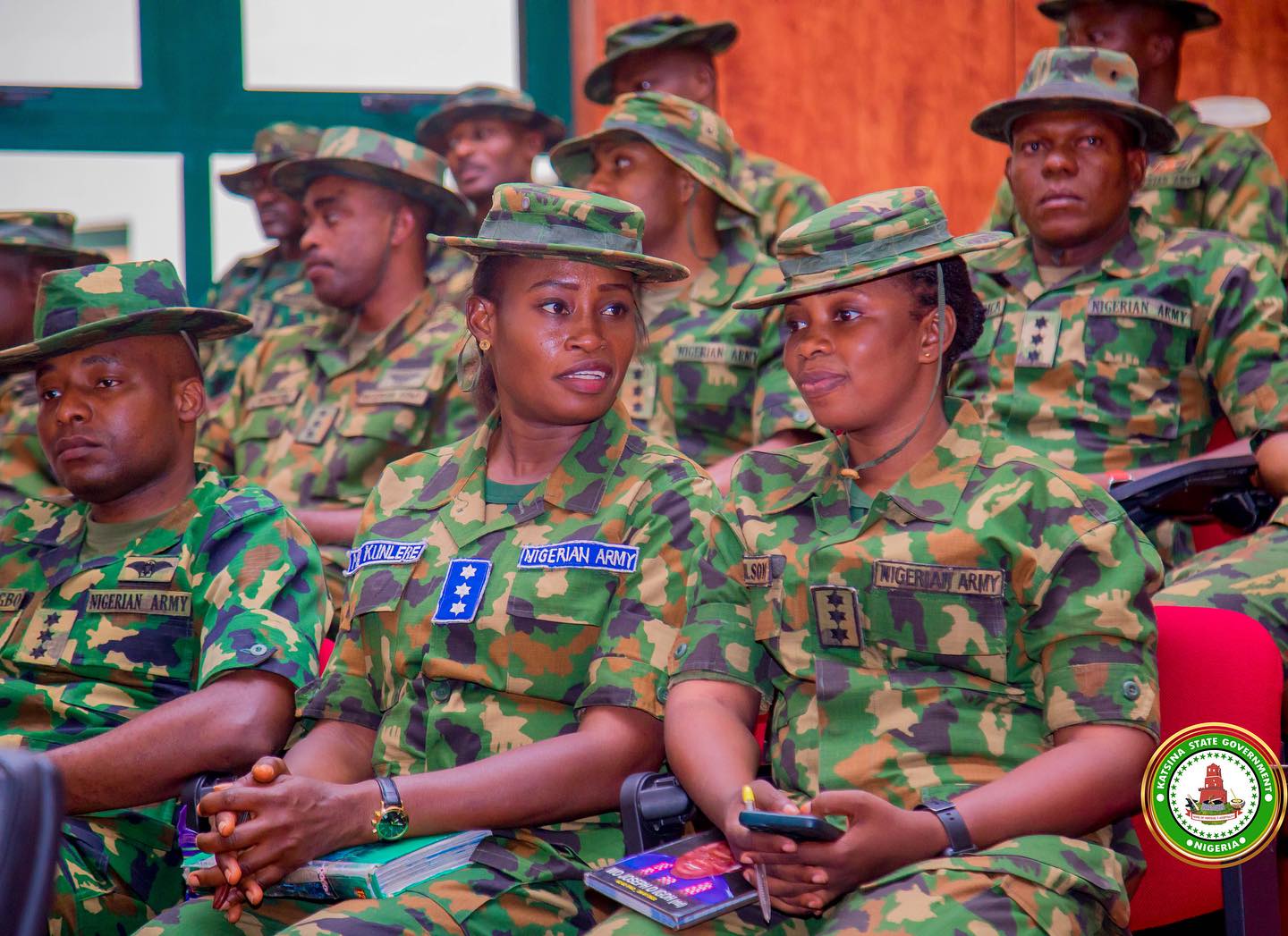
The Nigerian Army has passed out 384 female soldiers of the 90 Regular Recruit Intake (90 RRI) following the successful completion of Exercise SHINING STAR 2026 in Giri, Abuja.
In a post shared on the Nigerian Army’s X handle, yesterday, the Assistant Director, Army Public Relations, Nigerian Army Women Command, Giri, Abuja, Major Nsima Essien, said the passing-out ceremony was held on Wednesday, 28 October 2026, at the Nigerian Army School of Public Relations and Information (NASPRI), Giri, with the Chief of Army Staff (COAS), Lieutenant General W. Shaibu, represented by Major General Umar Gital Yusuf, as the Guest of Honour.
In his address, the Army Chief commended the female personnel for their dedication, resilience, discipline and commitment throughout the training exercise.
He described the successful completion of the exercise as an important milestone in their military careers and reaffirmed the Nigerian Army’s commitment to developing a professional, disciplined and combat-ready force.
He urged the newly trained soldiers to uphold the values of teamwork, courage, loyalty and professionalism, while applying the knowledge and skills acquired during the exercise to their military duties.
Shaibu emphasised the importance of continuous training, physical fitness and operational preparedness in addressing contemporary security challenges before declaring the exercise closed.
Earlier, the Acting Commander of the Nigerian Army Women Command (NAWC), Colonel S. M. Ahmed, welcomed the special guest and other dignitaries to the ceremony.
Ahmed highlighted the significance of Exercise SHINING STAR 2026 in enhancing the physical fitness, military competence, discipline and operational readiness of the female personnel.
He also acknowledged the contributions of the authorities, instructors and other personnel whose efforts ensured the successful conduct of the exercise.
Highlights of the ceremony included obstacle-crossing demonstrations and weapons-handling exercises, during which the female soldiers demonstrated their ability to strip and assemble AK-47 rifles while blindfolded.
The demonstrations showcased the personnel’s physical endurance, confidence, weapons-handling skills and proficiency in basic military tasks.
“A total of 384 female personnel of the 90 RRI participated in the exercise, alongside 14 male personnel from the Headquarters, Directorate of Army Physical Training (HQ DAPT), and 70 male personnel from the 167 Special Forces Battalion, “ Ahmed said.
The ceremony attracted senior military officers from various units and formations, representatives of paramilitary agencies and other invited guests.
Eight male and female personnel who distinguished themselves during the exercise received awards presented by the Acting Commander of NAWC.
The event also featured a vote of thanks delivered by one of the beneficiaries, the presentation of souvenirs and a group photograph to commemorate the successful completion of the exercise.
The exercise forms part of the Nigerian Army’s efforts to strengthen personnel development, improve military competence and enhance operational readiness in response to the country’s evolving security challenges.
As the world marked the 2026 International Day of the Girl Child on Sunday, October 11, 2026, a non-governmental organisation, Stand Up for Women Society (SWS) has intensified its campaign against child marriage, urging schoolgirls to prioritise education, protect their rights and develop skills for a better future.
The organisation joined the global observance of the day under the theme, “International Day of the Girl Child: End Child Marriage and Invest in Girls’ Rights,” with a sensitisation programme at Government Girls Secondary School, Oromenike, D-Line, Port Harcourt, Rivers State.
Led by its Vice Chairperson, Daba Benebo, the group engaged the students in discussions on the dangers of early marriage, teenage pregnancy, sexual abuse and other challenges that threaten the education, safety and development of the girl child.
Speaking during the programme, Benebo urged the students to reject early marriage and remain focused on their studies, stressing that education would empower them to make informed decisions about their lives and future.
She cautioned the girls against allowing anyone to deprive them of their right to education and dignity, advising them to report cases of harassment, abuse and other violations of their rights to the appropriate authorities.
Benebo assured the students that SWS remained available to support them whenever they encountered violations of their rights.
She also encouraged them to maintain discipline and responsible conduct while avoiding behaviours that could expose them to negative influences and jeopardise their future.
Beyond formal education, the SWS vice chairperson urged the students to acquire vocational skills that could provide additional opportunities for economic independence and help them navigate future challenges.
The sensitisation programme, enlivened by singing, dancing and to share their views and experiences on issues affecting the girl child interactive sessions, provided an opportunity for the students to share their views and experiences on issues affecting the girl child.
One of the major issues raised during the discussion was the appropriate age for marriage. While some participants maintained that 18 years was the constitutionally approved age, the discussion highlighted the need to consider not only age but also the maturity, preparedness and responsibilities associated with marriage.
The speaker stressed that marriage required adequate mental and emotional preparation, as well as the capacity to shoulder its responsibilities.
She therefore advised the students to concentrate on acquiring a sound education before considering marriage, noting that education would equip them with the knowledge and skills needed to make responsible decisions and manage family life.
The issue of teenage pregnancy also featured prominently during the question-and-answer session.
In addressing the subject, the speaker explained that pregnancy could occur even at the age of 12, using the example to underscore the vulnerability of young girls to the consequences of early sexual activity.
She advised the students to avoid sexual intercourse and prioritise their education, personal safety and future aspirations.
The discussion also examined the difficulties some girls encounter when living with hostile spouses, relatives or guardians.
Benebo encouraged the students to cultivate patience, humility and diligence, noting that these qualities could help them navigate difficult situations and build a brighter future.
However, she warned that patience and humility should never be interpreted as an obligation to endure violence, abuse or degrading treatment.
She urged girls experiencing hostile or abusive living conditions to seek help from their parents, trusted adults or appropriate support services rather than remain in environments that could expose them to physical or emotional trauma.
“When such happens, please return to your parents and engage in petty trade or learn a skill to support your education rather than stay in a hostile environment,” Benebo stressed.
The programme also underscored the importance of protecting girls from early marriage and other harmful practices that can disrupt their education, compromise their well-being and limit their opportunities in life.
It also reinforced the need for families, schools, communities and relevant organisations to work together to ensure that girls have access to education, vocational training, protection and the support they need to realise their potential.
For SWS, the message was clear: empowering the girl child begins with protecting her rights, investing in her education and equipping her with the confidence and skills to make informed choices about her future.
Stories by Kevin Nengia
The Egberipapa Foundation has unveiled a mass transit scheme aimed at easing transportation difficulties and improving connectivity among communities in the three Kalabari local government areas of Asari-Toru, Degema and Akuku-Toru in Rivers State.
The initiative, established by former Caretaker Committee Chairman of Akuku-Toru Local Government Council, High Chief Sobomabo Jackrich, popularly known as Egberipapa, is designed to make transportation more accessible and affordable for residents across the Kalabari area.
The scheme was launched on Monday, October 12, 2026, and is expected to address longstanding transportation challenges confronting residents, particularly those in riverine and hard-to-reach communities.
Communities expected to benefit from the initiative include Krakrama, Minama, Angulama, Sangama, Omekwe-Tariama and Omekwe-Ama.
The project is expected to ease movement within and beyond the Central Group area, while providing residents with a more convenient means of transportation for their daily activities.
For decades, transportation difficulties have posed significant challenges to several Kalabari communities, making movement between settlements both cumbersome and expensive. These challenges have also affected commercial activities, social interactions and access to essential services.
The introduction of the mass transit scheme is therefore expected to provide relief to residents, strengthen inter-community connections and stimulate economic activities across the benefiting communities.
Beyond improving mobility, the initiative could contribute to community development by facilitating the movement of people and goods, supporting local businesses and enhancing social and economic interactions within the Kalabari area.
As the scheme gets underway, attention will be focused on its implementation, accessibility and sustainability, as well as its capacity to deliver lasting transportation benefits to the target communities.
The initiative represents a potentially significant step towards addressing transportation challenges and promoting grassroots development across the Kalabari Kingdom.
-
News4 days ago
Parents Protest Scholarship Scheme Suspension At PAMO Varsity
-
 News4 days ago
US Hails Nigerian Military For Rescuing 125 Kidnap Victims
-
News1 day ago
Bayelsa Boat Mishap: Tinubu Donates N250m As Death Toll Hits 29
-
News1 day ago
Odu Pays Tribute To Late Chinwah, Describes Him As Courageous, Selfless Academic
-
Business4 days ago
Reps Raise Alarm Over N2trn Agricultural Loan Diversion
-

 Featured4 days ago
Presidents Xi, Trump, Putin Commit To Global Stability, Denuclearisation
-
Politics4 days ago
ADC Faults INEC’s Alleged Limited Capacity To Upload Election Result On IREV
-
Politics4 days ago
Tinubu Expands 2027 Campaign Tour To 19 States