
Nation
‘Nigeria’s External Debt-To-Revenue Up 400% In 10 Years’

Nigeria’s external debt to total revenue increased from 8 per cent in 2011 to 400 per cent in 2020, a former governor of the Central Bank of Nigeria (CBN), Sanusi Lamido Sanusi, has said.
Sanusi lamented the situation while participating in an online roundtable discussion tagged, “Debt Relief for a Green and Inclusive Recovery in Nigeria”, organised by Heinrich Böll Foundation.
The former CBN governor said Nigeria has a debt services ratio of up to 90-96 per cent but there are certain other elements of debts that analysts have not paid attention to.
He said, “If you go through the CBN statistical bulletin, in 2011, the total federally collected revenue from all sectors was N18.9trillion at N165 to the dollar. This will have placed federally collected revenue in 2011 at $55.5billion.
“Meanwhile, debt at that time was $5billion, so, we had an external debt to external revenue of about 8 per cent in 2011. By 2020, we have an external debt of about $33.4billion but all revenues in 2020 were about $8.3billion. So, it has moved from 8 per cent to 400 per cent between 2011 and 2020.
“And this is a serious red flag that I’ve not seen being pointed out in the conversation around debt sustainability especially given the facts that exports are yet to be diversified at the book of our revenues from oil sectors given what we’ve seen and what have been discussed today about the prospect of hydrocarbons as we move into a greener world.”
Nigeria’s debt position has been a source of concern for development experts in recent years, especially in the midst of dwindling oil revenue.
Sanusi, who was recently deposed as Emir of Kano, noted that in measuring debt sustainability, the debt to Gross Domestic Product (GDP) ratio is a useless metric.
“You do not service debt out of GDP, you service debt out of revenues,” he said.
“If only 20 per cent of your GDP is paying taxes, if you have a debt GDP ratio of 20 per cent, you are likely to have a debt service to revenue ratio of 100 per cent.
“So, for a long time, I have been concerned about this idea that if (having) 25, 30 or 35 per cent debt to GDP ratio is fine, because you’ve got countries that are activating 90 per cent.”
He added that in the countries where debts to GDP numbers are high, tax is a major component of government revenues.
Sanusi also explained that high interest rates with high debts could lead to difficult financial situations.
He also explained further that another key part of the nation’s debt profile is the components of bilateral loans, of which China is a major player, with $3.2billion of Nigeria’s $4.1 bilateral debt, that’s about 78 per cent.
He explained that any talk about debt sustainability has to involve China as a very dominant player.
The former CBN governor agreed that the call for debt relief is in the right direction, but the nation needs to show serious commitment and review the structure of its government and economy.
He noted that as countries begin to lift Covid-19 restrictions on travels, there will be increased demand for forex on travel, further putting pressure on the country’s exchange rate.
“When the world reopens and people start travelling, that is going to lead to an increase in demand on forex for travel and that is going to exert further pressure on the balance of payments.
“Now, these are the kinds of considerations I think we need to bear in mind when we talk about the sustainability of a debt situation.
“Honestly, I think debt relief is very necessary if this country is going to have the fiscal space to pursue any kind of developmental objectives. We can’t be spending 90 or 100 per cent of our revenue on debt service and don’t have anything to invest in development.”
According to Sanusi, the country needs to invest in education and agriculture, stressing that these two sectors will help play a key role in lifting Nigerians out of poverty.
Part of the problem Nigeria faces, he said, is that there has been significant under-investment in education and health care, and the productivity of agriculture.
“And these are the kinds of things that we need to lift people out of poverty and bring sustainable growth,” he argued.
The former chief executive of First Bank also explained that the rapid rate of growth in population is a source of concern, adding that the country needs to have social policies around demographic growth.
“There are parts of this country where the fertility rate is more than eight (8) live births per woman, and again some societies are also polygamous,” he said.
“Now there’s no way that you are going to continue growing at 3.4 or 4 per cent when your economy is growing at a slower rate and expect to deal with poverty. And that is an unsustainable model.”
He also noted that setting up factories could help lead to economic growth.
He said, “One of the issues I have with people when they talk about removing the subsidy on electricity tariffs and how the tariffs are going to go on to avert some problems is that we worry so much about tariffs because we use electricity for consumption and the buck of the population is yet to understand that electricity is an import into production. You can’t burn it.
“So, if you take away the subsidy by having a cost recovery tariff, you could put that money into small and medium enterprises that will turn that electricity into real production of goods and services and lift people out of poverty.
“Now, it doesn’t have to be fossil fuels electricity, you can in the same way, for example, use these bonds to encourage setting up factories to produce solar panels. People talk about renewable energy but if you are going to be importing solar panels from China or the UK, it is not as effective as if you set up factories to produce these panels in Nigeria. You’ve got all the raw materials you need to produce solar panels.
“So, set up factories, produce these panels and then the subsidy come in, in form of making these panels affordable and the kind of financing you give to the micro-enterprises to turn this renewable energy into goods and services.
“Not just about producing renewable energy that will continue to be fuelling television sets, water kettles, video games, no; we want electricity so that micro, small and medium enterprises can begin to generate.”
Sanusi argued further that a very smart way of dealing with debt relief is to effectively ensure that government puts in the right policies and that money goes into the right areas that will lead to sustainable development.
He noted that what happened when debt relief was granted to Nigeria in the past was that Nigeria went back on spending on overheads, unnecessary petroleum subsidies, and subsidies on fertilisers, which has not helped the country.
“What happened in the past was that we had this debt relief and then we went back to borrowing money, spending on salaries, overheads, and unnecessarily petroleum subsidies all sorts of fertilisers sub discount and those are the kind things that need to end,” he lamented.
“But we also need to bear in mind that as we take them out, the way to minimise impact is to address the real SDGs considerations, education, healthcare, renewable energy accompanied by training, the productivity of agriculture and this is really about the policy deficit that we’ve had in the last few decades,” he said.



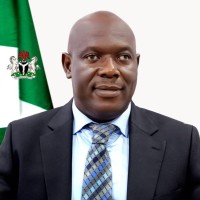
The Hydrocarbon Pollution Remediation Project (HYPREP) has commemorated the 15th anniversary of the release of the United Nations Environment Programme (UNEP) Environmental Assessment Report on Ogoniland, reaffirming its commitment to restoring the environment and improving the livelihoods of affected communities.
In a statement signed by the Project Coordinator, Prof Nenibarini Zabbey, to commemorate the anniversary, HYPREP described the anniversary as a significant milestone in Nigeria’s environmental restoration efforts, noting that the project has made remarkable progress in implementing the recommendations of the landmark UNEP report released on August 4, 2011.
The UNEP report had revealed extensive oil pollution across Ogoniland, severe environmental degradation, and serious public health risks resulting from decades of petroleum operations. It also recommended an initial $1 billion fund to commence the cleanup of the affected communities.
According to HYPREP, the Federal Government formally launched the Ogoni clean-up in 2016, while the Project Coordination Office was established in 2017 to drive the implementation of UNEP’s recommendations.
Zabbey said the current administration has continued to prioritise the project under the Renewed Hope Agenda.
Providing an update on the cleanup, the Project Coordinator disclosed that 30 of the 65 contaminated sites identified by UNEP have been fully remediated, while work is ongoing at several medium- and high-risk locations. It also stated that more than 1.5 million mangrove seedlings have been planted as part of what it described as the world’s largest restoration of oil-degraded mangroves, with over 1,000 hectares of shoreline already rehabilitated.
Zabbey further revealed that 49 Ogoni communities have been connected to potable water schemes through multiple water projects and booster stations aimed at providing safe drinking water across the region.
In the health sector, he said the 100-bed Ogoni Specialist Hospital in Kpite and the 43-bed Cottage Hospital in Buan are nearing completion, adding that several existing health facilities have been upgraded with modern medical equipment, while five ambulances have been donated to improve emergency healthcare services. The Project Coordinator also disclosed that a three-year human health biomonitoring study is being conducted in collaboration with the World Health Organization’s International Agency for Research on Cancer (IARC).
On economic empowerment, Zabbey stated that the Project has created more than 8,000 direct jobs and trained thousands of Ogoni youths and women in various vocational and technical skills, including software development, cybersecurity, aviation, commercial diving, seafaring, mechatronics, and creative arts. The project also reported awarding scholarships to more than 1,000 students, providing grants to small businesses, and supporting persons living with special needs through skills acquisition programmes.
The statement further highlighted ongoing legacy projects, including the Ogoni Power Project and the Centre of Excellence for Environmental Restoration, which it said is about 96 per cent complete. HYPREP also welcomed the recent designation of the Ogoni Wetland as a Ramsar Site of International Importance and pledged to continue promoting biodiversity conservation and sustainable management of the ecosystem.
Marking the anniversary, Zabbey said the progress achieved over the past 15 years demonstrates the collective commitment of government, development partners, stakeholders, and local communities to restoring Ogoniland. He called for renewed collaboration to sustain the cleanup effort, promote environmental sustainability, and support the long-term development of the region. 3
-

 News2 days ago
RSG Targets Nine Million Residents in Mosquito Net Distribution Campaign
-

 Oil & Energy2 days ago
Aiyedatiwa Signs New Electricity Bill
-

 Oil & Energy2 days ago
NLNG Commissions Research And Innovation Centre In RSU
-

 Maritime2 days ago
Marine Minister Commends President Tinubu On NPERA Bill Assent
-

 News2 days ago
KenPoly Holds Eight Convocations, August 29
-

 News2 days ago
RSG Begins Another Phase of Projects Commissioning Today
-

 News2 days ago
RMAFC Completes Revenue Sharing Review, Proposes New Pay
-

 Maritime2 days ago
NAGAFF Petitions IGP Over Alleged Maritime Police Harassment