
Nation
Electoral Act: Lawan Assures Of Reduced Violence In 2023

The President of the Senate, Dr Ahmad Lawan, has said that the 2023 General Election would see a drastic reduction in electoral violence after the passage of the amended version of the Electoral Act.
The Electoral Act is expected to be passed by the National Assembly in June, 2021.
Lawan gave the assurance while fielding questions after delivering a lecture at the National Defence College Course 29 Programme in Abuja, yesterday.
According to the Senate President, the Electoral Act under amendment by the Ninth National Assembly will provide for an Electoral Offences Commission, charged particularly with the responsibility of prosecuting electoral offenders.
He added that the piece of legislation when passed and signed into law would among other things, empower the Independent National Electoral Commission (INEC) to conduct transparent elections in Nigeria.
“Let me give some commendation to the National Assembly for continuously working on the Electoral Act to provide for a better electoral environment in Nigeria.
“All the improvement we have added was as a result of legislations passed by the National Assembly, and of course, supported by the Executive.
“This is going to be a continuous effort because electoral violence is largely a product of either genuine or misinformation of iniquity or some kind of conspiracy against certain persons during elections.
“But I also believe – and that is the position of the National Assembly generally – that we should have the Electoral Offences Commission, so that people who are involved in electoral violence will be prosecuted.
“I believe that it will go a long way in reducing and minimizing of all these tendencies of people taking the laws into their hands.
“But in addition, we are currently working on the Electoral Act, we want to amend it and we intend to achieve the amendment before June or thereabout.
“Our intention in the National Assembly with this is to further sanitize the electoral environment, and empower the election management body – INEC – to conduct seamless, transparent and very open sort of election where a winner is very happy that he is a winner and a looser will be glad that he lost in a very fair contest.
“So, we are working on this and we hope that the 2023 General Election will see less of electoral violence because the law itself would have been further improved.”
Speaking earlier during the lecture, the Senate President attributed the challenges faced by the Federal Government to various types of discolouration from conspiracies woven around political, ethnic and religious sentiments.
He, therefore, admonished Nigerian leaders to deploy strategic leadership tact needed for the realization of developmental initiatives that accommodate the national interest.
“For us particularly in this country, strategic political leadership is an imperative for development. You can’t but deploy it, and leaders must be strategic. And, it is required even more in countries like ours where the challenges of development are most.
“Unfortunately, almost every issue you bring in Nigeria would rather have or would be given either political, ethnic, geo-political or religious coloration.
“So, it makes governance tough. It gives leadership massive challenges because such colorations complicate the issues.
“Issues that could easily be relative and understood with little effort become so enmeshed in controversies that it may take you time to recover, and probably you may not even recover at all.
“This is an opportunity for me to appeal to all of us in political leadership that our responsibility to the people of Nigeria must remain the one and only critical factor for taking decisions.
“The national interest must override any other interest because it is the interest of the majority of the people of the country. If we do that, chances are that we will always get it right.
“I think it will be unpardonable for anyone to think that you can create controversies around government’s development programmes or projects. Let there be progressive and positive criticisms. Let’s allow the government a chance,” Lawan said.
Identifying diversity as fallout of a heterogeneous society such as Nigeria, the Senate President further called on leaders across the country to foster unity in their quest to achieve development and progress.
“Nigeria is heterogeneous, and there’s diversity. And, as leaders we must ensure that we weave the diversity into our strength, that we are able to create and sustain unity to engender peace and progress,” he stressed.
Assessing the collaboration between the Executive and Legislature, Lawan said, “as leaders and members of the National Assembly, we have to achieve unity of purpose. We have to attain bipartisanship.
“But because we are bicameral – that we have a Senate and House of Representatives – we also have to achieve harmony. We have to work in cordiality with our colleagues in the House of Representatives.
“And, having achieved united and very focused National Assembly, we also need to work in harmony with other arms of government, and particularly with the Executive arm that we work with on almost daily basis.
“But the essence this is that we are stronger, more productive, more effective and efficient together.
“As members of the National Assembly and a government, if distinguished members of the National Assembly work in unison to deliver their legislative interventions for the executive to work with; and between the executive and the legislature, there is mutual respect and consultation, as well as cooperation and partnership, the citizens get the best deal because performance and arrive deliver will be enhanced and sustained. This is the essence of any government.”
Lawan added, “Let me also emphasize that because our constitution provides for three arms of government, there are checks and balances that we have to make – checks mostly for the legislature on the executive arm of government – because the executive as we all know executes the government’s agenda.
“These are specified functions for the different arms. In our quest for harmony and cordiality with the executive arm of government, we also believe in the National Assembly that the Executive must be held to account.
“If we pass the budget and they implement, we need to know how they have implemented the budget. We need to know whether or not they restricted themselves to what has been provided in the budget, we need to know whether they implemented the projects and programmes with efficiency and prudence.
“And, we will not compromise on this, because we are expected by the constitution and the people to undertake those very important functions in addition to our representative roles to the people we represent and the legislature itself.
“So, oversight is key and important for us, but we also emphasize that unless it becomes absolutely necessary, the citizens should not be denied of benefits from programmes and projects, because of fights and disharmony between the two arms of government – the executive and legislature.
“The essence of any government according to our Constitution is to provide security and welfare to the people.
“The ordinary man doesn’t want to know why you will fight and the fight stops the delivery of services. So, we believe that we must continue to work together, and in this effort, since we came in June, 2019, we have been able to achieve so much.”
Lawan added further that in ensuring the delivery of infrastructural and economic development in accordance with the manifesto of the ruling All Progressives Congress (APC), the Senate had severally engaged the Ministry of Finance, Budget and National Planning on the need to rollout an economic plan that complements the nation’s annual budget.
“In the Senate, the Committee on National Planning and Economic Development has had a roundtable discussion and we are working with the Ministry of Finance, Budget and National Planning to see how we can go back to this means of creating a rolling development plan for our country rather than this annual budgetary process that we do that stops within the year.
“But the Medium Term Expenditure Framework that we do in this administration today provides some direction even though it is not exactly what we want,” Lawan said.



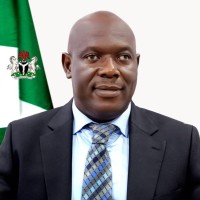
The Hydrocarbon Pollution Remediation Project (HYPREP) has commemorated the 15th anniversary of the release of the United Nations Environment Programme (UNEP) Environmental Assessment Report on Ogoniland, reaffirming its commitment to restoring the environment and improving the livelihoods of affected communities.
In a statement signed by the Project Coordinator, Prof Nenibarini Zabbey, to commemorate the anniversary, HYPREP described the anniversary as a significant milestone in Nigeria’s environmental restoration efforts, noting that the project has made remarkable progress in implementing the recommendations of the landmark UNEP report released on August 4, 2011.
The UNEP report had revealed extensive oil pollution across Ogoniland, severe environmental degradation, and serious public health risks resulting from decades of petroleum operations. It also recommended an initial $1 billion fund to commence the cleanup of the affected communities.
According to HYPREP, the Federal Government formally launched the Ogoni clean-up in 2016, while the Project Coordination Office was established in 2017 to drive the implementation of UNEP’s recommendations.
Zabbey said the current administration has continued to prioritise the project under the Renewed Hope Agenda.
Providing an update on the cleanup, the Project Coordinator disclosed that 30 of the 65 contaminated sites identified by UNEP have been fully remediated, while work is ongoing at several medium- and high-risk locations. It also stated that more than 1.5 million mangrove seedlings have been planted as part of what it described as the world’s largest restoration of oil-degraded mangroves, with over 1,000 hectares of shoreline already rehabilitated.
Zabbey further revealed that 49 Ogoni communities have been connected to potable water schemes through multiple water projects and booster stations aimed at providing safe drinking water across the region.
In the health sector, he said the 100-bed Ogoni Specialist Hospital in Kpite and the 43-bed Cottage Hospital in Buan are nearing completion, adding that several existing health facilities have been upgraded with modern medical equipment, while five ambulances have been donated to improve emergency healthcare services. The Project Coordinator also disclosed that a three-year human health biomonitoring study is being conducted in collaboration with the World Health Organization’s International Agency for Research on Cancer (IARC).
On economic empowerment, Zabbey stated that the Project has created more than 8,000 direct jobs and trained thousands of Ogoni youths and women in various vocational and technical skills, including software development, cybersecurity, aviation, commercial diving, seafaring, mechatronics, and creative arts. The project also reported awarding scholarships to more than 1,000 students, providing grants to small businesses, and supporting persons living with special needs through skills acquisition programmes.
The statement further highlighted ongoing legacy projects, including the Ogoni Power Project and the Centre of Excellence for Environmental Restoration, which it said is about 96 per cent complete. HYPREP also welcomed the recent designation of the Ogoni Wetland as a Ramsar Site of International Importance and pledged to continue promoting biodiversity conservation and sustainable management of the ecosystem.
Marking the anniversary, Zabbey said the progress achieved over the past 15 years demonstrates the collective commitment of government, development partners, stakeholders, and local communities to restoring Ogoniland. He called for renewed collaboration to sustain the cleanup effort, promote environmental sustainability, and support the long-term development of the region. 3
-

 News2 days ago
RSG Targets Nine Million Residents in Mosquito Net Distribution Campaign
-

 Oil & Energy2 days ago
Aiyedatiwa Signs New Electricity Bill
-

 Oil & Energy2 days ago
NLNG Commissions Research And Innovation Centre In RSU
-

 Maritime2 days ago
Marine Minister Commends President Tinubu On NPERA Bill Assent
-

 News2 days ago
KenPoly Holds Eight Convocations, August 29
-

 News2 days ago
RSG Begins Another Phase of Projects Commissioning Today
-

 News2 days ago
RMAFC Completes Revenue Sharing Review, Proposes New Pay
-

 Maritime2 days ago
NAGAFF Petitions IGP Over Alleged Maritime Police Harassment