
News
Shiite Protests: IGP Confirms IMN’s Proscription

The Inspector-General of Police, Mohammed Adamu, has said that the President Muhammadu Buhari-led All Progressives Congress (APC) government has officially classified as a terrorist organisation and proscribed the Islamic Movement in Nigeria (IMN aka Shiites) led by Ibraheem El-Zakzaky.
Adamu, in a press conference in Abuja, yesterday, said “It is to be emphasised that while all adherents of the Shiite sect in Nigeria remain free to continue to practise their faith and shall be guaranteed adequate security to so do as the judicial order does not stop them, the El-Zakzaky-led Shiites’ Islamic Movement in Nigeria which does not recognise nor accept the Constitution and Government of the Federation is the sole organisation that has been classified as a terrorist organisation and proscribed.”
The IGP also said: “The activities of the Islamic Movement in Nigeria (aka Shiites) led by Sheik Ibraheem El-Zakzaky have over time evolved to constitute a grave threat to national security, law and order, socio-religious harmony, peace, good governance and the sovereign integrity of the Federal Republic of Nigeria. The members of the IMN’s Shiites have engaged in extreme radicalism, series of terror-related activities, violence and other unlawful activities which are inimical to the national security interest, good governance, and the corporate existence of the Federal Republic of Nigeria.
“The Shiites have over the years manifested their penchant for launching attacks on Nigerians and the symbols of state authority. Since 2018, till date, the IMN has engaged in coordinated and organized violent protests within the Federal Capital Territory.”
The full text of the press conference reads, “I warmly welcome you all to this Conference which is a continuation of my management tradition to constantly engage strategic managers across all Commands in the Nigeria Police towards regularly evaluating the internal security profile of the country. This is with the intent to keep abreast with the dynamics of crime and to jointly discuss pathways towards either strengthening existing strategies or evolving new approaches.
“Within this context, I am delighted to note that the strategies so far emplaced and the commitment demonstrated by officers across all ranks in the Nigeria Police within the past months, have combined to aid in stabilizing the internal security profile of the country.
“In consequence, between January, 2019 to date, a total of 4,187 high profile suspects have been arrested nationwide. This includes 1,629 armed robbery suspects; 1,053 suspected kidnappers; 1,023 cultists, and 482 murder suspects.
“In addition, 1,181 firearms of various descriptions and calibre including improvised explosive devices (IEDs) and rocket launchers were recovered in various police operations across the country within the same period. 389 stolen vehicles were also recovered from criminal elements, while 506 kidnapped victims have been safely rescued. It is pertinent to mention that of the rescued victims, 300 were secured in Zamfara State alone with 249 of this number rescued between 9th to 23rd July, 2019 from bandits and militias operating in the forests in and around Zamfara State.
“The foregoing achievements are indicative of the fact that the trust gap between the police and the citizens has been narrowed such that the communities are now demonstrating impressive commitment towards partnering with the police in presenting a common front against criminal elements. It is also suggestive of the fact that the institutional capability of the police to undertake specialised operations, take the anti-crime war to the camps and other safe havens of high-profile criminals, and respond to any scene of violent crime has also been significantly boosted. Above all, the achievements are indicative of the effectiveness of the Operation Puff Adder and other strategies emplaced by the Nigeria Police to address prevalent crimes in the country.
“In order to sustain these gains, we have commenced the process of implementing the community policing concept which involves the engagement of citizens in identifying and prioritizing prevalent communal security threats as they affect their localities, and working together with the police towards developing and implementing solutions to the identified threats.
“In giving effect to this, we are drawing on the Provisions of the Police Act in relation to the recruitment and utilisation of special constables who in this instance, will be engaged as community policing officers (CPOs) under the coordination of the Nigeria Police towards evolving a community-focused policing architecture.
“The breakdown of the community policing deployment plan covers the recruitment of a total of 40,000 CPOs across the country in the interim. The CPOs will be recruited from within the communities where the prospective applicants reside and average of 50 CPOs are to be engaged in each of the 774 local government areas. In addition, 1,300 CPOs will be drawn from professional bodies like the academics, road transport unions, artisans, traders’ associations, religious bodies, women unions, and youth organisations, among others, in order to ensure diverse representation.
“The CPOs shall be deployed to complement the police in law enforcement functions within their localities by performing low-risk and non-sensitive duties. They will also act as liaisons between the Police and their communities. This policing architecture will free-up conventional police personnel that hitherto perform such functions and enhance our manpower profile in relation to deployment to frontline, operational duties. When fully implemented, the community policing strategy will bridge the gap between the police and the citizens in a manner that will enhance optimal, cost-effective, and sustainable law enforcement service delivery by the police.
“In evaluating our policing strategies, I am to note that there are still some security challenges which currently require our professional attention and which will constitute part of our discourse during this conference. First, has to do with the recent violent campaigns of the Islamic Movement in Nigeria which are clearly designed to destablilise the country. The second, is the spate of kidnapping in the South-West Geopolitical Zone of the country, while the third is the activities of bandits, particularly, in some states in the Northern part of the country.
“The activities of the Islamic Movement in Nigeria led by Sheik Ibraheem El-Zakzaky have over time evolved to constitute a grave threat to national security, law and order, socio-religious harmony, peace, good governance and the sovereign integrity of the Federal Republic of Nigeria. The members of the IMN have engaged in extreme radicalism, series of terror-related activities, violence and other unlawful activities which are inimical to the national security interest, good governance, and the corporate existence of the Federal Republic of Nigeria.
“Some of these nefarious activities include the pledging allegiance to foreign countries from where they are enjoying political, financial and training support with the aim of advancing their destabilizing intents within Nigeria; and unauthorized blocking of public highways, engagement in illegal road blocks, imposition of illegal curfews and checkpoints, raids on security assets, prevention of arrest of their members, invasion of court premises to abort legal proceedings involving IMN members, refusal to submit to ordinary security checks and attacks on security agents which led to the death of several Nigerians.”
Others include, “Setting up of a para-military guard known as ‘HURRAS’ through which IMN has been terrorizing local residents. They have also instituted unregistered security outfits and performed paramilitary ceremonies, hoisting of flags, combat exercises, parades and inspection by the IMN leader reminiscent of a state authority; provocative preaching and hate speeches aimed at inciting members against non-members while working towards its agenda of creating an Islamic State in Nigeria and challenging the legitimacy of the Federal Government in favour of Islamic government, non-recognition of the Constitution of the Federal Republic of Nigeria, non-recognition of State Authority, non-recognition of our democratic values and disrespect for our judicial processes. The IMN has over the years manifested its penchant for launching attacks on Nigerians and the symbols of State authority. Since 2018 till date, the IMN has engaged in coordinated and organized violent protests within the Federal Capital Territory.
“Two weeks ago, the Shiites extended its violent protest on 9th July, 2019 to the National Assembly in the course of which they violently attacked and fatally injured security operatives in an attempt to overrun the National Assembly and threaten the nation’s democratic order. The protesters overwhelmed the first gate of the complex, inflicting damage on the security post, and marched on to the second one just before the main complex while the lawmakers were in session. The protesters also damaged a police vehicle and several other vehicles belonging to visitors, lawmakers and staff of the National Assembly who also sustained varying degrees of injuries.
“On 22nd July, 2019, the Shiites members again launched another vicious cycle of violent protest around the Federal Secretariat during which they set a sub-station of the National Emergency Management Agency (NEMA) containing a truck and ambulance on fire. A Deputy Commissioner of Police, Usman Umar, in charge of Operations at the FCT Police Command and Precious Owolabi, a National Youth Service Corp member in the FCT were killed and several others injured with many properties destroyed by them. The violent activities of IMN under the guise of clamouring for the release of their leader who is being detained on the order of a court of competent jurisdiction in Kaduna State, has not only confirmed their disdain for due legal processes, but has heightened tension and insecurity in the country in a manner that confirms that their motivation is to destabilise the country.
“It is obvious from the foregoing that the activities of IMN constitute glaring defiance and/or rebellion against the Nigerian State, calculated efforts to plunge the nation into an ethno-religious war, intimidation of citizens and security agents, disrespect for Nigerian laws and the authority of the Commander-in-Chief of the Armed Forces. Their activities also clearly and consistently negate Section 1(2)(A)&(B) of the Terrorism (Prevention) (Amendment) Act 2013 and Section 2(1)(A)(B)(C) of the Terrorism (Prevention) (Amendment) Act of 2013 and hence, justify their proscription in overriding national security interest.
“Although this meeting will review this and other general security situation and emplace appropriate action plans that are targeted at addressing these threats, let me affirm that in relation to the Islamic Movement in Nigeria, in view of their increasing engagement of terror tactics and other violent and subversive activities which contravene the Terrorism Prevention Act 2013, as amended, and vide the judicial pronouncement of the Federal High Court, Abuja on 26th July, 2019, the Federal Government has classified them as a terrorist group and has accordingly, proscribed the El-Zakzaky-led Islamic Movement in Nigeria.
“In consequence, henceforth, any person engaged or associating, in any manner that could advance the activities of the proscribed Islamic Movement in Nigeria, shall be treated as a terrorist, enemy of the state, and a subversive element and shall be brought to justice within the context of the Terrorism Act. The import of this is that all forms of procession or protest by IMN is now illegal and thus banned.
“The police and other security agencies are fully committed to giving full effect to this judicial pronouncement in the interest of our internal security and national cohesion. In this regard, I wish to solicit the support of members of the public, specifically, in the provision of information that will aid in the identification of the locations of the IMN members and their mentors as well as in working with us in apprehending and bringing them to justice. For purpose of clarification, Nigeria is a secular state with constitution provisions guaranteeing the freedom to practice our faiths. This, however, must be exercised in a manner that will not threaten our national security.
“Hence, it is to be emphasised that while all adherents of the Shiite sect in Nigeria remain free to continue to practice their faith and shall be guaranteed adequate security to so do as the judicial order does not stop them, the El-Zakzaky-led Shiite Islamic Movement in Nigeria which does not recognise nor accept the Constitution and Government of the Federation is the sole organisation that has been classified as a terrorist organisation and proscribed.
“I want to commend all the strategic Commanders, and their Officers and men for their dedication to duty and the sacrifices they have to make in the line of duty. In this context, I wish to particularly recognize and condole the families of late DCP Usman A.K. Umar and Precious Owolabi, the National Youth Service Corp member that lost their lives during the recent violent campaign of members of the proscribed Islamic Movement in Nigeria in Abuja on 22nd July, 2019. I also commiserate with all other police personnel and citizens that were injured or had their valuable assets vandalised during the violence. I can assure that the perpetrators of these tragic and unguided acts shall in the fullness of time, be identified and brought to book. I have already directed the Deputy Inspector General of Police in-charge of the Force Criminal Investigation Department (FCID) to undertake a detailed investigation into the circumstances of the death of these great citizens and to identify the perpetrators with a view to prosecuting them.
“The war against crime is as dynamic as the society. I, therefore, wish to charge you all as strategic police commanders to redouble your efforts in ensuring that the lives and property of the citizens of this great country are protected and safe at all times. This is our sacred, statutory responsibility and we must continually strive to adapt our strategies, provide the requisite leadership and make the utmost sacrifice to achieve it.
“Finally, let me seize this opportunity to appreciate the citizens of this country and to reassure them that, with their cooperation, we shall continue to present a strong and impregnable front to defeat our common enemies which are the criminal elements that are bent on threatening our cherished values and livelihood. 19. I thank you all for your attention and I pray for God’s continued guidance over you all as you commit to serving our great nation”.
It would be recalled that the Federal Government has published in its Official Gazette the court order proscribing the Islamic Movement in Nigeria, also known as Shiites.
The gazetting was done, last Monday.
The Federal High Court in Abuja, which issued the proscription order on July 26, ordered the Federal Government to publish the order in its gazette and also in two national dailies.
The newspaper publication in the two dailies has since been done.


News
Rivers DPOs Receive Awards For Outstanding Performance In Crime Prevention …As Students, Media Group Honour CSP Worgu, CSP Yusuf


Two Divisional Police Officers (DPOs) in Rivers State have been honoured by separate groups for their contributions to security, crime prevention and improved community-police relations in their respective areas of responsibility.
The beneficiaries are the DPO of Afam Police Division, CSP Endurance Worgu and his counterpart at Oyigbo Police Division, CSP Bello Yusuf.
CSP Worgu was honoured by a group of students under the aegis of Rivers State Graduate Students Associations for what they described as his commitment and outstanding performance in the discharge of his duties.
The students, led by Chidi John Enyie, Esq. said CSP Worgu was selected based on his track record and status as one of the longest-serving young DPOs of Rivers State origin.
According to the group, CSP Worgu has made significant contributions to the protection of lives and property in the area since assuming office following the #EndSARS period.
The students said they were particularly impressed by the improvement in community-police relations under his leadership, noting that professionalism had remained a key feature of his service.
Enyie represented by Comrade Briggs Soku, said the students community was pleased to identify with a Rivers indigene who had distinguished himself in the police force.
He said the students considered it necessary to encourage and celebrate CSP Worgu because of his achievements as a young Rivers man excelling in a profession that many people from the state were often reluctant to join.
Receiving the award at his office in Afam, CSP Worgu expressed gratitude to God and the students for finding him worthy of the honour.
The DPO said the recognition had boosted his morale and encouraged him to sustain his efforts towards maintaining peace and security in the area.
He said he least expected the honour, particularly because it came from the students, adding that the recognition would further motivate him to serve the people better.
CSP Worgu assured residents of Afam that the police would sustain the existing peace in the area.
He appealed to members of the public to support the police by providing credible and timely information, stressing that useful information from residents would make the job of security personnel easier.
Meanwhile, the Ikwerre/Etche Media Association has also honoured the DPO of Oyigbo Police Division, CSP Bello Yusuf, for his efforts in tackling criminal activities in the area.
The media group presented the award following the swift tracking and arrest of five suspected kidnappers who had allegedly terrorised residents of the Kom-Kom axis and other parts of Oyigbo.
The group commended CSP Bello for what it described as his determined efforts to restore confidence and security in the affected communities, particularly Kom-Kom and Obeama.
According to the group, the arrest of the suspects demonstrated the DPO’s commitment to tackling criminality and safeguarding residents.
The media association said residents had received the development with relief, noting that the police action had sent a strong message to criminal elements operating in the area.
Responding, CSP Yusuf appreciated the group for the recognition and reaffirmed that there would be no room for criminality in Oyigbo.
He also commended the media for its role in disseminating credible information to the public, saying the media had remained supportive of the police in the fight against crime.
CSP Yusuf warned criminal elements operating in Oyigbo to leave the area or be prepared to face the full weight of the law.
He assured residents that the police would continue to pursue criminals and work to dismantle their hideouts, regardless of where they might be operating.
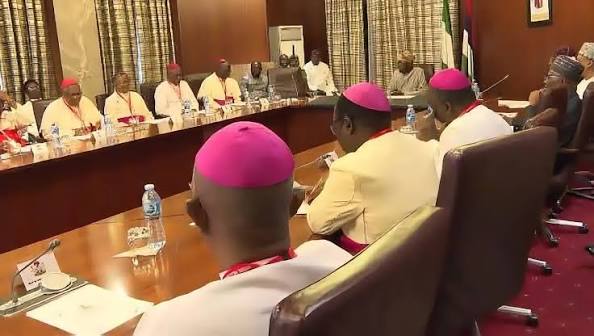
The 5000 Achievers Christian Forum and Colleges of Bishops, Archbishops and Apostles, a Christian interdenominational organisation, has endorsed President Bola Ahmed Tinubu and all candidates of the All Progressives Congress (APC) in Rivers State for the 2027 general elections.
International President of the forum, Archbishop Lucky Aroh, disclosed this during the ordination and consecration of three new Bishops, as well as an award ceremony held in Port Harcourt.
Aroh said the performance of the APC-led Federal Government had endeared the party to the organisation, prompting the forum to declare its support for President Tinubu and other APC candidates in Rivers State.
He said the forum would support all APC candidates in the state during the 2027 elections and urged Nigerians to vote for the party.
Aroh, who is also the General Overseer of Caring Peoples Church, Port Harcourt, charged the newly consecrated Bishops to see their new positions as a great responsibility and dedicate themselves to the advancement of the kingdom of God.
He cautioned them against conduct capable of bringing their offices into disrepute, stressing that their activities would be closely watched by members of the public.
“As Bishops, the eyes of the public are on your activities. You must therefore conduct yourselves in a manner worthy of your calling,” he said.
Also speaking, the International Coordinator of the forum, Bishop Saint Robinson, urged the newly consecrated Bishops to work diligently towards winning souls for the kingdom of God.
Robinson, who was the guest speaker at the event, stressed that the activities of Bishops must at all times be guided by godly principles.
He also called on members of the church to support and cooperate with the newly consecrated Bishops in the discharge of their responsibilities.
The Secretary of the College, Apostle Elizabeth Ayadi Abaye, said the organisation was established to advance the kingdom of God and promote spiritual development.
According to her, the forum has organised several crusades, conferences, prayer meetings, ordinations, consecrations, enthronements, empowerment programmes and other spiritual development activities across the country as part of efforts to win souls for Christ.
Abaye said the organisation has members across the world and disclosed that more programmes had been scheduled to promote the spiritual development and wellbeing of humanity.
The three Bishops consecrated at the ceremony were Prince Alban Chike, Testimony Omenihu Shedrach and Prince Ifemena.
Among those honoured at the event were the Chairman of the Community Development Committee (CDC), Abali Community, Port Harcourt City Local Government Area, Manuchimso Prince Lemmy Wopara, and Clifford Oko Jaja, Coordinator of the 5,000 House-to-House for President Tinubu.
By: John Bibor
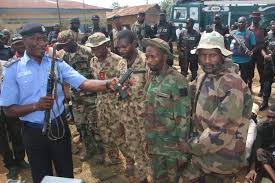
The Rivers State Police Command has arrested a 49-year-old suspected fake soldier, Andrew Atausi, and several other suspects in connection with various criminal activities, including kidnapping, armed robbery, cultism, one-chance robbery and the alleged murder of police officers.
The State Commissioner of Police, CP Olugbenga Adepoju, disclosed this in Port Harcourt, recently during a press briefing at the Command Headquarters, where he said the arrests formed part of the operational achievements recorded by the Command between June and August 2026.
Adepoju said Atausi was arrested on August 10 by police operatives along Ada George, Port Harcourt, while dressed in military uniform and driving a Toyota Hilux painted in Army colours.
The Commissioner said investigation revealed that Atausi was not a member of the Armed Forces, adding that he was suspected to be a serial car snatcher, with three suspected stolen vehicles recovered from him.
He said the recovered vehicles included three Toyota Hilux vehicles without registration numbers and a Toyota Corona Premio with registration number BNY 380 ES, noting that the chassis and engine numbers of the vehicles had allegedly been tampered with.
Adepoju added that an axe and military accoutrements were also recovered from Atausi, as investigation continued into the circumstances surrounding the vehicles and other items recovered from him.
On the June 29 attack on police officers at Aluu Division, the Commissioner said three members of the gang allegedly responsible for the incident had been arrested by operatives of the Violent Crime Response Unit, VCRU-AKU.
The suspects, identified as Maduabuchi Emeka, 34, alleged gang leader; Doctor Chinedu Owhor, 42, and Kamachi Joe, 28, alleged armourer, reportedly led operatives to their hideout at Omagwa where two AK-47 rifles stolen during the attack were recovered.
Adepoju recalled that two police officers were killed during the Aluu attack, while others were wounded and one officer had his leg amputated, stressing that efforts were ongoing to apprehend the fourth suspect.
On kidnapping, the Commissioner said five members of a suspected kidnapping syndicate were arrested in Oyigbo Local Government Area, adding that they allegedly confessed to operations in Kom-Kom, Railway, Obeama and Afam communities.
He said two other suspects from the same network, Anele Ogbogu, 35, alleged to be the gang’s armourer, and Kenneth Eke, 38, were arrested on July 27, with one AK-47 rifle and one SMG rifle recovered.
The Commissioner further disclosed the arrest of suspects in connection with alleged firearm offences, armed robbery, cultism and one-chance robbery, with firearms, ammunition and other exhibits recovered during the operations.
Adepoju assured residents that the Command would sustain intelligence-led, proactive and community-oriented policing in collaboration with other security agencies, while urging members of the public to continue providing credible information that would assist the police in combating crime across Rivers State.
By; King Onunwor