
News
Budget Delay: Blame Self, Not NASS, Dogara Tells Buhari

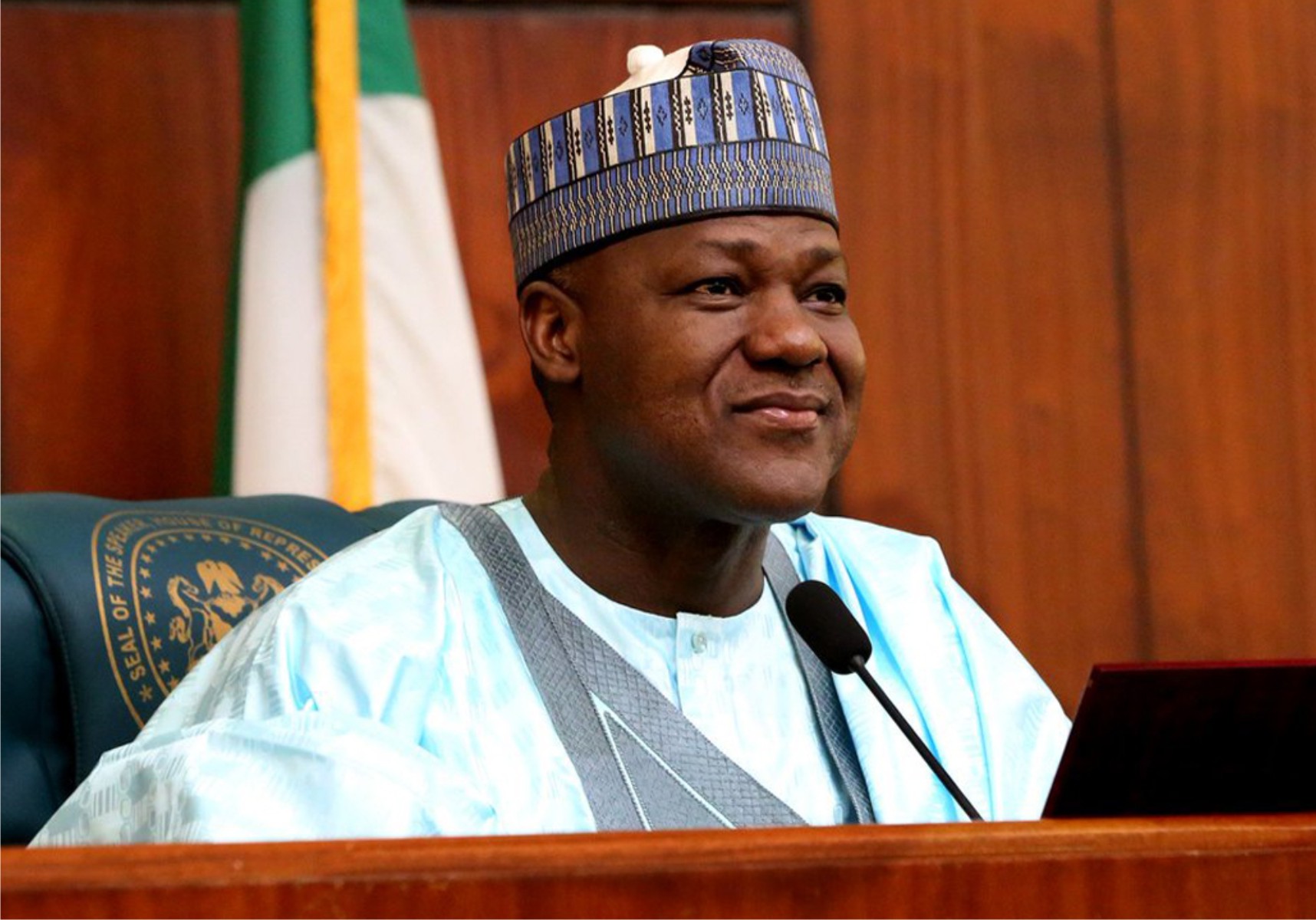
The Speaker of the House of Representatives, Rt Hon Yakubu Dogara, has said that President Muhammadu Buhari should blame himself and not the National Assembly for the delay in the passage of the 2019 budget which was signed into law, last Monday.
Dogara said since Buhari assumed office, he “has been unable to present budget on time. His first budget was the 2016 budget, which was submitted on December 22, 2015, exactly nine days to the end of the fiscal year.”
He also said: “The minimum time the National Assembly requires to pass budget is three months. But he presented it just nine days to 2016” and that “what Nigerians didn’t know and the President won’t say is that the Executive through the various ministries continued to propose additional projects to be included in the 2018 budget even as at April and May which further delayed the passage of the 2018 budget. These were communicated officially and if anyone is in doubt the letters are there with the dates they were written and received. But here’s Buhari blaming the National Assembly.”
Dogara, in a statement, yesterday, lamented that: “President Muhammadu Buhari a few days ago, in his usual characteristics of self righteousness, and buck passing, blamed tardiness in the passage of budgets by the National Assembly for the delay in the completion of projects across the country by his government.
“To be precise, the president said, ‘If the National Assembly takes seven months to pass a budget, then we should be commended for the much that we have achieved, and can still achieve. I personally feel very disappointed. I spoke with the leaders of the National Assembly on the issue that seven months is a long time to work on a budget’.
“Even though buck passing and blame game is not new to Buhari as it is now his stock in trade; in the past few days and weeks, there was no day that passed without the President blaming others in a desperate move to exonerate himself from any blame or failure of the Executive under his leadership to execute projects across the country.
“In fact, very recently, Buhari blamed all his predecessors for failing to build infrastructure. And I wonder why? It was the general consensus that the former employees didn’t perform as expected and that was why Nigerians hired him for a job he has sought for four conservative time but here he is blaming the same people he replaced. If you are the boss of ‘Nigeria limited’, what will you do this employee?
“Some weeks ago, he even blamed the media for failing to showcase his achievements.
“However, it is disingenuous for President Muhammad Buhari to blame the National Assembly for his government’s inability to implement budget and execute projects that affect the lives of Nigerians in the last three years.
“To set the record straight, this is a President who, from inception of his government didn’t show any sign that he was well prepared and ready for the job he sought for four times in 16 years and for which we voted for him.
“For instance, it took him six months, yes six months not six weeks to form his cabinet. It also took him two years to appoint board chairmen for most government agencies. This is was his greatest undoing and was principally responsible for plunging Nigeria into recession because activities in Ministries, Departments and Agencies of government were brought to a half for the period since civil servants could not take decisions due to absence of political heads in a country where public sector spending drives the economy.
“At a point, he even said he was happy working with civil servants because ministers or politicians were noise makers because ‘they are only there to make a lot of noises’, he told a French television station in September, 2015.
“Now, after three years, with election in three months, the President is at it again, exonerating himself from apparent failure of his government thereby throwing the blame right at the doorstep of the legislature. But facts don’t lie and they could be stubborn and here are the facts”.
On late budget presentation, Dogara said, “Since his assuming office, the president has been unable to present budget on time. His first budget was the 2016 budget which was submitted on December 22, 2015, exactly nine days to the end of the fiscal year.
“The minimum the National Assembly requires to pass budget is three months. But he presented it just nine days to 2016.
“Again, the 2017 budget was presented on December 14, 2016, just 17 days to the end of 2016.
“The earliest he presented budget was on November 7, 2017 which was the 2018 appropriations bill. It was less than two months to the end of the year.
“However, his ministers refused to appear before National Assembly committees to defend the budget for five months thereby delaying the passage.
“It was after the leadership of the National Assembly sought the President’s intervention on March 16, 2018 that the ministers reluctantly appeared before the committees, an exercise that takes at least one month to complete.
“In fact, some of them who felt they were super ministers sent in their permanent secretaries.
“What Nigerians didn’t know and the President won’t say is that the Executive through the various ministries continued to propose additional projects to be included in the 2018 budget even as at April and May which further delayed the passage of the 2018 budget. These were communicated officially and if anyone is in doubt the letters are there with the dates they were written and received. But here’s Buhari blaming the National Assembly”.
On violation of Fiscal Responsibility Act 2007, Dogara said, “Since the inception of the Buhari administration, it has been in constant violation of the Fiscal Responsibility Act which stipulates that budgets should be presented in early September. The wisdom or import of the FRA is that the National Assembly will have at least three full months to work on the budget bill.
“In fact, the Executive admitted its failure and inability to abide by the law on August 24, 2018 when former minister of Budget and National Planning, now Minister of Finance, Zainab Ahmed disclosed that the Federal Government will present the 2019 budget in September in a bid to restore the budget circle from January to December but here we are in November without the budget estimates before the lawmakers”.
On Buhari’s failure/refusal to assent to budget submitted to him, Dogara said, “In a bid to address the issue of late budget presentation and passage, the National Assembly passed a Constitutional Amendment Bill that requires the President to submit the Appropriation Bill not later than 90 days to the end of the financial year but unfortunately, very unfortunately, the president has vetoed the bill.
“In an effort to improve institutional capacity of the Parliament to process and pass budget expeditiously, the National Assembly Budget and Research Office (NABRO) Establishment Bill was passed into law. It was loosely modelled after the American Congressional Budget Office (CBO). Again, President Buhari has also vetoed the Bill”.
On lack of adequate consultation, Dogara said, “Under a Presidential system of government like ours where the doctrine of separation of powers and principles of checks and balances are well enshrined in our Constitution, wisdom presupposes that the Executive at all time engages the legislature on all issues that requires legislation in order to have their buy in even before it is presented to the parliament formally.
“The three Presidents before Buhari, from 1999 -2015, Olusegun Obasanjo, Umaru Musa Yar’Adua and Goodkuck Jonathan despite their failings sustained this tradition which is necessary for harmonious relations between the Executive and the Legislature and smooth running of government. Under this, it is expected that the President meet with the leadership of the two chambers (Body of Principal Officers including members of the opposition) and brief them on the details of the budget and key projects he would want to execute.
“They, in turn would brief their colleagues while the MDAs will then engage the committees over sighting them in pre-budget session. President Shehu Shagari used to hold such meetings monthly.
“Doing this, would have helped in reducing the time it takes to pass the budget because even before it is presented, the MPs would have been well informed about it and their inputs taken into consideration at the preparation stage by the various MDAs. Unfortunately, this too has not been done in the last three years”.
Doraga also said that, “The National Assembly has repeatedly challenged the Executive to approach the Supreme Court to seek interpretation on the constitutional powers of the legislature over budget, but up to now, they have failed to do so. Until then, the judgement of the Federal High court in FHC/ABJ/CS/259/2014 delivered on March 9, 2016, which was not appealed by either parties stands.
“This is what his lordship Hon Justice Gabriel Kolawole said in delivering judgment in the suit by Femi Falana SAN ‘the National Assembly was not created by drafters of the Constitution and imbued with the powers to receive budget estimates’ which the first defendant is constitutionally empowered to prepare and lay before it, as a rubber stamp parliament. The whole essence of the budget estimates being required to be laid before Parliament is to enable it, being the Assembly of the representatives of the people, to debate the said budget proposals and to make its own well informed legislative inputs into it”, he added.
Meanwhile, the former Deputy National Publicity Secretary of the All Progressives Congress (APC), Comrade Timi Frank, yesterday, called on President Muhammadu Buhari to take responsibility for what he termed a “colossal failure” to make any positive impact in the last four years.
Frank said the President should not blame his alleged incompetence on the President of the Senate, Dr. Bukola Saraki and the Speaker of the House of Representatives, Rt. Hon. Yakubu Dogara.
In a statement, yesterday, the former APC spokesperson wondered why Buhari chose to “lie during the Holy month of Ramadan”.
He called on Buhari to stop his blame-game, face reality for once and apologise to Nigerians for leading a calamitous regime of pain and penury.
According to Frank, “Blame your lethargy, flip-flops and incompetence for your failure, not Saraki and Dogara.
“It is you the people elected as President to exercise executive powers and not Saraki and Dogara whose duties are to supervise the passage of legislation.
“Any leader who completely abdicates responsibility for his action or inaction cannot by any stretch of imagination be said to be a good leader. If at the twilight of a four-year tenure Mr. President is shopping for new scapegoats, At what point would he realize that it was under his government that Nigeria became the poverty capital of the world?
“How many jobs has this administration created for our teeming unemployed youths? It is unfortunate that Nigerians got a man whose archaic policies and personal ineptitude led a once thriving economy into a tailspin and perpetual downward slide.
“It is further regrettable that Buhari who claims to be a man of integrity has failed all integrity indicators in leadership and personal character of being true to self.
“Only last week, the leadership of the Academic Staff Union of Universities (ASUU) alerted Nigerians that will soon resume its suspended strike following the refusal of the Buhari to honour agreement it reached with the union early this year.”
Frank said it is on record that under Buhari, all budgets were presented in late December, and for the last four years, budget performance has remained between a woeful 25 to 30 per cent while the appropriated amounts were brazenly stolen without consequence.
He said, “Only recently, Buhari’s wife, Aisha, cried out that the N500billion Social Intervention Programme was never implemented, even as there are no mosquito nets to show for a scandalous sum of N16billion set aside for that purpose. Is the SIP being implemented by Saraki and Dogara or the aides of the President?”
The activist maintained that rather than the 8th National Assembly being the problem, Buhari has been the real cog in the wheels of the nation’s progress and development.
He called on the President to immediately apologise to Nigerians for leading them with subterfuge and outright misinformation.
“It is on record that Buhari refuses to sign several bills passed by the 8th National Assembly like the Electoral Act, Proceeds of Crime Bill, Petroleum Industry Governance Bill, etc, that would have impacted positivity on the nation’s electoral system, the fight against corruption and the petroleum sector, respectively.
“Why engage in blame game when you cannot discern quality minds nor fathom a brilliant and workable idea even if it were to come from perceived political opponents?
“It is clear that the achievements of Buhari in the last four years remain gargantuan propaganda, poverty, suicides and comatose economy for which he has not stopped to blame the 16-year rule of the opposition party.
“I also believe that Buhari has nothing in stock for Nigerians in the next four years, reason he has shifted his pastime of blame for failure to Saraki and Dogara.
“If anything, the unbridled corruption in Buhari’s administration and the thieving aides around him should be held responsible for his unabashed failures.
“Is it not laughable that “Baba Go Slow” has got people to blame for the snail speed of his government?
“A President whose district head was kidnapped and whose Emirate Council since has suspended the celebration of the this year’s Eid-el-Fitri as a result of insecurity is blaming Saraki and Dogara for his cluelessness,” Frank declared.


News
Rivers DPOs Receive Awards For Outstanding Performance In Crime Prevention …As Students, Media Group Honour CSP Worgu, CSP Yusuf

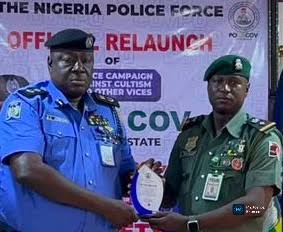
Two Divisional Police Officers (DPOs) in Rivers State have been honoured by separate groups for their contributions to security, crime prevention and improved community-police relations in their respective areas of responsibility.
The beneficiaries are the DPO of Afam Police Division, CSP Endurance Worgu and his counterpart at Oyigbo Police Division, CSP Bello Yusuf.
CSP Worgu was honoured by a group of students under the aegis of Rivers State Graduate Students Associations for what they described as his commitment and outstanding performance in the discharge of his duties.
The students, led by Chidi John Enyie, Esq. said CSP Worgu was selected based on his track record and status as one of the longest-serving young DPOs of Rivers State origin.
According to the group, CSP Worgu has made significant contributions to the protection of lives and property in the area since assuming office following the #EndSARS period.
The students said they were particularly impressed by the improvement in community-police relations under his leadership, noting that professionalism had remained a key feature of his service.
Enyie represented by Comrade Briggs Soku, said the students community was pleased to identify with a Rivers indigene who had distinguished himself in the police force.
He said the students considered it necessary to encourage and celebrate CSP Worgu because of his achievements as a young Rivers man excelling in a profession that many people from the state were often reluctant to join.
Receiving the award at his office in Afam, CSP Worgu expressed gratitude to God and the students for finding him worthy of the honour.
The DPO said the recognition had boosted his morale and encouraged him to sustain his efforts towards maintaining peace and security in the area.
He said he least expected the honour, particularly because it came from the students, adding that the recognition would further motivate him to serve the people better.
CSP Worgu assured residents of Afam that the police would sustain the existing peace in the area.
He appealed to members of the public to support the police by providing credible and timely information, stressing that useful information from residents would make the job of security personnel easier.
Meanwhile, the Ikwerre/Etche Media Association has also honoured the DPO of Oyigbo Police Division, CSP Bello Yusuf, for his efforts in tackling criminal activities in the area.
The media group presented the award following the swift tracking and arrest of five suspected kidnappers who had allegedly terrorised residents of the Kom-Kom axis and other parts of Oyigbo.
The group commended CSP Bello for what it described as his determined efforts to restore confidence and security in the affected communities, particularly Kom-Kom and Obeama.
According to the group, the arrest of the suspects demonstrated the DPO’s commitment to tackling criminality and safeguarding residents.
The media association said residents had received the development with relief, noting that the police action had sent a strong message to criminal elements operating in the area.
Responding, CSP Yusuf appreciated the group for the recognition and reaffirmed that there would be no room for criminality in Oyigbo.
He also commended the media for its role in disseminating credible information to the public, saying the media had remained supportive of the police in the fight against crime.
CSP Yusuf warned criminal elements operating in Oyigbo to leave the area or be prepared to face the full weight of the law.
He assured residents that the police would continue to pursue criminals and work to dismantle their hideouts, regardless of where they might be operating.
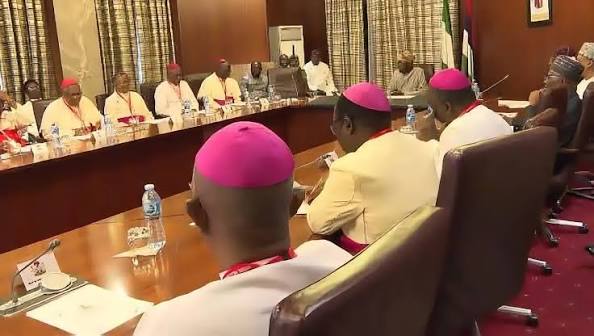
The 5000 Achievers Christian Forum and Colleges of Bishops, Archbishops and Apostles, a Christian interdenominational organisation, has endorsed President Bola Ahmed Tinubu and all candidates of the All Progressives Congress (APC) in Rivers State for the 2027 general elections.
International President of the forum, Archbishop Lucky Aroh, disclosed this during the ordination and consecration of three new Bishops, as well as an award ceremony held in Port Harcourt.
Aroh said the performance of the APC-led Federal Government had endeared the party to the organisation, prompting the forum to declare its support for President Tinubu and other APC candidates in Rivers State.
He said the forum would support all APC candidates in the state during the 2027 elections and urged Nigerians to vote for the party.
Aroh, who is also the General Overseer of Caring Peoples Church, Port Harcourt, charged the newly consecrated Bishops to see their new positions as a great responsibility and dedicate themselves to the advancement of the kingdom of God.
He cautioned them against conduct capable of bringing their offices into disrepute, stressing that their activities would be closely watched by members of the public.
“As Bishops, the eyes of the public are on your activities. You must therefore conduct yourselves in a manner worthy of your calling,” he said.
Also speaking, the International Coordinator of the forum, Bishop Saint Robinson, urged the newly consecrated Bishops to work diligently towards winning souls for the kingdom of God.
Robinson, who was the guest speaker at the event, stressed that the activities of Bishops must at all times be guided by godly principles.
He also called on members of the church to support and cooperate with the newly consecrated Bishops in the discharge of their responsibilities.
The Secretary of the College, Apostle Elizabeth Ayadi Abaye, said the organisation was established to advance the kingdom of God and promote spiritual development.
According to her, the forum has organised several crusades, conferences, prayer meetings, ordinations, consecrations, enthronements, empowerment programmes and other spiritual development activities across the country as part of efforts to win souls for Christ.
Abaye said the organisation has members across the world and disclosed that more programmes had been scheduled to promote the spiritual development and wellbeing of humanity.
The three Bishops consecrated at the ceremony were Prince Alban Chike, Testimony Omenihu Shedrach and Prince Ifemena.
Among those honoured at the event were the Chairman of the Community Development Committee (CDC), Abali Community, Port Harcourt City Local Government Area, Manuchimso Prince Lemmy Wopara, and Clifford Oko Jaja, Coordinator of the 5,000 House-to-House for President Tinubu.
By: John Bibor
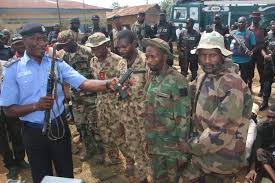
The Rivers State Police Command has arrested a 49-year-old suspected fake soldier, Andrew Atausi, and several other suspects in connection with various criminal activities, including kidnapping, armed robbery, cultism, one-chance robbery and the alleged murder of police officers.
The State Commissioner of Police, CP Olugbenga Adepoju, disclosed this in Port Harcourt, recently during a press briefing at the Command Headquarters, where he said the arrests formed part of the operational achievements recorded by the Command between June and August 2026.
Adepoju said Atausi was arrested on August 10 by police operatives along Ada George, Port Harcourt, while dressed in military uniform and driving a Toyota Hilux painted in Army colours.
The Commissioner said investigation revealed that Atausi was not a member of the Armed Forces, adding that he was suspected to be a serial car snatcher, with three suspected stolen vehicles recovered from him.
He said the recovered vehicles included three Toyota Hilux vehicles without registration numbers and a Toyota Corona Premio with registration number BNY 380 ES, noting that the chassis and engine numbers of the vehicles had allegedly been tampered with.
Adepoju added that an axe and military accoutrements were also recovered from Atausi, as investigation continued into the circumstances surrounding the vehicles and other items recovered from him.
On the June 29 attack on police officers at Aluu Division, the Commissioner said three members of the gang allegedly responsible for the incident had been arrested by operatives of the Violent Crime Response Unit, VCRU-AKU.
The suspects, identified as Maduabuchi Emeka, 34, alleged gang leader; Doctor Chinedu Owhor, 42, and Kamachi Joe, 28, alleged armourer, reportedly led operatives to their hideout at Omagwa where two AK-47 rifles stolen during the attack were recovered.
Adepoju recalled that two police officers were killed during the Aluu attack, while others were wounded and one officer had his leg amputated, stressing that efforts were ongoing to apprehend the fourth suspect.
On kidnapping, the Commissioner said five members of a suspected kidnapping syndicate were arrested in Oyigbo Local Government Area, adding that they allegedly confessed to operations in Kom-Kom, Railway, Obeama and Afam communities.
He said two other suspects from the same network, Anele Ogbogu, 35, alleged to be the gang’s armourer, and Kenneth Eke, 38, were arrested on July 27, with one AK-47 rifle and one SMG rifle recovered.
The Commissioner further disclosed the arrest of suspects in connection with alleged firearm offences, armed robbery, cultism and one-chance robbery, with firearms, ammunition and other exhibits recovered during the operations.
Adepoju assured residents that the Command would sustain intelligence-led, proactive and community-oriented policing in collaboration with other security agencies, while urging members of the public to continue providing credible information that would assist the police in combating crime across Rivers State.
By; King Onunwor
-

 News4 days ago
RSG Targets Nine Million Residents in Mosquito Net Distribution Campaign
-

 Oil & Energy4 days ago
Aiyedatiwa Signs New Electricity Bill
-

 Maritime4 days ago
Marine Minister Commends President Tinubu On NPERA Bill Assent
-

 Oil & Energy4 days ago
NLNG Commissions Research And Innovation Centre In RSU
-

 News4 days ago
KenPoly Holds Eight Convocations, August 29
-

 News4 days ago
RSG Begins Another Phase of Projects Commissioning Today
-

 News4 days ago
RMAFC Completes Revenue Sharing Review, Proposes New Pay
-

 Maritime4 days ago
NAGAFF Petitions IGP Over Alleged Maritime Police Harassment