
Nation
THE STATES

Adamawa
Former Adamawa Deputy Speaker, Alhaji Aliyu Marafa, on Friday lost his bid to return to the House at the PDP primaries held in Mubi town.
Marafa (Mubi-North constituency), who is the junior brother to the Emir of Mubi, Alhaji Isa Ahmadu, polled 66 votes as against 87 votes scored by a clergyman, Rev. Illiya Aguwa.
Our correspondent, who monitored the primaries reports that nine candidates contested in the election, which was held under tight security.
Other candidates including a housewife, Hajiya Maryam Babangida and Alhaji Sulaiman Yahaya, polled six and 33 votes, respectively.
The Returning Officer, Mr Aliyu Bakari, said that more than 240 delegates and party executives drawn from the 11 wards in the area participated in the election.
He added that the election was conducted in accordance with the party’s guidelines.
Bauchi
Bauchi State Police Command says that it will deploy 5,000 policemen to provide security during the voter registration beginning tomorrow.
The Commissioner of Police in the state, Alhaji Muhammad Indabawa, made this known in Bauchi yesterday, while fielding questions from newsmen.
Indabawa said that he had held meetings with all the divisional police officers in the state and put in place strategies to ensure the success of the exercise.
He warned that the police would arrest any prospective voter, who might want to make double registration or cause chaos at registration centres, during the exercise.
Indabawa urged the electorate to actively participate during the voter registration and report any incident during the exercise to the police for prompt action.
FCT
Mr Nduese Essien, the Minister of Lands, Housing and Urban Development, says no effort will be spared in addressing the housing needs of Nigerians.
Essien made the pledge on Tuesday in Abuja when he received Mr Jong Hak-SE, the Ambassador of the Democratic People’s Republic of Korea, who visited him in his office.
“I want to assure you that no effort will be spared in addressing the 17 million housing deficit in the country.
“We have developed a number of programmes to actualise the vision and in the next couple of months, the ministry will begin to roll out the houses,’’ Essien said.
According to him, the Ministry will collaborate with Korea in the area of housing development because of the similarities in the two countries’ housing programmes aimed at addressing their housing needs.
Gombe
Alhaji Abubakar Aliyu, a former director with the Federal Ministry of Agriculture, has been nominated as the governorship candidate of Congress for Progressive Change (CPC) in Gombe State.
Aliyu polled 55,254 votes during the party’s governorship primaries to defeat two other aspirants, Mohammed Daudu and Abubakar Danburam, who scored 1,545 and 231 votes respectively in the contest.
Announcing the result on Wednesday, the Chairman of the party’s primary election committee, Mr. Musa Bishara, said the election was conducted without any hitch.
He, however, said that the election took place in 112 of the 114 wards in the state, adding that it could not hold in Pantami and Burok wards in Shangom Local Government area.
Jigawa
The Congress for Progressive Change (CPC) in Jigawa, on Tuesday elected a former member of the House of Representatives, Alhaji Farouq Aliyu, as the party’s flag bearer for the April general elections.
The Chairman of the election panel, Prof. Mohammed Bello, who announced the results of the primaries in Dutse, said the party adopted option A4 method, whereby all its registered members participated in electing candidates for various positions.
Bello said that Aliyu polled 368,999 votes to defeat his opponent, Dr Lawal Hadejia who scored 114, 885 votes.
Kebbi
Health workers in Kebbi State have suspended their indefinite strike “on principle”.
The Chairman of the workers’ union, Dr Tanko Sununu, told newsmen in Birnin Kebbi yesterday that the state government had assured its members that their demands would be met.
“We have been assured that the demand for reduction on taxation of our members and implementation of policies that would reduce the exodus of medical workers and better conditions of service would be met.
“The union and the negotiation committee will sign an agreement while a circular will be issued to formalise the implementation of our demands,” Sununu said.
Kano
The Kano State branch of the Nigerian Medical Association (NMA) has asked the state government to implement the Consolidated Medical Salary Scale (CONMESS) for its members or face industrial action.
A statement issued on Wednesday in Kano by the union’s Chairman, Dr Dayyabu Ibrahim and Secretary, Dr Kabir Abubakar, gave the government 21 days within which to effect CONMESS.
“We give a 21-day ultimatum effective from January 10, 2011, to the Kano State Government to fulfill its promise, failing which the NMA would have no option but to commence immediate withdrawal of services of its members,” the statement said.
Katsina
The Katsina State Government has released N1.3 billion for the payment of 2011 leave grant to its civil servants.
A statement in Katsina yesterday by Alhaji Nasiru Abdul, the Special Adviser to the Governor on Media and Public Relations, said the payment was in continuation of Gov. Ibrahim Shema’s commitment to pay the grant early in the year.
The statement noted that of the amount, N434.2 million was for the workers in ministries, departments and agencies.
It added that N493.4 million was for the workers in the 34 local government councils while the balance of N429.7 million was for primary school teachers.
“This is the fourth year running Gov. Ibrahim Shema’s administration effected the payment of leave grants to all workers in the state at the beginning of each year,” it added.
Lagos
The Nigerian Bar Association (NBA) in Lagos has called on Mr Hafiz Ringim, the Inspector General of Police, to prosecute political thugs and their sponsors.
Mr Adebamigbe Omole, the chairman, NBA, Ikeja Branch made the call at a press briefing ahead of its 7th Annual Gani Fawenhinmi Lecture/Symposium scheduled to hold tomorrow in Lagos.
Omole said the call was imperative following the incessant violence which has characterised the primaries of the various political parties across the country in the past few weeks.
“Let the Inspector General of Police take the advice of President Goodluck Jonathan and go ahead to prosecute all of them and their sponsors to set an example that nobody is above the law.
Oyo
Amidst tight security, PDP delegates in Ibadan on Wednesday voted Gov. Adebayo Alao-Akala to re-contest the state’s governorship election in April.
Alao-Akala, in the governorship primary election held at Obafemi Awolowo (Liberty) stadium, Ibadan, scored 1,239 votes to defeat a former Minister of Special Duties, Elder Wole Oyelese, who got one vote.
The PDP National Electoral Panel, headed by Alhaji Buhari Bala, declared 66 votes void.
However, members of the PDP faction to which Oyelese belongs, were not present at the venue of the congress.
Our source recalls that Oyelese had on Tuesday instituted a legal action at the Federal High Court, Ibadan, seeking an order to stop the conduct of the governorship primary election.
Plateau
Police and military personnel are to begin joint special patrols to boost the security situation and restore confidence in Jos residents.
Mr Abdulraham Akano, the Plateau Commissioner of Police, told newsmen on Wednesday in Jos that the initiative would reduce the mistrust against the two security forces by residents
“We have resolved to patrol the streets together. While the Hausa/Fulani community trusts the soldiers to maintain peace, the natives have shown some preference for the police.
“To put an end to that, the two forces have decided to work jointly in the interest of peace,’’ he said.
He advised Jos residents to ignore text messages being circulated that six more villages would be attacked.
Sokoto
The Shagari local government of Sokoto State spent N310 million to provide basic infrastructure in the area in 2010.
Alhaji Abdullahi Maigwandu, the Chairman of the Council, told newsmen in Sokoto yesterday that the council executed the projects because of their importance.
He said that about N140 million was used in building 30 units of houses for sale to members of staff of the council on owner/occupier basis.
Maigwandu also said that about N100 million was used to drill 10 motorised boreholes in each of the 10 wards of the council to boost water supply.
Yobe
The Gudi Emirate Council in Yobe State has organised a cultural festival to mobilise its people to participate in the forthcoming voter registration exercise.
Declaring the festival open, the Emir of Gudi, Alhaji Isa Ibn Khaji, said yesterday in Dazawa in Yobe that “traditionally, the Kanti festival is used to celebrate the harvests and to give thanks to Allah.
The emir charged the people to suspend farming and grazing activities during the exercise to ensure they registered.
Khaji advised the people against abstaining from the exercise, and said, “many communities have cried of disenfranchisement in the last census.



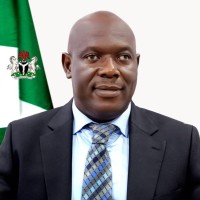
The Hydrocarbon Pollution Remediation Project (HYPREP) has commemorated the 15th anniversary of the release of the United Nations Environment Programme (UNEP) Environmental Assessment Report on Ogoniland, reaffirming its commitment to restoring the environment and improving the livelihoods of affected communities.
In a statement signed by the Project Coordinator, Prof Nenibarini Zabbey, to commemorate the anniversary, HYPREP described the anniversary as a significant milestone in Nigeria’s environmental restoration efforts, noting that the project has made remarkable progress in implementing the recommendations of the landmark UNEP report released on August 4, 2011.
The UNEP report had revealed extensive oil pollution across Ogoniland, severe environmental degradation, and serious public health risks resulting from decades of petroleum operations. It also recommended an initial $1 billion fund to commence the cleanup of the affected communities.
According to HYPREP, the Federal Government formally launched the Ogoni clean-up in 2016, while the Project Coordination Office was established in 2017 to drive the implementation of UNEP’s recommendations.
Zabbey said the current administration has continued to prioritise the project under the Renewed Hope Agenda.
Providing an update on the cleanup, the Project Coordinator disclosed that 30 of the 65 contaminated sites identified by UNEP have been fully remediated, while work is ongoing at several medium- and high-risk locations. It also stated that more than 1.5 million mangrove seedlings have been planted as part of what it described as the world’s largest restoration of oil-degraded mangroves, with over 1,000 hectares of shoreline already rehabilitated.
Zabbey further revealed that 49 Ogoni communities have been connected to potable water schemes through multiple water projects and booster stations aimed at providing safe drinking water across the region.
In the health sector, he said the 100-bed Ogoni Specialist Hospital in Kpite and the 43-bed Cottage Hospital in Buan are nearing completion, adding that several existing health facilities have been upgraded with modern medical equipment, while five ambulances have been donated to improve emergency healthcare services. The Project Coordinator also disclosed that a three-year human health biomonitoring study is being conducted in collaboration with the World Health Organization’s International Agency for Research on Cancer (IARC).
On economic empowerment, Zabbey stated that the Project has created more than 8,000 direct jobs and trained thousands of Ogoni youths and women in various vocational and technical skills, including software development, cybersecurity, aviation, commercial diving, seafaring, mechatronics, and creative arts. The project also reported awarding scholarships to more than 1,000 students, providing grants to small businesses, and supporting persons living with special needs through skills acquisition programmes.
The statement further highlighted ongoing legacy projects, including the Ogoni Power Project and the Centre of Excellence for Environmental Restoration, which it said is about 96 per cent complete. HYPREP also welcomed the recent designation of the Ogoni Wetland as a Ramsar Site of International Importance and pledged to continue promoting biodiversity conservation and sustainable management of the ecosystem.
Marking the anniversary, Zabbey said the progress achieved over the past 15 years demonstrates the collective commitment of government, development partners, stakeholders, and local communities to restoring Ogoniland. He called for renewed collaboration to sustain the cleanup effort, promote environmental sustainability, and support the long-term development of the region. 3
-

 News2 days ago
RSG Targets Nine Million Residents in Mosquito Net Distribution Campaign
-

 Oil & Energy1 day ago
Aiyedatiwa Signs New Electricity Bill
-

 Oil & Energy1 day ago
NLNG Commissions Research And Innovation Centre In RSU
-

 Maritime1 day ago
Marine Minister Commends President Tinubu On NPERA Bill Assent
-

 News2 days ago
KenPoly Holds Eight Convocations, August 29
-

 News2 days ago
RSG Begins Another Phase of Projects Commissioning Today
-

 News2 days ago
RMAFC Completes Revenue Sharing Review, Proposes New Pay
-

 Maritime1 day ago
NAGAFF Petitions IGP Over Alleged Maritime Police Harassment