
Business
Why Foreign Clearing Agents Flood Nigerian Ports -Customs

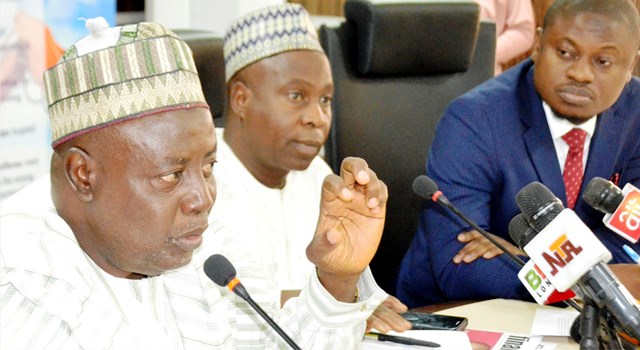
The Apapa Area Comptroller, Nigeria Customs Service, Musa Jibrin, says the clamour by licensed customs agents for the indigenisation of clearance of cargoes at Nigerian ports may not be achieved anytime soon.
Mr Jibrin said this while addressing the executive of the Maritime Reporters Association of Nigeria (MARAN) during a courtesy visit to his office in Lagos on Monday.
The Comptroller said most of the companies operating in the country were owned by foreigners and that the Customs had provided them with licenses for self-clearance.
According to him, the essence of the Ease-of-Doing-Business policy of the federal government is to make the environment friendly for investors as Nigeria is competing for foreign direct investment with other countries.
“Even though the Customs do not grant clearing license to foreigners, it has provisions in its laws for self-clearance for established companies.
“There have been talks about foreigners around the Customs house, in our import and export activities. We are dealing with both Nigerians and Non-Nigerians.
“Some of the companies that operate in Nigeria are owned by foreigners, we have assembly plants for Keke Napep and cars assembly companies owned largely by foreigners,” said Jibrin.
He explained that any company could be given self-clearance and that it was the prerogative of such company to decide who to send to process their customs documentation.
“If a company is owned by a foreigner and the clearing outfit of that company has foreigners, definitely you cannot rule out seeing a foreigner following up an entry,” he said.
The Customs boss added that the law also had a provision for an importer to hire a Customs agent to clear a consignment.
“Therefore, the owner of the consignment may be working from behind while he contracts the responsibility to the clearing agent,” he said.
Speaking on the ongoing construction of wharf road leading to Lagos port, the Comptroller assured that the completion of the road would lead to increase in economic activities for the good of the nation.
According to him, the command now conducts joint cargo examination with other relevant government agencies and issues joint reports for the release of cargoes.
He said with the implementation of the Customs Information Integration System (NICIIS) 2, it was no longer cumbersome for importers to secure the release of their consignments from the port.
“NICIIS 2 intended to encourage compliance with government fiscal policies; it is also for every stakeholder to be on the same platform with customs, to embrace full automation,” said Jibrin.
In his response, President of MARAN, Anya Njoku, stressed the need for Customs to preserve the jobs of Nigerian clearing agents, noting that foreigners had taken over their jobs.
Mr Njoku also said there was need for the Customs Service to issue clearing licenses to individuals and not corporate bodies.
According to him, it is the corporate bodies that perpetrate most of the crimes in the clearance process.
“This is where most of the problems are emanating from, if you look at the form C30, we are looking at individual declarants and not corporate declarants.
“It is the corporate declarants that we are having issues with and we are investigating who they are. This is why we say, we want to know who the declarants are.
“So let the declarant not be a corporate entity, let it be an individual so that we would know those who are criminals and hiding under corporate license,” he said.



Business
Jonathan, Diri, Others Laud Firm’s Milestone in Bayelsa …Says Project Will Drive Industrialisation, Create Jobs



-

 News2 days ago
RSG Targets Nine Million Residents in Mosquito Net Distribution Campaign
-

 Oil & Energy2 days ago
Aiyedatiwa Signs New Electricity Bill
-

 Maritime2 days ago
Marine Minister Commends President Tinubu On NPERA Bill Assent
-

 Oil & Energy2 days ago
NLNG Commissions Research And Innovation Centre In RSU
-

 News2 days ago
KenPoly Holds Eight Convocations, August 29
-

 News2 days ago
RMAFC Completes Revenue Sharing Review, Proposes New Pay
-

 News2 days ago
RSG Begins Another Phase of Projects Commissioning Today
-

 Maritime2 days ago
NAGAFF Petitions IGP Over Alleged Maritime Police Harassment