
News
Host Community Tranche Of PIB Scales Second Reading …Senate Adjourns To Sept 19

A Bill for an Act to provide a framework relating to petroleum producing host community’s participation, cost and benefit sharing among government, petroleum exploration companies and petroleum host communities, has passed second reading at the Senate.
The bill, which passed second reading following an unanimous adoption by the lawmakers through a voice vote at plenary, yesterday, was sponsored by Sen. Kabiru Marafa (Zamfara-APC) and members of the Joint Committee on Petroleum Resources.
The bill, which is one of the tranches of the Petroleum Industry Bill (PIB), scaled first reading on December 8, 2016.
Leading debate on the bill, Marafa said the bill was structured to bring direct funding for the development of host communities.
He said the bill recognised the pitfalls of past efforts and is structured to bring direct funding for the development of the petroleum host communities under the direction and control of the communities themselves.
According to him, when enacted into law the bill will create the much desired harmony and partnership among various stakeholders in the petroleum operation process.
He added that it would engender huge cost savings, extensive investment and overall transformations of the Nigeria oil and gas industry.
The lawmaker further said that the passage of the bill would help in curbing restiveness, by assuaging the fears of petroleum host communities and providing a veritable regime of compensation directly to the communities.
He noted that it would enable the host communities develop their local infrastructure, educate their people, access health care and earn a livelihood.
He added that the development would enable them cope with the devastated environment foisted on them by the poorly managed petroleum producing activities of the oil companies.
Marafa pointed out that the bill sought to establish a pool of funding for development of petroleum host communities and specifies the sources of this funding.
He maintained that the pool would be funded through a direct contribution from petroleum producing companies.
The senator also said that the bill defined petroleum host communities that would be beneficiaries of the fund.
According to him, the bill also provides reciprocal responsibilities on the part of communities by creating grounds for deductions for repair of any damaged oil facilities resulting from sabotage.
“The bill also sets out the requirements for account and audit of fund paid to petroleum host communities,
“Agitation for participation for host community in petroleum business and the conferment of financial and other benefits of the industry on such communities is as old as the petroleum industry in Nigeria.
“In fact this has been a critical issue of deliberation at several national forums and even here in the National Assembly.
“Over the years government has attempted to address this issue by providing forms of palliatives to the host communities but this has always fallen short of the expectations of the people in the manner in which it was conceived.
“This bill is presented in line with the perspective of this 8th Senate to split the PIB into smaller partitions to allow for easier consideration and where necessary further amendments,’’ he said.
He said the financial implications of the bill would result from the registration of Petroleum Host Communities Associations and National Committee on Petroleum Host Communities.
He said cost of registration of Petroleum Host Communities Associations would be borne by relevant communities.
He added that the running cost of National Committee on Petroleum Host Communities would be deducted from funds payable to petroleum host communities by petroleum producing companies.
“No funds are needed to be appropriated by the National Assembly for funding Host Communities Associations and National Committee on Petroleum Host Communities.’’
The lawmaker noted that the bill would provide the requisite succour to host communities that had borne the brunt of oil production activities, ensure peaceful co-existence and substantial investment to the Nigerian oil and gas industry.
Contributing, Sen. James Manager (PDP-Delta), said the 8th Senate had made history for the level of achievement with regard to the ensuring the passage of the Petroleum Industry Bill that had lingered for long.
He commended the sponsor of the bill for an extensive job that would be of benefit to all stakeholders in the industry, particularly the host communities.
According to him, “when passed into law, petroleum host communities will heave a sigh of relief.’’
The President of the Senate, Dr Bukola Saraki, referred the bill to the Joint Committee on Upstream, Downstream and Gas for further legislative action after putting it to a voice vote.
The joint committee was mandated to report back in four weeks.
Similarly, the Senate, yesterday, passed the Nigerian Financial Intelligence Agency (NSIA) Bill as a central body in Nigeria responsible for receiving, requesting, analysing and disseminating financial intelligence reports and other information to law enforcement agencies.
This followed the consideration of the report of the Committee on Anti-Corruption and Financial Crimes presented to the Senate by its chairman, Sen. Chukwuka Utazi during plenary.
The Bill, which was only read for the first time, penultimate Thursday, passed second reading last Tuesday and was approved by the upper legislative chamber on Thursday, exactly one week after.
With the passage of the Bill, the risk of Nigeria being expelled from the Egmont Group has been reduced by half as the bill is just waiting for presidential assent to become law.
The Egmont Group is a network of national financial intelligence units and the highest inter-governmental association of intelligence agencies in the world, with 154 member countries including Britain and the U.S.
Nigeria is currently serving a suspension from the group arising from the non-establishment of the NFIA as a unit standing autonomously.
The group accused the Acting Chairman of EFCC, Ibrahim Magu of interfering with the affairs of the unit and sharing information that should be confidential to the unit with others including the media.
The group had also threatened to expel Nigeria permanently by January 2018 if the Nigerian government failed to grant the unit the autonomy it required to be a member of the EGMONT group.
It is in a bid to save Nigeria from being expelled that the Senate gave accelerated passage to the Bill without conducting a Public Hearing.
It would be recalled that the NFIA, if given the Presidential assent, would act as the central body in Nigeria responsible for requesting, receiving, analysing and disseminating financial information to law enforcement agencies.
Speaking further on the Bill, Sen. Chukwuka Utazi, said the proposal sought to make the unit, which is currently domiciled under the EFCC an autonomous and independent body.
He said that the unit was the backbone of the EFCC but had to be made autonomous as pre-requisite of being a full member of the Egmont Group.
Under the passed Bill, the NFIA would now be domiciled in the Central Bank of Nigeria (CBN) and also report to the National Assembly.
The unit, which represents Nigeria at the global body, is charged with tackling money laundering and monitoring financial flows, a task made easy by its membership of the EGMONT Group.
In his remarks, the Deputy President of the Senate, Ike Ekweremadu, who presided over the plenary, thanked all the senators for ensuring they expedited the process leading to the passage of “this very important bill.
“We believe that this is a major contribution in the fight against corruption in Nigeria and believe the international community will take us more seriously for taking the step today.
“I hope that Egmont Group will also take the decision to lift the suspension on Nigeria because of this step we have taken today.
“The fact of relocating the agency under the CBN will give other agencies sufficient access to the job of this agency in such a way that there will be no control of the NFIU that will not lead Nigeria to another round of suspension.”
He said that the Senate had taken the right step especially when it considered that they had was in consonant with what was done in other countries of the world where they had similar agencies.
Meanwhile, the Senate adjourned sitting to September 19 after deliberations on the two bills.
However, as the 8th Senate winds its second session, the upper chamber has approved amendments of the Niger Delta Development Commission (NDDC), to clear certain ambiguities in the extant law.
The Senate also condemned, “non-transparent process” being adopted by the Ministry of Petroleum Resources and the Nigerian National Petroleum Corporation (NNPC) in concessioning of the Port Harcourt Refinery to ENI/AGIP and OANDO.
The lawmakers, therefore, resolved that every the process of the deal henceforth be stopped while advertisement and open bidding for transparency should be adopted for every maintenance of the refinery.
In the new amendment to the NDDC Act, “an indigene of an oil producing area” to be appointed into the NDDC Governing Board has been clarified to read “an indigene of an oil producing local government area”.
Three PIB related bills, Bill for an Act to Establish a Fiscal Framework, A Bill for an Act to provide for Administrative Framework for the Petroleum Industry and the Host Community Bill passed second reading in the Senate chambers.
The host communities’ bill, provides for Petroleum Host Community Associations (PHCA) “to be funded through a direct contribution from petroleum producing companies”.
The Bill also provides for National Committee on Petroleum Host (NCPHC) Communities designed solely to be “a small advisory body which provides support to the Petroleum Host Community Associations when required”.
According to the provisions of the bill, the cost of Registration of the PHCA will be borne by relevant communities, while the running cost of the NCPHC will be deducted from the funds payable to the communities.
The bills would be subjected to Public Hearings before final passage by the National Assembly when Senate resumes plenary Sitting (after annual recess) on September 19, 2017.
Nneka Amaechi-Nnadi, Abuja




Rivers State Governor, Sir Siminalayi Fubara, has described the late Chief Albert Korubo Horsfall as a distinguished statesman whose contributions to national development brought honour and distinction to the Kalabari Kingdom and Rivers State.
Fubara said Horsfall’s life of service, patriotism, integrity and commitment to humanity had left an enduring legacy that would continue to inspire generations.
The governor spoke through the Secretary to the Rivers State Government, Dr Dagogo Wokoma, at the funeral service of the late elder statesman last Saturday in Buguma, Asari-Toru Local Government Area of the State.
He described Horsfall as a patriotic Nigerian whose leadership and dedication to the country’s development earned him a place in the nation’s history.
“Chief Horsfall was a distinguished statesman whose life was defined by service, patriotism, integrity and commitment to humanity.
“His contributions to our nation, particularly through his service as Director-General of the State Security Service, pioneer Director-General of the National Intelligence Agency and Chairman of OMPADEC, remain significant milestones in our national history,” Fubara said.
The governor noted that the late Horsfall’s contributions to national security, intelligence administration and the development of the Niger Delta would remain part of his enduring legacy.
“His legacy of leadership, national service and dedication to development will remain an enduring source of inspiration to generations yet unborn,” he added.
Fubara urged the bereaved family, the Kalabari people and other Nigerians to uphold the values of peace, unity and selfless service exemplified by the late elder statesman.
The funeral service attracted several dignitaries, including the Director-General of the Department of State Services (DSS), the Director-General of the National Intelligence Agency (NIA), a representative of the Bayelsa State Governor, the Managing Director of NDDC, Chairman of PENDEF and the Regent of the Kalabari Kingdom.
Also in attendance were the Rivers State Commissioner for Education, the Commissioner for Special Projects and other government officials, traditional rulers and stakeholders.
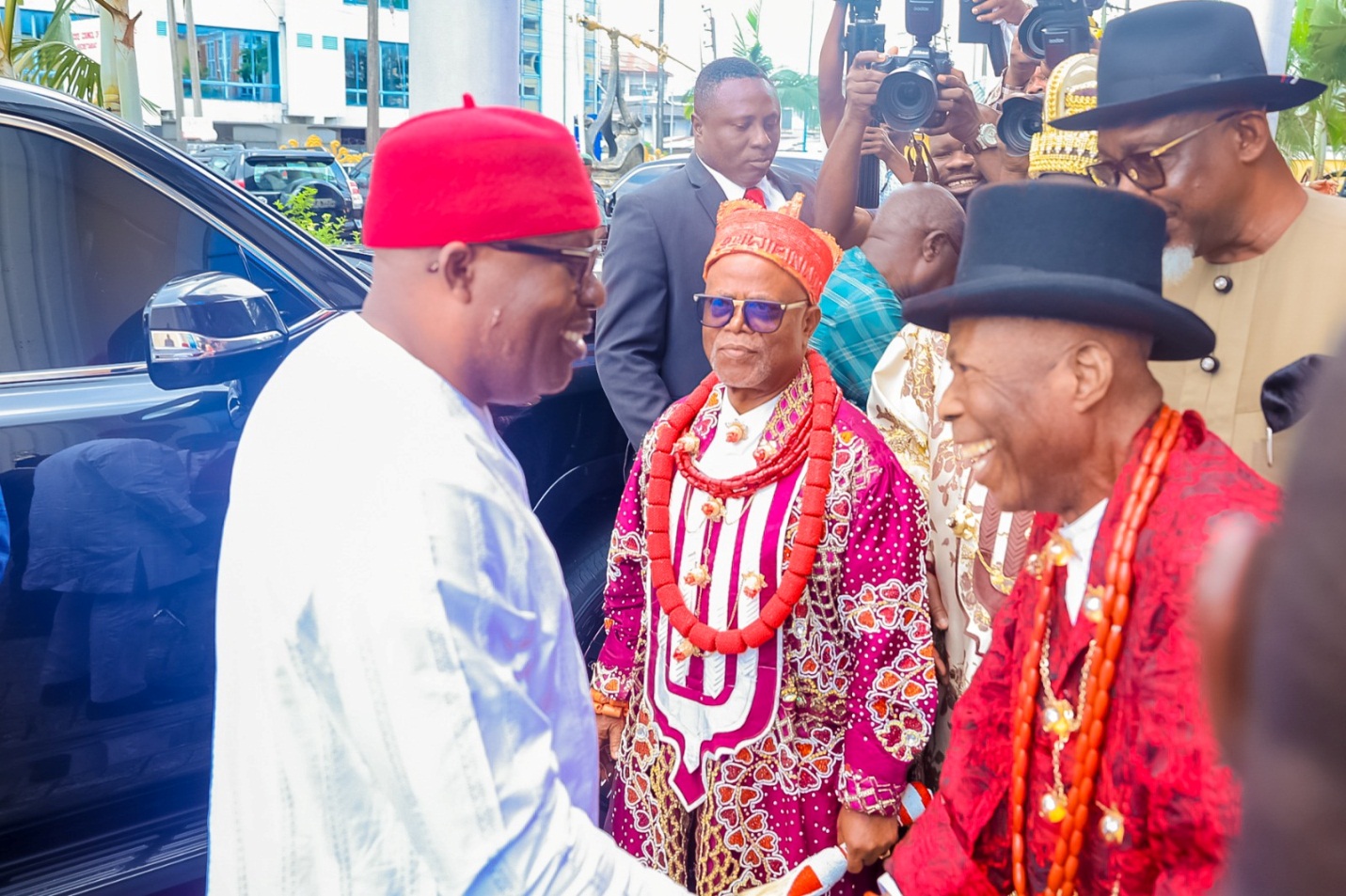
Rivers State Governor, Sir Siminalayi Fubara, has reaffirmed his administration’s commitment to partner with local government councils that prioritize the welfare and development of people at the grassroots.
Fubara stated this last Thursday in Nkoro Town during the commissioning of the newly built Sir Siminalayi Fubara Corps Members’ Lodge, executed by Hon. James A. James, the Chairman of Opobo/Nkoro Local Government Area.
Represented by his Chief of Staff, Mr Sunny Ewule, the governor said the project goes beyond a building to represent hope, hospitality and responsible leadership.
According to him, providing decent and safe accommodation for Nationl Youth Service Corps (NYSC) members who leave their comfort zones to serve in communities is the least government can do.
“Today we are not just commissioning a building, we are commissioning hope, hospitality and responsible leadership. The Chairman of Opobo/ Nkoro LGA, Hon. James A. James has understood a very simple truth that those who come to serve us must serve with dignity,.
“Our young graduates who serves under the NYSC scheme leave the comfort of their homes and travel far to contribute to our communities, they teach our children, they work in our health centres, and they become parts of our families.
“The least we can do is give them a decent, safe and befitting place to lay their heads. What Hon. James A. James has done today is in total alignment with the vision of this administration, an administration that believes in people, that prioritises welfare and that believes development must be felt in every local government and not just in Port Harcourt” he said.
Fubara further urged the beneficiaries of the corpers lodge to make good use of the facilities of the newly built edifice and be good ambassadors of Nigeria, respect the culture and traditions of the host community while continue to serve with dedication and patriotism.
“This Corpers lodge will enhance the security and welfare of serving corps members, boost their morale and make Opobo/Nkoro and even more attractive place for posting, it is a strategic investment in human capital and in peace building,” he said.
He commended the Opobo/Nkoro Council Chairman for aligning with his administration’s vision of ensuring development is felt in all 23 local government areas of the State, and not just in Port Harcourt, adding that the lodge is a strategic investment in human capital, security and peace building.
In his goodwill message, the Rivers State NYSC Coordinator, Mr. Moses Oleghe, said the accommodation was 85 percent of Corps members’ challenges.
Oleghe thanked Governor Fubara for the recent increase in the State allowances for Corps members to N35,000 for those in 21 rural areas and N20,000 for those in Obio/Akpor and Port Harcourt City LGAs, describing the gesture as a moral booster for the corps members.
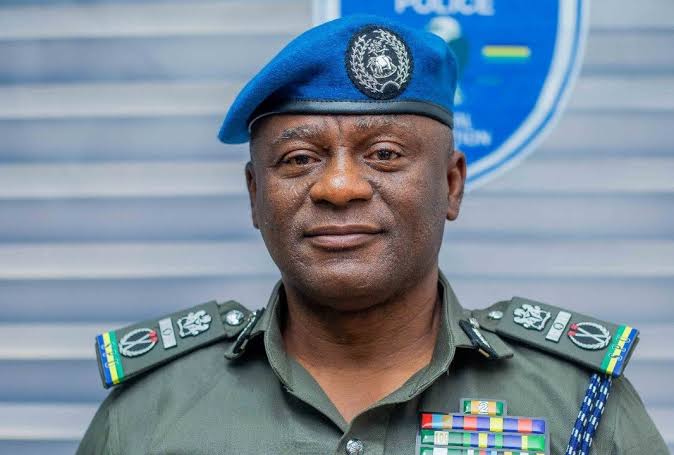
The Inspector-General of Police, IGP Olatunji Disu, has secured an offer of specialised training for up to 5,000 Nigerian police personnel under a proposed security cooperation involving Nigeria, the United States and Italy.
The Force Public Relations Officer, CSP Ani Iniedu, disclosed this in a statement issued at the Force Headquarters, Abuja, at the weekend.
The initiative is aimed at strengthening the operational capacity of the Nigeria Police Force to tackle insurgency, terrorism, kidnapping, arms trafficking and other emerging security threats across the country.
According to the statement, the proposed training programme will focus on counter-insurgency operations, intelligence-led patrols and tactical operations, particularly in difficult rural and forested environments.
Other areas of training include critical infrastructure protection, digital and scientific forensics, cybercrime investigations, explosives detection, financial investigations, asset tracing and anti-extortion operations.
The programme is expected to extend beyond the Police Mobile Force to other specialised units, including explosive ordnance disposal and forensic teams.
As part of the engagement, Disu met with the Commander-General of the Italian Carabinieri, Lieutenant-General Salvatore Luongo, to explore areas of technical assistance, professional training and institutional cooperation.
The police chief and his delegation also visited the Carabinieri Centre of Excellence for Stability Police Units in Vicenza, Italy, where they assessed training facilities and explored opportunities to adapt specialised policing programmes to Nigeria’s security needs.
Proposals discussed during the visit included command courses for 40 senior police officers, leadership training for 100 junior commanders and the deployment of a mobile assistance team to support Police Mobile Force training schools in Gwoza, Borno State, and Ila-Orangun, Osun State.
The discussions also covered the development of a national stability policing doctrine and standard operating procedures to improve professionalism, operational coordination and civilian protection, particularly in communities recovering from conflict.
Other areas of proposed cooperation include canine operations, forensic science and mounted policing, including horse breeding and local capacity development for effective public order management.
To formalise the proposed partnership, the IGP has initiated moves towards a Memorandum of Understanding covering specialised training, technology transfer and operational procedures.
He also invited an Italian Carabinieri assessment team to Abuja to identify priority needs and develop implementation arrangements.
Disu reaffirmed the commitment of the Nigeria Police Force to international partnerships that will strengthen operational readiness, improve investigative capacity and enhance the protection of lives and property.
The statement did not, however, indicate when the proposed training programme would commence or provide a definite implementation timetable.
-
Opinion4 days ago
Ancestorial Worship: My Take (1)
-

 Education20 hours ago
PAMO MEDICAL UNIVERSITY -Nullifies Arrest warrant on VC
-
Niger Delta21 hours ago
PANDEF Seeks 50% Oil Derivation Allocation Increase
-
Rivers19 hours ago
Don Seeks Repositioning Of Tech Education For Dev
-

 Education20 hours ago
IAUE MOVES TO END GHOST WORKERS SYNDROME AS 400 NEW NON-TEACHING STAFF UNDERGO MANDATORY ETHICS TRAINING
-

 News21 hours ago
Fresh Ebola Scare As NCDC Records Two Cases
-
News21 hours ago
Customs Partners EFCC, NDLEA, Others To Tackle Money Laundering, Terrorism Financing
-

 News4 days ago
FG Must Address Nigerians’ Concerns On Reforms -Shettima …Warns Against Misuse of AI, Social Media