
Opinion
Wike: Saving The Future Of Retirees

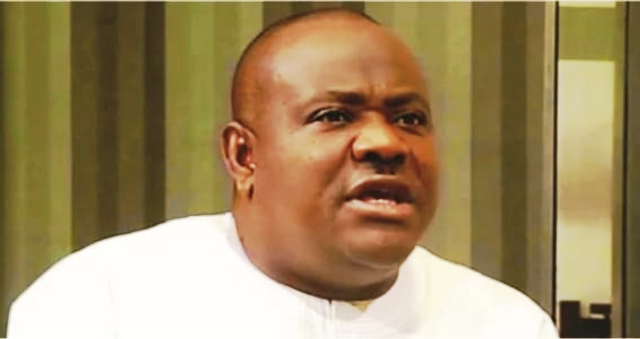
The victory of Governor
Nyesom Wike of the Peoples Democratic Party (PDP) at the governorship polls in 2015 and the landmark judgment of the Supreme Court in 2016, following the vigorous challenge by the opposition party, the All Progressives Congress (APC), is significant and a valuable chapter in the political history of Rivers State. Beside a widespread excitement across the state that attended the Supreme Court judgment, the peace and tranquility that prevailed in Port Harcourt city and the immediate suburbs was tangible.
The reason is obvious and not far to fetch. For instance, here is a governor who, in so short a period, has exhibited an uncommon will in policy and programmes implementation.
Despite the well coordinated distractions, the governor has genuinely warmed himself into the hearts of the people by undertaking projects that have added value to their existence. It is far from exaggeration that residents in some parts of the city, where time seemed to have forgotten them in terms of basic municipal infrastructure like roads, now sing new songs. There is no doubt that the present status of roads within the city befits Port Harcourt as a state capital, making it one of the choice centres for socio-economic activities in the country.
Other sectors of the economy, including agriculture, environment, transport, health, water, housing, security, youth development and education have been overhauled and repositioned to meet the aspirations of the citizenry. . In the education sector, for example, the administration has carried out a drastic review that has made this vital sector more realistic, acceptable, sustalnable and above all affordable. The revolution in the sector cuts across primary, post primary and tertiary institutions. The on-going upgrading of eleven old secondary schools in the three senatorial drstrlcts in the state is a commendable step in the right direction. Also is the provision and upgrading of infrastructure, including the planned establishment of a medical school in the state University of Science and Technology.
The story is the same in the health sector where the administration has made impressive strides within one year. The installation of Polymerase chain viral diseases testing machine at the Braithwaite Memorial Specialist Hospital (BMSH), Port Harcourt, as well as the planned establishment of designated centres for terminally ill persons and the completion of abandoned hospitals and health centres are some of the laudable achievements in the health sector.
The state civil service is not left out in the scheme of things. The drudgery that once characterised the service in recent past has been reduced through regular payment of salaries despite the obvious financial challenges.
The governor has also resuscitated the vibrancy in the MDAs throuqh regular disbursement of the monthly financial overhead for their day to day operatians. His desire for a corruption-free system in the service also informed the ongoing biometric exercise of civil servants in the state. And the exercise so far, according to reports, has produced encouraging results.
In the same vein, the administration has given hope to retired civil servants or pensioners, who, before now and in the words of Chidi Obineche were “left in the lurch, condemned to servitude, destitution and tenuously clutching the shadows of a passing cloud”. Within six months of inception of the administration, the arrears of pensioners in the state were cleared.
Presently, it is heart-warming to know that the governor is looking into the contributorv pension scheme initiated by his predecessor and believed to have been hastily implemented. It is pertinent to mention that the introduction and commencement of the new pension scheme has remained a grave source of worry to civil servants who were already in the service before the new scheme came on board, particularly those in the twilight of their career and others who statutory retired less than one year after the commencement of the new scheme. To them and generality of civil servants, it is one scheme deliberately contrived to impoverish and make them worthless after decades of service to the state.
It is a known fact that the strict structure of the service forbids or disallows the civil servants from engaging in other economic or business ventures, while still in active service. It follows therefore, that his monthly pension and gratuity constitute the lifeline after formal disengagement from service. To shred his retirement benefits through an unclear phantom scheme, as the new pension scheme is design achieve, is to send thousands of this class of citizens to early graves.
It is equally pertinent to recall that prior to the commencement of the scheme, and for the justified fear of the unknown, quite a good number of civil servants voluntarily retired from the service. This unfortunate development robbed the service of some of the experienced hands in the state civil service.
That is why the governor’s interest in this matter is welcome. An early review of the obnoxious scheme would go a long way in restoring the dynamism the civil service is known for. This is one area the governor is expected to make another historic mark and give a good sense of belonging to this vulnerable class of citizens having spent most of their youthful years in service to the state.
Like several other citizens of the state who are within and outside the civil service, I have absolute confidence in Governor Wike to reverse the anti-workers pension scheme. I said this because the catalogue of Wike’s achievements, within the last one year, speaks of a leader determined to leave lasting legacy for posterity.
In several tributes to the governor on his first year anniversary, he was variously described as a trail blazer who is committed to quality governance. For the rest of us, it is congratulations to courageous and purposeful leadership.
Ezekiel-Jenewari is a retired staff of the Rivers State Ministry of Information.
Tonye Ezekiel-Jenewari



Quote: “Ogoniland does not
The latest attack by Chief
Instead, the gathering and
The proposal for a unified
The question should be: who
It is easy to criticise
The people are looking beyond
onest people can reach
Society must therefore

Quote: “Privilege should
There is an old saying that
While motivations cannot
A person who benefits from a
This is why citizens should
We must not assume that
By: Michael Abraham
Quote:”Although the Federal
The recent outburst by the
The senator also alleged
They connect ports, airports,
To address these challenges,
Rwanda and Morocco, for
FERMA should also prioritize
Many Nigerians have asked
-

 News2 days ago
RSG Targets Nine Million Residents in Mosquito Net Distribution Campaign
-

 Oil & Energy2 days ago
Aiyedatiwa Signs New Electricity Bill
-

 Oil & Energy2 days ago
NLNG Commissions Research And Innovation Centre In RSU
-

 Maritime2 days ago
Marine Minister Commends President Tinubu On NPERA Bill Assent
-

 News2 days ago
KenPoly Holds Eight Convocations, August 29
-

 News2 days ago
RSG Begins Another Phase of Projects Commissioning Today
-

 News2 days ago
RMAFC Completes Revenue Sharing Review, Proposes New Pay
-

 Maritime2 days ago
NAGAFF Petitions IGP Over Alleged Maritime Police Harassment