
Nation
THE STATES

Bauchi
The Bauchi State Government says it spent more than N160 million on implementing its Nomadic Education Programme.
Governor Isa Yuguda said this in Bauchi while giving account of his stewardship in the last three years.
Yuguda said the amount was spent to enhance access to quality education for nomadic children.
He said N60 million and N110 million were allocated to nomadic education sector in 2008 and 2009 fiscal years respectively.
The governor said more than N30 million was spent on the purchase and distribution of assorted text books.
“N20 million was spent on the rehabilitation of the Agency for Nomadic Education office complex and to provide two vehicles.
Benue
The Minister of State for Information and Communications, Mr Labaran Maku, has appealed to politicians not to allow political differences to becloud their sense of patriotism.
He made the call while paying tribute to the late Baver Dzeremo, a member of Benue House of Assembly, during a valedictory session in his honour on Monday in Makurdi.
The late legislator, who represented Tarka State Constituency, died on May 21in Makurdi, three days after his return from Germany where he had undergone treatment for five months.
According to the Minister, all politicians are supposed to be guided by ideas because “in a society without commitment to ideas, people use platforms of ethnicity and religion to have their way.”
FCT
The Minister of State for Health, Alhaji Suleiman Bello, says inadequate access to information on health management is responsible for the high rate of teenage pregnancy and drug abuse.
Bello said this in Abuja on Tuesday while declaring open the National Consultative Forum for Advancing Young Peoples’ Health and Development in Nigeria.
The minister said poor nutrition, unemployment and increased drug abuse due to lack of information had severe consequences on the health and development of young people.
He said young people between the ages of 10 and 24 were largely affected, adding that efforts must be made to ensure that health issues of young people were properly addressed.
Gombe
The Gombe State Universal Basic Education Board (SUBEB) spent N1.6 billion on various projects in 2009, the Chairman, Alhaji Aliyu Elnafaty, said on Tuesday.
Elnafaty told newsmen in the state capital that the amount was spent on the construction of 200 new classrooms.
He listed the other projects as the renovation of 400 classrooms, provision of furniture and instructional materials as well as teacher training and workshops for all UBE teachers across the state.
According to the SUBEB chairman, the projects, which started last year, are expected to be completed by the end of June.
He appealed to the private sector to assist the state government in improving educational standards.
Kaduna
The National Population Commission (NPC) in Kaduna, has called on local governments to enforce the registration of births and deaths.
The commissions ’ vital registration Head of Department, Malam Umar Adamu made the call in an interview with newsmen in Kaduna.
Adamu said both registrations were useful for national planning and school enrolment.
He expressed regret that in spite of the N25 million that was released by the Kaduna State Government in 2009 for the training of village scribes on birth and death registration, the response had not been encouraging.
According to him, if the government made it mandatory for children to present their birth certificates before school enrolment, it could have received a more favourable response from parents.
Katsina
The Katsina State Government has spent N1.2 billion on the construction of 5.5 kilometres of dual carriage roads in Dutsin-ma town.
The Permanent Secretary, Ministry of Works and Housing, Alhaji Danjuma Alti, said this in an interview with newsmen in Katsina recently.
He said that part of the money was also used in the construction of drains along some major roads and the provision of solar powered security lights.
”The road has since been completed and has been put into use,” he said.
He said the completion of the project brought to five, the number of such roads completed in five of the seven old local government headquarters in the state.
Kebbi
The Election Petition Tribunal in Kebbi has dismissed the petition of Alhaji Samba Aliyu (DPP) challenging the election of Alhaji Atiku Bagudu (PDP) in the Kebbi Central Senatorial by-election held in December 2009.
The Tide’s source reports that the Kebbi Central senatorial by-election was conducted in December 2009 following the appointment of Alhaji Adamu Aliero as then FCT Minister.
Delivering judgment, Justice Elizabeth Kpojimi, said that the petition was dismissed for want of evidence.
She said that the petitioner failed to convince the tribunal beyond reasonable doubt that the respondent had been indicted by any competent court on allegations of mismanagement of public funds.
Lagos
A cleric, Dr Fred Odutola, in Lagos said communicating in mother tongues will promote literacy and help children to imbibe good morals.
Odutola, the Chief Executive Officer of the Bible Society of Nigeria (BSN),said in an interview with newsmen that speaking and writing in vernacular sensitised children to societal values.
“It helps literacy a lot; there are certain things in a language that you cannot translate into English,’’ the cleric said.
He added that it would also enable children to identify with their origin and its norms.
“Our languages are rich in culture and morals. There is respect in our language,’’ he said.
The cleric warned that the lack of speaking of mother tongues would force some languages into extinction and make some Nigerians to lose their identities.
Ogun
Acute shortage of potable water has become a source of serious worry for residents of Ijebu-Ode, the News Agency of Nigeria (NAN) reports.
Some residents who spoke with The Tide’s source, appealed to both the state and the local governments to urgently find a lasting solution to the problem.
They said that many people were now buying water or fetching from nearby rivers to meet their daily needs.
They said that if the water problem was not resolved on time, it might lead to the outbreak of water-borne diseases even as water hawking business was booming.
The development, it was learnt, has made many residents to embark on an endless search for potable water.
The residents urged the government to pay adequate attention to the Iyemoji Dam, said to be the major source of water for the town and its environs.
Ondo
The Ondo State House of Assembly has acknowledged the receipt of the names of two indigenes of the state, nominated for the post of commissioner by Governor Olusegun Mimiko.
The Majority Leader of the Assembly Mr Ifedayo Akinsoyin, who the confirmation on Monday in Akure, said the list had been received by the clerk of the House, Alhaji Jaye Dada.
In a letter signed by the Secretary to the State Government, Dr Rotimi Adelola,on Thursday, Mimiko nominated Dr Pius Osunyikanmi and Prince Oladiran Iyantan as commissioners.
Akinsoyin said the Assembly would do its legislative functions right as it had the interest of the state at heart.
Oyo
Authorities of the Lead City University (LCU), Ibadan, have threatened to expel lecturers and students, engaging in indiscipline.
Prof. Babajide Owoeye, Chairman of the Governing Council of the LCU who made the disclosure in an interview with newsmen in Ibadan said that the institution had created an atmosphere of transparency where the interest of everyone was protected.
“There is zero tolerance for acts of indiscipline. And in many occasions, we have had to ask some students to leave.
“Not just students, even members of staff. Once you cannot adapt to our philosophy here, whether you are staff or student, you have to leave,” he added.
Owoey said: “at LCU no lecturer has power to terrorise any student.
“And we will not say that because you are a student, you think that it confers on you the immunity to misbehave. We don’t allow that,” he said.



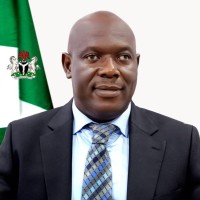
The Hydrocarbon Pollution Remediation Project (HYPREP) has commemorated the 15th anniversary of the release of the United Nations Environment Programme (UNEP) Environmental Assessment Report on Ogoniland, reaffirming its commitment to restoring the environment and improving the livelihoods of affected communities.
In a statement signed by the Project Coordinator, Prof Nenibarini Zabbey, to commemorate the anniversary, HYPREP described the anniversary as a significant milestone in Nigeria’s environmental restoration efforts, noting that the project has made remarkable progress in implementing the recommendations of the landmark UNEP report released on August 4, 2011.
The UNEP report had revealed extensive oil pollution across Ogoniland, severe environmental degradation, and serious public health risks resulting from decades of petroleum operations. It also recommended an initial $1 billion fund to commence the cleanup of the affected communities.
According to HYPREP, the Federal Government formally launched the Ogoni clean-up in 2016, while the Project Coordination Office was established in 2017 to drive the implementation of UNEP’s recommendations.
Zabbey said the current administration has continued to prioritise the project under the Renewed Hope Agenda.
Providing an update on the cleanup, the Project Coordinator disclosed that 30 of the 65 contaminated sites identified by UNEP have been fully remediated, while work is ongoing at several medium- and high-risk locations. It also stated that more than 1.5 million mangrove seedlings have been planted as part of what it described as the world’s largest restoration of oil-degraded mangroves, with over 1,000 hectares of shoreline already rehabilitated.
Zabbey further revealed that 49 Ogoni communities have been connected to potable water schemes through multiple water projects and booster stations aimed at providing safe drinking water across the region.
In the health sector, he said the 100-bed Ogoni Specialist Hospital in Kpite and the 43-bed Cottage Hospital in Buan are nearing completion, adding that several existing health facilities have been upgraded with modern medical equipment, while five ambulances have been donated to improve emergency healthcare services. The Project Coordinator also disclosed that a three-year human health biomonitoring study is being conducted in collaboration with the World Health Organization’s International Agency for Research on Cancer (IARC).
On economic empowerment, Zabbey stated that the Project has created more than 8,000 direct jobs and trained thousands of Ogoni youths and women in various vocational and technical skills, including software development, cybersecurity, aviation, commercial diving, seafaring, mechatronics, and creative arts. The project also reported awarding scholarships to more than 1,000 students, providing grants to small businesses, and supporting persons living with special needs through skills acquisition programmes.
The statement further highlighted ongoing legacy projects, including the Ogoni Power Project and the Centre of Excellence for Environmental Restoration, which it said is about 96 per cent complete. HYPREP also welcomed the recent designation of the Ogoni Wetland as a Ramsar Site of International Importance and pledged to continue promoting biodiversity conservation and sustainable management of the ecosystem.
Marking the anniversary, Zabbey said the progress achieved over the past 15 years demonstrates the collective commitment of government, development partners, stakeholders, and local communities to restoring Ogoniland. He called for renewed collaboration to sustain the cleanup effort, promote environmental sustainability, and support the long-term development of the region. 3
-

 News2 days ago
RSG Targets Nine Million Residents in Mosquito Net Distribution Campaign
-

 Oil & Energy2 days ago
Aiyedatiwa Signs New Electricity Bill
-

 Maritime2 days ago
Marine Minister Commends President Tinubu On NPERA Bill Assent
-

 Oil & Energy2 days ago
NLNG Commissions Research And Innovation Centre In RSU
-

 News2 days ago
KenPoly Holds Eight Convocations, August 29
-

 News2 days ago
RSG Begins Another Phase of Projects Commissioning Today
-

 News2 days ago
RMAFC Completes Revenue Sharing Review, Proposes New Pay
-

 Maritime2 days ago
NAGAFF Petitions IGP Over Alleged Maritime Police Harassment