
Politics
2015 Presidency: The Odds

As the February 14
Presidential election draws nearer by the day, and parties put finishing touches to their strategies to either retain or gain power, permutations as to which party waxes more or gains more ground are rife. As events unfold, there is little doubt that the race will be between the ruling Peoples’ Democratic Party (PDP) and the leading opposition party, All Progressives Congress (APC).
Following the emergence of incumbent president, Goodluck Ebele Jonathan (GEJ) and former Head-of-State, General Mohammadu Buhar (GMB), as the candidates of the PDP and APC respectively, the battle for Nigeria’s presidency has begun in earnest.
As expected, both presidential candidates have as much chances of emerging victorious as their followers chose to portray or make keen observers believe. One certainty, however, is that at the end of the day, only one aspirant will emerge. So, what are the odds against, or in favour of the two presidential gladiators.?
For GEJ, there is no doubt that the catch phrase, “A breath of fresh air” that was the crux of his pre-2011 campaign that saw him coast to victory in the 2011 election seem to have fizzled out. So have all the goodwills and promises of a better Nigeria.
Pundits have expressed the belief that the disillusionment trailing the GEJ presidency garnered so much momentum because it basically originated from what is largely seen as within the inner chambers of the PDP, the very heart of the party caucus.
Key areas in which GEJ has been identified to have given a lackluster attention and hence deemed to have failed could be summerised into corruption and insecurity, and a major advocate in this wise is former president, Olusegun Obasanjo.
Being a key figure in PDP, whatever the former president says cannot be dismissed as mere frivolity. Comparatively, there is the belief that no matter what can be said about former President Obasanjo, he at least made some efforts against corrupt officials when he was in charge, even if such efforts were often viewed as sectional and tokenistic.
In his recent autobiography titled “My Watch”, Obasanjo said of corruption in GEJ’s first tenure; “under Jonathan we seem to have gone from frying pan to fire. If in the past corruption was in the corridors of power, it would seem now to be in the sitting room, dinning room and bedroom of power”.
The former president further drove his point when he alleged that incremenating corruption-related documents against a former governor was ordered to be removed from a file because the culprit was close to GEJ.
As a result of his perceived inability to address issues of corruption, therefore, many Nigerians, as amplified by the opposition, do not see GEJ as ready to fight corruption, which no doubt, has over the years proven to be the bane of Nigeria’s woes, both within and outside the shores of Nigeria.
The same reason is given for GEJ’s inability to secure lives and properties in his domain, as exemplified by the increasing and more deadly activities of the terrorist sect, Boko Haram, which had sent thousands to their early grave, and has held over 200 Chibok secondary school girls hostage since April 15, 2014.
In a summarizing manner, the founder of Adoration Ministry, Enugu Rev. Fr. Ejike Mbaka, during his end-of-year mass on the eve of 2015, said GEJ had surrounded himself with very corrupt officials. As a result, the President, he said, has turned a blind eye to their corrupt activities while millions of Nigerians wallow in abject poverty and endless insecurity.
According to Mbaka, “Jonathan has ruled for six years. We need a change. NEPA (electricity) is not working because of corruption. The privatization of public companies has not yielded any fruit because of corruption.
“Jonathan surrounded himself with very corrupt officers who advise him. Nigerians are sick and tired of wasting innocent lives without government doing enough to stop the destruction.
“Up till now, nobody knows the whereabouts of the innocent Chibok girls kidnapped by Boko Haram and we say we have a government that cannot guarantee the welfare, safety and security of the citizens.
“Nigerians are calling for change. We need change. We don’t want to move from bad luck to bad luck. Nigerians want to move from bad luck to good luck”, he said.
While acknowledging the stand by the opposition in a piece titled “Can Jonathan survive this blitzkriegs?” in This Day, Simon Kolawole identified four categories of GEJ’s critics: Opposition figures and other political opponents; those who lost out in the political game; those northerners who are still bitter that Jonathan “hijacked” power after the death of President Umaru Musa Yar’Adua in 2010; and those who have neither partisan nor sectional sentiments against Jonathan as they are sincerely critical of certain aspects of his stewardship.
Kolawole had no qualms with opposition figures and other political opponents because they must do their bidding.
“There is no way APC would come out and praise Jonathan; that is political suicide. They want power. They want his job. Theirs is to say Jonathan or PDP has not done well and that if Nigerians give them a chance, they would do much better.
“This is a universal characteristic of opposition politics. You can argue that they do not always work with facts, but what is politicking? PDP would do the same if APC was in power”, he said.
For those who lost out in the political game, the writer observed that many politicians, who supported GEJ in 2010 and 2011, feel abandoned, “they feel like a deflated orange: squeezed, sucked and dumped. They feel Jonathan treated them to a one-night stand, whereas they wanted an affair.
“Some wanted appointments; others simply desired respect and recognition. But they are bitter that Jonathan jilted them after getting what he wanted. In no time, they became his sworn enemies”, he said.
The northerners who are embittered that GEJ hijacked their right after the death of President Yar’Adua feel so because they say when they conceded power to the South in 1999, they did it with the understanding that Obasanjo would do only one term. But he did the maximum two terms.
Consequently, PDP, as the ruling party, agreed to north/south power rotation every eight years. Unfortunately, Yar’Adua died prematurely.
“Jonathan took over and refused to let so. To some northerners, there is nothing Jonathan can do to make them happy. Even if he turns Nigeria to Dubai, their message is clear; Thank you and just get out of here”, he said.
The last category, which have neither partisan nor sectional sentiments against Jonathan are merely genuinely bothered at his handling of critical issues such as corruption and Boko Haram.
“In truth, Jonathan lost a lot of sympathizers with the Chibok School girls’ saga, which turned into the ‘Na only you waka come’ tragicomedy in the corridors of power”, Kolawole concluded.
As a word of advise, and in seeming appreciation of the political scenario, Kolawole noted: “It is not in the best interest of President Jonathan to lump all his critics together. As a leader, he has to sit down, analyse his critics and their criticisms, and work out his actions and reactions appropriately.
“He sure has millions of critics, like any other leader. People criticize with different motives. People have different agenda even when they are saying the same thing. Unfortunately, you will miss the massage when you lump everyone together and respond to every critic and criticism with cynicism and antagonism”.
As is usual with incumbency and opposition in politics, the weakness of the ruling government is what opposition latches upon to score its points, and the APC, seem to be doing a good job of it.
Against an allegedly “weak” GEJ, the APC, which is the leading opposition party, has fielded a perceived “strong” candidate in GMB, based on his track record. One key factor that constitutes a plus to GMB is his brief tenure as Military Head of State from the 1st of January 2004 to August 2005.
Alongside his second in command, late Major-General Tunde Idiagbon, GMB launched the popular War Against Indiscipline (WAI), through which they attempted to set a new road-map for the country’s politics.
They introduced strict economic and political policies that have been widely described as “Buharism”. It saw him refuse to adopt the IMF conditionality to devalue the naira. While his critics blamed him then for the resultant job losses, closure of some businesses, and decline in living standards, his admirers commended him for adopting unique economic measures that enabled his government to reduce inflation, curb import of needless goods and curtail crude oil theft.
Given his history as a leader with a strong character, GMB is also described as incorruptible and hence seem as the messiah that Nigeria needs to combat the ailing corruption-infested Nigerian economy.
Ironically, GMB’s critics also consider his strong personality as a minus, saying that he would not be a listening president like GEJ. But his followers have expressed strong feelings that the former Army General’s popularity is increasing by the day, and before February 14 where the pendulum for the presidency will swing to will be too glaring not to see in favour of the APC candidate.
Moreso, as is popularly said,There is little doubt that Nigerians want to change, one that would loosen the stranglehold of corruption in the nation’s polity. What is, however, in contention is who represents that change so yearned for. Is it a repented GEJ, or a brand new GMB?
Soibi Max-Alalibo
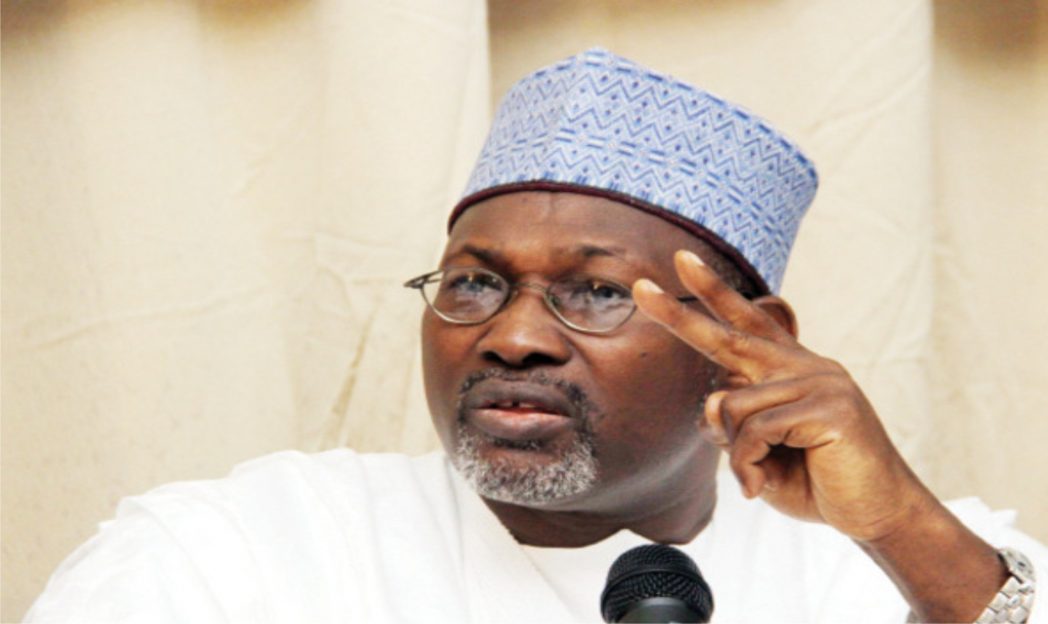
Prof. Attahiru Jega, INEC Chairman



The Independent National Electoral Commission (INEC) has extended the deadline for political parties to submit the list of candidates for the 2027 governorship and state Houses of Assembly elections from Saturday, August 8, to Tuesday, August 11, 2026.
The commission announced the extension in a statement issued on Saturday and signed by the National Commissioner and Chairman of its Information and Voter Education Committee, Mohammed Haruna.
According to INEC, the decision followed appeals by political parties for additional time to complete the submission process through the dedicated online portal.
“The submission window, which according to the revised Timetable and Schedule of Activities for the General Election was originally scheduled to close on Saturday, 8th August, 2026, has been extended to Tuesday, 11th August, 2026,” the commission said.
In a a related development, INEC announced the suspension of PVC collection in Osun State ahead of the August 15 governorship election.
The commission said voters who applied for replacement of lost, damaged or defaced Permanent Voter Cards would have until midnight on Sunday, August 9, to print downloadable copies of their cards.
The electoral body explained that the deadline was necessary to enable it compile data on downloaded PVCs and produce final statistics on the total number of cards collected ahead of the election.
INEC said PVC collection in Osun commenced at the Registration Area level from July 22 to 28, 2026, but was extended to July 31 following complaints about large crowds and difficulties experienced by voters at collection centres.
The exercise subsequently moved to the local government level and ran from August 1 to 7.
The commission also disclosed that replacement downloadable PVCs had been made available to voters in Odo-Otin and Ife Central Local Government Areas following the theft of cards during attacks on the two collection centres.
It stressed that the stolen cards could not be used to vote.
INEC reassured Osun residents of its preparedness for the August 15 governorship election.
“The commission reiterates that the stolen cards cannot be used to vote.
“INEC reassures the people of Osun State of its readiness to conduct a free, fair, credible and inclusive governorship election on 15th August, 2026,” the statement said.
The commission said the deadline, initially set for Saturday, 8 August, has been extended to Tuesday, 11 August 2026, following appeals from political parties for more time.
INEC also announced that the window for voters who applied to replace lost, damaged or defaced PVCs to download their replacement cards will close at midnight on Sunday, 9 August.
The move is to enable the commission compile final PVC collection figures ahead of the 15 August Osun governorship election.
INEC said replacement downloadable PVCs have also been provided to affected voters in Odo-Otin and Ife Central Local Government Areas after hoodlums carted away cards from two collection centres, stressing that the stolen cards cannot be used to vote.
The commission reaffirmed its readiness to conduct a free, fair, credible and inclusive election in Osun State.
Gov. Kefas made the remarks over the weekend at the Federal Medical Centre (FMC), Jalingo, during the flag-off of the second phase of the Renewed Hope Medical Outreach in Taraba State, organised as part of activities marking Prof. Yilwatda’s 58th birthday.
The governor commended Prof. Yilwatda for choosing to mark his birthday by providing medical care to people in need.
“What Professor Nentawe did is a powerful demonstration of what leadership should be,” Gov. Kefas said.
He assured that his administration would continue to support initiatives that complement government efforts to improve healthcare delivery and the wellbeing of residents.
Speaking at the event, Prof. Yilwatda called on Nigerian leaders to embrace the culture of giving and use their positions to touch the lives of the less privileged.
He said his decision to celebrate his 58th birthday in Taraba State was deliberate and informed by the needs of underserved communities, particularly people who face difficulties accessing healthcare because of distance and financial constraints.
According to him, the intervention followed a needs assessment and was extended across the three senatorial districts of the state.
He said the exercise commenced on August 3 at Takum General Hospital and covered the Federal University Teaching Hospital, Wukari; First Referral Hospital, Sunkani, Ardo-Kola Local Government Area; General Hospital, Bali; General Hospital, Gembu; and FMC Jalingo.
Prof. Yilwatda said the intervention provided medical services to thousands of beneficiaries, including people who required surgical procedures.
He said sustainable national development could only be achieved when strong institutions placed Nigerians at the centre of development.
“Leadership is about service,” he said, urging political and public leaders to make giving back to society an important part of their responsibilities.
He reaffirmed his commitment to serving Nigeria and its people, saying his personal vision was to make every day of his life useful to humanity.
“Every day that I live, the vision is: let it be useful to humanity,” he said.
The Taraba State Commissioner for Health, Dr. Bordiya Buma, commended the initiative, saying it was consistent with the Renewed Hope agenda and efforts to strengthen healthcare delivery in the state.
Dr Buma said the second phase followed the successful completion of the first phase, which was conducted simultaneously in six local government areas, with two LGAs selected from each of the three senatorial districts.
According to him, more than 10,000 patients were attended to during the first phase, including people with medical and surgical conditions.
He disclosed that 327 general surgeries, 71 eye surgeries and 575 dental procedures were carried out during the exercise.
The commissioner expressed appreciation to President Bola Tinubu for the Renewed Hope Medical Outreach and thanked Prof. Yilwatda for supporting the initiative and choosing Taraba State as a beneficiary.
The Minister of Health and Social Welfare, Prof. Muhammad Ali Pate, also commended Prof. Yilwatda for choosing Taraba State to mark his 58th birthday through a medical outreach.
Prof. Pate said making healthcare the centrepiece of the birthday celebration was significant because health affects everyone.
-

 News2 days ago
RSG Targets Nine Million Residents in Mosquito Net Distribution Campaign
-

 Oil & Energy2 days ago
Aiyedatiwa Signs New Electricity Bill
-

 Maritime2 days ago
Marine Minister Commends President Tinubu On NPERA Bill Assent
-

 Oil & Energy2 days ago
NLNG Commissions Research And Innovation Centre In RSU
-

 News2 days ago
KenPoly Holds Eight Convocations, August 29
-

 News2 days ago
RSG Begins Another Phase of Projects Commissioning Today
-

 News2 days ago
RMAFC Completes Revenue Sharing Review, Proposes New Pay
-

 Maritime2 days ago
NAGAFF Petitions IGP Over Alleged Maritime Police Harassment