
Politics
APC Chieftain Hails Tinubu For Sacking Suspended INEC RECs

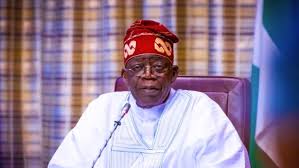
A chieftain of the All Progressives Congress (APC) in Osun State, Olatunbosun Oyintiloye, has hailed President Bola Tinubu for sacking three Resident Electoral Commissioners (RECs) of the Independent National Electoral Commission (INEC) accused of misconduct during the 2023 general elections.
The affected INEC RECs are Ike Uzochukwu (Abia State), Hudu Yunusa-Ari ( Adamawa State) and Nura Ali ( Sokoto State).
Mr Oyintiloye, who said this while speaking with journalists yesterday in Osogbo, also commended members of the Senate for granting the President’s request to sack the suspended RECs.
The APC chieftain said the sacking of the RECs would serve as strong warning to others, ensure accountability and restoring the electorate’s confidence in the country’s electoral process.
“I want to commend the president for the bold step to terminate the appointments of the suspended RECs. This is a demonstration that the President is keen to free, fair and credible election that Nigerians will be proud of.
“The suspension and termination of the appointments of the three RECs; Ike Uzochukwu (Abia), Hudu Yunusa-Ari (Adamawa), and Nura Ali (Sokoto) will serve as a deterrent to other RECs who have similar traits. The President has promised to fight corruption and this will serve as a lesson to other public servants that the country is moving forward”, he said.
Mr Oyintiloye, a former lawmaker, also commended INEC for taking disciplinary action against the RECs in March, 2023.
He recalled that Mr Yunusa-Ari was suspended for unlawfully usurping the Returning Officer’s role in the Adamawa State governorship election and making an unauthorised declaration of results.
He said that Messers Ali and Uzochukwu were suspended for dereliction of duty, with Mr Ali facing prosecution over bribery allegation.
Mr Oyintiloye also commended INEC over the prosecution of Prof. Ignatius Udok for electoral fraud, adding that “this shows the commission’s commitment to electoral integrity.”
He said that the sentencing of Prof. Udok, who was the Returning Officer for Essien Udim State Constituency in the 2019 general elections by an Akwa Ibom State High Court sitting in Uyo, was a strong signal that the country’s electoral reform was evolving.
Mr Oyintiloye, however, urged the President not to relent in his fight against corruption, noting that the effort had started yielding positive results.


The Commission disclosed the figure in its weekly update for week 14 of the second phase of the exercise, which ended on Friday, April 17, 2026.
According to the breakdown, 2,259,288 Nigerians completed their registration through the online pre-registration portal, while 1,489,416 finalized their registration physically at designated centres nationwide.
INEC noted that the figures remain preliminary and are subject to further verification and data cleaning processes to ensure accuracy ahead of the consolidation of the national voter register.
With the conclusion of the registration phase, the Commission has now shifted focus to the display of the Register of Voters for Claims and Objections, a statutory stage aimed at strengthening the credibility and integrity of the voters register.
The display exercise is scheduled to hold from April 29 to May 5, 2026, across designated centres nationwide, providing citizens the opportunity to verify their details and raise objections where necessary.
The Commission urged all registered voters from the concluded phase to take advantage of the exercise to confirm the accuracy of their information and assist in identifying ineligible entries, including duplicate registrations, deceased persons, and non-citizens.
INEC explained that the Continuous Voter Registration exercise is being conducted in phases, with the first phase running from August 18 to December 10, 2025, while the second phase commenced on January 5, 2026 and ended on April 17, 2026.
The Commission further stated that the date for the commencement of the third phase will be announced in due course.
Reaffirming its commitment to credible elections, INEC stressed that maintaining a clean and accurate voter register remains central to ensuring free, fair, and transparent electoral processes in Nigeria.
The Executive Director of IPC, Mr Lanre Arogundade, informed the journalists that the dialogue was sponsored by the European Union, under the auspices of the EU-Support to Democratic Governance in Nigeria (EU-SDGN II), Component 4: Support to Media.
According to the veteran media practitioner, the programme is aimed at strengthening the capacity of the media to promote credible elections through factual, accurate and fair reporting.
He explained that the programme is part of a broader five-year intervention designed to support democratic governance and improve the role of the media in Nigeria’s electoral process, stressing that fact-checking and inclusive reporting are critical responsibilities for journalists, especially during electioneering.
He described the media as a central role agent with regard to upholding transparency and accountability in the democratic process.
A resource person and Director of Journalism Clinic, Lagos, Mr Taiwo Obe, enjoined journalists to embrace the evolving technology so that they would not be in the backwaters in the practice of the profession.
He advised journalists not to downplay Artificial Intelligence (AI) in their bid to remain relevant in the media environment by being abreast of the changing patterns of news consumption.
The journalism teacher explained that with digital transformation of the media industry, it had become imperative for journalists to constantly upgrade and update their skills, stressing the fundamental place of attitude and self-development and underscored the dynamic nature of media consumption in the digital age, thereby compelling journalists to embrace tools and platforms, but without much reliance on AI.
In his lecture, a Professor of Mass Communication at the Federal University Oye-Ekiti (FUOYE), Adebola Aderibigbe, advised journalists in Ekiti State to ensure that coverage of the upcoming governorship poll is issue-based rather than dwelling on personalities.
He added that sensationalism should not occupy the front-burner of any discussions concerning the 2026 election, admonishing that sustenance of democracy is anchored on responsible journalism.
”Journalists must prioritise accuracy, fairness and balance in their reports by verifying facts and giving all parties involved in political matters the opportunity to present their views”, he said.
According to the university don, the election will not be defined by personalities, but by issues. ”Let issues be the pivotal ring upon which every discussion should be made. Sensationalisation of issues should not be the bedrock of discussions in the 2026 election”, he added.
“Do not hear from Party A without hearing from Party B, otherwise the report will be skewed to one side and once issues of elections are skewed, problems will naturally arise”, he stressed.
-
Politics4 days ago
ADC ELECTS NEW EXECUTIVES IN RIVERS LGA
-
Politics4 days ago
INEC To Display Voters Register April 29 As CVR Phase II Closes Nationwide
-
Politics4 days ago
Ekiti 2026: IPC Trains Journalists On Election Coverage
-
Sports4 days ago
WAN Mourns Ex-NFF President Galadima
-
Sports4 days ago
Brentford Miss Chance To Move Up
-
Politics4 days ago
GROUP BLASTS ATIKU CRITICAL COMMENTS AGAINST JONATHAN … SAYS EX-VP CAREER ASPIRANT
-
Sports4 days ago
NBA PlayOff: Lakers Make Winning Start
-
Sports4 days ago
NSF champion Osaretin wins at Tour du Faso