
Editorial
Hurray, Siminalayi Fubara Is 50!

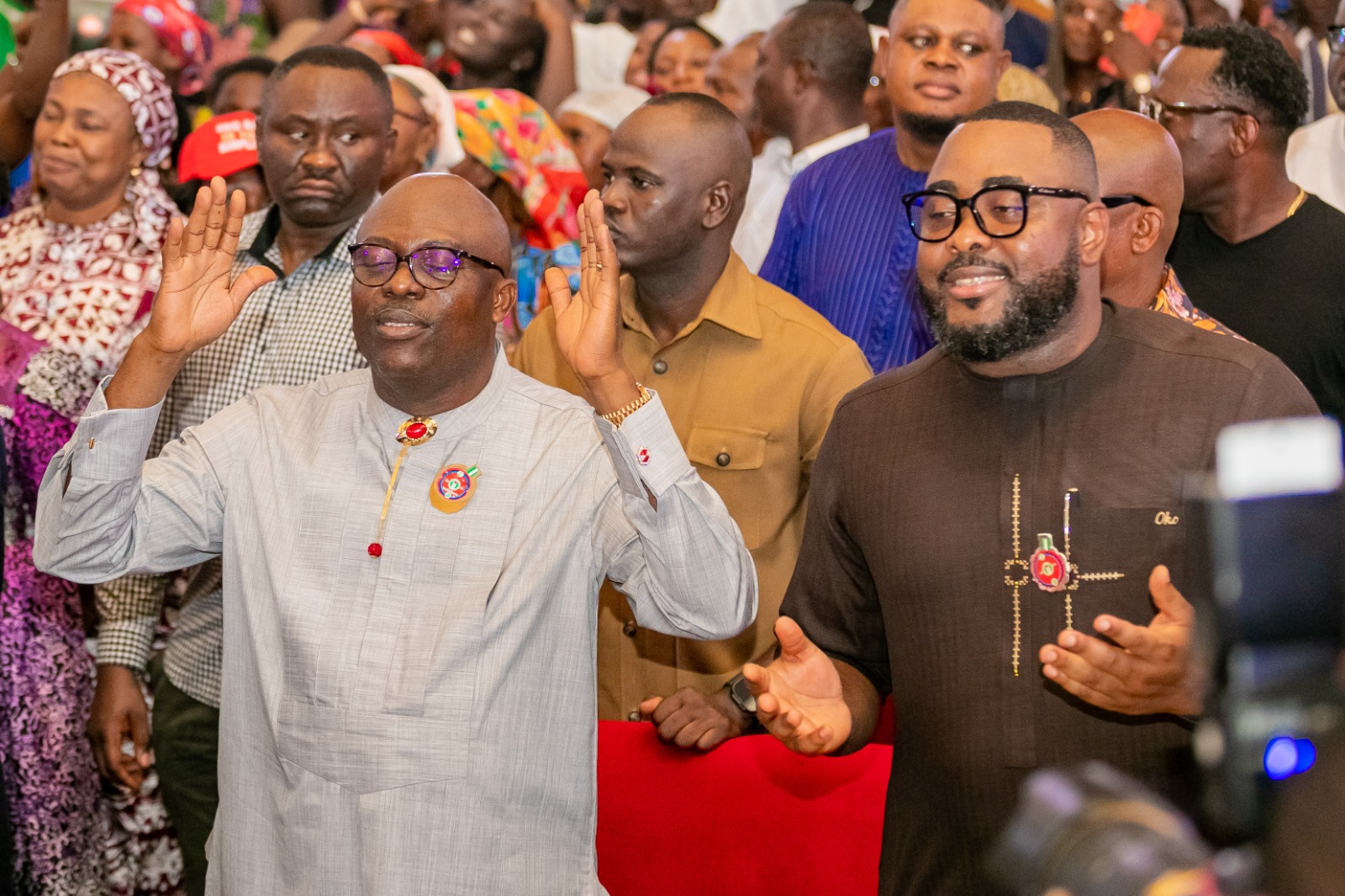
Born on January 28, 1975, in Opobo Town, Mr. and Mrs. Joseph and Love Fubara welcomed their second of five children and first son. His father, a former soldier who completed an overseas training tour of duty, instilled in him a strong sense of discipline and dedication. His mother, a civil servant, taught him the importance of hard work and perseverance.
He received his primary education at Opobo Primary School and continued his studies at Comprehensive Secondary School in Opobo. His passion for numbers led him to pursue a degree in Accountancy at the then Rivers State University of Science and Technology, now known as Rivers State University.
Upon completion of his Bachelor’s degree, he pursued further education and obtained a Master of Business Administration (MBA) and a Master of Science (MSc) from the prestigious University of Port Harcourt in 2013 and 2016, respectively. Fubara’s dedication to his studies and his commitment to personal growth have shaped him into the accomplished individual he is today.
Sim, fondly called by his colleagues, started his career in 2003 as a principal accountant at the Rivers State Senior Secondary Schools Board. His dedication led to his promotion to Director of Finance and Accounts at the Government House in 2015. In March 2020, he was appointed Permanent Secretary and then became the Accountant-General of Rivers State on December 23, 2020.
His achievements are numerous, as he is a Knight of the St. Christopher (KSC) Order of the Church of Nigeria Anglican Communion. Additionally, he holds the prestigious traditional chieftaincy title of Amaopusenibo of Opobo Kingdom. The Governor’s commitment to family is evident through his marriage to Valerie Ibiere Fubara, with whom he shares three beautiful children.
Among Siminalayi’s other significant qualifications and accomplishments are his fellowship with the Nigerian Institute of Management and his fellowship with the Association of National Accountants of Nigeria (ANAN). He holds membership in the Chartered Institute of Forensic and Investigative Auditors. His impressive background has gained him the trust and support of the Peoples Democratic Party (PDP), leading to his victory in the party’s governorship primaries for the 2023 general elections.
Fubara embodies a leadership style defined by simplicity and compassion. He exhibits patience, confidence, and empathy in his interactions with those he serves. His humility and faith in God make him trustworthy. Representing the younger generation, Sim leads with the slogan “Consolidating and Continuing the New Rivers Vision,” focusing on developing infrastructure, healthcare, education, security, agriculture, and investment opportunities for Rivers State.
The bravery exhibited by His Excellency in resisting godfatherism has attracted respect from a wide array of Nigerians, Africans, and supporters of democracy around the world. He emphasises serving the interests of the people of Rivers over any godfather. His actions unify diverse groups in the state, promoting a sense of belonging among various ethnicities.
Our affable Governor exemplifies robust moral leadership rooted in his Christian beliefs. As a devoted Knight, he shows compassion and selflessness in his governance. He fosters an environment where all religions can peacefully coexist. Fubara sponsored Muslim pilgrims for the 2024 Hajj and personally wished them well, encouraging them to pray for the state and Nigeria. His religious tolerance has earned him respect among Nigerians who value coexistence.
Moreover, the Governor’s appealing physique and charming smile have garnered admiration from many Nigerians, who view physical beauty as a reflection of inner qualities. His tall stature has solidified his status as a revered figure, commanding respect across the nation. Fubara has shown dedication to women’s issues by initiating several programmes in collaboration with the Women Affairs Ministry and the Office of the First Lady, highlighting his strong commitment to women’s empowerment and gender equality.
Sir Fubara has focused on actively involving young people in his governance by launching entrepreneurship and training schemes, notably the Rivers State Youth Empowerment Scheme. His efforts to support youth have earned him the backing of many young Nigerians. Additionally, he provides scholarships and makes donations to orphanages, demonstrating his commitment to investing in education for the benefit of children in the state.
Known for his strong commitment to national unity, this Governor reaches out to Nigerians from various backgrounds. As a state Governor, he demonstrates great nationalism by supporting citizens from other states, especially in Rivers. He respects the rule of law and democratic values, which has enabled past local government chairmen to complete their terms without issues. His effective management of Rivers State’s resources promotes transparency and accountability.
Despite facing numerous distractions, the Rivers Chief Executive has made remarkable strides in steering the state’s affairs, reflecting his unwavering focus and commitment to delivering results. He has encountered challenges but remains dedicated to his vision for a better state. His peaceful and caring leadership style has made him popular, inspiring new leaders to emulate similar qualities. By being strong yet compassionate, he has redefined the concept of leadership. Fubara’s selfless nature prioritises the state’s needs above his own. This has earned him widespread support.
As he commemorates his Golden Jubilee birthday today, even the most ardent critics, adversaries, and accusers cannot overlook that he embodies a worthy precursor in every sense.
Happy Birthday, His Excellency!



Nigeria stands at a critical juncture as the world marked World Press Freedom Day (WPFD) on May 3. This annual observance is a reminder that a free press is central to democratic life, good governance, and public accountability. For Nigeria, it is also a moment for sober reflection on how far the country has come and how far it still has to go in safeguarding the independence of its media.
World Press Freedom Day exists to highlight the fundamental importance of freedom of expression and to honour journalists who risk their lives in pursuit of truth. It underscores the idea that without a free press, societies cannot function transparently, nor can citizens make informed decisions. In countries like Nigeria, where democracy continues to evolve, the observance carries particular urgency.
This year’s theme, “Shaping a Future at Peace: Promoting Press Freedom for Human Rights, Development and Security”, places journalism at the heart of global stability. It emphasises that a peaceful society cannot be built on silence, fear, or manipulated information. Rather, it depends on the free flow of accurate, timely, and independent reporting.
At its core, the theme highlights the role of journalism in fostering accountability, dialogue, and trust. These are not abstract ideals. In Nigeria, where public confidence in institutions is often fragile, the media remains one of the few platforms through which citizens can question authority and demand transparency. When press freedom declines, so too does public trust.
Journalism serves as a foundation for peace, security, and economic recovery. Countries with robust media systems tend to attract greater investment, maintain stronger institutions, and resolve conflicts more effectively. Nigeria’s economic challenges, ranging from inflation to unemployment, require open scrutiny and informed debate, both of which depend on a free press.
However, the issue of information integrity has become increasingly complex in the digital age. Artificial Intelligence (AI) and online platforms have amplified the spread of misinformation and disinformation. In Nigeria, where internet penetration has grown rapidly, false narratives can travel faster than verified facts. This makes the role of credible journalism more vital than ever.
The challenge is not only technological but also ethical. AI-driven manipulation of information threatens to distort public discourse, influence elections, and deepen social divisions. In such an environment, professional journalism must act as a stabilising force, ensuring that truth prevails over sensationalism and propaganda.
Equally troubling is the safety of journalists. Across Nigeria, reporters face growing levels of online harassment, judicial intimidation, and physical threats. Self-censorship is becoming more common, as media practitioners weigh the risks of reporting sensitive issues. This trend undermines the very essence of journalism.
A particularly alarming incident involved a serving minister in the present administration, who openly threatened to shoot a journalist during a televised exchange. Such conduct, broadcast to the public, sends a dangerous signal that hostility towards the press is acceptable. It erodes the norms of democratic engagement and places journalists in harm’s way.
This year’s theme aligns closely with the United Nations Sustainable Development Goal (SDG)16, which promotes peace, justice, and strong institutions. Freedom of expression is a cornerstone of this goal. Without it, institutions weaken, corruption thrives, and justice becomes elusive. Nigeria’s commitment to SDG 16 must therefore include genuine protection for the media.
Historically, the Nigerian press has been a formidable force. From resisting colonial rule to challenging military dictatorships, our journalists have played a central role in shaping the nation’s political landscape. Today, however, that legacy appears to be under strain, as the media operates under what can best be described as a veneer of freedom.
Beneath this facade lies a troubling reality. Journalists are routinely harassed, detained, and prosecuted for performing their constitutional duties. Reports from media watchdogs indicate that dozens of Nigerian journalists face legal threats or arrest each year, often for exposing corruption or criticising those in power.
The Cybercrimes (Prohibition, Prevention, etc.) Act of 2015 has become a focal point of concern. Originally intended to combat cyber threats, it has increasingly been used to silence dissent. Sections 24 and 27(1)(b), in particular, have been invoked to target journalists, bloggers, and social commentators.
Although amendments introduced in February 2024 were meant to safeguard journalists, concerns persist. The law continues to be wielded in ways that stifle investigative reporting and restrict freedom of expression. Legal reforms must go beyond cosmetic changes to address the root causes of misuse.
To safeguard the future of journalism in Nigeria, decisive action is required. The Cybercrimes Act must be revisited to ensure it cannot be weaponised against the press. Law enforcement agencies must operate free from political influence, upholding the rule of law and protecting journalists’ rights. Civil society and international partners must also strengthen independent media through funding, training, and platforms for wider reach.
In this rapidly evolving world shaped by artificial intelligence and digital innovation, Nigeria faces a clear choice. It can either allow press freedom to erode under pressure, or it can champion a truly independent media landscape. The path it chooses will determine not only the future of journalism, but also the strength of its democracy and the peace it seeks to build.

-

 Featured4 days ago
WASSCE: RSG Distributes Science Materials To Secondary Schools
-
News5 days ago
Xenophobic Attacks: Nigerian Lives More Important Than Foreign Investment – Oshiomhole
-
Rivers5 days ago
MBA Forex Trial Adjourn To June 3, Amid Bereavement … As Court Declines Cost Application
-
News5 days ago
ActionAid Demands Probe Of Govs Using Public Funds For Campaign
-
Aviation5 days ago
Passengers Stranded As Delta Airline From Atlanta Route Back Eight Hours After
-
Business5 days ago
Customs Impound N2.35bn Cocaine, 15 Trailers of Rice
-
Politics5 days ago
2027: Bayelsa Senator Gets Critical Endorsement For Second Term
-
 Politics5 days ago
INEC Sets Rivers South-East Senatorial By-Election For June 20