
Oil & Energy
Aba Power Seeks More Gas To Boost Supply

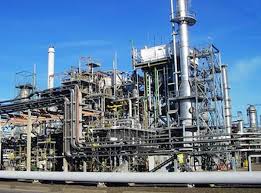
Nigeria’s newest electricity distribution company, Aba Power Electric Limited., is working towards obtaining more natural gas supplies from its partners to increase electricity to nine of the 17 Local Government Areas (LGAs) in Abia State.
The Managing Director, Aba Power, Ugo Opiegbe, explained that “a team of dedicated and competent TCN engineers and technicians is scheduled to service the line from December 1 to 7 to ensure regular and quality bulk power supply to the Aba Ringfenced Area managed by Aba Power, Nigeria’s 12th distribution company (DisCo).
“We have, therefore, been in talks with the NNPCL and Heirs Energies to increase gas supply to the 188-megawatt Geometric Power Plant in the Osisoma Industrial Layout in Aba to enable us to provide electricity to the people, businesses, and communities in the nine LGAs we cover, and they have pledged to do their best to give us increased gas”.
The NNPCL and Heirs Energies own Oil Mining Lease (OML) 17 in the Owaza Community in Ukwa West LGA in Abia State as a joint venture, with Heirs Energies as the operator.
An Electric Power Consultant Engineer who works for both the Texas Power and Light company in the United States, and the defunct National Electric Power of Nigeria (NEPA), Engr Cliff Eneh, stated that “Geometric Power gets its gas from the 27-kilometre gas pipeline it built to the OML.
“Due to the insufficient gas supplies to the Geometric Power Plant”, Eneh told journalists today, “the electricity firm has been augmenting its own power generation with supplies from the Niger Delta Power Holding Company (NDPHC) which uses TCN’s 133kv and 330kv lines to make them available to the Geometric Power Plant.
“This is why Aba residents and businesses might be affected by the scheduled one-week maintenance work on the Line, though Geometric Power has taken proactive steps to either minimize the impact on the customers or reduce it to the barest minimum”, he said.
While commending the cooperation between Geometric Power and the TCN as well as the NDPHC, Eneh noted that the planned TCN shutdown would not have any impact on the Aba Ringfence if there were sufficient gas supplies to the 188MW plant.
People in the Aba Ringfence, recalled that the area did not experience outages when there was a series of nationwide outages in October and November 2024 because there was a significant gas supply improvement to the area during this period by the NNPCL and Heirs Energies.
“Not only would the plant have started to provide full and uninterrupted electricity to all the nine LGAs under its coverage since commissioning last February 26”, said the power expert, “it would have been exporting power to the national grid to increase power availability in other parts of Nigeria since it already has installed three turbines of 47MW each, with the fourth to be installed anytime the gas issue is resolved.
“The whole nation is waiting anxiously to see the NNPCL and Heirs Energies deliver on their promise to increase natural gas supply to the Geometric Power Plant which will, in turn, provide electricity to Aba Power Electricity Ltd”, Eneh said.


Researchers in Hong Kong and China have developed a new form of battery that is more eco-friendly and longer lasting than lithium ion batteries – and it runs on tofu brine. The new water battery is still in research phases, but if the technology proves to be scalable enough to hit commercial markets, it could be a game-changer for the energy and tech sectors.
“Compared with current aqueous battery systems … our system delivers exceptional long-term cycling stability and environmental friendliness under neutral conditions,” the research team, composed of scientists from the City University of Hong Kong and Southern University of Science and Technology in Shenzhen, Guangdong, said in a paper published this month in Nature Communications.
The researchers found that their battery model can be recharged over 120,000 times. “At over a hundred thousand cycles, this could mean a single water-based battery could last at least a decade or so,” states a recent report on the breakthrough from Interesting Engineering. “For applications like grid storage (solar farms, wind balancing), that’s extremely valuable,” the article went on to say.
This kind of lifespan would represent a drastic improvement over the battery technologies that dominate today’s market. Lithium-ion batteries degrade after between 1,000 and 3,000 charge cycles. This could prove revolutionary, as finding an alternative to lithium-ion batteries to power rechargeable devices is a major priority for Big Tech and the global energy sector.
Moreover, these tofu-brine batteries could prove safer and more environmentally friendly than lithium-ion batteries. According to the study authors, the full cells are environmentally benign and nontoxic and can be directly discarded to environments according to various standards.” Water based (also called aqueous) batteries can also potentially be cheap to produce as they rely on ingredients that are less rare in addition to being less hazardous.
Lithium is environmentally harmful to extract, prone to fires, and its supply chains are geopolitically fraught. Currently, China alone controls half of the global lithium market, and is rapidly increasing its stake. In 2024, more than eight in ten battery cells on the planet were made in China. This means that finding a battery model that can compete with lithium-ion batteries in applications like grid-scale energy storage and electric vehicles would have revolutionary implications for global markets.
Researchers around the world have been racing to develop battery models that could diversify the market and make it more competitive and resilient. These models range widely in size, components, and application, with models currently under development for next-gen sodium-ion batteries, quantum batteries, nuclear batteries, and even sand and dirt batteries.
Of course, the irony is that the leading alternatives to lithium-ion batteries are also being developed in Chinese labs. If this new tofu-brine battery proves scalable and applicable outside of a laboratory environment, it could just be another step toward Beijing’s goal of near-total domination of clean energy technology value chains and status as the world’s first and premiere ‘electro-state.’
China’s extreme advantage in global battery making gives it a major point of leverage in global economies as the world continues to electrify at a rapid pace. It is estimated that European demand for lithium in batteries will reach kilo tonnes (thousands of tonnes) of Lithium Carbonate Equivalent by next year, and North American demand will reach 250 kit LCE. it’s all but certain that the vast majority of that demand will be supplied by China.
Other nations are aware of the risk of this dependency, and are taking pains to protect and promote domestic battery manufacturing, but these efforts may be too little, too late. “For globally competitive battery manufacturing industries to emerge outside of Asia over the next ten years, companies will need to do far more than ensure regulatory compliance,” summarizes a McKinsey & Company report released in January. “Challenges will need to be overcome on multiple fronts spanning supply chains, talent management, operations and technology.”
By: Haley Zaremba

The Rural Electrification Agency (REA) says it will spend N100 billion in 2026 to deploy hybrid mini-grids for government agencies within and outside Abuja.
The Managing Directors, REA, Abba Aliyu, disclosed this while addressing newsmen on the sidelines of the 2026 budget defence session
The approved funds form part of the National Public Sector Solarisation programme, a component of the agency’s broader N170 billion budget proposal for 2026.
The initiative is designed to improve electricity reliability for public institutions while reducing operational costs and easing pressure on the national grid.
Aliyu explained that the agency’s total proposed budget for 2026 stands at N170 billion, with N100 billion of the amount dedicated specifically to the solarisation initiative targeting government agencies.
He said the hybrid mini-grid systems combine solar power with complementary energy sources to ensure an uninterrupted electricity supply.
“The total budget size for 2026 operations is N170 billion, out of which N100 billion had been approved for National Public Sector Solarisation.
Aliyu cited the National Hospital in Abuja as an example where similar infrastructure had been deployed to ensure stable power and cut operational expenses.He added that beyond the Solarisation
Recall that earlier in February 2026, REA signed a Memorandum of Understanding with the Economic Community of West African States (ECOWAS) to deploy solar power systems to 15 public institutions across Nigeria.
The project will be implemented under the Regional Off-Grid Electricity Access Project (ROGEAP), a World Bank-supported initiative aimed at expanding off-grid electricity access across West Africa and the Sahel.
ECOWAS will provide a $700,000 grant to fund the installation of solar photovoltaic systems in selected rural health centres and schools in the Federal Capital Territory, Niger, and Nasarawa States.
Oil & Energy
PIA: TotalEnergies Transfers OLO Oilfield HCDT Obligation To Aradel ……Says HCDT Enabled Completion of 100 Projects In 2 years


In his remarks, the Community Affairs Manager, Aradel Holdings Plc, Blessyn Okpowo, affirmed the company’s commitment to honouring all PIA obligations and continuing Total Energies’ community engagement approach.“We want to say that in line with the PIA, we will honour commitments and duties required of the settlor and we want to work very smoothly with the way TotalEnergies has worked with them,” he stated.
He recognised the Commission’s role in approving the Community Development Plan (CDP) before project start, underscoring regulatory excellence.The parties noted that between 2023 and 2025, the trust has enabled the completion of more than 100 community projects, spanning water supply, electricity, road infrastructure, education, and healthcare with a further 40 projects currently ongoing.
-
Politics3 days ago
2027: NIGERIANS FAULT INEC ON DIGITAL MEMBERSHIP REGISTER DIRECTIVE
-

 Environment3 days ago
LAWMA Director Says Sweeping Reforms Have Improved Waste Collection
-
Politics3 days ago
LP Crisis: Ex-NWC Member Dumps Dumps Abure Faction
-

 Politics3 days ago
Umahi Dismisses Allegations On Social Media, Insists On Projects Delivery
-

 Sports3 days ago
Abia Not Sure To Secure continental Ticket
-
Sports3 days ago
La Liga: Yamal Records First Career Hat-trick
-
Politics3 days ago
NATASHA ELECTRIC VEHICLES INITIATIVE IN KOGI CENTRAL
-

 Sports3 days ago
PSG Extend Lead In Ligue 1