
News
Fubara Pledges Support For Journalists, Receives Champion Of Peace Award …As The Tide Shines At Rivers NUJ Award Night

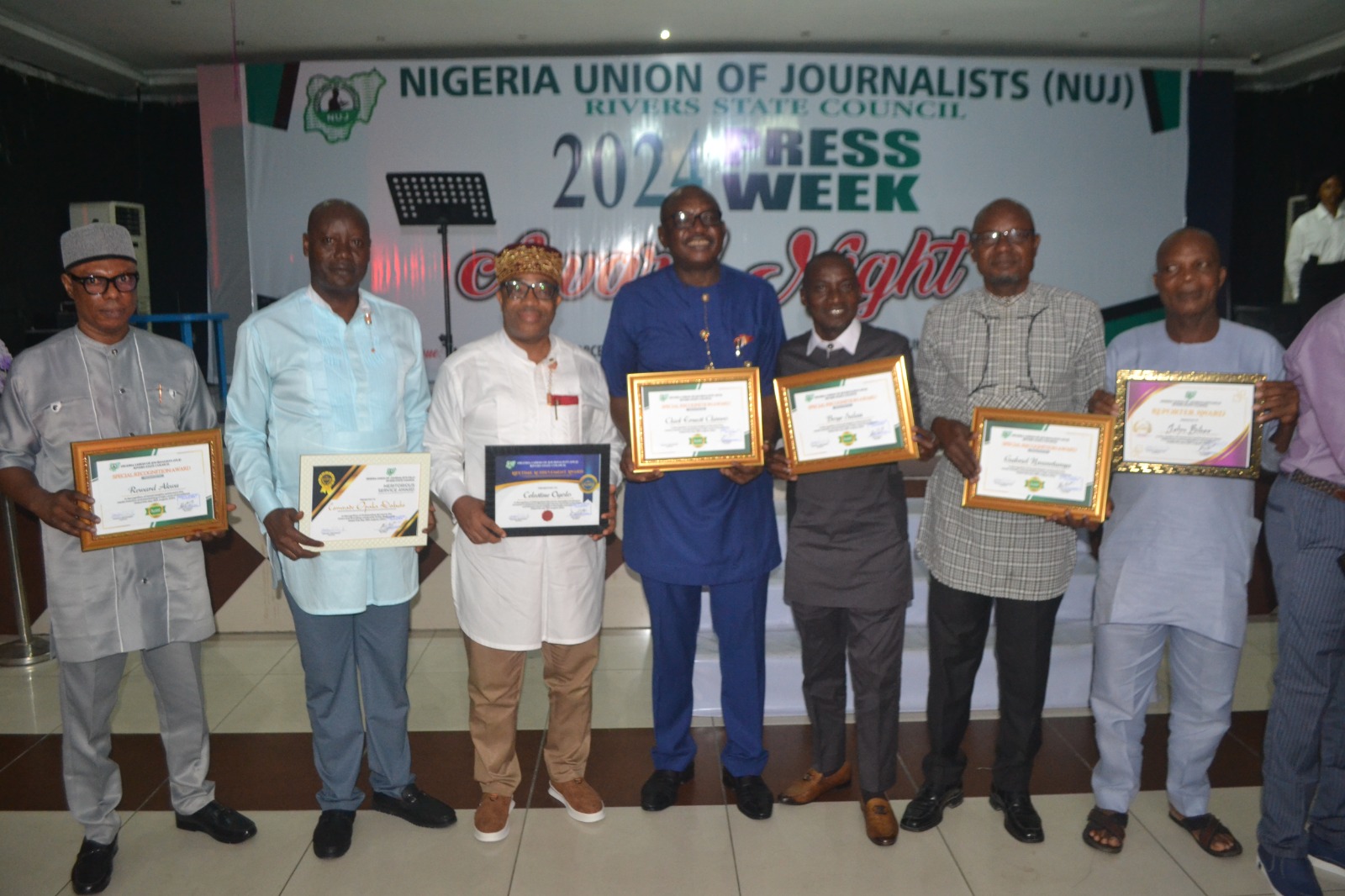
Rivers State Governor, Sir. Siminialayi Fubara, has reiterated his support for journalists in the State.
The governor made this pledge on Sunday while receiving the ‘Champion of Peace Award’ at an Award Night organised by the Nigeria Union of Journalists (NUJ), Rivers State Council, to mark the end of its week-long Press Week celebrations.
The award was bestowed on the governor by the Council for his peaceful disposition and demeanour, and quest to deliver democracy dividends despite present political challenges in the State.
Fubara, who was represented by the State Commissioner for Information and Communications, Warisenibo Joe Johnson, described the award as a motivation to deliver more democracy dividends to the people of the State.
He described the Press as partners in progress and assured that his administration is always ready to work with the media for the betterment of the State.
On his part, President of the NUJ, Chief Chris Isiguzo, expressed satisfaction with the cordial relationship between the State Government and the media, and urged the governor to sustain the tempo.
Isiguzo also used the event to call on the Federal Government to ensure that the rights of journalists are always protected, as he frowned at the treatment meted out to newsmen during the recent #EndBadGovernanceInNigeria protest.
According to him, the Nigeria Constitution guarantees freedom of expression and rights of journalists to their duties.
Chairman of NUJ, Rivers State Council, Comrade Stanley Job Stanley, thanked Governor Fubara for his support towards the successful hosting of the Press Week, and expressed hope for better relationship with the Union in the future.
Meanwhile, The Tide Newspapers, published by the Rivers State Newspaper Corporation (RSNC) has emerged top winner at the 2024 NUJ Award ceremony in Port Harcourt on Sunday.
Out of 47 distinguished journalists recognised during the award, The Tide took home over 10 awards, showcasing its excellence in journalism.
Six senior editors from The Tide received Special Recognition Awards, while two others bagged Meritorious Service and Reporters Awards, respectively. Notable awardees include RSNC’s General Manager, Chief Ernest Chinwo; The Acting Editor of The Tide, Reward Akwu; former Acting Chairman of The Tide Editorial Board, who is now the Chief Press Secretary to the Rivers State Governor, Nelson Chukwudi; Group News Editor, Boye Salau, and Group Sports Editor, Gabriel Nwanetanya.
Other recipients of Special Recognition Awards include former NUJ secretaries, media executives, and senior journalists from various organisations. These include The Business Editor, Soibi Max-Alalibo, and the incumbent NUJ Secretary, Ike Wigodo, who retired from The Tide a few months ago.
The remaining 10 awardees in the Special Recognition Award category emerged from eight other media outfits. The recipients include two former NUJ secretaries in the State, Mr. Samuel Iyoyo, and Tamunoisela Toby; the General Manager of the Rivers State Television (RSTV), Fengecy Onisoya; Business Manager of Super FM, Pastor Segun Owolabi; Publisher of The Gist Newspaper, Mrs Sotonye Toby Fulton; South South Bureau Chief of The Guardian, Mrs Ann Godwin, and Head of News, Rhythm 93.7FM, Clem Ofuokwu.
Others are the Deputy National President of the National Association of Women Journalists (NAWOJ) and senior editor with the RSTV, Dr (Mrs) Lilian Okonkwo-Ogabu; former senior correspondent with The Nation Newspapers, Mrs Clarice Azutalam; and Baridorn Sika of the Radio Rivers.
The Tide also excelled in the Meritorious Service Award category, which was reserved for past chairmen of the State Council of NUJ, with former General Manager, Elder Vincent Ake, and Political Editor and Vice President, NUJ Zone F, Opaka Dokubo, receiving honours.
Five others in this category include the first chairman of NUJ, Rivers State Council, Chief Wofuru Oparaolu; Chief Bobo Brown, Pastor Paulinus Nsirim, Omoni Ayo-Tamuno and the incumbent chairman of the Council, Stanley Job Stanley.
In the Reporters Award category, The Tide’s John Bibor was among 12 recipients, alongside journalists from other media outlets. The 11 others include Peter Abaje of AIT, Dr. Ijeoma Tubosia of Radio Rivers, Obiandu Madume of RSTV, Anayo Onukwugha of Leadership Newspapers, Allwell Ene of Megaletric, and Rachael Ramson of Rhythm 93.7FM.
Other reporters awardees are Okechukwu Gabriel of Treasure FM, Wariso Wariso of Independent Monitor, Paul Bazia of the State Ministry of Information and Communications, Doris Dogini Nwankwo of the Federal Ministry of Information, and Stephen Momoh of TVC who received Reporters Award in Video.
Additionally, two former General Managers and two former editors of the RSNC received Lifetime Achievement Awards, along with seven other veteran journalists. They are: former Chief Executive Officer/Editor-In-Chief of the RSNC, Mr. Dagogo Ezekiel-Hart; former RSNC General Manager, Mr. Celestine Ogolo; former editor of The Weekend Tide who retired as a Permanent Secretary in the State Civil Service, Ms Kadilo Brown, and another former editor of The Tide, who is currently serving as Permanent Secretary (Cabinet), Mr Hamilton Amadi.
Also in this category are three former Commissioners for Information and Communications in Rivers State – Hon. Ogbonna Nwuke, Dame Ibim Semenitari, and Pastor Paulinus Nsirim.
Other recipients are former President of the Sports Writers Association of Nigeria (SWAN) and Permanent Secretary, Rivers State Scholarship Board, Sir Honour Sirawoo; Regional Manager of Business Day, Elder Ignatius Chukwu; Publisher of National Network, Pastor Jerry Needam, and Mr Blessing Wikina, who was former Chief Press Secretary to former Governor Chibuike Amaechi.
The Posthumous Meritorious Service Award went to the former General Manager of the RSNC, Late Augustine Nwikinaka; Late Karibo Botoye, Late Ndagene Akwu and Late Paul Alozie who, at various times in their lifetime, served as chairmen of the NUJ, Rivers State Council.
The Tide also had a good outing in the Posthumous Special Recognition Award category, with two former editors of The Tide, Late Soye Jamabo and Late Juliet Njiowhor among the five recipients. The three other awardees are late Publisher/Editor-In-Chief of The Beacon Newspaper, Minere Amakiri; late Publisher of the Independent Monitor, Evans Osi, and former chairman of NAWOJ in Rivers State, Late Uche Atuzie.
Speaking with The Tide, shortly after the event yesterday, the Chairman of the Press Week Committee, Olalekan Ige, explained that the 11 distinguished journalists who received the Lifetime Achievement Award “have consistently, throughout their careers, brought great honour and pride to the NUJ, in addition to rising to the pinnacle of the profession.
Ige also stated that those given the Special Recognition Award are “senior journalists who have attained great heights in the media profession and have maintained a high level of excellence in journalism.”
He added that NUJ also decided to honour some past chairmen of the Council for their meritorious service and leadership at various times, while reporters who have consistently demonstrated excellence in news reporting and have brought pride to the NUJ were also recognised.
Boye Salau & Kevin Nengia


The Rivers State chapter of the All Progressives Congress Christian Leaders Forum has expressed strong confidence in the capacity of All Progressives Congress (All Progressives Congress) candidates in the state to deliver effective governance if elected into office in the coming elections.
The State Coordinator of the forum, Archbishop Lucky Aroh, made this known during a breakfast and thanksgiving meeting held in Port Harcourt, where leaders gathered to pray for the stability of the party and the safety of its candidates ahead of the 2027 general elections.According to him, the meeting was convened to seek divine intervention for peace, unity, and security among APC candidates across Rivers State.
“Today we are praying for APC stability in Rivers State and the security of our candidates that have been elected to contest the 2027 elections. It is a breakfast meeting,” Aroh said.
He further expressed optimism that the party’s candidates would not disappoint the people if entrusted with leadership responsibilities.
“They will not fail when elected into office. We are here as fathers of the land to let them know, and I must tell you the truth that these are the authentic people that will do well in Rivers State,” he added.
Speaking earlier, the National Chairman of the forum, Professor Olanrewaju Abraham, commended the Rivers State chapter for organizing the programme, noting that the national body of the forum believes strongly in the power of prayer.
He stated that political leadership provides an opportunity to influence society positively, including advancing moral and spiritual values, while expressing confidence that APC candidates at all levels would emerge victorious in the upcoming elections.
Also speaking, the Rivers State Women Leader of the APC, Hon. Darling Amadi, praised the forum for its commitment to prayers for peace, stability, and the protection of party candidates.
Represented by the Deputy Women Leader of the party in the state, she described the initiative as commendable and urged other political and support groups within the party to emulate the gesture in promoting unity and stability.
By: John Bibor, Menebe Emmanuel & Fortune Paibi
Prominent businessman and philanthropist, Elder Anthony Osagwe-Ogo, was celebrated in grand style as he marked his 70th birthday anniversary, with distinguished Nigerians, business leaders, and golf enthusiasts gathering to honour his remarkable contributions to society.
The colourful celebration took place at the Port Harcourt Golf Club, where friends, associates, and well-wishers converged to pay tribute to the revered elder statesman.
Chairman of the occasion, High Chief (Dr.) Ikenna Okafor, described the celebrant as a detribalised Nigerian whose generosity, humility, and commitment to humanity have earned him admiration across different communities and backgrounds.
According to Dr. Okafor, Pa Osagwe-Ogo’s impact on society and the development of his community remains unparalleled. He noted that members of the golfing community are proud to be associated with a father figure who consistently promotes the welfare and well-being of those around him.
He further stated that the history and growth of the Port Harcourt Golf Club cannot be told without acknowledging the significant role played by the celebrant, whose wisdom, encouragement, and leadership have helped sustain the club over the years.
“We are here to celebrate a man who has impacted humanity positively, a peace-loving individual and an epitome of hope for the younger generation. We pray to emulate his virtues. Today, we celebrate a bridge-builder, a trailblazer, and an iconic leader whose life continues to inspire many,” Dr. Okafor said.
He expressed delight at the large turnout of guests from various walks of life, describing it as a testament to the respect and affection Pa Osagwe-Ogo commands within and beyond Rivers State.
In his response, the celebrant, Pa Anthony Osagwe-Ogo, expressed profound gratitude to God for preserving his life and granting him the privilege of attaining the milestone age of 70.
He also thanked members of the Port Harcourt Golf Club, family members, friends, and associates for identifying with him during the celebration and for their unwavering support over the years.
The event featured the cutting of the birthday cake, presentation of awards to deserving members of the club, goodwill messages, and moments of celebration among guests.
The ceremony was attended by notable personalities from the business community, the golfing fraternity, and other sectors, all of whom joined in celebrating the life and legacy of the respected elder statesman.
Rivers State Governor, Sir Siminalayi Fubara, and the Permanent Secretary of the Rivers State Ministry of Information and Communications, Dr. Honour Kuru Sirawoo, have been honoured with awards of recognition in connection with the 2026 Democracy Day celebrations held in Port Harcourt.
The awards, which formed part of activities marking Nigeria’s Democracy Day on June 12, were formally presented on Tuesday at the Ministry of Information and Communications in Port Harcourt.
Presenting the awards was Hon. Abdul Hameed Oladipupo Alli, popularly known as “Mr. Nigeria,” Publisher of Asiwaju Trumpet Magazine and Achievers World International Magazine.
Governor Fubara was recognised for his efforts in sustaining peace, stability, and a conducive political atmospherJohn Bibor / Menebe Emmanuel / Fortune Paibie in Rivers State. The organisers noted that his administration has fostered harmony and strengthened civic participation across the state.
Dr. Sirawoo, on the other hand, was honoured for his exemplary administrative leadership and significant contributions to effective information management within the Ministry of Information and Communications.
Representing Dr. Sirawoo at the presentation ceremony, Dr. Christian Davies received the award on his behalf and expressed gratitude for the recognition. He described the honour as a reflection of Dr. Sirawoo’s unwavering commitment to professionalism, excellence, and dedicated public service.
Dr. Davies assured the organisers that the award would be formally conveyed to the Permanent Secretary.
The event also featured the presentation of commemorative publications highlighting major governance and civic milestones in Rivers State, including Easter celebrations, Workers’ Day activities, the Governor’s third anniversary in office, and Democracy Day programmes.
Organisers of the awards commended the Rivers State administration for what they described as sustained peace, political stability, and improved civic engagement, noting that these achievements have contributed significantly to the state’s continued development.
By: Jessica Sambol
-

 Niger Delta20 hours ago
Warri Airport Manager Disputes Air Peace Bird Strike Claim
-

 News23 hours ago
Nigeria Won’t Surrender Any Territory To Criminals -Tinubu
-

 News23 hours ago
FG Begins Trial Of Over 600 Terrorism Suspects
-

 Rivers20 hours ago
79th IAUE Inaugural Lecture: Prof Anero Advoctes Tuition-Free Education For Children
-

 Politics19 hours ago
Parties’ Deregistration: How Justice Lifu Overruled Appeal Court Justices
-

 Politics19 hours ago
ADC: Okonkwo Rejects Amaechi As Presidential Running Mate, Withdraws Support
-
Politics20 hours ago
2027: Rivers PFN To Mobilise 600,000 Votes
-

 Politics19 hours ago
2027: Tinubu’s Projects Give APC Edge In South East – Yilwatda