
Niger Delta
Uniport Calls For Inclusion Of AI In Nigeria’s Educational System

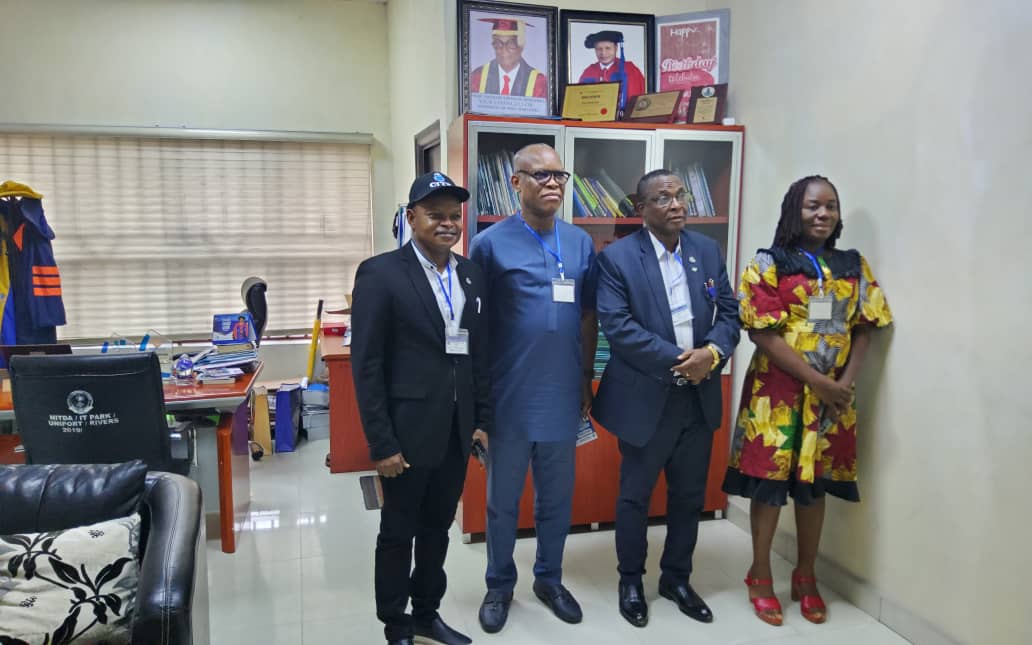
The Department of Computer Science, University of Port Harcourt, has advocated for the advancement of Artificial intelligence (Al) in Nigeria’s educational system.
The initiative was highlighted during a National Artificial lntelligence workshop which took place at the University of Port Harcourt, last weekend.
The workshop was sponsored by the International Development Research Center, Canada, and Swedish International Development Cooperation Agency,SIDA, with funding managed by African Center For Technology Studies (ACTS), under the Artificial lntelligence For Development Africa initiative.
The Head of Department, Computer Science, at the University of Port Harcout, Dr. Ugochi A. Okengwu, in her opening remarks, emphasized the need to accelerate the advancement of Artificial lntelligence in Nigeria and across Africa.
Dr. Okengwu, who is also the branch Co-ordinator of the Organization of Women In Science for the Developing World, Uniport Chapter, said that AI was a revolution and urged the federal government to create an enabling environment ensure its growth.
“We are trying to see how Al development will be faster in Africa, because Africa is a very crucial place, because we have the population. It is a good ground for a lot of technological advancement to come in.
“So, Al as we said earlier, it’s not just technological advancement, it is a revolution”, she said.
Also speaking, the Director, Center for Information and Telecommunication Engineering (CITE), at the University of Port Harcourt, Prof. Bourdillon Omijeh, said plans had been concluded to launch a catch-them-young programme for children in primary and secondary schools in few weeks time.
He, therefore, enjoined the general public to embrace Artificial lntelligence to ensure that Nigerian youths were not left behind in the rapidly advancing world.
Earlier, the Vice Chancellor of the University of Port Harcourt, Professor Owunari A. Georgewill, in his welcome address, had urged the participants to take the workshop seriously, saying the world is rapidly shifting towards AI.
Dr. T.P. Singh of Bennett University who delivered the keynote speech, discussed the benefits and challenges of AI.
He highlighted AI’s applications across various fields and addressed some of the challenges it presents.
Tonye Lekara from Rivers State gave a technical presentation on AI in health applications. He also covered topics such as AI in health has a lot of setups, role in detecting medical imaging analysis, to detecting cancer, malaria parasites, and other health challenges, its applications in other fields.
According to him, AI in health involves using advanced algorithms, hardware systems.
Kaggle, fig.1, Humata are AI Assisted Research Tools.
He also talked about Future Trends and Roles of Government.
A question-and-answer session followed, allowing participants to interact with the facilitators and ask relevant questions, which were addressed comprehensively by the speakers.
The second technical presentation focused on the application of AI in research, delivered by Ediong Umoh from Nigeria.
He discussed the importance of AI tools such as plagiarism checkers, reference managers like Zotero, and AI writing assistants like QuillBot and Trinka, Grammar for enhancing research quality and data representation.
The third technical presentation on AI in agriculture was done by Tonye Lekara.
He demonstrated how AI could be used to analyze agricultural images using apps like Picture, Pop apps used in teaching farmers how to manage machine and other toolkits such as plantify, plantix used to identify crop, plants, analysis of images for signs of mold, rot, insects and other threats.
Second question-and-answer session followed, with participants engaging with the lecturer and having their queries addressed.
The panel session on AI ethics, moderated by Dr. C.B. Marcus, featured Dr. Legbors Barikpoa Emmanuel, Professor Laeticia N. Onyejegbu, and Dr. Ugochi A. Okengwu.
The panelists who were subjected to thorough questioning on AI ethics, responded adeptly.
Prof. Omijeh discussed the topic: “Embedded AI and Education 4.0,” explaining how the fourth industrial revolution (4IR) is driven by digital technologies such as AI, machine learning, the Internet of Things, and robotics.
He encouraged collaboration between the faculties of engineering and computer science to integrate AI into education.
In his vote of thanks, the Dean of the Faculty of Computing, Professor Laeticia N. Onyejegbu thanked all those that contributed to the success of the workshop.



-

 News1 day ago
Navy Destroys Illegal Refinery In Rivers, Intercepts Stolen Fuel In C’ River
-

 News1 day ago
You’re The Backbone Of Our Society, Fubara Salutes Mothers On Mothering Sunday
-

 Rivers23 hours ago
County Grammar School Old Boys Elect New Executive
-

 Environment23 hours ago
Illegal Buildings On Embassies’ Land Will Be Demolished – Wike
-

 News1 day ago
ODU PLEDGES PARTNERSHIP WITH WACCIMA TO ADVANCE WOMEN’S ECONOMIC EMPOWERMENT
-

 Business24 hours ago
Wema Bank Admits 10 Startups into Hackaholics 2026
-

 Politics23 hours ago
HUNDREDS OF LATE BAYELSA DEP GOV’S KINSMEN DUMP PDP FOR APC
-

 Politics23 hours ago
A’Court Voids Rep’s Sack Over Defection To APC