
News
Sacked CBN Workers Fault Dismissal, Seek Reinstatement

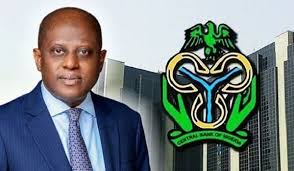
Former employees of the Central Bank of Nigeria (CBN) are grappling with the shock of their sudden dismissal, accusing the management of maltreatment and injustice.
They claimed that many were not paid their entitlements before their sacking, a move they argued violates the bank’s human resource rules and policy.
In a statement issued yesterday in Jos, Plateau State capital, the North Central Coordinator of the Conference of Autochthonous Ethnic Communities Development Association Youth Wing, Paul Dekete, called for the immediate reinstatement of the sacked workers.
The statement read, “The purge wasn’t limited to high-level executives. It extended far beyond directors, impacting Deputy Directors and Assistant Directors who formed the backbone of departmental operations. These were not junior staff; they were seasoned professionals with deep institutional knowledge.
“For example, the Director of Information Technology was overseeing crucial projects on the very day they were terminated, including efforts to secure international information security certifications for the bank.
“In a particularly egregious case, a Director on special assignment, tasked with leading the bank’s efforts to secure an ISO certification for information security, was sacked on the very day the bank successfully achieved this crucial milestone.
“Central banking relies heavily on robust cybersecurity measures, and this certification is a testament to the Director’s competence and the bank’s commitment to financial security. This abrupt dismissal, on the day of a major accomplishment, raises serious questions about the planning and rationale behind the mass layoffs.”
The statement further said, “The mass sack violated the bank’s own HR policy, which mandates board approval for executive terminations.
“This blatant disregard for due process has raised serious questions about transparency. The CBN, a federal institution, must adhere to public service rules. This dismissal exercise, carried out without board approval, lacks a solid legal foundation.
“Making matters worse, the bank offered no clear criteria for the mass sacking. This is a stark departure from their established culture of clear communication with staff during downsizing exercises.”
Dekete, on behalf of the sacked CBN workers further argued that, “Loyal employees, some with over 30 years of dedicated service, were cast aside with a cold, impersonal letter stating ‘your services are no longer required.’ This callous act extended to a Deputy Director who was let go even though she had already completed all the necessary paperwork and her retirement letter was ready to be issued.
“The human cost of this heartless exercise is staggering. Many staff members had used their salaries as collateral for loans tied to their remaining years of service at the CBN. With their abrupt termination, these loans were immediately deducted from their final paychecks, leaving some with nothing and others still indebted to the bank. The impact on these individuals and their families is devastating, with their dreams and financial security shattered in an instant.
“The CBN’s purge extended beyond individual hardship, raising serious concerns about ethnic bias. Reports indicate that some states saw over 80% of their executive staff removed, with North Central and South Eastern regions disproportionately affected. This blatant disregard for the principle of federal character raises troubling questions about the bank’s commitment to national unity.
“Staff morale has plummeted, with a pervasive sense of fear and uncertainty gripping the institution. Every Friday is met with dread, as rumours swirl of another list of targeted employees. The reported use of an external consultant, seemingly unfamiliar with the bank’s HR policies and civil service regulations, only exacerbates the lack of trust and transparency.”
The CBN’s mass dismissal included the entire Economic Intelligence Unit (EIU), a unit in the bank tasked with the critical function of identifying and monitoring illegal financial activities within Nigeria. Established in 2018, the EIU was meticulously built by cherry-picking the bank’s brightest minds across various departments.
According to Dekete, the loss of these highly trained professionals represents a significant blow to the bank’s institutional knowledge and capacity to combat money laundering and other illicit financial activities.
He noted that the nature of the sack shows an attempt to cripple the Middle-belt region of the state as Gombe, Plateau and Benue are affected most.
“In Gombe State, five people cutting across Deputy Directors to Assistant Directors cadre were all dismissed courtesy of the re-organization of the bank. In Plateau, 80% of the staff in the executive cadre were sacked, including one who had 3 days to retire and arrangements had been concluded for her normal retirement.
“Benue is not spared either as many Deputy Directors are affected. Very painful is that Mr Onoja Ameh who was transferred from Abuja to Awka Branch last year December was involved in a terrible accident in April this year during which he almost lost his life on his way back to Awka after visiting his family in Abuja is still recuperating when he got sacked. A widow who is currently nursing her trauma was also sacked from the region due to the ‘re-organisation’ of the bank.
“All termination decisions should be reviewed to ensure compliance with CBN HR policy and public service rules. This may involve reinstating some employees who were dismissed without proper justification.
“With most of the casualties arising from the Middle Belt and the South Eastern regions of the country, we call on the Governor of these regions to as a matter of urgency step into the ugly development to unravel the mystery behind the motive to correct it”, the statement said.


The Rivers State Government has commended the Church of Nigeria (Anglican Communion) for its outstanding contributions to the development of Rivers State, particularly in the areas of peacebuilding, education, healthcare, and moral development.
Governor of Rivers State, Siminalayi Fubara, stated that the Church has remained a dependable partner in promoting peace, unity, justice, moral discipline, and social harmony across society.
The Governor, who was represented by the Secretary to the State Government, Dr. Dagogo Wokoma, made the remarks during the thanksgiving service marking the 30th Anniversary and First Session of the 11th Synod of the Diocese of Niger Delta North, held at St. Peter’s Anglican Church on Sunday.
Governor Fubara described the Synod’s theme, “Kingdom Advancement: The Priority of Every Believer,” as timely and relevant, considering the prevailing realities in society.
According to him, the Church continues to play a vital role in shaping societal values and inspiring hope among citizens.
“The Church remains a vital partner in promoting peace, unity, justice, and moral discipline. Its role in shaping values and inspiring hope cannot be overemphasized,” he stated.
The Governor further acknowledged the Anglican Communion’s contributions in education, healthcare delivery, youth empowerment, humanitarian services, and spiritual guidance across communities in Rivers State.
“The Rivers State Government appreciates the invaluable contributions of the Anglican Communion in education, healthcare, youth development, humanitarian support, and spiritual guidance. Your impact across communities in Rivers State continues to strengthen families and promote peaceful coexistence among our people,” he added.
Governor Fubara reaffirmed his administration’s commitment to building a peaceful, united, and prosperous Rivers State where all citizens can thrive irrespective of religion, ethnicity, or social background.
He also urged the Synod to continue praying for sustainable development and progress in Rivers State and Nigeria at large.
Earlier in his sermon, the Guest Minister, Joseph Olushola, spoke on the topic, “Kingdom Investment and Internal Rewards,” urging Christians to remain faithful stewards of God’s blessings and committed to advancing God’s kingdom through service and generosity.
The cleric emphasized that believers are custodians of the virtues and resources entrusted to them by God, stressing that divine rewards are based on faithfulness and impact rather than material possessions.
The Shell Nigeria Gas Limited, in partnership with the Manufacturers Association of Nigeria (MAN), has reaffirmed support for efforts to expand gas distribution infrastructure in Rivers State as part of initiatives aimed at improving access to affordable, cleaner and more reliable energy for industries across the South-South region.
The commitment was highlighted during the SNG–MAN Business Forum held in Port Harcourt, where stakeholders from the industrial and public sectors examined the role of natural gas in driving industrialisation, boosting local production and strengthening energy security.
Speaking at the forum on behalf of the Managing Director of Shell Nigeria Gas Limited, the company’s Head of Gas Distribution, Mr. Chukwuka Amos Ejesi, described natural gas as a critical component of Nigeria’s energy mix and a key driver of sustainable industrial growth.
According to him, Nigeria’s gas development agenda has reached a stage where policy direction must be matched with practical implementation capable of addressing the energy challenges confronting manufacturers.
He noted that pipeline gas offers industries a cleaner, more dependable and cost-effective energy alternative capable of supporting uninterrupted operations, reducing emissions and improving production efficiency.
“Gas is the backbone of manufacturing, and we are encouraged by the growing recognition among stakeholders of the need for cleaner and more reliable energy solutions,” he said.
Ejesi stressed the need for sustained collaboration among energy providers, government institutions and industrial stakeholders to maximise the country’s gas resources for economic development.
He added that improved gas infrastructure would strengthen manufacturing value chains, enhance productivity and promote more competitive industrial operations across Rivers State and the wider South-South region.
Participants at the forum also emphasised the importance of expanding energy infrastructure as a pathway to unlocking industrial capacity, reducing operating costs and promoting sustainable industrial development.
Representing Governor Siminalayi Fubara, the Director-General of the Rivers State Investment Promotion Agency, Dr. Chamberlain Peterside, reaffirmed the state government’s commitment to partnering with private sector investors to revitalise industrial activities in the state.
He identified key projects targeted under the initiative to include the revival of the Ahoada Industrial Park, the New Port City project and the proposed Bonny Industrial Park, all aimed at stimulating economic growth and expanding industrial opportunities along the Bonny corridor.
According to the governor, the long-term vision is to position Rivers State as a leading manufacturing hub in Southern Nigeria through strategic public-private partnerships.
Governor Fubara also commended Shell Nigeria Gas and MAN for sustaining engagements geared towards improving industrial energy access, noting that gas infrastructure development remains central to the state’s economic recovery plans.
He further observed that the gas sector presents enormous opportunities for economic growth, especially as global energy systems continue to shift towards cleaner energy sources.
The governor called on stakeholders to work collectively towards developing a practical and sustainable gas framework capable of supporting the state’s industrial and energy development objectives.
By; Kevin Nengia
Rivers State Deputy Governor, Prof. Ngozi Nma Odu, has charged newlywed couples to build their marriages on the virtues of love and submission as taught in the Word of God.
Prof. Odu gave the charge at the wedding ceremony of Amblessed Favour Sunny-Cookey and Samson Jesuganji at Lifegate Power Ministries, Dominion Cathedral, in Port Harcourt on Saturday, 16th May 2026.
The Deputy Governor congratulated the couple on beginning a new phase of life together and prayed for God’s blessings upon their union, noting that the couple had been raised by godly parents and encouraged them to uphold the Christian values instilled in them.
Referring to the sermon delivered during the ceremony, Prof. Odu emphasized that the principles of love and submission remain fundamental to a successful marriage.
According to her, genuine love reflects the nature of God, stressing that love should remain the foundation of the couple’s relationship as they journey through life together.
Prof. Odu further prayed for enduring peace, happiness, and progress in the home, expressing confidence that the marriage would continue to flourish under God’s guidance.
The Deputy Governor also commended the families of the couple for their support and upbringing, while urging the newlyweds to always remember the significance of the day and the commitment they had made before God and witnesses.
In his sermon at the wedding, the Founder and Presiding Pastor of Salvation Ministries, Pastor David Ibiyeomie, stated that marriage did not originate from Western culture, traditions, or human ideas, but from God, whom he described as the “manufacturer” of marriage.
According to the cleric, couples seeking lasting and peaceful homes must rely on biblical principles rather than societal trends or assumptions.
He explained that many marital crises and rising divorce rates stem from ignorance and failure to apply scriptural teachings in family life.
Drawing from the biblical parable of building a house on a rock, Pastor Ibiyeomie said the Word of God remains the only solid foundation capable of sustaining marriages through challenges and difficult times.
He noted that marriage naturally comes with unexpected realities and pressures, stressing that religious ceremonies or cultural practices alone are not enough to sustain a home without proper understanding of God’s instructions.
The pastor further warned that ignorance of scripture remains one of the greatest weapons against believers, urging Christians to study and practice the Word of God rather than merely attending church services.
It would be recalled that the bride is the daughter of Pastor Sunny Cookey the Founder and Presiding Pastor of Lifegate Ministries. The Ceremony had lots of Ministers in attendance which includes Apostle Zilly Aggrey, Pastor George Izunwa, and Bishop Winston Iwo
-

 Editorial1 day ago
Enough Of Xenophobic Attacks On Nigerians
-

 Nation1 day ago
RSU, Otonti Nduka Foundation Holds Centenary Conference, Unveil Book on Values in Nigeria
-

 Oil & Energy1 day ago
Rivers PETROAN Elects 12-Member Executive
-
Politics2 days ago
APC Group Protests Ex–Presidential Aspirant’s Disqualification From Rivers Senatorial Race
-

 Environment2 days ago
MOSOP – Tinubu Not Sincere With Ogoni People For Oil Resumption
-
Politics2 days ago
Reps Speaker Secures APC Return Ticket For Fifth Term
-

 Sports1 day ago
Oparaodu Urges Rivers United To Win Katsina United
-

 News2 days ago
Fubara, Wife Hail Tinubu’s Renewed Hope Initiative …As Over 6,800 Families Benefit From Largesse In Rivers