
Featured
Fubara Is A Manifestation Of God’s Own Intervention – Samuel-Horsefall

Chief Paworiso Samuel-Horsfall, a tested politician and an astute administrator with a rich pedigree in public service spanning decades, is a former Commissioner in Rivers State under the administration of Sir (Dr) Peter Odili.
In this exclusive interview, the revered Kalabari Chief, who is the Coordinator of the SIMPLIFIED MOVEMENT in Asari-Toru Local Government Area, gave his verdict on Governor Siminialayi’s one year in office and revealed the underbelly of the political crisis in Rivers State.
Excerpts:
QUESTION – The Governor of Rivers State, His Excellency, Sir Siminalayi Fubara is celebrating his one year on the saddle, what is your scorecard of his administration in the midst of a political crisis barely three months of his assumption of office?
ANSWER – The Governor has proved his detractors very wrong, very wrong and I can safely score him 90 percent in terms of performance and good governance. I Chief Paworiso Samuel-Horsfall can safely score him 90 percent. There is this saying that a good dancer is known from the first step and then look at all His Excellency, Governor Siminalayi Fubara has done, from the first step of handling the issues of civil servants and Rivers people; look at the payment of unprecedented Christmas bonus; the promotions; the provision of single digit interest loans to over 3,000 Small Scale and Medium Scale business owners in the State and the provision of 20,000 housing units to low income earners. Then get into his achievements in the area of infrastructural development spread acros the State. It is massive, so massive that it is difficult to believe that there is indeed any form of crisis in Rivers State.
The incumbent Governor also has a new approach to governance by deciding not to inherit his predecessor’s enemies and also continue to abandon laudable projects that would benefit the State and give good governance. Now, that is part of the problem. For instance, the Songhai Farm which the former Governor, who is now the Federal Capital Territory (FCT) Minister, Barr. Nyesom Wike, killed. Likewise the Fish Farms in Buguma and other places. Wike killed them because of his political differences with his predecessor, Rt Hon. Rotimi Amaechi, not minding the benefits those projects could bring to Rivers people.
Wike killed them but we know that agriculture today should be the mainstay after our oil and gas. But because the incumbent Governor decides that Songhai Farm should be revamped, it is a problem for his predecessor, Wike. That’s a shame.
The incumbent Governor knows that the farm and the other agricultural projects would, at least, create employment and also put food on our tables, so he went ahead with it.
There are moribund industries he is also going to look into. And then, look at the projects that were initiated by his predecessor, he is completing and commissioning them. And most of the projects that his predecessor initiated became a debt burden on the current Governor. He has been lamenting that part of the challenge is the debt burden on him.
QUESTION – But didn’t former Governor Wike tell Rivers people on several occasions that he was not owing any contractors and banks?
ANSWER – That is a big lie. Even our own Emohua-Kalabari road was left with about 72 percent debt. Wike paid only 28 percent of the contract cost, leaving a huge difference of 72 percent which was paid by Governor Fubara. What about the Port Harcourt Ring Road project? Wike caused the State to obtain a loan of about N200 billion and paid about N150 billion to the contractors, then the other N50 billion was given to his brother, the Estate Valuer. So as we speak today, the current Governor is paying back loans and this spreads round.
But to God be the glory that Governor Fubara was able to put his eyes down on the internally generated revenue from where he is able to initiate more projects, complete some within this period.
QUESTION – You are a critical stakeholder in the Rivers project. What is your stake in this whole political crisis currently in the State?
ANSWER – My stake on this crisis is that former Governor Nyesom Wike has probably failed to realise that he is no more in power as the Governor of Rivers State, that he is a Minister today, Minister of the Federal Capital Territory. And rather than restrict himself to his assignment as Minister of FCT, he wants to combine it as a third term Governor of Rivers State by trying to have absolute control. And Wike sees that as being grateful and loyal if Governor Fubara complies and as being ungrateful and disloyal if he does not comply.
So, you want to look at the genesis of the crisis, what happened that caused the State House of Assembly, as at then, to want to impeach the Governor who was barely three months in office? Now if you look at previous video clips of the former Governor, Wike, and his utterances, you find out that as at today, all that he is doing completely negates what he has said in the past.
Now, are you saying, a sitting Governor does not have authority to exercise in the governance of a State? We saw it even from the inception that the former Governor virtually established the cabinet. Right from the Chief of Staff to the appointment of principal Commissioners, all were done by the former Governor as evident in their behaviours. And the former Governor made restrictions to the incumbent Governor, including even meetings that he had to attend, not to attend. So you can see that the cabinet itself was established by the former Governor. What does that mean? That means that the former Governor wants to take absolute control of governance, because he is appointing SSG, Attorney- General, Works Commissioner, Education Commissioner, virtually all the key sectors of the government he is appointing.
He also has the Board of Internal Revenue in his pocket and boasts that he has the structure. While all that is going on with him dictating where and when and what meetings the incumbent Governor will attend, he also has the Board of Internal Revenue to his coffers, and when the incumbent Governor now wants to know about how much is actually being generated, problems started emanating from that angle.
The current Governor had been Finance Director, this and that until he got to Accountant General, so he knows about what the State generates internally, monthly, and then it becomes a problem when he tries to ask questions. The former Board Chairman tells the former Governor, see what is happening, the Governor is trying to find out what is going on, and then the former Governor raises dust and then gives directives to the Assembly members to impeach him.
Meanwhile, because the former Governor has his sinister plans, he even made the Speaker of the Assembly to come from his local government so that in the event that the Governor is impeached with his Deputy, the Speaker becomes the acting Governor, apparently showing that he is still in control, and that his ethnic nationality and local government area still in control. So, he gives order to the Assembly members to impeach the Governor and that process caused the beginning of the crisis because the current Chief of Staff who was the the Leader of the Assembly and others refused to take part in such a terrible plan.
So, the problem started which eventually ended up in the emergence of a new Assembly headed by Rt. Hon. Edison Ehie when the former members defected from the Peoples Democratic Party (PDP) to the All Progressives Congress (APC) thereby vacating their seats and the issues continued like that until the President’s intervention. But during that incident, Rivers people rose up to say why will this happen? And the incumbent Governor himself asked, “what have I done to warrant impeachment?” I think till date, that question has not been answered.
QUESTION – Would you say the President’s intervention has in any way helped to resolve the crisis?
ANSWER – Now, the President’s intervention which was meant to resolve this matter has escalated it and brought us to where we are today and, all due respect to our President, I want to blame him for the eight points agenda that he gave as a proclamation, political solution to the matter. That resolution was very unfair to the incumbent Governor and the good people of Rivers State. It has not helped in anyway because, first, the resolution seemed to have dismissed the Constitution of the Federal Republic of Nigeria, when for instance it was obvious that the defection of the 27 or 25 members, as the case may be, to APC at a time there was no crisis in the PDP as clearly stated in section 109 subsection 1(g) that automatically meant that they have vacated their seats and the then Speaker who is now the Chief of Staff also declared their seats vacant and wrote to INEC and also to PDP. The President thad that information and yet stated that as a father, what would he have done other than to accept them if members defect to his party? And he so accepts them and then decides that they remain as Assembly members. That is an impeachable offence in a civilised country, because he has completely violated the Constitution he swore to protect and defend.
Second, for the President to order that the budget that has been legitimately passed and signed into law as an appropriation law should be represented to the Martin Amaewhule led Assembly members was absurd. It is not done anywhere. He shouldn’t have dabbled into those areas that have legal and constitutional issues to resolve. And it seems to us that that resolution that was a proclamation did not originate from meeting with both parties. It is like an order, like reading a riot act, because he came in with that paper and handed over to my former boss, former Governor, Dr. Peter Odili to read and thereafter virtually threatened the Governor because he said he is using the carrot and stick stuff. The kind of utterances he made clearly shows a threat. Our Governor was threatened to sign or agree. And when he came, the Rivers people, and indeed well meaning Nigerians all over, raised their voices as an objection to that kind of proclamation from the President to a State governor. That’s why we are still where we are.
And whereas the incumbent Governor was trying to meet up the areas that he could without totally violating the Constitution, and also taking into cognisance the sensibility of Rivers people, because part of it was that he should recall the Commissioners that resigned and represent them to the Assembly that, abinitio, does not exist. He did that and came back and insisted of them behaving in a manner that would support the government and the Governor, they were rather doing things to sabotage the Government. Even in their utterances, they were berating the Governor and clearly making him know that he is not their boss and that he is also not the leader of Rivers people and the party itself.
You can see a situation where the former Governor, Wike, was at every opportunity throwing tantrums at the incumbent Governor, our dear beloved, peaceful, humane, humble, down-to-earth Governor, Sir Siminalayi Fubara. And ofcourse, it would be unwise for the Governor to sit, fold his hands and see himself being impeached for no reason. And he also responded appropriately and today we have a proper Assembly that is being led by Rt. Hon. Oko-Jumbo which has also declared these committee of friends as nonexistent, their seats also declared vacant and calling on INEC Chairman to put himself together to come and conduct fresh elections.
Meanwhile, there are legal issues involved in it for which the party (PDP), NGOs are in Court to ensure that there is a legal pronouncement that their seats have been declared vacant by the reason of their defections. So, that’s where we are and I can say that to a very large extent, infact totally, this whole problem was caused by the former Governor, Nyesom Wike, who sees himself as a demigod that must be worshipped by the entire State. A former Governor who, when he was in power, was a despot or as an autocrat, was a dictator. He was more like a Kabaka, who can not, I emphasize, dwell in a proper democratic setting, he can’t.
QUESTION – Do you think that all these moves and actions of the former Governor Wike have anything to do with his presidential ambition?
ANSWER – I can tell you for free that till tomorrow, Wike will still be wanting to aspire to the office of the President. If you look at the current appointments that he has been able to make while being Minister, he has been appointing them to juicy places where they can make money to add to what he might accumulate to sponsor his ambition of becoming president in the future. His ambition is still alive. It is that ambition and how to strategise for its huge funding and previous manipulations during and after the last elections that has put him into this problem. Everytime he does something or calculates, it is purely selfish. You recall his escapades in his Presidential ambition in the PDP and how it landed him swallowing his vomit to become a Minister at last. Wike has serious Presidential ambition and that is where he is going to cross his path with the current President. He may be talking today that it is President Tinubu come 2027, it is a lie. Come that period, you will see the other side of him that we all know today.
QUESTION – As the leader of the SIMPLIFIED MOVEMENT in Asari Toru Local Government Area, would you say that Asari-Toru people, and indeed Kalabari people, have felt the positive impact of Governor Fubara’s administration within this one year?
ANSWER – In passing I mentioned the Emohua-Kalabari road, but beyond that, the main Trans-Kalabari road that previous administrations have failed to take on, Governor Fubara has flagged off its construction. A N225 billion project, the main Trans-Kalabari Road has started and guess what? He has also paid 30 percent mobilisation to the contractors. And you know what we are going to derive from the construction of that road? So, it is huge for us and even on the day of commissioning of the Emohua-Kalabari Road, the Governor made more pronouncements, promising to reconstruct the road leading from Buguma to Abonnema, in addition to the construction of the Tema-Ifoko road. Don’t we have all the reasons to be thankful to God for this Governor he has given to us for whom the former Governor is saying is a mistake?
QUESTION – Chief, is it actually a mistake?
ANSWER – It is a blessing, it is the biggest blessing and a clear manifestation of God’s own intervention. This Governor is answered prayers of Rivers people. This is one of the areas I have seen that God actually uses the foolish things to confound the wise. So, I think that we as Kalabari people have every reason to be very grateful to God for giving us Sir Siminalayi Fubara as our Governor.



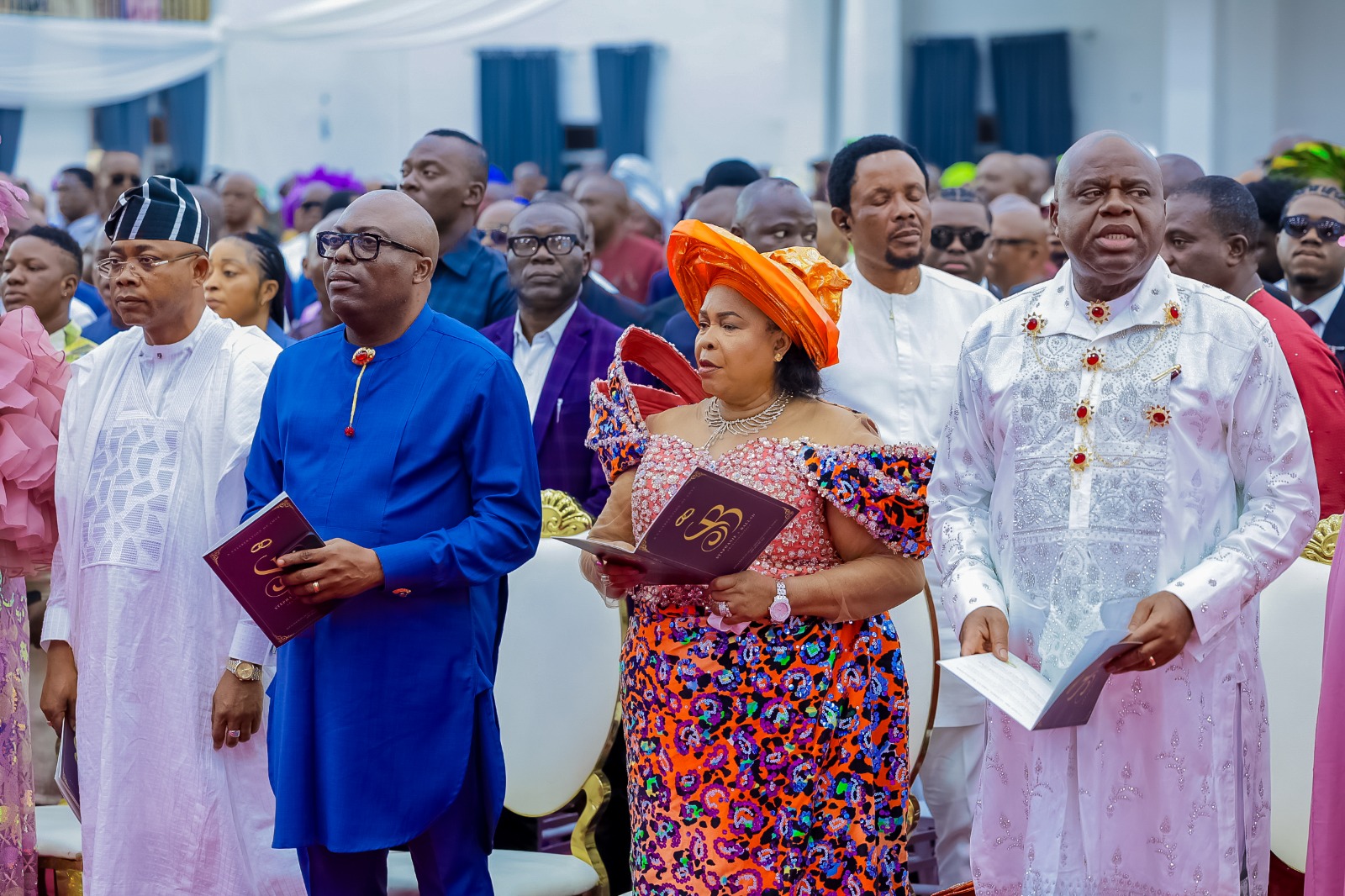
Rivers State, Sir Siminalayi Fubara, has assured members of the National Youth Service Corps (NYSC) of his administration’s commitment to supporting and strengthening the scheme in the State.
Fubara gave the assurance last Friday at the NYSC permanent orientation camp, Nonwa-Gbam, Tai Local Government Area in the State, during the swearing-in ceremony of 2026 Batch B Stream II orientation course.
Represented by the Permanent Secretary, Cabinet Bureau, Office of the Secretary to the State Government, Dr. Promise Oguzie, the governor said the State Government would remain intentional in providing the necessary support to improve the NYSC scheme and enhance the experiences of corps members deployed to the state.
He charged the corps members to be role models and quality nation-builders in their service to the good people of Rivers State in particular, and Nigeria at large.
“I charge you to be exemplary, dedicated and committed in all you do. Take full advantage of all the camp programmes and activities to enrich yourselves”, he said.
In his welcome address, the State Coordinator of NYSC in Rivers State, Mr. Moses Oleghe, urged corps members to see their deployment to Rivers State as a “veritable opportunity to make meaningful contribution to the growth of the State in particular and Nigeria at large.”
He further charged them to serve with all sense of “integrity, discipline, and the fear of God, especially when they will be engaged as INEC ad-hoc staff that will conduct the 2027 general elections.”
A total of 3,584 corps members composed of 1,421 males and 2,163 females were sworn in by the Chief Judge of Rivers State, who was represented by Justice Godspower Aguma.

Governor of Rivers State, Sir Siminalayi Fubara, says Nigeria needs God-fearing leaders for the nation to move in the right direction and make meaningful progress.
The Governor stated this yesterday when he received in audience, the World President of the Seventh Day Adventist Church, Pastor Erton Kohler; his wife, Andriene Marques Kohler; daughter Mariana Marques Kohler and a retinue of ministers of the church at Government House, Port Harcourt.
Fubara who hailed the Seventh Day Adventist Church for its contributions to education and the grooming of future leaders in Nigeria, expressed delight that the Church had over the years, been investing in education at various levels and currently runs two universities in the country.
He commended the church for not only using its institutions to spread the gospel of Christianity but to groom future leaders for the country.
According to him, religion should not be just about defending one’s faith, but also making meaningful impact on the lives of the people.
He said that by floating these educational institutions, the church has demonstrated capacity to support Nigeria in the task of producing not only educated people but a breed of God-fearing leaders.
“Our country is where it is today because we lack the fear of God. If you have the fear of God, there should be a limit to what you can do because you understand the supremacy of God. But when God is not in your equation, you’ll go beyond the line and that is what has brought us to where we are today.
“So, I feel very happy that you are contributing to the development of our future leaders in this country. We need the right people being in the right place; prepared properly with good minds; that is what we need, not just in Nigeria but round the whole world.,” he said.
Governor Fubara further observed that the absence of God-fearing people in high places to take the right decisions that could impact positively on the society, has also given rise to other problems such as social inequality, poverty, corruption and criminality. According to him, Nigeria needs a system where the average parent could afford quality education for their children and a guarantee that upon graduation, the average child will have the capacity to compete favourably with anybody, anywhere in the world.
“If we have a situation where the little money that you’re being paid as wage can also afford you quality healthcare and after working at least for 15-20 years, you have a roof over your head, tell me why you should be involved in any kind of crime? At that point, you’ll feel secured and this attitude of insecurity about the future that leads to all the social vices we have today won’t be there,” he said.
Governor Fubara expressed appreciation to the delegation for the visit and for their prayers for Rivers State, assuring them of his continued support for their programmes in the state.
Leader of the delegation and World President of the Seventh Day Adventist Church, Pastor Erton Kohler said he was in Nigeria for a special conference of the church during which thousands of the church’s ministers will be undergoing an empowerment programme to further equip them for the task of herding their flocks and serving the society.
He expressed gratitude to the Governor for the warm reception accorded his entourage, saying the memory of the visit will linger in his mind for a lifetime.
Kohler disclosed that the Church has over twenty -four million (24,000,000) members and more than 182,000 places of worship, spread across 212 countries of the world.

The Rivers State House of Assembly has approved the 2026–2028 Medium Term Expenditure Framework (MTEF) submitted by Governor Siminalayi Fubara.
This reaffirms the lawmakers’ commitment to enacting laws and taking legislative actions geared towards the overall development of the State.
The Assembly gave the approval during its Second Legislative Sitting of the Fourth Session held last Friday.
Speaking on the MTEF document during plenary, the House Speaker, Rt. Hon. Martin Amaewhule, noted that by the provision of Section 10(1)(b) of the Rivers State Fiscal Responsibility Law No. 8 of 2010, the MTEF ought to have been laid before the House in September 2025.
Amaewhule explained that traditionally, the document is expected to be presented four months before the commencement of the next financial year and immediately after the expiration of every three-year fiscal cycle.
He, however, stated that in the interest of the State and its people, the House considered it necessary to deliberate on the document, describing it as a precursor to the 2026 Budget Estimates.
The Speaker expressed concern that the year had already progressed significantly before the presentation of the framework.
During deliberations on the document, members examined the assumptions and projections contained in the MTEF and observed that strict adherence to the outlined fiscal parameters would ultimately serve the interest of Rivers people.
The lawmakers maintained that effective implementation of the framework would promote prudent financial management and enhance developmental planning across the State.
Following the debate and positive consideration by members, the Speaker put the question to the House and members voted overwhelmingly in support of the approval of the MTEF.
Meanwhile, during the same sitting last Friday, the House also received a petition from the Chairman of Obio/Akpor Local Government Council, Dr. Gift Worlu.
The petition was presented by the member representing Obio/Akpor Constituency II, Hon. Emilia Amadi.
According to the petition, concerns were raised over an imminent security breach, threats to lives, destruction of property and alleged forceful takeover of property by some lawless persons within parts of the Local Government Area.
Presenting the petition before the House, Hon. Amadi appealed to the lawmakers to revisit the matter and take necessary steps aimed at safeguarding lives and property in the affected communities.
The House is expected to further deliberate on the petition and consider measures to address the concerns raised in order to sustain peace and security in the area.
King Onunwor
-

 News2 days ago
RSG Targets Nine Million Residents in Mosquito Net Distribution Campaign
-

 Oil & Energy2 days ago
Aiyedatiwa Signs New Electricity Bill
-

 Oil & Energy2 days ago
NLNG Commissions Research And Innovation Centre In RSU
-

 Maritime2 days ago
Marine Minister Commends President Tinubu On NPERA Bill Assent
-

 News2 days ago
KenPoly Holds Eight Convocations, August 29
-

 News2 days ago
RSG Begins Another Phase of Projects Commissioning Today
-

 News2 days ago
RMAFC Completes Revenue Sharing Review, Proposes New Pay
-

 Maritime2 days ago
NAGAFF Petitions IGP Over Alleged Maritime Police Harassment