
Nation
HYPREP Harps On Wetlands’ Protection

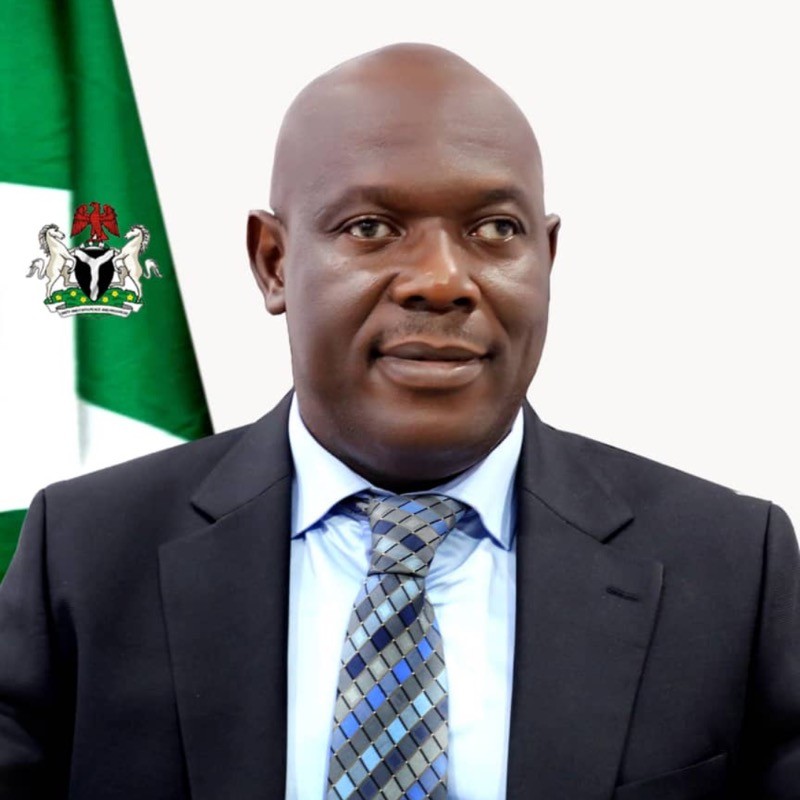
As the global community celebrated the 2024 World Wetlands Day recently, the Hydrocarbon Pollution Remediation Project ( HYPREP) has emphasised the need to protect wetlands in Nigeria, particularly in the Niger Delta region and Ogoniland.
The Project Coordinator of HYPREP, Prof Nenibarini Zabbey, who gave this indication in a statement in Port Harcourt to mark this year’s World Wetlands Day, said the theme of the celebration, ‘Wetlands and Human Wellbeing’ resonates deeply with Nigeria, a nation blessed with abundant wetlands that play vital role in supporting biodiversity and the livelihoods of communities, adding that HYPREP takes the opportunity to highlight the critical importance of wetlands in Nigeria’s rich and diverse ecosystem, the Niger Delta.
According to him, the change in attitude towards the environment, sustainable use of the ecosystems and co-management of ecological infrastructure by communities are essential components of a sustainable wetlands restoration regime.
He, therefore, posited that all stakeholders must work together to implement sustainable practices that protect and restore these vital ecosystems for the benefit of the current and future generations, stressing that HYPREP is committed to raising awareness about the significance of wetlands and advocating for their protection.
While calling on the government at all levels, civil society organisations, businesses, communities and the public to join hands in preserving these critical ecosystems, Zabbey said, “Our collective efforts can contribute to achieving sustainable development goals, particularly those related to clean water and life on land and underwater, as well as climate action”.
The Project Coordinator further indicated that HYPREP encourages individuals and communities to engage in activities that promote wetland conservation, such as clean-up drives, educational programmes and tree-planting initiatives.
“Working together, we can ensure that wetlands continue to thrive for the benefit of the current and future generations. We therefore urge you to appreciate the beauty and importance of wetlands and please, to be stewards of these ecosystems,” he pleaded.
He said the theme of this year’s celebration recognises wetlands as critical to all facets of human wellbeing, including psychological, mental, social and spiritual, stressing that it underscores the intrinsic value of wetland ecosystems to sustainable development and human wellbeing.
“Wetlands, including mangroves, lagoons, creeks, ponds, rivers, associated seasonal water bodies, sustain life, foster biodiversity, and ensure the health and prosperity of our communities through their regulatory, provisioning, protecting, replenishing and sustaining functions,” he said.
Zabbey hinted that over 4,000 hectares of mangroves have been destroyed by decades of oil spills in Ogoniland alone, which he said has exacerbated poverty, as traditional livelihoods dependent on healthy mangroves are destroyed.
According to him, the degradation of these crucial ecosystems poses risks to biodiversity and compromises the wellbeing of communities that depend on wetlands for their survival.
He noted that a range of these ecosystems exists in Nigeria, particularly in the Niger Delta region, where they contribute to the sustenance of various local cultures, offering valuable resources for fishing, agriculture, traditional and spiritual activities.
The Project Coordinator said mangroves typically serve as natural buffers against floods; store and purify water as well as provide food and habitat for various plant and animal species, adding that despite their invaluable contributions, wetlands face numerous threats, including urbanisation, reclamation for social projects, plastic and crude oil pollution, deforestation, dredging and the impact of climate change.
Zabbey disclosed that HYPREP has taken bold steps to restore hectares of shoreline and mangrove ecosystems in Ogoniland, which have been degraded, by undertaking a preliminary shoreline clean-up assessment of over 3,000 hectares of shoreline; conducting a chemical characterisation of oil levels in the sediment; delineating the 3,000 hectares of the assessed shoreline into 833 grids; and starting the process of remediating 1,747 hectares of the 3,000 hectares.
According to him, the Project has also piloted mangrove rehabilitation of 460 hectares while at the same time providing skill training to 5,000 Ogoni youths, including artisanal refiners, to create alternative livelihoods, as a means to prevent recontamination of remediated ecosystems.
He further hinted that 90 Ogoni youths and women have been trained in mangrove restoration and empowered with grants to set mangrove nurseries, while HYPREP has also created and funded Environment Clubs in secondary schools in Ogoniland, to sustain its education, awareness and sensitisation campaigns on the risks of wetland degradation.
Donatus Ebi


Rivers State University and the Otonti Nduka Foundation for Values Education jointly hosted a two-day National Conference on 8 and 9 May 2026 to examine the state of values in Nigeria.
The two days conference held at Rivers State University convocation arena brought together academics, policymakers, legal experts and education leaders under the theme _“Trends and Challenges in Upholding Values in Nigeria.”_
The gathering focused on policy gaps, curriculum reform, and the role of ethics in public service and education.
The event opened on Friday with remarks from Vice Chancellor Prof. Chief Isaac Zeb-Obipi, who stressed the need to address declining moral and civic values across Nigeria’s education and public sectors. A book of abstracts for the plenary sessions was also presented to participants.
Key speakers included former Attorney General Chief Dr Kanu Agabi, SAN; NERDC Executive Secretary Prof. Shehu Salisu; Prof. Hauwa Imam, FNAE, of the University of Abuja; former Rivers SUBEB Chairman Ven Dr Fyneface Akah, ; former NIMASA DG Dr Hon. Dakuku Adol-Peterside; and RSU Director of ICT Prof. Sunny Orike.
Discussions centered on integrating values education into schools, tertiary institutions and public institutions, alongside the impact of technology on moral development among young Nigerians. Panel and plenary sessions produced practical recommendations for curriculum and policy reform.
On Saturday, the foundation marked its centenary with the unveiling of the book _Otonti Nduka in History_, launched by Chief Engr. Grant Offor, FNSE. The Nigerian Academy of Education held a ceremonial procession led by its President Prof. Olu Jegede and the Ikwerre Professors Forum.
In a communiqué, participants called for stronger collaboration between government, civil society and academia to mainstream values education nationwide. They recommended reviewing teacher training curricula and expanding digital platforms to promote ethical civic engagement, with the foundation pledging to share the outcomes with education authorities for implementation.
Dignitaries present included Ogbakor Ikwerre Worldwide as Chief Host, Prof. Emeritus Chief T. Uzodimma Nwala, the Ikenga 1 of Mbaise and first philosophy student of the late Prof. Otonti Nduka, alongside scholars and community leaders.

The Shell Nigeria Gas Limited, in partnership with the Manufacturers Association of Nigeria, has reaffirmed support for efforts to expand gas distribution infrastructure in Rivers State as part of initiatives aimed at improving access to affordable, cleaner and more reliable energy for industries across the South-South region.
The commitment was highlighted during the SNG–MAN Business Forum held in Port Harcourt, where stakeholders from the industrial and public sectors examined the role of natural gas in driving industrialisation, boosting local production and strengthening energy security.
Speaking at the forum on behalf of the Managing Director of Shell Nigeria Gas Limited, the company’s Head of Gas Distribution, Mr. Chukwuka Amos Ejesi, described natural gas as a critical component of Nigeria’s energy mix and a key driver of sustainable industrial growth.
According to him, Nigeria’s gas development agenda has reached a stage where policy direction must be matched with practical implementation capable of addressing the energy challenges confronting manufacturers.
He noted that pipeline gas offers industries a cleaner, more dependable and cost-effective energy alternative capable of supporting uninterrupted operations, reducing emissions and improving production efficiency.
“Gas is the backbone of manufacturing, and we are encouraged by the growing recognition among stakeholders of the need for cleaner and more reliable energy solutions,” he said.
Ejesi stressed the need for sustained collaboration among energy providers, government institutions and industrial stakeholders to maximise the country’s gas resources for economic development.
He added that improved gas infrastructure would strengthen manufacturing value chains, enhance productivity and promote more competitive industrial operations across Rivers State and the wider South-South region.
Participants at the forum also emphasised the importance of expanding energy infrastructure as a pathway to unlocking industrial capacity, reducing operating costs and promoting sustainable industrial development.
Representing Governor Siminalayi Fubara, the Director-General of the Rivers State Investment Promotion Agency, Dr. Chamberlain Peterside, reaffirmed the state government’s commitment to partnering with private sector investors to revitalise industrial activities in the state.
He identified key projects targeted under the initiative to include the revival of the Ahoada Industrial Park, the New Port City project and the proposed Bonny Industrial Park, all aimed at stimulating economic growth and expanding industrial opportunities along the Bonny corridor.
According to the governor, the long-term vision is to position Rivers State as a leading manufacturing hub in Southern Nigeria through strategic public-private partnerships.
Governor Fubara also commended Shell Nigeria Gas and MAN for sustaining engagements geared towards improving industrial energy access, noting that gas infrastructure development remains central to the state’s economic recovery plans.
He further observed that the gas sector presents enormous opportunities for economic growth, especially as global energy systems continue to shift towards cleaner energy sources.
The governor called on stakeholders to work collectively towards developing a practical and sustainable gas framework capable of supporting the state’s industrial and energy development objectives.
Chairman of MAN, Rivers and Bayelsa Branch, Elder Vincent Okuku, described gas as indispensable to industrial operations, noting that many manufacturers continue to struggle with the high cost of alternative energy sources.
Similarly, President of the Port Harcourt Chamber of Commerce, Industry, Mines and Agriculture, Dr. Chinyere Ngozi Nwoga, said the transition to natural gas had become increasingly necessary for businesses seeking stable and cost-efficient operations.
“Pipeline natural gas provides a more cost-effective and reliable source of energy for industries,” she stated.
Also speaking, former Chairman of MAN in Rivers and Bayelsa States, Mrs. Emilia Akpan, stressed the need to align energy infrastructure development with investment in human capacity.
She maintained that rebuilding the state’s economy would require not only reliable energy supply but also the development of technical skills needed to support long-term industrial growth.
By Kevin Nengia
Nation
First Rivers Female Professor of Theatre Arts in Education Delivers UNIPORT’s 211th Inaugural Lecture


The first female Professor of Theatre Arts in Education from University of Port Harcourt and Rivers State, Prof. Faith Ken-Aminikpo, has delivered the institution’s 211th inaugural lecture to widespread acclaim, highlighting the critical role of theatre in modern education.
The inaugural lecture, titled “Playing and Learning: The Siamese Twins,” was delivered on April 30, 2026, at the university campus in Port Harcourt before an audience comprising academics, traditional rulers, students, and members of the public.
The event attracted applause and commendations for the lecture’s intellectual depth, engaging delivery, and practical relevance to contemporary education.
In her presentation, Prof. Ken-Aminikpo challenged the misconception that Theatre Arts is merely entertainment or academically inferior to other disciplines. She stressed that theatre remains a powerful pedagogical tool capable of improving learning outcomes across diverse fields, including science, medicine, and technology.
According to her, theatre promotes creativity, discipline, emotional intelligence, and critical thinking, describing it as a holistic educational experience beyond acting and performance.
“Theatre is life itself. Every rehearsal is a learning process. Through theatre, we develop creativity, discipline, emotional intelligence, and critical thinking. It is not just about dancing or acting. It is a comprehensive educational experience,” she stated.
The professor, who is also the first PhD holder in the Department of Theatre Arts in Education at the university, described playing and learning as inseparable concepts that must coexist to achieve meaningful education.
She maintained that imaginative and participatory teaching methods significantly enhance students’ engagement, understanding, and retention.
Drawing from her personal teaching experience, Prof. Ken-Aminikpo recounted how she deployed visual aids and creative techniques to teach poetry during her early teaching career, leading to improved student performance.
She also cited the use of models and demonstrations by science teachers to simplify complex concepts as further evidence of the effectiveness of experiential learning methods.
As part of her recommendations, the theatre scholar proposed the establishment of a Centre for Theatre Arts in Education in universities to drive curriculum development, research, interdisciplinary collaboration, capacity building, and community engagement.
She further advocated the creation of a World Theatre-Inspired Children’s Learning Park, which she said would promote youth development, provide practical training opportunities, and generate revenue for institutions.
In his remarks, the Vice Chancellor of University of Port Harcourt, Prof. Owunari Georgewill, commended the inaugural lecturer for what he described as an intellectually stimulating and socially relevant contribution to knowledge.
Similarly, the Dean of the Faculty of Humanities, Prof. J. E. Esmonde, described Prof. Ken-Aminikpo as an accomplished scholar whose work has significantly advanced theatre education in Nigeria and beyond.
-

 Editorial11 hours ago
Enough Of Xenophobic Attacks On Nigerians
-

 Environment12 hours ago
MOSOP – Tinubu Not Sincere With Ogoni People For Oil Resumption
-

 Nation10 hours ago
RSU, Otonti Nduka Foundation Hold Centenary Conference, Unveil Book on Values in Nigeria
-

 News16 hours ago
Fubara, Wife Hail Tinubu’s Renewed Hope Initiative …As Over 6,800 Families Benefit From Largesse In Rivers
-

 Oil & Energy10 hours ago
Rivers PETROAN Elects 12-Member Executive
-

 Maritime13 hours ago
Products, Others, To Arrive Lagos Ports Today — MPA
-

 Oil & Energy12 hours ago
SEED: FG To Train 6,000 Energy Professionals
-
Politics12 hours ago
APC Group Protests Ex–Presidential Aspirant’s Disqualification From Rivers Senatorial Race