
Featured
Probe Missing $15bn, N200bn Oil Revenues, SERAP Tells Tinubu

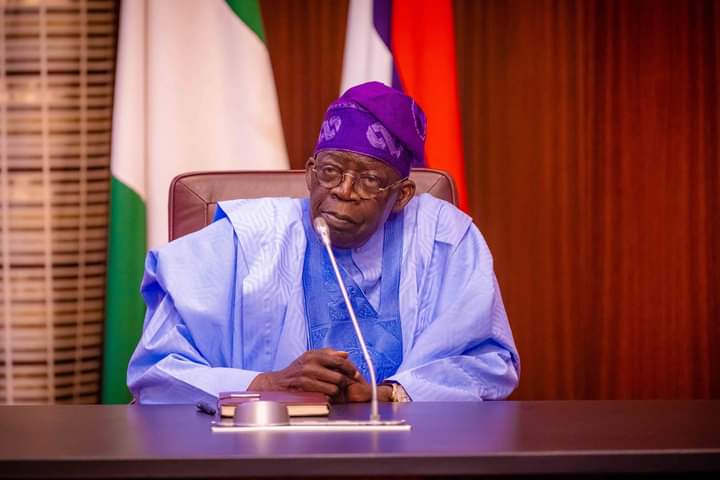
The Socio-Economic Rights and Accountability Project (SERAP) has urged President Bola Tinubu to set up a presidential panel of enquiry to promptly probe the grim allegations that over US$15 billion of oil revenues, and N200 billion budgeted to repair the refineries are missing and unaccounted for between 2020 and 2021, as documented by the Nigeria Extractive Industries Transparency Initiative (NEITI).
SERAP urged the President to “name and shame anyone suspected to be responsible for the missing and unaccounted for public funds and to ensure their effective prosecution as well as the full recovery of any proceeds of crime.”
SERAP also urged Tinubu “to fully implement all the recommendations by NEITI in its 2021 report, and to use any recovered proceeds of crime.”
In the letter dated 23 September 2023 and signed by SERAP deputy director Kolawole Oluwadare, the organisation said there was a legitimate public interest in ensuring justice and accountability for these serious allegations, adding that taking these important measures would end the impunity of perpetrators.
SERAP said, “As President and Minister of Petroleum Resources, your office ought to be concerned about these damning revelations, by getting to the bottom of the allegations and ensuring that suspected perpetrators are promptly brought to justice, and any missing public funds fully recovered.”
The letter read in part: “Any failure to investigate these grave allegations, bring suspected perpetrators to justice and recover any missing public funds would have serious resource allocation and exacerbate the country’s debt burden.
“It would also create cynicism, suspicion, and eventually citizens’ distrust about the ability of your government to combat high-level official corruption, as well as deter foreign investment and limit growth and development.
“We would therefore be grateful if the recommended measures are taken within seven days of the receipt and/or publication of this letter. If we have not heard from you by then, SERAP shall consider appropriate legal actions to compel your government to comply with our request in the public interest.
“The findings by NEITI suggest a grave violation of the public trust and the provisions of the Nigerian Constitution 1999 [as amended], national anticorruption laws, and the country’s obligations under the UN Convention against Corruption.
“The allegations of corruption documented by NEITI undermine economic development of the country, trap the majority of Nigerians in poverty and deprive them of opportunities.
“Your government has a constitutional duty to ensure transparency and accountability in the spending of the country’s wealth and resources.
“According to the 2021 report by the Nigeria Extractive Industries Transparency Initiative (NEITI), government agencies including the Nigerian Petroleum Development Company (NNPC) and the Nigerian Upstream Petroleum Regulatory Commission (NPDC) failed to remit $13.591 million and $8.251 billion to the public treasury.
“The NNPC and NPDC failed to remit over 70% of these public funds. NEITI wants both the NNPC and NPDC to be investigated, and for the missing public funds to be fully recovered.
“The report also shows that in 2021, the State Owned Enterprises (SOE) and its subsidiaries (the NNPC Group) reportedly spent US$6.931billion on behalf of the Federal Government but without appropriation by the National Assembly. The money may be missing.
“The NNPC also reportedly obtained a loan of $3 billion in 2012 purportedly to settle subsidy payments due to petroleum product marketers but there is no disclosure of the details of the loan, subsidy and the beneficiaries of the payments.
“The report also shows that N9.73 billion was paid to the NNPC as pipeline transportation revenue earned from Joint Venture operations but the money was neither remitted to the Federation nor properly accounted for. The NPDC in 2021 also failed to remit $7.61 million realized from the sale of crude oil.
“The report documents that about N200 billion was spent on refineries rehabilitation between 2020 and 2021 but “none of the refineries was operational in 2021 despite the spending.’ NEITI wants the spending to be investigated, as the money may be missing.
“Section 13 of the Nigerian Constitution 1999 [as amended] imposes clear responsibility on your government to conform to, observe and apply the provisions of Chapter 2 of the constitution. Section 15(5) imposes the responsibility on your government to ‘abolish all corrupt practices and abuse of power’ in the country.
“Under Section 16(1) of the Constitution, your government has a responsibility to ‘secure the maximum welfare, freedom and happiness of every citizen on the basis of social justice and equality of status and opportunity.
“Section 16(2) further provides that, ‘the material resources of the nation are harnessed and distributed as best as possible to serve the common good.
“Similarly, articles 5 and 9 of the UN Convention against Corruption also impose legal obligations on your government to ensure proper management of public affairs and public funds, and to promote sound and transparent administration of public affairs.
“The UN Convention against Corruption and the African Union Convention on Preventing and Combating Corruption to which Nigeria is a state party obligate your government to effectively prevent and investigate the plundering of the country’s wealth and natural resources and hold public officials and non-state actors to account for any violations.
“Specifically, article 26 of the UN convention requires your government to ensure ‘effective, proportionate and dissuasive sanctions’ including criminal and non-criminal sanctions, in cases of grand corruption.
“Article 26 complements the more general requirement of article 30, paragraph 1, that sanctions must take into account the gravity of the corruption allegations.
“Nigeria is also a participating state of the Extractive Industries Transparency Initiative (EITI), which aims to foster greater governmental accountability for the use of natural resource wealth through the creation of a set of international norms on revenue transparency.
“EITI also aims to tackle corruption, poverty and conflict associated with natural resource wealth. Nigeria has the obligations to implement the EITI Standard, which sets out the transparency norms with which participating States including Nigeria must comply.




Featured
JUNE 12: Democracy Remains Nigeria’s Strongest Path To Unity, Progress, Says Fubara ….Extols Abiola, Wife


Governor of Rivers State, Sir Siminalayi Fubara, has reaffirmed that democracy remains the most effective system of government for Nigeria, given the country’s rich diversity of ethnic, religious, and cultural identities.
In a goodwill message to Nigerians on the occasion of the 2026 Democracy Day celebration, Governor Fubara said June 12 represents far more than a historic date; as it embodies the enduring struggle, sacrifice, and collective aspiration of Nigerians for freedom, justice, and representative governance.
The Governor extended warm felicitations to Nigerians at home and in the Diaspora, paying tribute to the heroes and heroines of the democratic struggle, particularly Chief MKO Abiola, his wife, Kudirat Abiola, and countless others whose courage and sacrifices helped secure the democratic freedoms Nigerians enjoy today.
According to him, “June 12 is a reminder of the price paid for the democracy we enjoy today. The sacrifices made by Chief MKO Abiola, Kudirat Abiola, and many other patriots who laid the foundation for the democratic journey we continue to enjoy today. Their commitment to the principle that power must ultimately reside with the people remains a source of inspiration for every generation of Nigerians.”
Governor Fubara noted that thirty-three years after the historic June 12, 1993 election, Nigeria’s democratic experiment has continued to evolve despite challenges and setbacks.
“Our democratic journey has not been without difficulties, but the resilience of our institutions and the determination of our people have kept the nation moving forward. The ability to express differing opinions, engage in constructive debate, and peacefully choose leaders through the ballot remains one of the greatest achievements of our nation,” he said.
Governor Fubara stressed that democracy provides the best framework for managing Nigeria’s diversity and transforming it into a source of national strength.
“Nigeria’s diversity should never be seen as a weakness. Properly harnessed, it is our greatest asset. Democracy offers us the opportunity to build consensus, promote inclusion, strengthen national unity, and create the conditions for sustainable development and shared prosperity,” he said.
Governor Fubara commended President Bola Ahmed Tinubu, for his commitment to the Renewed Hope Agenda and ongoing efforts aimed at economic revitalization, strengthening security, and deepening democratic institutions across the country.
He reiterated the readiness of Rivers State to continue partnering with the Federal Government in advancing policies and programmes that improve the lives of citizens through infrastructure development, job creation, enhanced security, quality education, healthcare delivery, and good governance.
The Governor further called on Nigerians, regardless of political affiliation, ethnic background, or religious belief, to use the occasion of Democracy Day to renew their commitment to the Nigerian project and the ideals that underpin democratic governance.
“Democracy must not be viewed merely as a periodic electoral exercise. It must be reflected in our daily commitment to accountability, transparency, tolerance, justice, respect for the rule of law, and responsible leadership. As citizens and leaders, we all share a collective responsibility to strengthen our democracy and build a nation that future generations will be proud to inherit,” he said.
Governor Fubara expressed optimism about Nigeria’s future, urging citizens to remain united, hopeful, and committed to the values of peace, dialogue, and national development.
“Together, we can build a stronger, more inclusive, and more prosperous Nigeria where every citizen has the opportunity to thrive and contribute meaningfully to national progress,” he said.

Governor of Rivers State, Sir Siminalayi Fubara, has reaffirmed the unwavering commitment of his administration to peace, unity, security, and inclusive development as Rivers State marked its 59th anniversary, last Wednesday.
In a goodwill message issued on Wednesday to commemorate the anniversary, Governor Fubara stated that despite the challenges faced over the years, the people of Rivers State have continued to demonstrate resilience, strength, and an enduring spirit of unity that has sustained the state since its creation.
The Governor noted that the strong bond of brotherhood among the various ethnic nationalities of the state, including the Ijaw, Ikwerre, Ogoni, Etche, Ekpeye, Andoni, Kalabari, and others, remains one of Rivers State’s greatest strengths and a critical foundation for peace, stability, and progress.
He further observed that Rivers State has remained a major driver of Nigeria’s economy for decades, not only because of its abundant oil and gas resources, but also because of the exceptional contributions of its people across diverse sectors including academia, jurisprudence, business, entertainment, public service, and sports.
Governor Fubara assured the people that his administration will continue to prioritize policies and programmes that promote peace, protect lives and property, and expand development across all parts of the state. He emphasized that governance must be people centered and impactful, with equal attention given to every Local Government Area of the state.
The Governor also paid tribute to the elders and founding leaders of the state for preserving the spirit of unity and coexistence over the years, while urging the youths to remain hopeful, responsible, and actively committed to building a greater Rivers State through innovation, hard work, and patriotism.
He equally acknowledged the invaluable role of women in strengthening families, communities, and society, describing them as indispensable partners in the continued growth and stability of the state.
Governor Fubara called on all Rivers people to use the occasion of the anniversary as a moment of reflection and renewed commitment to peaceful coexistence, mutual respect, dialogue, and collective progress, stressing that the unity and future of Rivers State must always rise above personal interests and political differences.
Rivers State was created on May 27, 1967, by General Yakubu Gowon.
