
Politics
Why Atiku Is Upset With Integrity Group – Ortom

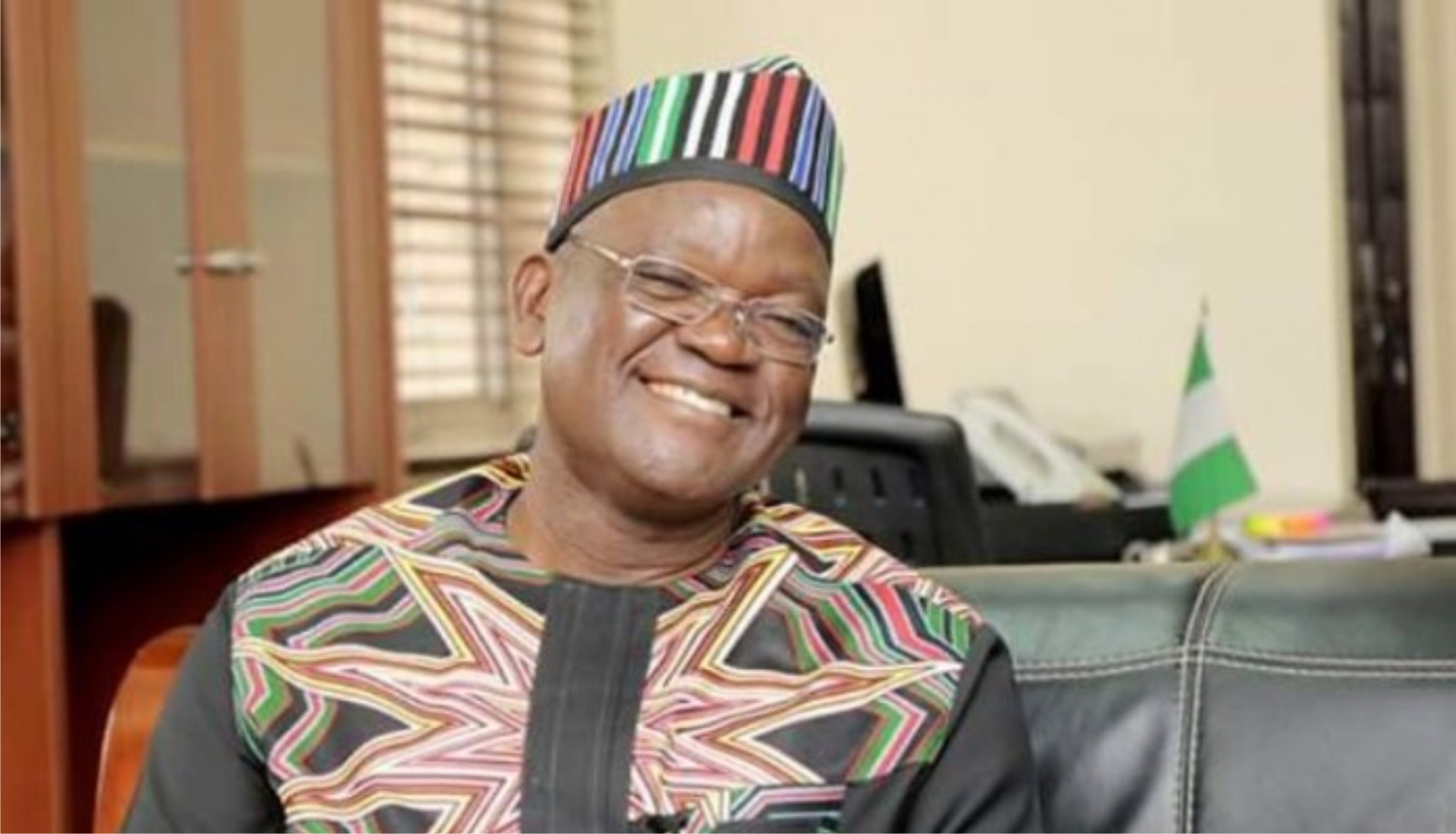
Former Governor of Benue State, Samuel Ortom has said that the candidate of the Peoples Democratic Party ( PDP) in the 2023 presidential election, Atiku Abubakar is angry because he was rejected by him and the G5- governors.
Ortom was reacting to a statement made by Atiku through his media aide, Phrank Shaibu accusing him (Ortom) and other G-5 members of seeking appointment and protection from prosecution from the Federal Government.
Ortom said that the presidential candidate should be worried about why the G-5 and other members of the integrity group rejected his candidacy.
Atiku had described the former Benue governor as one of the worst governors in the history of Nigeria, saying his case file at the Economic and Financial Crimes Commission (EFCC) is bulky.
But responding, Ortom reiterated the stand of the G-5 and said that the group stood for justice, equity, and fairness and that the 2023 Presidency must go to the Southern part of the country and Nigerians saw the indisputable facts contained in the position of the Integrity Group and voted for a presidential candidate from the South.
The statement reads in parts, “Atiku is angry because Governor Ortom and his colleagues in the G-5 refused to be used by him as ‘Special Purpose Vehicles (SPVs)’ to circumvent and thwart the resolve of Nigerians to produce a President from the Southern region.
“Another reason for Atiku’s attack on Chief Ortom is the former Benue State Governor’s boldness to speak truth to his face and rebuke him for making unstatesmanlike comments regarding the killing of Benue people by Fulani herdsmen. Atiku is on record to have expressed bitterness towards Ortom for daring to enact a law to prohibit open grazing of livestock in the State”, he said.
“The former Vice President’s diatribe against Chief Ortom can therefore be understood as the manifestation of frustration for losing the 2023 election. His failure to humble himself and unite the PDP, opting to remain haughty even when the signals were clear that he was heading for defeat summarized his performance in the last election.
“Atiku lacks the moral ground to accuse anyone else of corruption. The words of his erstwhile principal, the former President, Chief Olusegun Obasanjo, who described him as a very corrupt man have remained indelible and incontrovertible. Chief Obasanjo, in his book, ‘My Watch’ states on pages 191-192 thus:
“Atiku Abubakar’s name was among the names sent to us. Up to that time, EFCC had enjoyed close cooperation and collaboration with law enforcement agencies in the UK and the USA. I gave the green light to Nuhu for the investigation as requested by the authorities and forwarded his report to the USA. The report was uncomfortable and unsavoury about Atiku and his associates. I thought it was bad enough that the Vice President of the Federal Republic of Nigeria was under investigation for corruption when my Administration had made fighting corruption one of its cardinal objectives. As it turned out, the investigation in Nigeria and in the US led to Atiku’s house being searched by the US Bureau of Investigation (FBI). It was so embarrassing for our Administration and Embassy in Washington…”
Ortom admitted that he honoured the invitation of the anti-graft agency saying, “The role of anti-graft agencies was to investigate allegations of corruption. Whenever they invite someone, such a person has to honour the invitation. As a man who believes in the rule of law, Chief Ortom willingly visited EFCC when the Commission sought clarifications on the actions of his administration.”
The former governor urged Nigerians to disregard the allegation by Alhaji Abubakar against him, describing it as unfounded and tantamount to cheap blackmail.

Politics
Alleged Coup: Protests Rock N’Assembly As Detained Officers’ Children, Wives Demand Justice


Scores of children and wives of military officers detained over an alleged coup plot yesterday staged a peaceful protest at the National Assembly, demanding a speedy trial and the release of the accused officials.
The protesters who gathered at the entrance of the National Assembly complex, moved in a slow procession while clutching placards with inscriptions such as “Don’t Kill Our Daddies,” “Detention Without Trial is Injustice,” and “Six Months of Torture: Enough Is Enough.”
Amid tears and trembling voices, the children appealed for justice and access to their detained fathers, many of whom they said they had not seen for months.
The appeal was made during a press briefing in Abuja attended by no fewer than 20 wives and several children of the detained officers, including a two-month-old baby.
The families were accompanied by human rights lawyer, Deji Adeyanju and activist Omoyele Sowore.
At the briefing, the families lamented that the officers had been held for over 160 days without trial or contact with their relatives, describing the situation as a violation of their fundamental rights.
Speaking on behalf of the families, Memuna Bashiru said the prolonged detention had thrown their households into uncertainty and emotional distress, noting that while allegations had been widely publicised, families remained in the dark about the fate of their loved ones.
The arrest of the indicted officers was first announced on October 4, 2025, by the then Director of Defense Information, Brigadier General Tukur Gusau, who disclosed that 16 officers were taken into custody for alleged breaches of military regulations and acts of indiscipline.
However, an interim investigation later suggested the existence of a clandestine network of officers, allegedly coordinated by a senior Army officer, which had begun preliminary planning for a coup.
According to the report, the alleged plot involved surveillance of key national assets, including the Presidential Villa, Armed Forces Complex, Niger Barracks in Abuja, and major international airports, with October 25, 2025, cited as the planned date for the operation.
Those reportedly in custody include Brig Gen M. A. Sadiq, Col M. A. Maaji, Lt Col S. Bappah, Lt Col A. A. Hayatu, Lt Col P. Dangnap, Lt Col M. Almakura, Maj A. J. Ibrahim, Maj M. M. Jiddah, Maj M. A. Usman, Maj D. Yusuf, Capt I. Bello, Capt A. A. Yusuf, Lt S. S. Felix, Lt Cdr D. B. Abdullahi, Sqn Ldr S. B. Adamu and Maj I. Dauda.
The alleged plot, according to findings, targeted senior government officials, including President Tinubu and Vice President Kashim Shettima.

In a statement issued yesterday, the party’s National Publicity Secretary, Mr Felix Morka, said the exercise would take place in all wards and designated centres nationwide.
He called on existing members to update their records, while encouraging new entrants to join the party through the digital platform.
“As the electronic membership registration exercise resumes in all wards and designated locations nationwide, we urge existing members to validate their membership while new members are encouraged to register and join the progressive family,” Mr Morka said.
According to him, eligibility for registration is limited to individuals aged 18 and above who possess a valid National Identification Number (NIN).
The party said the initiative is part of efforts to modernise its operations by transitioning to a digital database that would enhance record accuracy and accessibility.
Mr Morka noted that the e-registration would “digitise the party’s membership register, ensure the integrity of records, and enhance efficient access to membership data for planning and management decisions.”
He added that the move is also aimed at promoting internal democracy within the party and strengthening its commitment to democratic innovation.
The APC had previously introduced electronic registration as part of broader reforms to streamline its membership system and improve organisational efficiency.
-
Opinion3 days ago
Ozoro Festival: Tradition or Tyranny?
-

 News3 days ago
RSG Reiterates Commitment To Youth Dev
-

 Oil & Energy3 days ago
Transcorp Energy, Renewvia Partner On Renewable Energy Gap
-
Politics3 days ago
RIVERS WOMEN RALLY SUPPORT, CONTINUOUS PRAYERS FOR TINUBU
-
Politics3 days ago
AKPABIO, DIRI, OBOREVWORI, OTHERS VOW TO REELECT TINUBU …AS GIADOM RETAINS APC ZONAL CHAIR
-

 Business3 days ago
NSCDC Discloses Illegal Dump Site In Ikwerre Community
-
Politics3 days ago
Viral 2027 Nomination Forms Price List Fake, Misleading – APC
-

 Business3 days ago
Yenagoa’s Radisson Hotel Ready December — NCDMB, Other