
Business
FG Makes N10tn VAT Under Buhari

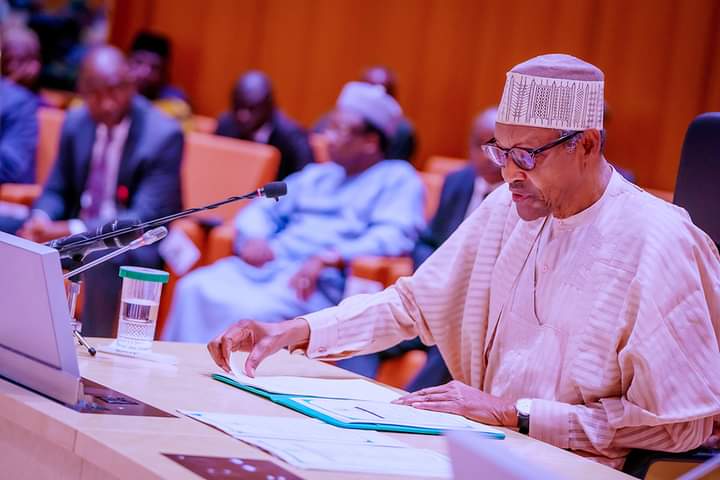
The Federal Government has raked in N10.1tn from the collection of Value Added Tax under the regime of the President Muhammadu Buhari.
Consequently, the Minister of Finance, Zainab Ahmed, had adviced the in-coming government to increase the VAT from the current 7.5 per cent to 10 per cent.
VAT is a 7.5 per cent consumption tax administered by the Federal Inland Revenue Service when goods are purchased and services are rendered, and it is borne by the final consumer.
Revenue generated from VAT is usually disbursed to the three tiers of government through the Federation Accounts Allocation Committee.
An analysis of reports obtained from the National Bureau of Statistics showed that the VAT earnings continued to rise annually throughout the eight-year period.
The country earned N759.4 billion in 2015, N777.5 billion in 2016, N972.4 billion in 2017 and N1.1 trillion in 2018.
VAT collections in 2019 amounted to N1.2tn, N1.5 trillion in 2020, N2.1tn in 2021 while N2.5 trillion was paid in 2022.
The Tide source reports that the significant increase in VAT collection in the past two years is not unconnected with the decision by the Federal Government in 2020 to increase the VAT rate from five per cent to 7.5 per cent. This was part of the tax reforms included in the 2019 Finance Act meant to help the government achieve its revenue projections.
Meanwhile, economists have cautioned against raising the VAT from 7.5 per cent to 10 per cent by the incoming administration, as they argued that it would stifle the country’s economic growth.
The Finance Minister, who made the call during a courtesy visit to the headquarters of Voice of Nigeria in Abuja recently, said, “VAT is one of the ways to increase revenue and we still have to increase VAT because, at 7.5 per cent, Nigeria has the lowest VAT rate in the world, not in Africa, in the world.
“In Sub-Saharan Africa, the African average is 18 per cent, when you increase your VAT, your Gross Domestic Product will grow.
“So, tax compliance has increased. As a result, we have also adjusted our VAT rate from five per cent to 7.5, even though our target was 10 per cent. But you know how it is in Nigeria, we are targeting 10 per cent by the second year, we did so to increase revenue”.
Reacting to the development, the Director, Centre for the Promotion of Private Enterprise, Muda Yusuf, said the advice was coming too early considering the previous increase in 2020.
He said it was better to bring more people into the tax net than to impose more burden on those in the tax net.
“The revenue performance from VAT has generally been excellent in recent years. My view is that it is perhaps too early to review it again, especially in light of all the challenges that businesses are facing.
“Businesses are the main contributors of VAT and there are some other taxes that have already been proposed under the finance bill like excise and telecom tax. So, we have to be careful so as not to increase the burden on businesses.
“The better thing is to bring more people into the tax net than to impose more burden on those in the tax net”, he stated.



-
Politics4 days ago
2027: NIGERIANS FAULT INEC ON DIGITAL MEMBERSHIP REGISTER DIRECTIVE
-
Politics4 days ago
LP Crisis: Ex-NWC Member Dumps Dumps Abure Faction
-

 Environment4 days ago
LAWMA Director Says Sweeping Reforms Have Improved Waste Collection
-

 Politics4 days ago
Umahi Dismisses Allegations On Social Media, Insists On Projects Delivery
-

 Sports4 days ago
Abia Not Sure To Secure continental Ticket
-
Politics4 days ago
NATASHA ELECTRIC VEHICLES INITIATIVE IN KOGI CENTRAL
-
Sports4 days ago
La Liga: Yamal Records First Career Hat-trick
-

 Sports4 days ago
PSG Extend Lead In Ligue 1