
Business
Experts Query Expatriate Heading NNPCL Subsidiary

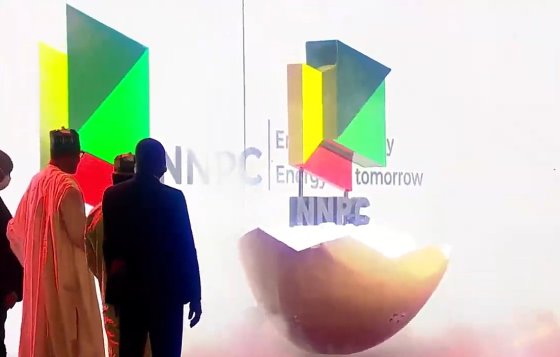
Some industry experts have raised concerns over the announcement of Jean-Marc Codier as the head of the oil trading arm of the Nigerian National Petroleum Company Limited (NNPCL).
A statement issued in Abuja by the Chief Corperate Communications Officer, Garba-Deen Muhammad, said he is to head NNPC Trading Ltd, a subsidiary of NNPCL, a situation which did not go down well with some industry experts.
The announcement attracted resentments among some analysts and operators on Monday, while other experts see it as normal.
Commenting on the issue, energy expert and Chief Executive Officer of Sage Consulting, Bode Fadipe, said, “It is of concern to most Nigerians that at this time of our life we are still having a foreigner in such a strategic business enterprise in this country.
“The question many people will ask is that, don’t we have Nigerians who can manage that office? Are the expatriates now investors in the business or is it a joint venture that allows a foreigner to hold that kind of position?
“Has NNPC Ltd sold its shares to the public? To the best of my knowledge, it is still the Nigerian government that owns the shares in NNPCL. It is still owned by the government, so when did it start appointing foreigners to such a level?”
According to Fadipe, this was the first time he would see such an appointment in the national oil company, adding that it is abnormal.
“I think it is an anomaly. I don’t know what would have informed that kind of position, but I think it is a situation that calls for further interrogation”, he stated.
On his part, a legal consultant and energy law advisor, Prof. Yemi Oke, argued that under the Petroleum Industry Act 2021, NNPCL should be a going concern, as there were requirements under the law for appointments.
“There are other Nigerian companies that have expatriates as employees, all they need is to comply with the expatriate quota and show that there’s no local manpower skilled enough to man that particular office, due to the technical nature of the position,” he said.
A reliable source in NNPCL, however, disclosed to The Tide’s source that henceforth, most commercially viable subsidiaries of NNPCL will be managed by expatriates.
“I was reliably told that most subsidiaries or units that are commercially viable, the operations would be managed by expatriates, with those in M3 category now limited to administrative schedules.
“This is same with NNPC Retails (the filling stations arm), NETCO (National Engineering and Technical Company), NPDC (Nigeria Upstream Development Company), etc,” the source stated.
According to the source, “If the expatriates are on M3 NNPC grade (Executive Vice President is M2, Group Chief Executive Officer is M1), would that not lead to rivalry and conflict, at the expense of the company’s man-hours?”
The source explained that the decision to use expatriates as heads of viable subsidiaries could be “to instill higher productivity, improved net profit, better efficiency and operational effectiveness”.
Explaining the situation, NNPCL said in its statement that Cordier, served as a former Vice President of the Abu Dhabi National Oil Company, and that his appointment was in furtherance of the ongoing repositioning in the company for improved growth, better performance and service delivery.
“A renowned international oil trader, Cordier, a French/Swiss national, holds a Masters degree in Corporate Finance with Distinction from Paris 9 University.
“He comes into the role with a rich background spanning over 30 years in physical oil, oil derivatives, and risk management, with significant experience in reorganising and creating a trading business”.
Also, the President, Nigeria Consumer Protection Network, Kunle Olubiyo, urgwd NNPCL to promote the local content drive of the Federal Government.
“Does it mean that there are no competent Nigerians who could do the same job, with respect to the promotion of local content? NNCPL has a mandate of refining petroleum products and it is a national company.



-
Politics4 days ago
2027: NIGERIANS FAULT INEC ON DIGITAL MEMBERSHIP REGISTER DIRECTIVE
-
Politics4 days ago
LP Crisis: Ex-NWC Member Dumps Dumps Abure Faction
-

 Environment4 days ago
LAWMA Director Says Sweeping Reforms Have Improved Waste Collection
-

 Politics4 days ago
Umahi Dismisses Allegations On Social Media, Insists On Projects Delivery
-

 Sports4 days ago
Abia Not Sure To Secure continental Ticket
-
Politics4 days ago
NATASHA ELECTRIC VEHICLES INITIATIVE IN KOGI CENTRAL
-
Sports4 days ago
La Liga: Yamal Records First Career Hat-trick
-
Politics4 days ago
IT’S A LIE, G-5 GOVS DIDN’T WIN ELECTION FOR TINUBU – SOWUNMI