
News
PDP’s Dumping Of Zoning Arrangements Worst Form Of Anti-Party -Wike

Rivers State Governor, Chief Nyesom Wike, has said the national leadership of the Peoples Democratic Party (PDP) committed anti-party and embarked self destruct when they blatantly dumped the zoning arrangements entrenched in the party’s constitution.
The governor maintained that the decision of the PDP leadership to abandon zoning in clear violation of the party’s constitution, is largely to blame for the party’s catastrophic defeat in the just concluded presidential election.
Governor Wike, made these remarks when the three Rivers senators-elect; the deputy governor, Dr. Ipalibo Harry Banigo, Senator Barry Mpigi and Hon. Allwell Onyesoh visited him at his private residence in Rumueprikom, last Wednesday, to present their certificates of return to him.
The governor, in a statement by his Special Assistant on Media, Kelvin Ebiri, reiterated that PDP’s Constitution in Section 7(3)(c) states in pursuant of the principles of equity, justice, and fairness the party shall adhere to the policy of rotation of elective and appointive offices. According to him, the decision to jettison this principle is the worst form of anti-party.
“We are proud to have produced the three senators. Out of 13 House of Reps, they have announced ten, and we have taken nine. We believe that when election is done in the other ones, we will also emerge victorious because Rivers State has always been with PDP as regards to the issues of our local elections.
“When our party abandoned the principle of equity, fairness and justice; when our party abandoned the provisions of our constitution , which is the highest anti-party anybody can do, they also have to pay for it. If you see that your constitution says this is what you should do, and you abandoned it, you have committed anti-party more than any other thing. Our own is unity of Nigeria, and that is what we stand for. Unity of Nigeria is far above party interest.”
Governor Wike said the All Progressives Congress (APC) governors deserve commendation for their nationalistic stance that propelled the party to zone the presidency to the south. According to him, the emergence of the president elect of southern extraction was made possible because of the premium APC governors attached to national unity.
“That is why I said that the APC governors are my heroes. They came out openly to tell the world , to tell Nigerians, look, the unity of this country is paramount, we don’t want Nigeria to be divided. In fact, I was shocked when all of them came out and said we have had it for eight years in the north, let it go this way (south) for eight years so that we can have harmony, peace and unity.”
The Rivers State governor said the emergence of a southern Nigerian as president elect in the just concluded presidential election will give the people a sense of belonging and cause Nigerians to live harmoniously together without any sense of alienation.
Governor Wike, charged the senators elect to be nationalistic in the discharge of their legislative duties, by supporting policies of government that will unite the country. He further tasked them not to allow pecuniary interest to sway them from fighting vigorously for the interest of Rivers State.
The governor expressed confidence that the three senators elect will not betray the interest of Rivers State and the country as some former senators did in the past.
“I want to appeal to you when you go to the Senate, talk about Nigeria, not party. Talk about how Nigeria will continue to be one. Support policies of government that will unite this country, and that is where we stand.”
Governor Wike urged the senators elect to return to their various senatorial districts to galvanise massive grassroots support for the PDP governorship candidate, Sir Siminalayi Fubara, whose administration is expected to consolidate on the remarkable successes of the current government in the State.
Senator Barry Mpigi, who spoke on behalf of the senators elect, said they remain eternally grateful to God for using governor Wike to enable them actualise their political aspirations.
“You have fought a battle to prove to us that you love Rivers State. Your Excellency, our mission here is just to assure you and reassure you that we are going to Abuja, not for ourselves but for Rivers interest.”
Similarly, PDP National Vice Chairman (South-South), Chief Dan Orbih, said the victory of the three senators elect is a bold and clear statement that the people of Rivers State are appreciative of governor Wike’s commitment to the development of the State.
“For me, it is a very bold and thank you message to governor Nyesom Wike for the wonderful job he has done for Rivers people. Their election is very clear, the people of Rivers state appreciate everything the governor has done for this state.
“For us in the South-South, we are proud of him. He has done very well, the people are happy with him, the party is happy with him”, he said.




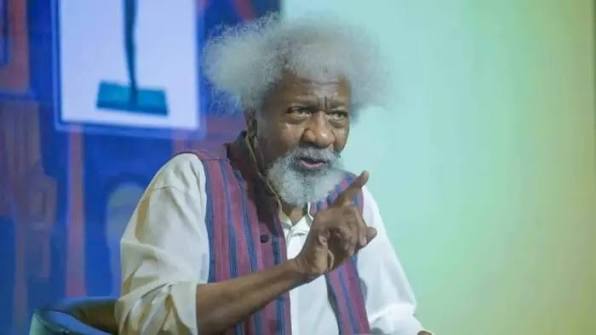
Nobel Laureate, Professor Wole Soyinka, has called on Nigerians to reject silence in the face of extrajudicial killings and other abuses of human rights.
Soyinka stressed that accountability and civic courage remain essential to rebuilding public confidence in the nation’s institutions.
He made the call during the 28th Wole Soyinka Lecture held in Port Harcourt, last Friday as part of activities marking his 92nd birthday.
The lecture, themed “Reclaiming the Nigerian State through Accountability, Justice and Civic Courage,” drew participants from different sectors of society.
The renowned playwright and human rights advocate said the country’s greatest tragedy was not only the unlawful killings carried out by state and non-state actors, but also the silence that often follows such incidents, allowing perpetrators to evade justice.
According to him, indifference by citizens to abuses of power and violations of fundamental human rights has contributed to the persistence of extrajudicial killings and other forms of injustice across the country.
Soyinka said he dedicated this year’s lecture to victims of unlawful killings, noting that the event was intended to honour individuals who had lost their lives as a result of failures within the justice system and society’s inability to protect the sanctity of human life.
He stressed that the lecture was dedicated to what he described as the basic unit of every society – the human being, and urged Nigerians to place greater value on human dignity irrespective of ethnicity, religion or social status.
The Nobel Laureate recalled several incidents of violence, including the fatal shooting and killing of a young man in Ugheli in Delta State by a police officer, and the mob killing of Deborah Yakubu in Sokoto State sometime ago, lamenting that many of those responsible are yet to face justice.
He expressed concern that some perpetrators of violent crimes had openly admitted their actions without fear of prosecution, describing such situations as evidence of serious failures within the nation’s justice system.
Soyinka maintained that when justice is delayed or denied, public confidence in state institutions continues to erode, thereby encouraging further violations of human rights.
Responding to critics who accuse him of promoting religious or ethnic divisions whenever he spoke on such issues, Soyinka dismissed the allegations and pointed out that his advocacy has always centred on the protection of human life and the rule of law.
He urged Nigerians to remain vigilant and continue demanding justice in cases of alleged extrajudicial killings, including the recent shooting of a young man by a police officer, stressing that every life deserves equal protection under the law.
The literary icon also recalled an earlier pledge by a past incoming president to make public the files relating to unresolved assassinations and extrajudicial killings, questioning the status of the promised investigations.
He challenged citizens to continue asking questions about unresolved cases, insisting that justice, accountability and respect for human dignity are indispensable to building a peaceful, democratic and inclusive Nigerian society.
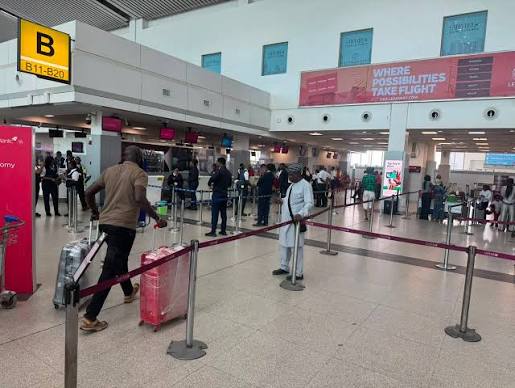
The Federal Airports Authority of Nigeria (FAAN) has clarified that there was no fire at Terminal 2 of the Murtala Muhammed International Airport, Lagos, contrary to its earlier advisory.
Earlier yesterday, FAAN had announced that a fire incident had occurred at Terminal 2 of the nation’s busiest airport, and assured that its Aerodrome Rescue and Firefighting Service had been deployed to contain the situation.
There were also reports that activities were briefly disrupted at the airport yesterday after smoke was seen inside parts of the terminal.
Videos circulating online showed passengers kept standing outside the terminal while firefighters responded to the incident.
However, in an update issued less than two hours later by the Director of Public Affairs and Consumer Protection, Henry Agbebire, and posted on FAAN’s official X handle, the authority said preliminary findings showed that the smoke seen at the terminal was caused by the discharge of the facility’s FM-200 fire suppression system.
“Further to our earlier advisory regarding the incident at Terminal 2 of the Murtala Muhammed International Airport, Lagos, the Federal Airports Authority of Nigeria (FAAN) wishes to provide the following update,” the statement read.
“Preliminary findings indicate that there was no fire at the terminal. The smoke observed within the affected area resulted from the discharge of the terminal’s FM-200 fire suppression system. The reason for the activation of the fire suppression system is currently being investigated,” FAAN stated.
The authority said normal operations had resumed at the terminal while investigations were ongoing to determine the cause of the incident.
“Normal operations have since resumed at the terminal, while detailed investigations are ongoing to determine the exact cause of the incident,” the statement added.
The authority thanked passengers, airlines, airport users and other stakeholders for their understanding and cooperation.
FAAN appreciated the understanding and cooperation of passengers, airlines, airport users and all stakeholders, and reiterated its commitment to the safety and security of all airport operations.
-
 News19 hours ago
Soldier, Police Officer Killed As Army Rescues Nine Abductees In Zamfara
-

 News19 hours ago
PH NBA Election: Committee Uncovers Over 500 Padded Names On Voters’ Register
-
 News19 hours ago
Fubara Reaffirms Commitment To Creating Conducive Environment For Business Growth …Commissions Paint Manufacturing Plant
-

 Business17 hours ago
Asaba Private Jet Incident Was A Security Violation—Keyamo
-
 Business16 hours ago
Vet Doctors Vow Support To Check Rabies Spread In Rivers
-
 Oil & Energy17 hours ago
NGLPP: FG Targets 5m Households By 2030
-
 Rivers19 hours ago
Women Renew Call For Unity, Back Fubara’s Political Direction
-
Sports19 hours ago
INEC Seeks Media Partnership, Declares Readiness For Osun Guber Poll