
News
World Bank Lowers Nigeria’s 2023 Economic Growth Forecast To 3.2%

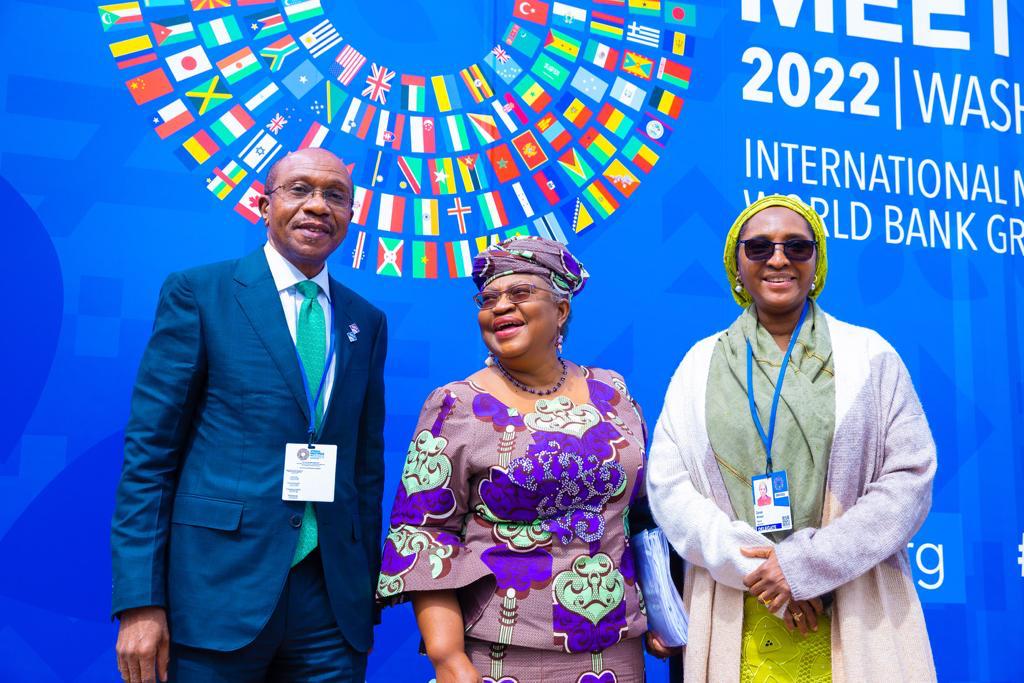
The World Bank has lowered its economic growth forecast for Nigeria in 2023 to 3.2per cent from 3.3per cent, citing slowdown in global growth, the war in Ukraine, including declining demand from China for commodities produced in Africa.
Citing similar conditions, the World Bank also projected that the Sub-Saharan African region will record a lower economic growth of 3.3per cent in 2022 from 4.1per cent recorded in 2021.
Consequently, the World Bank called on the governments in the Sub-Saharan African region to urgently implement measures to restore macro-economic stability and protect the poor in a context of slow growth, high inflation.
The forecasts were contained in the October edition of the World Bank’s Africa’s Pulse, a biannual analysis of the near-term regional macroeconomic outlook, and economic growth in Sub-Saharan Africa (SSA).
Highlighting the growth factors for Nigeria’s economy, the World Bank said: “The Nigerian economy is projected to slow in 2023, down to 3.2per cent (from 3.3per cent) and persist at this level the following year. Growth will be supported mainly by the rebound in private consumption prompted mostly by accommodative monetary policy as inflationary pressures subside.
“Private consumption expenditure is forecast to decrease this year and grow next year. This performance will likely continue in 2024. On the production side, growth in 2023 will be supported by industry (with the growth of 5.1per cent) with the mega-refinery project.”
On its growth forecast for the Sub-Saharan African region, the World Bank said: “Economic growth in Sub-Saharan Africa (SSA) is set to decelerate from 4.1percent in 2021 to 3.3percent in 2022, a downward revision of 0.3 percentage points since April’s Pulse forecast, mainly as a result of a slowdown in global growth, including flagging demand from China for commodities produced in Africa.”
On the factors undermining economic growth in SSA, the World Bank said: “The war in Ukraine is exacerbating already high inflation and weighing on economic activity by depressing both business investments and household consumption. As of July 2022, 29 of 33 countries in SSA with available information had inflation rates over 5percent while 17 countries had double-digit inflation.
“Elevated food prices are causing hardships with severe consequences in one of the world’s most food-insecure regions. Hunger has sharply increased in SSA in recent years driven by economic shocks, violence and conflict, and extreme weather. More than one in five people in Africa suffer from hunger and an estimated 140million people faced acute food insecurity in 2022, up from 120million people in 2021, according to the Global Report on Food Crises 2022 Mid-Year Update.
“The interconnected crises come at a time when the fiscal space required to mount effective government responses is all but gone. In many countries, public savings have been depleted by earlier programmes to counter the economic fallout of the COVID-19 pandemic, though resource-rich countries in some cases have benefited from high commodity prices and managed to improve their balance sheet.
“Debt is projected to stay elevated at 58.6percent of GDP in 2022 in SSA. African governments spent 16.5percent of their revenues servicing external debt in 2021, up from less than 5percent in 2010. Eight out of 38 IDA-eligible countries in the region are in debt distress, and 14 are at high risk of joining them. At the same time, high commercial borrowing costs make it difficult for countries to borrow on national and international markets while tightening global financial conditions are weakening currencies and increasing African countries’ external borrowing costs.”
Stressing the need for governments to improve the efficiency of existing resources and to optimize taxes in response to the above challenges, the World Bank added that, “In the agriculture and food sector, for example, governments have the opportunity to protect human capital and climate-proof food production by re-orienting their public spending away from poorly targeted subsidies toward nutrition-sensitive social protection programmes, irrigation works, and research and development are known to have high returns.
“For example, one dollar invested in agricultural research yields, on average, benefits equivalent to $10, while gains from investments in irrigation are also potentially high in SSA. Such reprioritisation maintains the level of spending in a critical sector while raising productivity, building resilience to climate change, and achieving food security for all. Creating a better environment for agribusiness and facilitating intra-regional food trade could also increase long-term food security in a region that is highly dependent on food imports.”



The Rivers State chapter of the All Progressives Congress Christian Leaders Forum has expressed strong confidence in the capacity of All Progressives Congress (All Progressives Congress) candidates in the state to deliver effective governance if elected into office in the coming elections.
The State Coordinator of the forum, Archbishop Lucky Aroh, made this known during a breakfast and thanksgiving meeting held in Port Harcourt, where leaders gathered to pray for the stability of the party and the safety of its candidates ahead of the 2027 general elections.According to him, the meeting was convened to seek divine intervention for peace, unity, and security among APC candidates across Rivers State.
“Today we are praying for APC stability in Rivers State and the security of our candidates that have been elected to contest the 2027 elections. It is a breakfast meeting,” Aroh said.
He further expressed optimism that the party’s candidates would not disappoint the people if entrusted with leadership responsibilities.
“They will not fail when elected into office. We are here as fathers of the land to let them know, and I must tell you the truth that these are the authentic people that will do well in Rivers State,” he added.
Speaking earlier, the National Chairman of the forum, Professor Olanrewaju Abraham, commended the Rivers State chapter for organizing the programme, noting that the national body of the forum believes strongly in the power of prayer.
He stated that political leadership provides an opportunity to influence society positively, including advancing moral and spiritual values, while expressing confidence that APC candidates at all levels would emerge victorious in the upcoming elections.
Also speaking, the Rivers State Women Leader of the APC, Hon. Darling Amadi, praised the forum for its commitment to prayers for peace, stability, and the protection of party candidates.
Represented by the Deputy Women Leader of the party in the state, she described the initiative as commendable and urged other political and support groups within the party to emulate the gesture in promoting unity and stability.
By: John Bibor, Menebe Emmanuel & Fortune Paibi
Prominent businessman and philanthropist, Elder Anthony Osagwe-Ogo, was celebrated in grand style as he marked his 70th birthday anniversary, with distinguished Nigerians, business leaders, and golf enthusiasts gathering to honour his remarkable contributions to society.
The colourful celebration took place at the Port Harcourt Golf Club, where friends, associates, and well-wishers converged to pay tribute to the revered elder statesman.
Chairman of the occasion, High Chief (Dr.) Ikenna Okafor, described the celebrant as a detribalised Nigerian whose generosity, humility, and commitment to humanity have earned him admiration across different communities and backgrounds.
According to Dr. Okafor, Pa Osagwe-Ogo’s impact on society and the development of his community remains unparalleled. He noted that members of the golfing community are proud to be associated with a father figure who consistently promotes the welfare and well-being of those around him.
He further stated that the history and growth of the Port Harcourt Golf Club cannot be told without acknowledging the significant role played by the celebrant, whose wisdom, encouragement, and leadership have helped sustain the club over the years.
“We are here to celebrate a man who has impacted humanity positively, a peace-loving individual and an epitome of hope for the younger generation. We pray to emulate his virtues. Today, we celebrate a bridge-builder, a trailblazer, and an iconic leader whose life continues to inspire many,” Dr. Okafor said.
He expressed delight at the large turnout of guests from various walks of life, describing it as a testament to the respect and affection Pa Osagwe-Ogo commands within and beyond Rivers State.
In his response, the celebrant, Pa Anthony Osagwe-Ogo, expressed profound gratitude to God for preserving his life and granting him the privilege of attaining the milestone age of 70.
He also thanked members of the Port Harcourt Golf Club, family members, friends, and associates for identifying with him during the celebration and for their unwavering support over the years.
The event featured the cutting of the birthday cake, presentation of awards to deserving members of the club, goodwill messages, and moments of celebration among guests.
The ceremony was attended by notable personalities from the business community, the golfing fraternity, and other sectors, all of whom joined in celebrating the life and legacy of the respected elder statesman.
Rivers State Governor, Sir Siminalayi Fubara, and the Permanent Secretary of the Rivers State Ministry of Information and Communications, Dr. Honour Kuru Sirawoo, have been honoured with awards of recognition in connection with the 2026 Democracy Day celebrations held in Port Harcourt.
The awards, which formed part of activities marking Nigeria’s Democracy Day on June 12, were formally presented on Tuesday at the Ministry of Information and Communications in Port Harcourt.
Presenting the awards was Hon. Abdul Hameed Oladipupo Alli, popularly known as “Mr. Nigeria,” Publisher of Asiwaju Trumpet Magazine and Achievers World International Magazine.
Governor Fubara was recognised for his efforts in sustaining peace, stability, and a conducive political atmospherJohn Bibor / Menebe Emmanuel / Fortune Paibie in Rivers State. The organisers noted that his administration has fostered harmony and strengthened civic participation across the state.
Dr. Sirawoo, on the other hand, was honoured for his exemplary administrative leadership and significant contributions to effective information management within the Ministry of Information and Communications.
Representing Dr. Sirawoo at the presentation ceremony, Dr. Christian Davies received the award on his behalf and expressed gratitude for the recognition. He described the honour as a reflection of Dr. Sirawoo’s unwavering commitment to professionalism, excellence, and dedicated public service.
Dr. Davies assured the organisers that the award would be formally conveyed to the Permanent Secretary.
The event also featured the presentation of commemorative publications highlighting major governance and civic milestones in Rivers State, including Easter celebrations, Workers’ Day activities, the Governor’s third anniversary in office, and Democracy Day programmes.
Organisers of the awards commended the Rivers State administration for what they described as sustained peace, political stability, and improved civic engagement, noting that these achievements have contributed significantly to the state’s continued development.
By: Jessica Sambol