
Editorial
Making Power Sector Work

Nigeria’s increasingly precarious energy supply situation took a turn for the worse last week when the
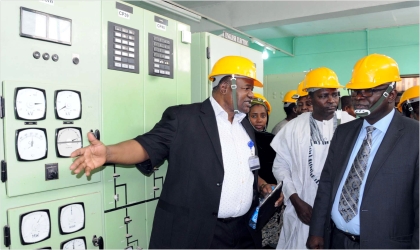
national grid suffered a system collapse for the 7th time this year on September 26, 2022. This is about three months after the last national system spill in July. The embarrassing development further compounded the woes of Nigerians. While relevant stakeholders are not in short supply of excuses for total blackout, the incident verges on institutional incompetence and regulatory imprudence.
To the extent that the state of power supply in Nigeria is a barometer for measuring the health of its overall physical infrastructure, it is fair to conclude that the country is in a sorry state. A recent media analysis of industry data gives a picture of the sordid situation. One thing that jumps out is the revelation that over the past 12 and a half years, the national power grid has suffered at least 222 partial or total collapses. The national power grid is a network of electricity transmission lines connecting generating stations to loads across the country.
The causes of these recurrent and seemingly interminable collapses are varied. According to the report, they range from “low water levels at the hydropower plants, low gas supply at the gas power plants, fire at the largest power generating station, load rejection,” to the “inability of the transmission companies to wheel electricity from generators to distributors.” If the causes are well-known, what makes it so difficult to arrest them and restore sanity to the electricity supply in the country? Why has the situation worsened despite all the ostensibly well-meaning efforts to bring it under control?
The recent collapse extends Nigeria’s wretched run in power generation. For a country of more than 200 million people, its installed capacity of 12,555 megawatts is abysmal. By contrast, South Africa, with a population of slightly less than 60 million, generates almost 60,000 Megawatts. Official figures from Egypt state that the country generates 55,000 Megawatts of electricity. In effect, Nigeria’s abysmal power generation has the same effect on its citizens as an invisible tariff in terms of energy that is bottled up and prevented from being unleashed.
Over the years, several proposals have been advanced to bring the Nigerian power sector up to par with what obtains in other middle-income economies across the world. Invariably, and to Nigerians’ eternal frustration, such proposals have foundered on the rocks of corruption and political nepotism. Yet, if the country is to fulfil its developmental aspirations, it is difficult to see past steady power generation, a dream, incidentally, that the nation boasts enough gas resources to accomplish.
The ever increasing demand for power in Nigeria, coupled with limited supply, has restricted the nation’s socio-economic development. The country’s policymakers have formulated energy development policies lately aimed at diversifying the current electricity mix and increasing electrification in rural settlements. Despite these efforts, electricity infrastructure projects have been side-lined, power outages are common, and grid unreliability is costing the industry significant amounts to secure the electricity supply necessary for business sustainability and profitability.
The power problem has remained intransigent to the gigantic investments sunk into the sector in the last two decades. It is shocking that instead of an improvement, the situation has continued to get worse. Since 2013 when the sector was privatised, the grid has cumulatively failed electricity consumers several times over. On each occasion, the incident practically grounded Nigeria and its economic activities. It is not surprising, therefore, that the economy is on a nosedive and companies are shutting down.
The Association of Nigerian Electricity Distributors (ANED), the umbrella body of distribution companies, blamed the recurrent power collapse on the Transmission Company of Nigeria’s (TCN) analogue system, describing it as largely responsible for collapses since the privatisation of the power sector in 2013. The TCN, a government agency that manages the asset under the privatised power sector, had, in turn, attributed the grid collapse to “multiple tripping”.
The Group Managing Director of Nigeria National Petroleum Corporation Limited (NNPCL), Mele Kyari, once said, there was enough gas to generate 8,000 megawatts of electricity, but the transmission grid could not support it. It is startling that the key power plants, including Egbin, Utorogu, Chevron Oredo, Oben gas-fired power plants, Ughelli, and Chevron Escravos could all shut down. The fact that Nigeria’s power generation relies on natural gas distributed through exposed pipelines that are vulnerable to destruction in many parts of the country, poses a significant problem.
But why is the Federal Government unable to provide good leadership in the power sector? The failure to address challenges in the sector amounts to insensitivity by the government to the fundamentals of development. The unbundling of the erstwhile National Electricity Power Authority (NEPA) has proven to be a massive failure. What we have is a considerable fraud. And the solution to the perennial energy crisis is true federalism that will ensure we do not have a single national power grid.
Several things point to the corruption and inefficiency in the power sector. President Muhammadu Buhari should demand an immediate investigation of the sector and begin to explore alternatives to energy sources. The world is scandalised that Nigeria, one of the leading producers and exporters of crude oil and gas, remains in darkness. Also, the Federal Government must relinquish ownership of TCN, so the sector does not stagnate.
It has become imperative to explore other options for power generation outside a consolidated national grid that is prone to mismanagement and graft. For instance, states should be able to band together to generate their power, and we are pleased to see that the House of Representatives is currently considering a law that would make this possible. The current system of power generation does not work. It is time to abolish it in favour of a more reliable method.
The national grid is designed to operate within a controlled range to ensure stable grid operation. Exceeding the limits leads to instability and often collapse. The transmission company, therefore, should allocate the load to the distribution companies based on the demand information received from the National Control Centre. This guarantees that there is no mismatch between power supply and demand to avoid the national grid system collapse.



Nigeria stands at a critical juncture as the world marked World Press Freedom Day (WPFD) on May 3. This annual observance is a reminder that a free press is central to democratic life, good governance, and public accountability. For Nigeria, it is also a moment for sober reflection on how far the country has come and how far it still has to go in safeguarding the independence of its media.
World Press Freedom Day exists to highlight the fundamental importance of freedom of expression and to honour journalists who risk their lives in pursuit of truth. It underscores the idea that without a free press, societies cannot function transparently, nor can citizens make informed decisions. In countries like Nigeria, where democracy continues to evolve, the observance carries particular urgency.
This year’s theme, “Shaping a Future at Peace: Promoting Press Freedom for Human Rights, Development and Security”, places journalism at the heart of global stability. It emphasises that a peaceful society cannot be built on silence, fear, or manipulated information. Rather, it depends on the free flow of accurate, timely, and independent reporting.
At its core, the theme highlights the role of journalism in fostering accountability, dialogue, and trust. These are not abstract ideals. In Nigeria, where public confidence in institutions is often fragile, the media remains one of the few platforms through which citizens can question authority and demand transparency. When press freedom declines, so too does public trust.
Journalism serves as a foundation for peace, security, and economic recovery. Countries with robust media systems tend to attract greater investment, maintain stronger institutions, and resolve conflicts more effectively. Nigeria’s economic challenges, ranging from inflation to unemployment, require open scrutiny and informed debate, both of which depend on a free press.
However, the issue of information integrity has become increasingly complex in the digital age. Artificial Intelligence (AI) and online platforms have amplified the spread of misinformation and disinformation. In Nigeria, where internet penetration has grown rapidly, false narratives can travel faster than verified facts. This makes the role of credible journalism more vital than ever.
The challenge is not only technological but also ethical. AI-driven manipulation of information threatens to distort public discourse, influence elections, and deepen social divisions. In such an environment, professional journalism must act as a stabilising force, ensuring that truth prevails over sensationalism and propaganda.
Equally troubling is the safety of journalists. Across Nigeria, reporters face growing levels of online harassment, judicial intimidation, and physical threats. Self-censorship is becoming more common, as media practitioners weigh the risks of reporting sensitive issues. This trend undermines the very essence of journalism.
A particularly alarming incident involved a serving minister in the present administration, who openly threatened to shoot a journalist during a televised exchange. Such conduct, broadcast to the public, sends a dangerous signal that hostility towards the press is acceptable. It erodes the norms of democratic engagement and places journalists in harm’s way.
This year’s theme aligns closely with the United Nations Sustainable Development Goal (SDG)16, which promotes peace, justice, and strong institutions. Freedom of expression is a cornerstone of this goal. Without it, institutions weaken, corruption thrives, and justice becomes elusive. Nigeria’s commitment to SDG 16 must therefore include genuine protection for the media.
Historically, the Nigerian press has been a formidable force. From resisting colonial rule to challenging military dictatorships, our journalists have played a central role in shaping the nation’s political landscape. Today, however, that legacy appears to be under strain, as the media operates under what can best be described as a veneer of freedom.
Beneath this facade lies a troubling reality. Journalists are routinely harassed, detained, and prosecuted for performing their constitutional duties. Reports from media watchdogs indicate that dozens of Nigerian journalists face legal threats or arrest each year, often for exposing corruption or criticising those in power.
The Cybercrimes (Prohibition, Prevention, etc.) Act of 2015 has become a focal point of concern. Originally intended to combat cyber threats, it has increasingly been used to silence dissent. Sections 24 and 27(1)(b), in particular, have been invoked to target journalists, bloggers, and social commentators.
Although amendments introduced in February 2024 were meant to safeguard journalists, concerns persist. The law continues to be wielded in ways that stifle investigative reporting and restrict freedom of expression. Legal reforms must go beyond cosmetic changes to address the root causes of misuse.
To safeguard the future of journalism in Nigeria, decisive action is required. The Cybercrimes Act must be revisited to ensure it cannot be weaponised against the press. Law enforcement agencies must operate free from political influence, upholding the rule of law and protecting journalists’ rights. Civil society and international partners must also strengthen independent media through funding, training, and platforms for wider reach.
In this rapidly evolving world shaped by artificial intelligence and digital innovation, Nigeria faces a clear choice. It can either allow press freedom to erode under pressure, or it can champion a truly independent media landscape. The path it chooses will determine not only the future of journalism, but also the strength of its democracy and the peace it seeks to build.

-

 Featured3 days ago
WASSCE: RSG Distributes Science Materials To Secondary Schools
-
News4 days ago
Xenophobic Attacks: Nigerian Lives More Important Than Foreign Investment – Oshiomhole
-
Rivers4 days ago
MBA Forex Trial Adjourn To June 3, Amid Bereavement … As Court Declines Cost Application
-
News4 days ago
ActionAid Demands Probe Of Govs Using Public Funds For Campaign
-
Aviation4 days ago
Passengers Stranded As Delta Airline From Atlanta Route Back Eight Hours After
-
Business4 days ago
Customs Impound N2.35bn Cocaine, 15 Trailers of Rice
-
Politics4 days ago
2027: Bayelsa Senator Gets Critical Endorsement For Second Term
-

 Politics3 days ago
INEC Sets Rivers South-East Senatorial By-Election For June 20