
Editorial
In Support Of Exclusive Breastfeeding

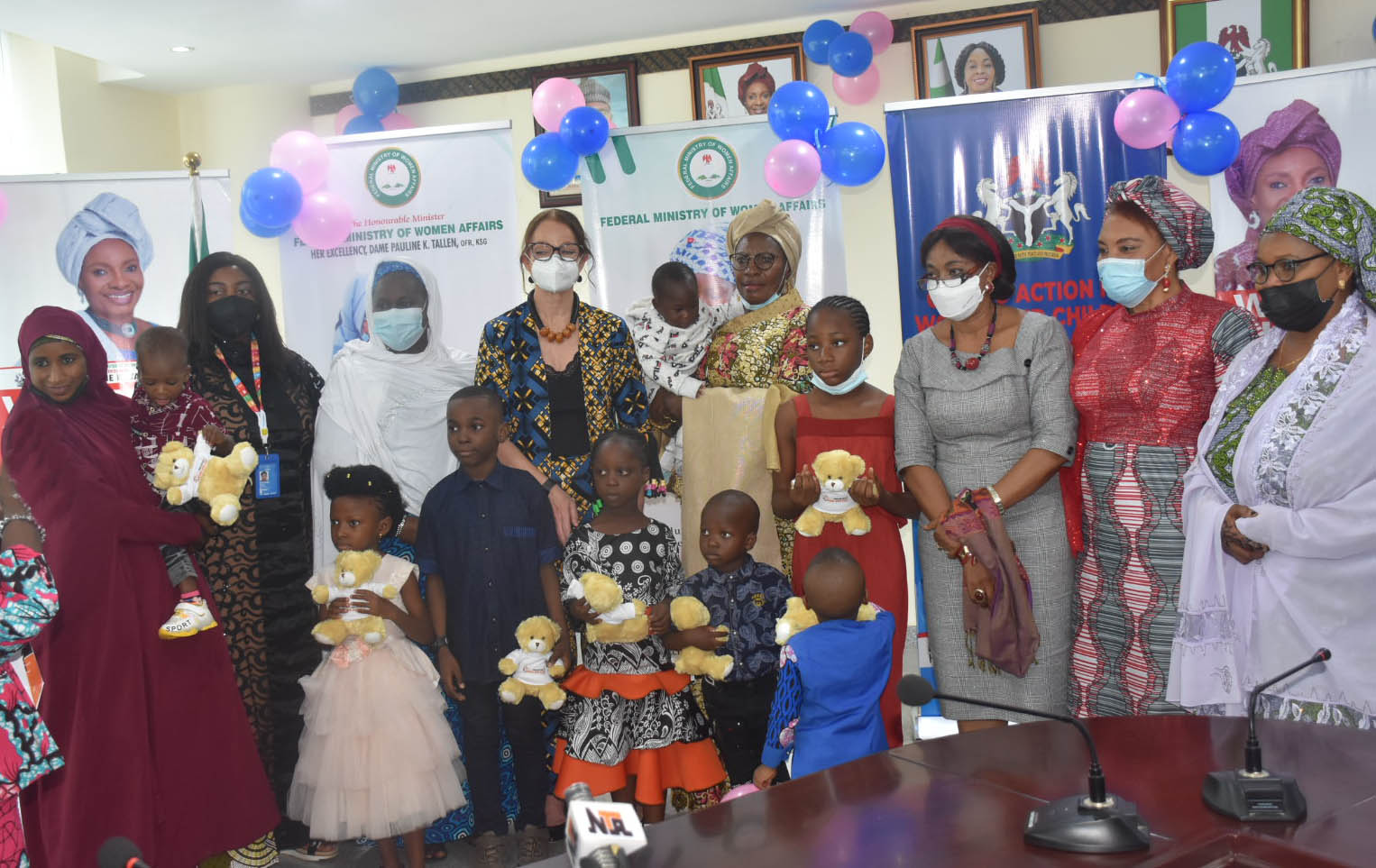
As the world commemorates this year’s World Breastfeeding Week, the need to encourage
breastfeeding and improve the health of babies around the world has again been spotlighted. World Breastfeeding Week is annually celebrated from August 1 to 7. It is observed by 170 countries to protect, promote, and support breastfeeding. World Health Organisation (WHO) recommends that babies are exclusively breastfed until they are six months or possibly two years old.
Every year, this week is celebrated with a unique theme and this year’s theme is, “Step Up for Breastfeeding: Educate and Support”. As humanity observes the event, it is vital to spread awareness about the significance of education and support for breastfeeding. It is not a social stigma, but a requirement that shapes the totality of a child’s wellbeing.
In a joint statement by the United Nations Children’s Fund (UNICEF) Executive Director, Catherine Russell, and the World Health Organisation (WHO) Director-General, Dr. Tedros Adhanom Ghebreyesus, on the World Breastfeeding Week, UNICEF and WHO are calling on governments to allocate increased resources to support breastfeeding policies and programmes, especially for the most vulnerable families living in emergencies.
Health professionals point out that breast milk contains all the nutrients a newborn needs for normal development early and later in life. However, pressure from family members and friends to drink water in addition to breast milk prevents mothers from exclusively breastfeeding their babies. This stress is not good for the child, as health professionals advise breastfeeding to be valuable for both mother and child.
Colostrum, in particular, the yellow, custard-like milk produced in the first few days of life, is described as the baby’s first immunity because it is very rich in anti-infective substances that protect the baby from potentially harmful diseases. Likewise, breast milk is an ideal food for babies and infants because it contains the right amount of nutrients and is easily digested, giving them all the nutrients they need to survive.
Besides, it is safe and contains antibodies that assist in protecting infants from common childhood illnesses, such as respiratory tract infections, diarrhoea and pneumonia, which are the two primary causes of child mortality worldwide. Exclusive Breastfeeding can also reduce the risk of coeliac disease and chances of developing asthma, and other allergic crises.
Breastfeeding also prevents obesity in childhood and adulthood, as well as diet-related chronic diseases such as high blood pressure and cancer. In addition, breastfed infants are known to show better vaccine responses when vaccinated against childhood diseases. Compared with infant formula-fed babies, they performed better on intelligence tests.
For mothers, starting breast milk early can speed up the expulsion of the placenta, while breastfeeding helps burn extra calories and lose pregnancy weight faster. It releases hormones that support the return of the uterus to its pre-pregnancy size and may reduce uterine bleeding after birth. Breastfeeding is also associated with a lower risk of breast and ovarian cancer, type II diabetes and postpartum depression in mothers.
According to the 2018 Nigerian Demographic and Health Survey (2018 NDHS), child mortality accounts for 52 per cent of all under-five deaths. The child mortality rate was 69 per 1,000 children surviving to 12 months, while the overall under-five mortality rate was 132 per 1,000 live births. Fifty-one per cent of all deaths among children under the age of five in Nigeria happen before the child’s first birthday, and 30 per cent of these occur in the first month of life.
It is worth reiterating that breastfeeding is not a woman’s job alone. A mother needs the support of her husband and family. Therefore, Nigerian men should show greater commitment to ensuring that their babies are successfully breastfed for at least the first six months of life. Men should plan active roles for themselves and ensure their babies do not miss out on the many benefits of breastfeeding.
The Rivers State Government had earlier highlighted the need for nursing mothers to engage in exclusive breastfeeding to promote healthy baby growth. This was contained in a goodwill message from the Deputy Governor, Dr Ipalibo Harry Banigo, on the event. She said breast milk is nature’s food and ensures a baby’s health and quality of life from childhood to adulthood. This reveals that Governor Nyesom Wike cares about the health of nursing mothers and their babies.
Since it is recommended that mothers breastfeed exclusively for six months, the breastfeeding policies that are already in place in the country should be bolstered such that the maternity leave should be a minimum of six months. Moreover, the legislature should enact laws to protect the breastfeeding rights of working women to enable them to exclusively breastfeed.
Employers should be involved as well. They need to create an enabling environment by providing childcare or crèches. Governments at all levels should also protect breastfeeding by enforcing regulations on the marketing of breastmilk substitutes. All formula labels must state the benefits of breastfeeding. Authorities must also express dissatisfaction with the distribution of free breastmilk substitutes to mothers and health workers.
A participatory approach to promoting exclusive breastfeeding is imperative. There should be an enlightenment campaign, planning and information sharing on the benefits of breastfeeding by the governing authorities. This should include the relevant stakeholders within their socio-cultural networks. The initiative will in turn lead to improvement in the uptake of breastfeeding among nursing mothers in the country.



Nigeria stands at a critical juncture as the world marked World Press Freedom Day (WPFD) on May 3. This annual observance is a reminder that a free press is central to democratic life, good governance, and public accountability. For Nigeria, it is also a moment for sober reflection on how far the country has come and how far it still has to go in safeguarding the independence of its media.
World Press Freedom Day exists to highlight the fundamental importance of freedom of expression and to honour journalists who risk their lives in pursuit of truth. It underscores the idea that without a free press, societies cannot function transparently, nor can citizens make informed decisions. In countries like Nigeria, where democracy continues to evolve, the observance carries particular urgency.
This year’s theme, “Shaping a Future at Peace: Promoting Press Freedom for Human Rights, Development and Security”, places journalism at the heart of global stability. It emphasises that a peaceful society cannot be built on silence, fear, or manipulated information. Rather, it depends on the free flow of accurate, timely, and independent reporting.
At its core, the theme highlights the role of journalism in fostering accountability, dialogue, and trust. These are not abstract ideals. In Nigeria, where public confidence in institutions is often fragile, the media remains one of the few platforms through which citizens can question authority and demand transparency. When press freedom declines, so too does public trust.
Journalism serves as a foundation for peace, security, and economic recovery. Countries with robust media systems tend to attract greater investment, maintain stronger institutions, and resolve conflicts more effectively. Nigeria’s economic challenges, ranging from inflation to unemployment, require open scrutiny and informed debate, both of which depend on a free press.
However, the issue of information integrity has become increasingly complex in the digital age. Artificial Intelligence (AI) and online platforms have amplified the spread of misinformation and disinformation. In Nigeria, where internet penetration has grown rapidly, false narratives can travel faster than verified facts. This makes the role of credible journalism more vital than ever.
The challenge is not only technological but also ethical. AI-driven manipulation of information threatens to distort public discourse, influence elections, and deepen social divisions. In such an environment, professional journalism must act as a stabilising force, ensuring that truth prevails over sensationalism and propaganda.
Equally troubling is the safety of journalists. Across Nigeria, reporters face growing levels of online harassment, judicial intimidation, and physical threats. Self-censorship is becoming more common, as media practitioners weigh the risks of reporting sensitive issues. This trend undermines the very essence of journalism.
A particularly alarming incident involved a serving minister in the present administration, who openly threatened to shoot a journalist during a televised exchange. Such conduct, broadcast to the public, sends a dangerous signal that hostility towards the press is acceptable. It erodes the norms of democratic engagement and places journalists in harm’s way.
This year’s theme aligns closely with the United Nations Sustainable Development Goal (SDG)16, which promotes peace, justice, and strong institutions. Freedom of expression is a cornerstone of this goal. Without it, institutions weaken, corruption thrives, and justice becomes elusive. Nigeria’s commitment to SDG 16 must therefore include genuine protection for the media.
Historically, the Nigerian press has been a formidable force. From resisting colonial rule to challenging military dictatorships, our journalists have played a central role in shaping the nation’s political landscape. Today, however, that legacy appears to be under strain, as the media operates under what can best be described as a veneer of freedom.
Beneath this facade lies a troubling reality. Journalists are routinely harassed, detained, and prosecuted for performing their constitutional duties. Reports from media watchdogs indicate that dozens of Nigerian journalists face legal threats or arrest each year, often for exposing corruption or criticising those in power.
The Cybercrimes (Prohibition, Prevention, etc.) Act of 2015 has become a focal point of concern. Originally intended to combat cyber threats, it has increasingly been used to silence dissent. Sections 24 and 27(1)(b), in particular, have been invoked to target journalists, bloggers, and social commentators.
Although amendments introduced in February 2024 were meant to safeguard journalists, concerns persist. The law continues to be wielded in ways that stifle investigative reporting and restrict freedom of expression. Legal reforms must go beyond cosmetic changes to address the root causes of misuse.
To safeguard the future of journalism in Nigeria, decisive action is required. The Cybercrimes Act must be revisited to ensure it cannot be weaponised against the press. Law enforcement agencies must operate free from political influence, upholding the rule of law and protecting journalists’ rights. Civil society and international partners must also strengthen independent media through funding, training, and platforms for wider reach.
In this rapidly evolving world shaped by artificial intelligence and digital innovation, Nigeria faces a clear choice. It can either allow press freedom to erode under pressure, or it can champion a truly independent media landscape. The path it chooses will determine not only the future of journalism, but also the strength of its democracy and the peace it seeks to build.

-

 Featured1 day ago
WASSCE: RSG Distributes Science Materials To Secondary Schools
-
News1 day ago
Xenophobic Attacks: Nigerian Lives More Important Than Foreign Investment – Oshiomhole
-
Rivers1 day ago
MBA Forex Trial Adjourn To June 3, Amid Bereavement … As Court Declines Cost Application
-
News1 day ago
ActionAid Demands Probe Of Govs Using Public Funds For Campaign
-
Aviation1 day ago
Passengers Stranded As Delta Airline From Atlanta Route Back Eight Hours After
-
Business1 day ago
Customs Impound N2.35bn Cocaine, 15 Trailers of Rice
-
Politics1 day ago
2027: Bayelsa Senator Gets Critical Endorsement For Second Term
-

 Politics1 day ago
INEC Sets Rivers South-East Senatorial By-Election For June 20