
Politics
Analysts Downplay Tinubu, Atiku Educational Certificates Controversy

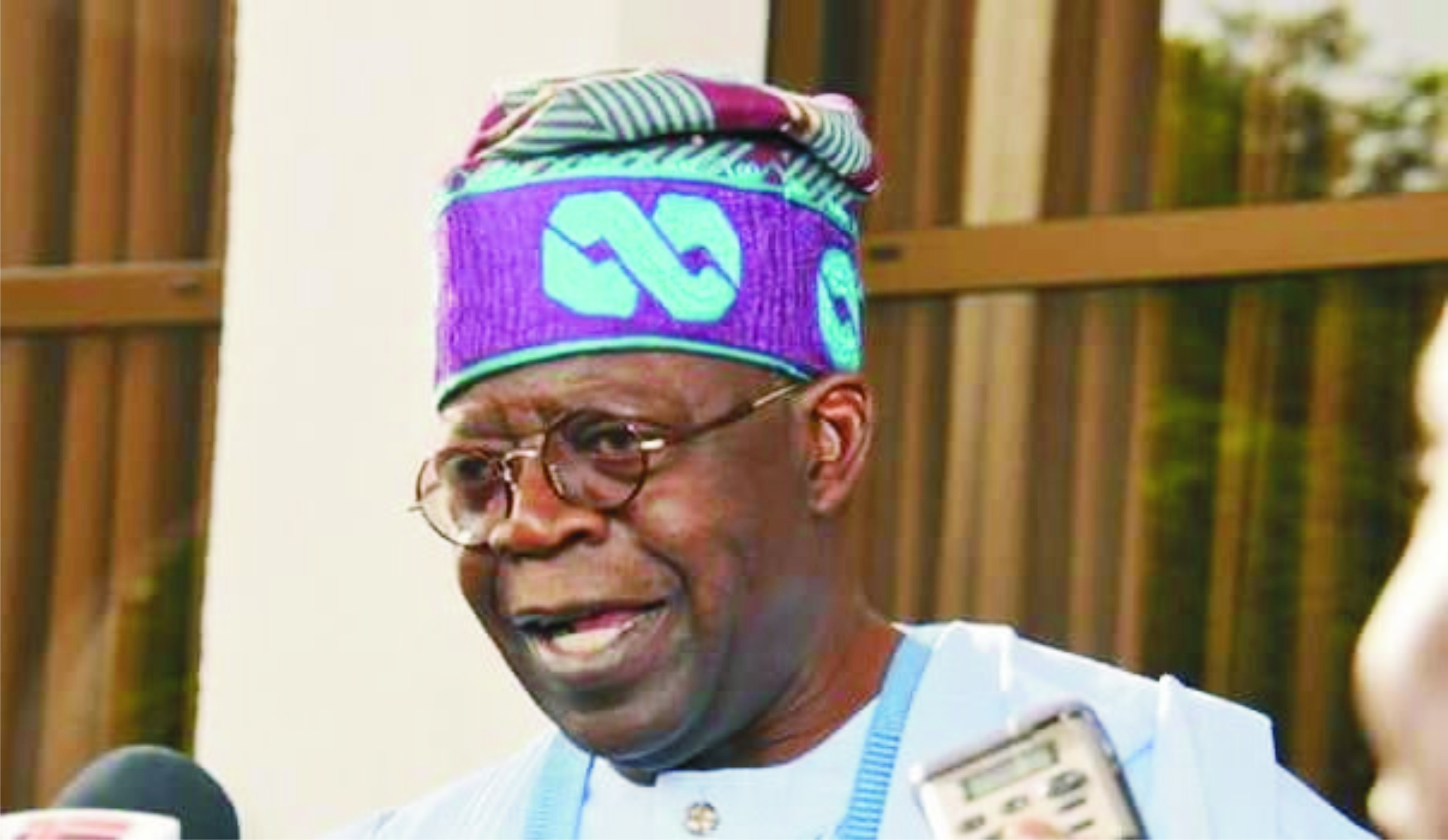
The controversies surrounding the educational certificates of some presidential candidates who will be contesting the 2023 presidential election, have been described as a non-issue by some lawmakers and activists.
Those who spoke with The Tide over the issue, noted that such controversy was not new to the political system of Nigeria.
The All Progressives Congress (APC) presidential candidate Asiwaju Bola Tinubu, had claimed in the forms he submitted to the Independent National Electoral Commission (INEC) that his primary and secondary school certificates were stolen by unknown persons, who invaded his home during the military junta of the ‘90s when he fled the country over his support for the revalidation of the June 12, 1993 presidential election.
For that, many Nigerians who had raised concerns over the development called for the disqualification and prosecution of the former Lagos State governor, whom they alleged lied under oath over academic qualifications.
A non-governmental organisation, Centre for Reform and Public Advocacy recently issued an ultimatum to President Muhammadu Buhari and the Inspector General of Police to arrest and prosecute Tinubu for allegedly supplying false information to INEC.
Legal Adviser of the group, Mr Kalu Agu, at a press briefing in Abuja, said that the alleged offence committed by the former Lagos State governor breached both the Constitution and the Electoral Act.
In the same vein, Tinubu’s running mate, Kabiru Masari told INEC that his original certificates are missing.
Reports had it that Masari in particulars submitted to INEC deposed to an affidavit on the loss of his primary and secondary schools certificates.
He, however, said that he attended Masari Primary school, Katsina State between 1972 and 1978 and obtained a Grade 2 Certificate from Katsina Teachers College in 1982 and a Higher Certificate in 1995.
Masari in the sworn affidavit for ‘Loss of Some Original Documents’, obtained from Divisional Police Headquarter, Wuse Zone 3, Abuja attached to the particulars he submitted to INEC, said, in January 2021, that, while on transit within Wuse, Area FCT, Abuja, he lost his Certificate of Grade 2 Certificate from Katsina Teachers College and First Leaving Primary School Certificate issued by Masari Primary School, Katsina State, (1972-78).
He also said that all efforts made to trace the items proved abortive.
On his part, the presidential candidate of the main opposition Peoples Democratic Party (PDP), Alhaji Atiku Abubakar, had a few questions raised about his academic credentials.
Atiku, who served as the country’s Vice President from 1999 to 2007, was said to have not provided information on his primary education.
The 1965 West Africa School Certificate (WASC) result presented by him, allegedly identified the student as Siddiq Abubakar.
While reacting to the issue, a member of the Lagos State House of Assembly, Olanrewaju Oshun said the issue of certificates as far as he was concerned, is a non-issue and unfounded.
Oshun, the member representing Lagos Mainland Constituency 2, said, “This is a man that worked with Mobil and he was recruited from his school. If he didn’t have that qualification, how was he recruited from the school? Are we saying Mobil didn’t check his qualification?
”He was a Senator and he was governor of Lagos State for eight years. All these shouts about him not having certificates are mere political gimmicks.
“If you say he doesn’t have primary and secondary school certificates, how was he able to attend a prestigious university abroad.
“You can’t be admitted into any university in Nigeria without a secondary school certificate not to talk of attending a university abroad. This is not new. They said the same thing in 2015 about Buhari.”
A United States based public affairs analyst, Prof. John Oshodi said, “At no point did Tinubu say he had no primary or secondary school education.
Even if he is not able to show the concrete certificates, whether due to being lost or accidentally damaged, how does that show he has no basic educational background?
“One thing is certain: He is a Nigerian-educated person who earned a Bachelor of Science Degree in Business and Administration with a major in accounting from Chicago State University in 1979.
“In past election seasons, through media hysteria, President Buhari, also an American trained military scientist with post-secondary education, was said not to have a WAEC certificate and, so, he is not eligible to vie for any elective position.
“Let’s say that Buhari’s basic educational certificates were with the military, like he said, or they could not be located, what cannot be denied by the American government is that Buhari holds a diploma from the United States Army War College.
“On the part of Atiku Abubakar, the media has it that he holds a secondary school education, although not of the highest level.
“He has post-secondary education in hygiene science and a diploma in law, and in recent times, he has worked hard and now has a master’s degree in International Relations from the United Kingdom.
“What is most stunning about the current uproar is that a basic education such as a primary or secondary school certificate is required to be president, as in the case of Tinubu.
”In 2019, it became a settled matter when the Supreme Court held that Buhari, per the constitution, is not required to possess a secondary school certificate to be qualified to run for the presidency and does not have to submit it to INEC to run for the presidency.
“Yet in a society where lawlessness and lack of respect for operating laws are rampant, you in the media and the people should be asking the presidential candidates about how they will handle monumental problems like crime and security, poverty, unemployment, poor electricity, infrastructure and road hassles, illegal substitution of candidates’ names, and human rights abuses,” Oshodi added.



The Tide source reports that Prof. Akinoso was elected alongside 38 other executive members of the party at the congress held on Saturday.
Other executive members are Dr Abiola Olaonipekun, who emerged as Secretary, Alhaja Latifah Latifu, Women Leader and Mr A. Adeleke, elected as Youth Leader.
It was learnt that the congress, which took place at the Obafemi Awolowo Stadium, Oke Ado in Ibadan, was attended by representatives of the Independent National Electoral Commission (INEC), the Police, other security agencies and prominent members of the party.
The election was supervised by electoral committee members, among whom were Prince Diran Odeyemi, who served as Chairman, Hon. Awoniyi Tolulope, Mr Babatunde Gbadamosi, Queen Stepheine Oyechere, Alhaji Yusuf Abidakun, Mr Olumide Aguda and Dr Phillips Adeniyi, who served as Secretary.
Prof. Akinoso, in his inaugural address, urged members of the party to set aside intra-party differences.
He advised them to concentrate their resources on the promotion of the party, saying, “The primary responsibilities of party executive members are to coordinate party activities, ensure harmony among members, and ensure party victory during general elections.
“Our immediate assignments are to key into INEC released 2027 general election time-tables. As directed by the National Caretaker Committee of PDP, our party e-membership registration starts next week. We must be fully involved and do a membership drive.
“A political party is only relevant and benefits its members if it wins the election. This is our goal. We should set aside intra-party differences; concentrate our resources towards the promotion of the party. We will make necessary consultations and dialogue to actualise this”.

President Tinubu disclosed this during an interfaith breaking of fast with senior journalists and media executives at the Presidential Villa in Abuja on Saturday.
He also disclosed that his administration had opened up on the principles of true federalism to the extent that local governments now get direct allocation from the Federal Government.
“There’s no morning that I ever leave my house without going through the newspapers. It’s an addiction. I read all of you.
“It might not be in full detail, but headline, the one that would hit me and the ones that won’t.
“At the beginning of this administration, I was just a little bit stubborn, looking at opportunities to correct things and make life more easier for the downtrodden.
“We’ve opened up the principle of federalism to the extent that local governments are now getting their money, but how they use it is in your hands. So, don’t bombard me alone,” President Tinubu said.

The ruling party said the ADC had turned criticism of the APC-led administration into its operating manifesto instead of presenting concrete solutions to Nigeria’s economic challenges.
In a statement issued on Saturday by the APC National Publicity Secretary, Mr Felix Morka, the party dismissed the ADC’s interpretation of a report presented at a policy dialogue organised by Agora Policy which suggested that the country’s poverty rate had risen from 49 per cent to 63 per cent.
Mr Morka said the opposition party’s reaction to the report as a “damning verdict” on the government’s economic policies reflected either ignorance of economic realities or deliberate political mischief.
“The African Democratic Congress’ attempt to spin a recent report presented at the Agora Policy dialogue indicating a rise of poverty rate of 63 per cent from 49 per cent as a damning verdict on this administration’s economic policies speaks either to its shocking ignorance of economic policy or its wilful blindness to the justification for, and transformative impacts of, ongoing economic reforms,” he said.
The APC spokesman noted that the report itself recognised the necessity of reforms aimed at correcting long-standing structural distortions in the economy.
According to him, the ADC had failed to present any credible alternative policy direction for Nigerians.
“Clearly, the ADC does not recognise itself as a political party. The ADC has not articulated a single alternative policy position or prescription of benefit to Nigerians. Condemning the APC and its policies has become its operating manifesto,” Mr Morka said.
He explained that major economic decisions taken by President Bola Tinubu, including the removal of fuel subsidy and the unification of multiple foreign exchange windows, were necessary steps to rescue the country’s economy from collapse.
Mr Morka said the subsidy regime had for years placed a heavy burden on public finances, consuming trillions of naira annually while encouraging corruption, fuel smuggling and inefficiencies in the system.
He added that the reforms had helped redirect national resources to key sectors such as infrastructure, healthcare, education and social development.
The APC spokesman acknowledged that economic reforms often come with short-term hardship but stressed that the measures were essential to build a stronger and more resilient economy.
“Economic reform is never cost-free anywhere in the world. The transient hardship experienced by Nigerians was an inevitable cost of reforms meant to build and guarantee a better future for all Nigerians,” he said.
Mr Morka maintained that the country’s economic outlook was already improving, citing recent growth figures and stronger external reserves.
“Our economy has rebounded and is expanding steadily. The country’s Gross Domestic Product grew by 4.4 per cent last year and is projected to expand by 5.5 per cent this fiscal year, with foreign reserves now exceeding $50 billion,” he stated.
He also pointed to government initiatives designed to cushion the effects of economic adjustments on citizens, including cash transfer programmes, student loan schemes and the rollout of compressed natural gas (CNG) initiatives to reduce transportation costs.
Mr Morka reaffirmed that the APC-led administration would remain focused on rebuilding the economy and expanding social investments to support vulnerable Nigerians.
-

 News5 days ago
Navy Destroys Illegal Refinery In Rivers, Intercepts Stolen Fuel In C’ River
-

 News5 days ago
You’re The Backbone Of Our Society, Fubara Salutes Mothers On Mothering Sunday
-

 Rivers4 days ago
County Grammar School Old Boys Elect New Executive
-

 Environment4 days ago
Illegal Buildings On Embassies’ Land Will Be Demolished – Wike
-

 Politics4 days ago
HUNDREDS OF LATE BAYELSA DEP GOV’S KINSMEN DUMP PDP FOR APC
-

 Politics4 days ago
A’Court Voids Rep’s Sack Over Defection To APC
-
 Politics4 days ago
You’re Misleading Nigerians, APC Slams ADC Over Poverty Rate Report
-

 Sports4 days ago
We ‘ill No Longer Pay Athletes Training Grants In Foreign Currency- NSC