
News
N’Delta Leaders Insist On Resource Control, Self-Determination

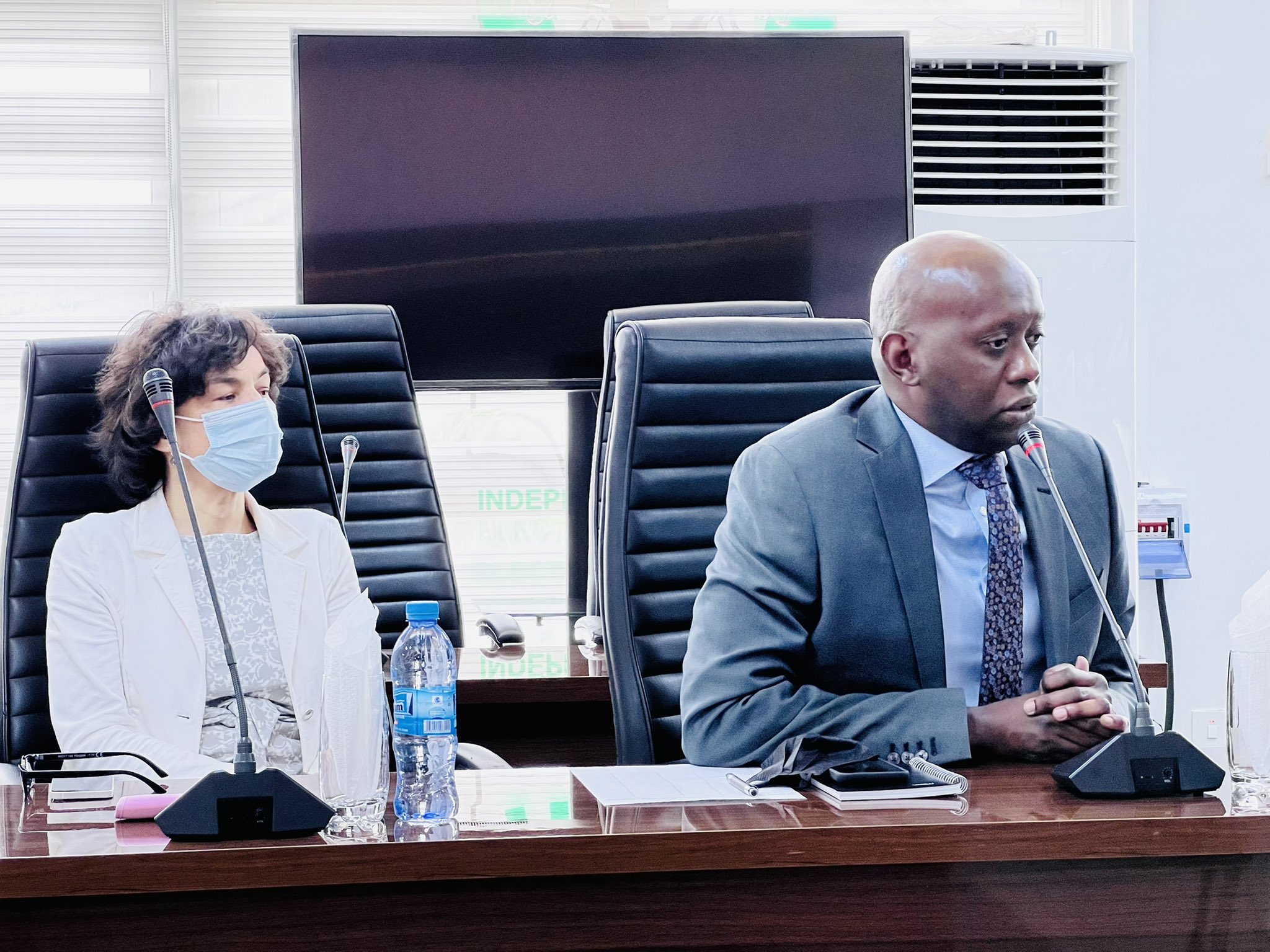
Some leaders of the Niger Delta have demanded granting of self-determination to their region to take total control of its resources and end years of alleged exploitation, deprivation and slavery of their people in the Nigerian state.
The leaders, who lamented that the people of the Niger Delta had been talking and agitating for resource control and restructuring of the country through conferences but to no avail, said the time had come for them to take their destiny in their hands.
In a keynote address at a conference by the Niger Delta Alternative Convergence (NDAC) to endorse the eight-point demand in the “Niger Delta Manifesto for Socio-Ecological Justice” in Uyo, Akwa Ibom State, former Chairman, Editorial Board of The Guardian, Prof. G. G. Darah, said: “From the challenges we are facing in the Niger Delta region, we seem to assume that the Federal Government is on our side whereas the Federal Government is the number one enemy of the Niger Delta.
“Today, people are anxious to be the president of Nigeria because there is the Niger Delta oil for them to squander. What this means is that the political system is all organised for taking control of the oil money, to share it among the friends of the president. All the parties are organised gangs to loot and plunder the Niger Delta resources.
“That is the country we are in. Therefore, we must assume that whatever government that comes to office in 2023 will not be different from the past ones since 1960. Nigeria has been designed to steal our resources and share. They gather monthly in Abuja to share the money. All our presidents, now and past, occupied office for the purpose of plundering our resources, otherwise our own son would have done something. Jonathan, when he was president, had no capacity to touch any bad section of the constitution against the Niger Delta”.
According to Darah, “Nigeria exists today because of Niger Delta oil and Nigeria is the only country in the world that has colonised its people.
“Now, we are pleading that the Federal Government should implement the manifesto. We have to do it by ourselves because if you look at history, it is not today that our people have been fighting against injustice. Jonathan called for a national conference and all the issues raised could not be implemented. So, what we are doing now is the authentication of the national conference for Nigerian people.
“The structure of Nigeria is against us and to build a new Nigeria will take time. We need a Niger Delta that will be in charge of its own resources and aim to be a country of its own, a sovereign country. Some ethnic groups in the Niger Delta are bigger than some European countries and our ancestors in their grave will not forgive us that we succumbed cheaply. We are well populated”.
Prof. Lucky Akaruese of the Ishekiri nationality aligned with the position of Darah, noting that many countries of the world like East Timo and Indonesia, Singapore and Malaysia, Denmark and Norway, Yugoslavia and the Soviet Union that split into many countries are products of negotiations, so the Niger Delta and Nigeria cannot be an exception.
A prominent traditional ruler from Rivers State backed the demand for a sovereign state.
“I agree with Prof. Darah that we should clamour for Niger Delta Republic, and the manifesto we are signing today, we should speak with one voice. We have been talking and now it is only action that will bring result. There is nothing the Niger Delta has gotten without struggle.
“The manifesto will remain a document if we do not put it to action. The Pan-Niger Delta Forum (PANDEF) presented a 16-point agenda but only two were implemented. So, we need to take a deliberate action on some of the issues we raise here.”
The convener of NDAC and Executive Director of Health of Mother Earth Foundation (HOMEF), Comrade Nnimmo Bassey, said: “The convergence also aims to produce an inclusive Niger Delta Manifesto for Socio-Ecological Justice highlighting needed alternatives for transformation and social mobilisations for resource justice. It is hoped that NDAC will provoke a platform for convergence of communities in the region to galvanise action for needed changes for re-source access, including through demands for legislative changes, debates on the Petroleum Industry Bill and for critical attainment of re-source democracy – defined as the right of a people to live in harmony with nature and to retain a right to use, or not use, the gifts of nature.”
He stated that 64 years of oil extraction had brought untold misery and cut life abysmally low in the region.
“Things cannot continue this way. We have demands and resolves in the proposed Niger Delta Manifesto shared to delegates. Let’s all rise to be counted, demand that politicians declare their environmental plans before they gain our votes. Let us demand real climate action, including a halt to gas flaring and a restoration of our ecosystems. Let us demand action to stall the washing away of our communities. After 64 years of a nightmare, it is time to wake up, it is time to demand socio-ecological justice. We are not calling for charity, we are calling for justice”.
Former Governor of Akwa Ibom State, Obong Victor Attah, and the National Chairman of PANDEF, Senator Ibok Essien, clamoured for restructuring and total control of resources.
They pleaded with the people of the region to get their PVCs to vote people that will carry out restructuring of the country.



The Chief of Army Staff (COAS), Lt.-Gen. Waidi Shaibu, has tasked troops of Operation SAVANNAH SHIELD to dominate the battlespace and intensify offensive operations against kidnappers, bandits and other criminal elements in the North Central region.
Shaibu gave the directive yesterday during his maiden operational visit to the Headquarters, Joint Task Force North Central (JTF-NC), at Sobi Barracks, Ilorin.
This is contained in a statement by the Acting Director, Army Public Relations, Col. Appolonia Anele, in Abuja, yesterday.
Shaibu said the Nigerian Army would remain resolute in its constitutional responsibility of safeguarding lives and property, stressing that troops must sustain pressure to decisively deny criminal elements freedom of action.
He assured personnel of continued deployment of combat enablers and operational resources to enhance clearance operations and dismantle criminal hideouts across Kwara and Niger states.
The COAS reaffirmed his commitment to troop welfare, noting that improved welfare remained critical to sustaining morale, operational effectiveness and combat readiness.
He urged the troops to remain disciplined, professional and loyal to the Constitution and the democratically elected government.
Earlier, the Theatre Commander, JTF-NC Operation SAVANNAH SHIELD, Maj.-Gen. Yakubu Yahaya, commended the COAS for his strategic leadership and support.
Yahaya assured that troops would remain committed and steadfast in restoring peace and stability in the region.

The Nigerian Navy says it is expanding training and infrastructure to address emerging security threats and strengthen operational efficiency across formations and units nationwide.
The Chief of Naval Staff, Vice Adm. Idi Abbas, spoke during the inauguration of projects at the Nigerian Navy Basic Training School (NNBTS) in Onne, Rivers as part of activities marking the Nigerian Navy’s 70th anniversary.
Abbas, represented by the Flag Officer Commanding, Naval Training Command (NAVTRAC), Rear Adm. Ebiobowei Zipele, said the projects reflected significant progress made by the navy since its establishment in 1956 from the British Royal Navy.
“Training and infrastructure have improved significantly to meet contemporary security challenges and fulfil the navy’s constitutional responsibilities.”
According to him, the anniversary provides the navy an opportunity to reflect on its achievements and contributions over the past seven decades.
Projects inaugurated included a remodelled female trainees’ hostel accommodating more than 500 occupants and an expanded golf course upgraded from one to nine holes.
Others were the NNBTS fuel dump, Chief Boatswain’s Mate House, renovated pharmacy department and a new theatre block at the Naval Medical Centre, Onne.
Abbas described the new theatre as a major milestone for the navy’s medical services.
“Previously, injured personnel requiring surgeries were referred outside the facility.
“With this theatre, surgeries can now be conducted within the base.’’
He added that a 30KVA inverter had also been installed to guarantee uninterrupted electricity supply at the training school.
The naval chief assured officers, ratings and trainees that the navy leadership remained committed to their welfare and wellbeing.
“These infrastructure upgrades show the commitment of the Chief of Naval Staff to addressing operational and welfare challenges promptly,” he said.
In addition, NAVTRAC distributed educational materials to pupils of Community Primary Schools One and Two, Ogale, in Ebubu-Eleme area of Rivers.
Items distributed included exercise books, school bags and other writing materials as part of the navy’s civil-military engagement initiative.
Zipele said the outreach was designed to strengthen relations between the navy and host communities while supporting children’s education.
“Education remains critical to national growth and youth empowerment. Some of these pupils may eventually serve in the Nigerian Navy,” he said.
He noted that the initiative demonstrated the navy’s commitment to educational development, peace, security and sustainable community relations.
Zipele urged the pupils to remain disciplined, focused and committed to their studies while embracing patriotism, integrity and hard work.
He thanked the Ebubu community for its continued support for the naval training command headquarters and the navy.
-
News1 day ago
Obuah’s Victory Excites Former Lawmaker as APC Primaries Conclude in Rivers West
-

 Politics3 days ago
APC PRIMARIES: FUBARA’S WITHDRAWAL, HISTORIC SACRIFICE FOR NATIONAL STABILITY ……. GROUP
-

 News3 days ago
Court Sentences Seven To Death Over Murder Of Cleric In Rivers
-
News1 day ago
105 Nigerians Killed In S/Africa In Seven Years
-

 Sports3 days ago
PH Arsenal Community Set For Streets Procession, Saturday
-

 Politics3 days ago
IPAC Flays INEC Over Election Guidelines Judgement
-

 Politics3 days ago
NDC To Adopt Electronic Voting For Future Primaries
-

 Niger Delta1 day ago
Royal Father Endorses PH Arsenal Community, Pledges To Support