
Editorial
2023: Now That Primaries Are Over

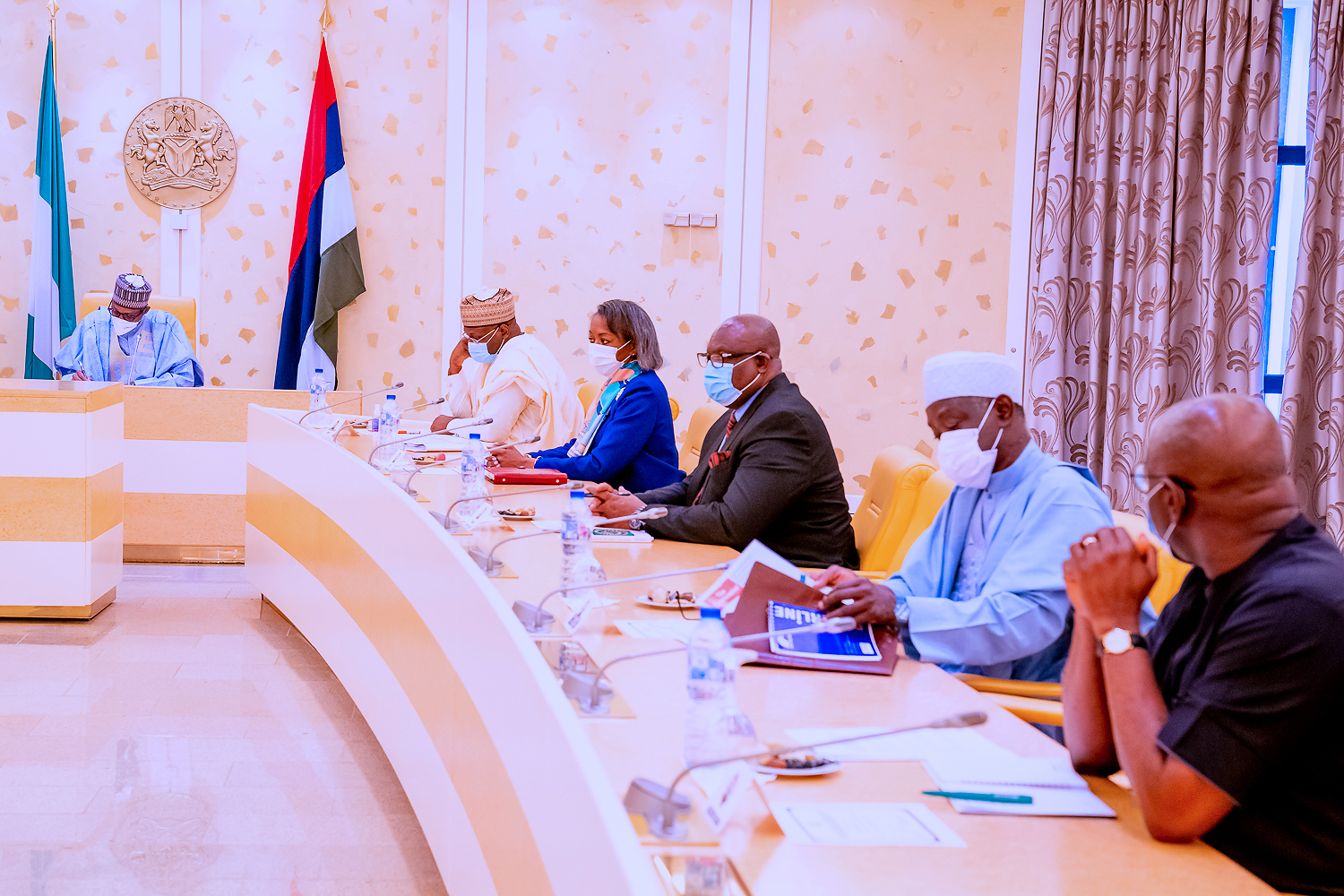
After all the drama of the last few weeks leading up to the presidential primaries within the political par-
ties in Nigeria, we now know who the presidential candidates are for next year’s election. Nigerians have learnt so much as our politicians crisscrossed the country searching for votes. As a result of what happened, it was discovered that some Nigerians no longer want their children or wards to be doctors or engineers. They would rather prefer them to be party delegates.
Although many Nigerians did not see money exchanging hands, there is a strong presumption that party delegates were ‘richly rewarded’ for their votes. Surprisingly, while the primaries lasted issues affecting the ordinary people did not feature prominently in the exercise that had on display the ruthlessness of the political class — the unconscionable and vulgar assault on the sensibility of the people with the way money became the main defining factor on who occupies which office.
The presence of security agents, in particular, the Economic and Financial Crimes Commission (EFCC), at the convention venues, designed to be a smokescreen, however, meant nothing to these politically exposed persons who allegedly dared the anti-graft agency to stop the despicable jamboree in its immensity. In other climes in which democracy is important, this behaviour is sufficient to put an end to anyone’s political career.
Still, Nigerians looked on askance, helplessly pondering in their minds if ever this charade will end, so they could go on with their lives devoid of the insensitivity of those they have the misfortune of regarding as their leaders; those who eat their corn and throw the chaff in their faces. This has challenged the viability of the constitutional democracy that the nation has embraced as a system of government and administration.
Oddly enough, in our opinion, unemployment and, in fact, the economy in general, during this period, no longer dominated the media space in search of solutions. Insecurity began to be romanticised and talked about in a cavalier manner, suggesting that, perhaps, the ruling class appreciated the climate of uncertainty that has been the bane of peace in the country. Even the protracted closure of the nation’s universities took the back seatas those responsible for resolving the impasse were more intrested in seeking for the office of president of the country.
These troubling realities make the forthcoming general elections a defining moment for the country, which raises the need for a thorough and insightful search for who will preside over the affairs of the country after President Muhammadu Buhari’s administration. This search has since begun for the political elite, hence, the intra-party tussle for the party ticket. While this is a party affair, Nigerians have witnessed how aspirants seeking to govern the country have crossed its length and breadth, talking to their delegates.
The Tide is dismayed that politicians appear to play as Nero while Rome burnt. A look at the polity today shows a near-failing state whose socio-political systems and cultures are collapsing hard and fast. Unfortunately, this is about more than just politicians. The so-called “masses”, comprising the broad spectrum of the Nigerian electorate, are complicit. What is important for them is being paid handsomely for the unpatriotic work they do.
These are the same people who were part of the infamous “cash for vote” case. They are those who choose to look the other way as members of the watchdog institutions, refusing, for whatever reason, to hold the political class to account. They are also the delegates who showed far more patriotism to the foreign currencies than to the country. However, there is every cause to believe that all is not lost. Some candidates, like Governor Nyesom Wike of Rivers State, have displayed genuine desire for a better Nigeria.
As the Independent National Electoral Commission (INEC) formally declares Nigeria’s political space open for campaigns by candidates flying the flags of the respective political parties at the presidential, governorship and various legislative levels in a few months, what are Nigerians expecting from the candidates and political parties? Do we expect a resort by the candidates to vulgar abuse, indecent and indecorous words, exchange of inanities or presentation of ideas to solve existing national challenges, planning for the future and novel concepts of a societal organisation?
There is no doubt that Nigerians would like to see a firm commitment by political parties and their candidates to meet the challenges they face. The problems we are confronted with in this country are already well known. Unlike in the past, we do not expect to see candidates give superficial explanations to the issues or romanticise the concerns for cheap sound bites. We believe that the quality of election campaigns is a precursor to the quality of governance when a winner emerges.
Consequently, political parties must question the health sector, which is grossly underfunded, as well as almost every sector of the economy and society. How will the new government raise fresh and, maybe, novel funds to invest in the sector? Will we have special intervention funds or budgetary funds to improve the facilities? What are the short to medium and long-term health plans? In addition to universal health coverage, what are the ways and the logistics of realising this dream?
Education as the cornerstone of societal development needs should also be considered with urgency. How will the party extend ingress to education at all levels while strengthening the quality and content of the curriculum? Are we constructing new institutions, particularly universities and polytechnics, or are we growing the capacity of existing institutions? Which is less or more costly to implement? What is the plan for hiring workers at higher education institutions?
One of the main challenges facing the Nigerian economy is the high unemployment rate and low electricity supply in the industrial sector. For many decades, successive governments of the country have made futile attempts to fight unemployment. There is no doubt that power has an effect on unemployment rates in this country. Therefore, candidates have to tell Nigerians how they hope to improve electricity generation and ensure that the industrial sector is given a higher priority in the supply of electricity if the high unemployment rate is to be abated.
Insecurity has been a major obstruction to foreign investment in the country. Nigerians would like to hear from candidates who aspire to lead how they will manage this threat. This challenge must be adequately examined by political parties and their candidates seeking power if the nation is to witness positive developments. A complete list of challenges is not conceivable. This is just a cue to the candidates and political parties to concentrate on the fundamental issues.
Every election is a referendum, and the 2023 election will be a critical one. Not for the reasons some politicians have said it is. It will be a referendum on whether Nigerians are ready to make the necessary sacrifices to have the kind of leadership they yearn for; a leadership that will guarantee a better future not for them alone, but for their children and posterity. Or will they opt for a continuation of the pervasive shame and sham? Of course, 2023 will tell.



Nigeria stands at a critical juncture as the world marked World Press Freedom Day (WPFD) on May 3. This annual observance is a reminder that a free press is central to democratic life, good governance, and public accountability. For Nigeria, it is also a moment for sober reflection on how far the country has come and how far it still has to go in safeguarding the independence of its media.
World Press Freedom Day exists to highlight the fundamental importance of freedom of expression and to honour journalists who risk their lives in pursuit of truth. It underscores the idea that without a free press, societies cannot function transparently, nor can citizens make informed decisions. In countries like Nigeria, where democracy continues to evolve, the observance carries particular urgency.
This year’s theme, “Shaping a Future at Peace: Promoting Press Freedom for Human Rights, Development and Security”, places journalism at the heart of global stability. It emphasises that a peaceful society cannot be built on silence, fear, or manipulated information. Rather, it depends on the free flow of accurate, timely, and independent reporting.
At its core, the theme highlights the role of journalism in fostering accountability, dialogue, and trust. These are not abstract ideals. In Nigeria, where public confidence in institutions is often fragile, the media remains one of the few platforms through which citizens can question authority and demand transparency. When press freedom declines, so too does public trust.
Journalism serves as a foundation for peace, security, and economic recovery. Countries with robust media systems tend to attract greater investment, maintain stronger institutions, and resolve conflicts more effectively. Nigeria’s economic challenges, ranging from inflation to unemployment, require open scrutiny and informed debate, both of which depend on a free press.
However, the issue of information integrity has become increasingly complex in the digital age. Artificial Intelligence (AI) and online platforms have amplified the spread of misinformation and disinformation. In Nigeria, where internet penetration has grown rapidly, false narratives can travel faster than verified facts. This makes the role of credible journalism more vital than ever.
The challenge is not only technological but also ethical. AI-driven manipulation of information threatens to distort public discourse, influence elections, and deepen social divisions. In such an environment, professional journalism must act as a stabilising force, ensuring that truth prevails over sensationalism and propaganda.
Equally troubling is the safety of journalists. Across Nigeria, reporters face growing levels of online harassment, judicial intimidation, and physical threats. Self-censorship is becoming more common, as media practitioners weigh the risks of reporting sensitive issues. This trend undermines the very essence of journalism.
A particularly alarming incident involved a serving minister in the present administration, who openly threatened to shoot a journalist during a televised exchange. Such conduct, broadcast to the public, sends a dangerous signal that hostility towards the press is acceptable. It erodes the norms of democratic engagement and places journalists in harm’s way.
This year’s theme aligns closely with the United Nations Sustainable Development Goal (SDG)16, which promotes peace, justice, and strong institutions. Freedom of expression is a cornerstone of this goal. Without it, institutions weaken, corruption thrives, and justice becomes elusive. Nigeria’s commitment to SDG 16 must therefore include genuine protection for the media.
Historically, the Nigerian press has been a formidable force. From resisting colonial rule to challenging military dictatorships, our journalists have played a central role in shaping the nation’s political landscape. Today, however, that legacy appears to be under strain, as the media operates under what can best be described as a veneer of freedom.
Beneath this facade lies a troubling reality. Journalists are routinely harassed, detained, and prosecuted for performing their constitutional duties. Reports from media watchdogs indicate that dozens of Nigerian journalists face legal threats or arrest each year, often for exposing corruption or criticising those in power.
The Cybercrimes (Prohibition, Prevention, etc.) Act of 2015 has become a focal point of concern. Originally intended to combat cyber threats, it has increasingly been used to silence dissent. Sections 24 and 27(1)(b), in particular, have been invoked to target journalists, bloggers, and social commentators.
Although amendments introduced in February 2024 were meant to safeguard journalists, concerns persist. The law continues to be wielded in ways that stifle investigative reporting and restrict freedom of expression. Legal reforms must go beyond cosmetic changes to address the root causes of misuse.
To safeguard the future of journalism in Nigeria, decisive action is required. The Cybercrimes Act must be revisited to ensure it cannot be weaponised against the press. Law enforcement agencies must operate free from political influence, upholding the rule of law and protecting journalists’ rights. Civil society and international partners must also strengthen independent media through funding, training, and platforms for wider reach.
In this rapidly evolving world shaped by artificial intelligence and digital innovation, Nigeria faces a clear choice. It can either allow press freedom to erode under pressure, or it can champion a truly independent media landscape. The path it chooses will determine not only the future of journalism, but also the strength of its democracy and the peace it seeks to build.

-

 Featured4 days ago
WASSCE: RSG Distributes Science Materials To Secondary Schools
-
News4 days ago
Xenophobic Attacks: Nigerian Lives More Important Than Foreign Investment – Oshiomhole
-
Rivers4 days ago
MBA Forex Trial Adjourn To June 3, Amid Bereavement … As Court Declines Cost Application
-
News4 days ago
ActionAid Demands Probe Of Govs Using Public Funds For Campaign
-
Aviation4 days ago
Passengers Stranded As Delta Airline From Atlanta Route Back Eight Hours After
-
Business4 days ago
Customs Impound N2.35bn Cocaine, 15 Trailers of Rice
-
Politics4 days ago
2027: Bayelsa Senator Gets Critical Endorsement For Second Term
-
 Politics4 days ago
INEC Sets Rivers South-East Senatorial By-Election For June 20