
News
2023: Interrogate Leadership Recruitment Process, Nsirim Tasks Media

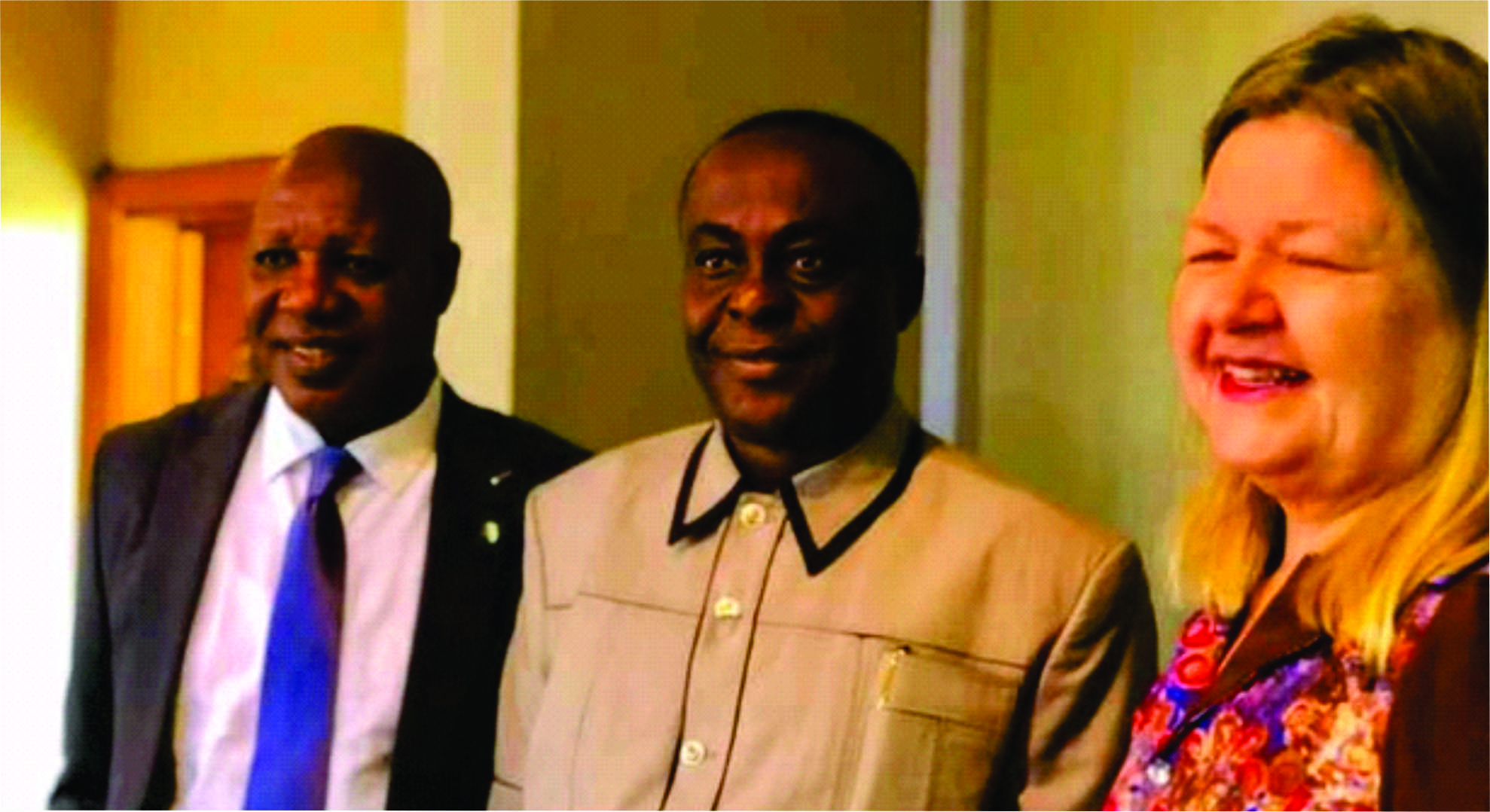
The Rivers State Commissioner for Information and Communications, Pastor Paulinus Nsirim, has tasked journalists to see the build ups to the 2023 general election as a viable opportunity for the media to interrogate the leadership recruitment process of the country.
The commissioner stressed that the time has come for the media to thoroughly examine those who aspire to leadership positions, what their credentials are, with a view to projecting those credentials to the voting populace for them to make their choice.
Nsirim, who was speaking at South-South Town Hall Meeting of the Nigerian Guild of Editors (NGE) in Port Harcourt, yesterday, emphasised that as members of the Fourth Estate of the Realm, journalists must no longer hide under the cover of societal challenges and allow Nigeria remain in doldrums.
The theme of the Town Hall Meeting is, “Agenda Setting for Sustainable Democratic Culture”.
Nsirim said, “I always call our attention to the fact that as a people, we have lost our value, the values of honesty, hardwork and integrity are lost. So, this is the society where the media should be operating to set agenda.
“We must stand firm at this political season to show the political gladiators that we have the professional competence to project issue based campaigns and not campaigns of calumny, because we fall prey when we allow such campaigns to flood the channels.
“Nigeria is at crossroads and we are looking for those who will bring us out of the doldrums. Therefore, we must promote issue based campaigns in this season,” he said.
He restated that the country has been divided along ethnic and religious lines, adding that it was the media that should set the agenda for a united Nigeria again.
“Let me underscore the fact that this country is divided and it is the media that will bring about a united Nigeria. We must take that as a responsibility as we match into 2023.
“The time has come for journalists to refuse to be dumping ground for politicians. It is sad today to see the volume of libellous publications flood our print and broadcast media platforms because we have refused to be professional. Anything goes, and when anything goes, society will be the worst for it,” he said.
Nsirim also charged the media to rise up to the challenges of increasing level of savagery in the country by educating the people that as humans nobody deserves to be slaughtered.
“The Nigerians slaughter themselves as if they are slaughtering cows. How did we get here? When did we lose our sense of humanity?
“The media need to play a role here. We must begin to tell our people that we are all humans. Nobody deserves to be slaughtered like a cow,” he said.
He said the missing link has been that those who promote this violence somehow are protected by the Nigerian society.
“We all must rise up to say no to savagery. I feel a lot of pain when I watch some of this things and it is something that should give us concern as media people.
“Somebody said recently, that journalists write history, but let us remember that history will also write us. And that should be a food for thought for all of us,” he cautioned.
He expressed hope that with its abundant potentials, Nigeria will still evolve a better country. “Galvanising these potentials, we can beat those who are the naysayers and build the Nigeria of our dream.”
He welcomed participants to the new Rivers State where Governor Nyesom Wike’s governance style has shown a new touch in terms of infrastructural development and leadership.
Also speaking, the President of the Nigerian Guild of Editors, Mr. Mustapha Isah, said the Town Hall meeting was organised to fashion a direction for journalists and the media to assess media performance in consolidating Nigeria’s democracy, aggregate citizens’ verdict and set agenda for the future.
Isah disclosed that the conference would further reignite the flame of the sense of responsibility of the editors in the discharge of their duties, and moreso, within the ambience of ethical standards.
He stated that the conference was aimed at scrutinising the performance of the media in consolidating Nigeria’s democracy as well as setting agenda for the future.
He said “the town hall meeting will provide an uncommon platform for media stakeholders to undertake self-introspection and also begin a conversation on a framework for media regulation, which will not only have their buy-in, but also improve the standard for media practice in Nigeria – thereby reducing, if not eliminate, incidents of sub-standard and unprofessional reportage in the Nigerian media”.
The guild president expressed hopes that the roundtable with stakeholders across the different segments of the Nigerian society including top government officials, the Nigerian Bar Association (NBA), traditional/religious leaders, renowned scholars, leaders of ethnic nationalities, civil society organisations among others would be an example to other regional countries in terms of ethical and professional reportage in their democratic dispensations.
“Such conversations and hopefully eventual adoption of self-regulatory framework could also have a regional spin-off whereby countries within the region, and indeed Africa, could be encouraged to borrow a leaf from the Nigerian example, as was the case with the adoption of a Freedom of Information Act in Nigeria subsequently having a positive spin-off in Ghana”, they said.
He condemned a situation where governors who have no appreciable records of performance in their states put themselves forward to be elected into higher positions.
“A free and critical press is essential for the growth and development of any democracy.
“A free press is important in a democratic society for the protection of human rights and fundamental freedoms.
“An independentand free press is always a threat to dictators, corrupt elements, impunity by government and anti-democratic characters. Little wonder that all over the world, dictatorship begins with a clampdown on the media”, he added.
According to him, “Section 22 of the 1999 Constitution says, the press, radio, television, and other agencies of the media should at all times be free to uphold the responsibility and accountability of the government to the people”, noting that this section gives the media the enormous responsibility to hold the government accountable to the people.
The president challenged members of the Fourth Estate of the Realm to sincerely discharge their duties as well as hold government accountable in any area they find themselves, arguing that their performance in that area has been questionable.
“Can we beat our chests and say we have carried out this role effectively?
“The Town Hall Meeting is expected to assess performance of the members of the Fourth Estate of the Realm as well as suggest ways for improvement”, he said.
The NGE boss urged the various stakeholders, including youth groups, organised labour, students, civil society organisations, traditional and religious groups, invited to the Town Hall meeting to feel free to identify areas where the media has done well as well as areas that need improvement.
“This is the sixth and the last leg in the series with the first five held in Lagos, Kano,Yola, Abuja and Enugu under the NGE/US Embassy capacity building programme for editors in the South-West, North-West, North-East, North-Central, South-East, and South-South”, he said.
Also speaking, Information Official/Press Attaché of the United States Embassy in Nigeria, Jeanne Clark, said everyone has roles and responsibilities to promote transparency and good governance in the country.
Clark advised the media to hold politicians accountable, saying that as the 2023 general election draws closer, the media must work hard to ensure free and fair elections in the country.
She regretted that some countries are currently witnessing a decline in press freedom, and urged the media practitioners in the country to fight for their freedom to practise.
“The media should take positive steps in favour of transparency”, she said.
A fellow of the Nigeria Guild of Editors, Mr Tony Iyare, described the proposed Lagos-Calabarrail line as vital to the economy of Nigeria.
Speaking as lead presenter, Iyare said the project, when completed, would link all the ports from Lagos in the South-West to Calabar in the South-South.
He said the project would open up many rural communities for development as well as create thousands of job opportunities for the country.
The Editor, who described the railway as a unifying industry, charged the media to continue to push the government for railway development in the country.
He said the rush to obtain forms for the presidency has reduced the office to ridicule, and called for the inclusion of women and persons with disabilities in governance.
Iyare said the present administration has done so much to divide the county along ethnic and religious lines,noting that Nigeria must not be allowed to blow out as the consequences would be too much for the African continent.
Also speaking, the spokesperson of the Pan-Niger Delta Forum (PANDEF), Mr Ken Robinson, charged the media to live up to expectations by holding politicians accountable for their promises.
He also commended the NGE for the programme.
By: Lady Godknows Ogbulu, John Bibor & Susan Serekara-Nwikhana


The Rivers State Government has commended the Church of Nigeria (Anglican Communion) for its outstanding contributions to the development of Rivers State, particularly in the areas of peacebuilding, education, healthcare, and moral development.
Governor of Rivers State, Siminalayi Fubara, stated that the Church has remained a dependable partner in promoting peace, unity, justice, moral discipline, and social harmony across society.
The Governor, who was represented by the Secretary to the State Government, Dr. Dagogo Wokoma, made the remarks during the thanksgiving service marking the 30th Anniversary and First Session of the 11th Synod of the Diocese of Niger Delta North, held at St. Peter’s Anglican Church on Sunday.
Governor Fubara described the Synod’s theme, “Kingdom Advancement: The Priority of Every Believer,” as timely and relevant, considering the prevailing realities in society.
According to him, the Church continues to play a vital role in shaping societal values and inspiring hope among citizens.
“The Church remains a vital partner in promoting peace, unity, justice, and moral discipline. Its role in shaping values and inspiring hope cannot be overemphasized,” he stated.
The Governor further acknowledged the Anglican Communion’s contributions in education, healthcare delivery, youth empowerment, humanitarian services, and spiritual guidance across communities in Rivers State.
“The Rivers State Government appreciates the invaluable contributions of the Anglican Communion in education, healthcare, youth development, humanitarian support, and spiritual guidance. Your impact across communities in Rivers State continues to strengthen families and promote peaceful coexistence among our people,” he added.
Governor Fubara reaffirmed his administration’s commitment to building a peaceful, united, and prosperous Rivers State where all citizens can thrive irrespective of religion, ethnicity, or social background.
He also urged the Synod to continue praying for sustainable development and progress in Rivers State and Nigeria at large.
Earlier in his sermon, the Guest Minister, Joseph Olushola, spoke on the topic, “Kingdom Investment and Internal Rewards,” urging Christians to remain faithful stewards of God’s blessings and committed to advancing God’s kingdom through service and generosity.
The cleric emphasized that believers are custodians of the virtues and resources entrusted to them by God, stressing that divine rewards are based on faithfulness and impact rather than material possessions.
The Shell Nigeria Gas Limited, in partnership with the Manufacturers Association of Nigeria (MAN), has reaffirmed support for efforts to expand gas distribution infrastructure in Rivers State as part of initiatives aimed at improving access to affordable, cleaner and more reliable energy for industries across the South-South region.
The commitment was highlighted during the SNG–MAN Business Forum held in Port Harcourt, where stakeholders from the industrial and public sectors examined the role of natural gas in driving industrialisation, boosting local production and strengthening energy security.
Speaking at the forum on behalf of the Managing Director of Shell Nigeria Gas Limited, the company’s Head of Gas Distribution, Mr. Chukwuka Amos Ejesi, described natural gas as a critical component of Nigeria’s energy mix and a key driver of sustainable industrial growth.
According to him, Nigeria’s gas development agenda has reached a stage where policy direction must be matched with practical implementation capable of addressing the energy challenges confronting manufacturers.
He noted that pipeline gas offers industries a cleaner, more dependable and cost-effective energy alternative capable of supporting uninterrupted operations, reducing emissions and improving production efficiency.
“Gas is the backbone of manufacturing, and we are encouraged by the growing recognition among stakeholders of the need for cleaner and more reliable energy solutions,” he said.
Ejesi stressed the need for sustained collaboration among energy providers, government institutions and industrial stakeholders to maximise the country’s gas resources for economic development.
He added that improved gas infrastructure would strengthen manufacturing value chains, enhance productivity and promote more competitive industrial operations across Rivers State and the wider South-South region.
Participants at the forum also emphasised the importance of expanding energy infrastructure as a pathway to unlocking industrial capacity, reducing operating costs and promoting sustainable industrial development.
Representing Governor Siminalayi Fubara, the Director-General of the Rivers State Investment Promotion Agency, Dr. Chamberlain Peterside, reaffirmed the state government’s commitment to partnering with private sector investors to revitalise industrial activities in the state.
He identified key projects targeted under the initiative to include the revival of the Ahoada Industrial Park, the New Port City project and the proposed Bonny Industrial Park, all aimed at stimulating economic growth and expanding industrial opportunities along the Bonny corridor.
According to the governor, the long-term vision is to position Rivers State as a leading manufacturing hub in Southern Nigeria through strategic public-private partnerships.
Governor Fubara also commended Shell Nigeria Gas and MAN for sustaining engagements geared towards improving industrial energy access, noting that gas infrastructure development remains central to the state’s economic recovery plans.
He further observed that the gas sector presents enormous opportunities for economic growth, especially as global energy systems continue to shift towards cleaner energy sources.
The governor called on stakeholders to work collectively towards developing a practical and sustainable gas framework capable of supporting the state’s industrial and energy development objectives.
By; Kevin Nengia
Rivers State Deputy Governor, Prof. Ngozi Nma Odu, has charged newlywed couples to build their marriages on the virtues of love and submission as taught in the Word of God.
Prof. Odu gave the charge at the wedding ceremony of Amblessed Favour Sunny-Cookey and Samson Jesuganji at Lifegate Power Ministries, Dominion Cathedral, in Port Harcourt on Saturday, 16th May 2026.
The Deputy Governor congratulated the couple on beginning a new phase of life together and prayed for God’s blessings upon their union, noting that the couple had been raised by godly parents and encouraged them to uphold the Christian values instilled in them.
Referring to the sermon delivered during the ceremony, Prof. Odu emphasized that the principles of love and submission remain fundamental to a successful marriage.
According to her, genuine love reflects the nature of God, stressing that love should remain the foundation of the couple’s relationship as they journey through life together.
Prof. Odu further prayed for enduring peace, happiness, and progress in the home, expressing confidence that the marriage would continue to flourish under God’s guidance.
The Deputy Governor also commended the families of the couple for their support and upbringing, while urging the newlyweds to always remember the significance of the day and the commitment they had made before God and witnesses.
In his sermon at the wedding, the Founder and Presiding Pastor of Salvation Ministries, Pastor David Ibiyeomie, stated that marriage did not originate from Western culture, traditions, or human ideas, but from God, whom he described as the “manufacturer” of marriage.
According to the cleric, couples seeking lasting and peaceful homes must rely on biblical principles rather than societal trends or assumptions.
He explained that many marital crises and rising divorce rates stem from ignorance and failure to apply scriptural teachings in family life.
Drawing from the biblical parable of building a house on a rock, Pastor Ibiyeomie said the Word of God remains the only solid foundation capable of sustaining marriages through challenges and difficult times.
He noted that marriage naturally comes with unexpected realities and pressures, stressing that religious ceremonies or cultural practices alone are not enough to sustain a home without proper understanding of God’s instructions.
The pastor further warned that ignorance of scripture remains one of the greatest weapons against believers, urging Christians to study and practice the Word of God rather than merely attending church services.
It would be recalled that the bride is the daughter of Pastor Sunny Cookey the Founder and Presiding Pastor of Lifegate Ministries. The Ceremony had lots of Ministers in attendance which includes Apostle Zilly Aggrey, Pastor George Izunwa, and Bishop Winston Iwo
-

 Editorial1 day ago
Enough Of Xenophobic Attacks On Nigerians
-

 Nation1 day ago
RSU, Otonti Nduka Foundation Holds Centenary Conference, Unveil Book on Values in Nigeria
-

 Oil & Energy1 day ago
Rivers PETROAN Elects 12-Member Executive
-

 Environment1 day ago
MOSOP – Tinubu Not Sincere With Ogoni People For Oil Resumption
-
Politics1 day ago
APC Group Protests Ex–Presidential Aspirant’s Disqualification From Rivers Senatorial Race
-
Politics1 day ago
Reps Speaker Secures APC Return Ticket For Fifth Term
-

 News2 days ago
Fubara, Wife Hail Tinubu’s Renewed Hope Initiative …As Over 6,800 Families Benefit From Largesse In Rivers
-

 Sports1 day ago
Oparaodu Urges Rivers United To Win Katsina United