
News
Nigeria Becoming Fertiliser Powerhouse In Africa, Buhari Boasts

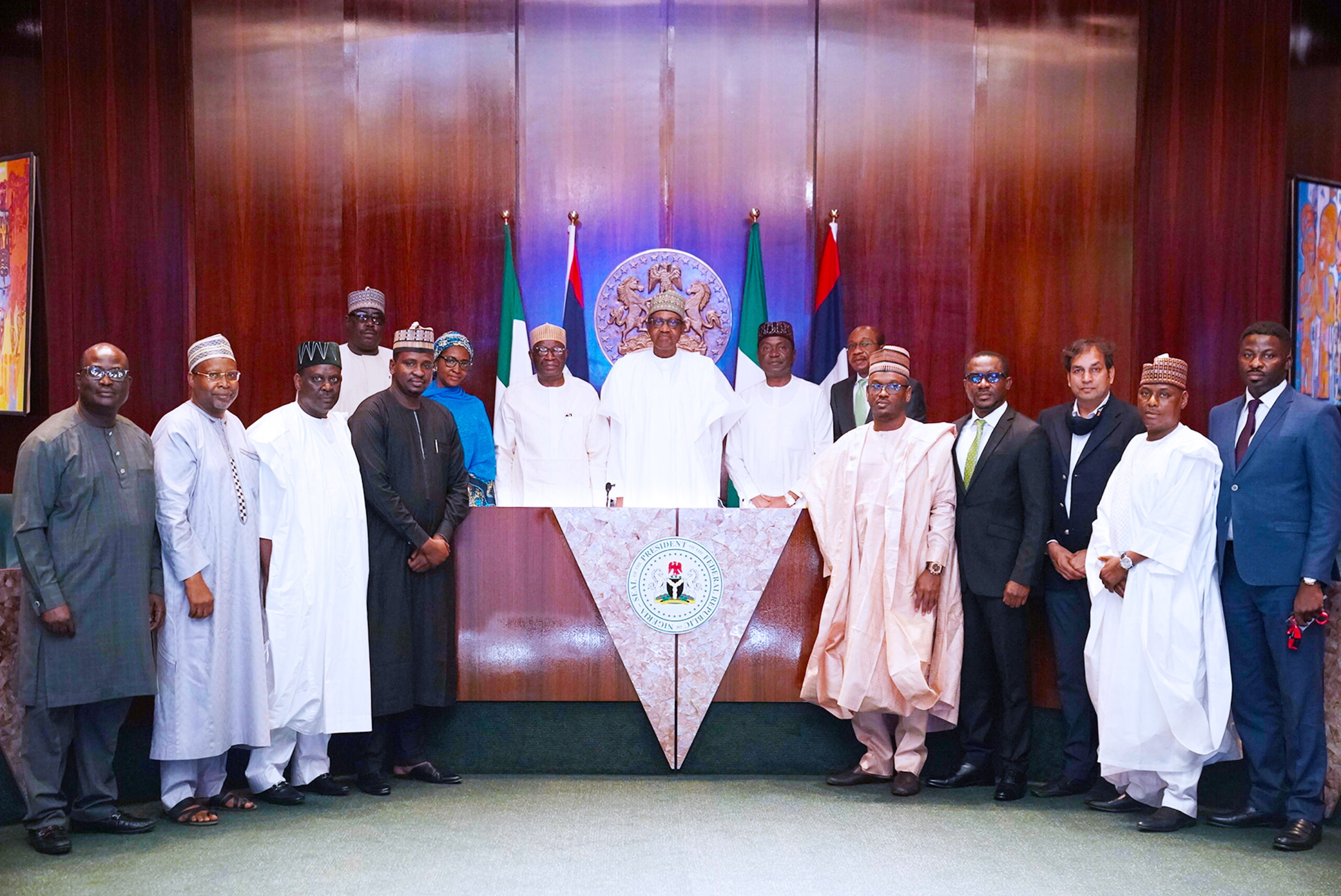
President Muhammadu Buhari, yesterday, in Abuja, attributed Nigeria’s rising prominence as Africa’s fertiliser powerhouse to the implementation of the right policies by the present administration.
According to a statement by Special Adviser to the President on Media and Publicity, Femi Adesina, Buhari at an audience with the Executive Committee of Fertiliser Producers and Suppliers’ Association of Nigeria (FEPSAN) said: “With our over 70 blending plants operating, Nigeria is on its way to becoming Africa’s fertiliser powerhouse. And with our mega Urea production facilities, Nigeria is definitely a global player in the urea space.”
The president noted that this remarkable achievement, in a very short period of time, had ensured a steady flow of investments to the sector from the private sector; bringing prosperity to millions of Nigerians and good returns to the investors.
He expressed delight that the era of a persistent shortage of fertiliser in the country was now a thing of the past, commending FEPSAN for partnering with the government in the very patriotic backward integration project of enhancing the agricultural value chain.
He recounted steps taken by his administration to limit over-reliance on imports, ensure the availability of the commodity and achieve self-sufficiency in food production in the country.
“When this administration came to office in 2015, our focus was on three key areas; security, economy and tackling corruption,” he stated.
“For every nation to have peace and prosperity, its economy must be inclusive.
“For Nigeria, a predominantly agrarian nation, having an inclusive economy meant we needed to prioritise the enhancement of our agricultural value chain.
“We quickly identified the persistent shortage of fertilizer as a key reason for the low yields experienced on our farms.
“This historical scarcity of fertiliser was due to our over-reliance on imports and the inefficient participation of the Government in distributing this essential commodity to the farmers.
“As a government, it was very clear to us that these practices needed to change. Nigeria is naturally blessed with most of the raw materials needed to produce fertilisers.
“Nigeria has all the skills and manpower required to convert these raw materials to fertilisers. With the right enabling environment, Nigeria has entrepreneurs who are ready to invest in the sector.
“So, we went to work. And as the chairman of FEPSAN mentioned in his remarks, the rest is now history,” he said.
The president noted that a key indicator of the present government’s successful policies is the fact that the country had no shortages of fertilisers during the global COVID lockdowns.
“Today, I am pleased to hear your assurances that we will not have any shortages in Nigeria because of the Eastern European conflicts that have impacted the global fertiliser trade. All these trends indicate our backward integration policy was the right policy.”
Appreciating those who have invested and continue to invest in the sector, the president said: “Through these investments, you are double blessed as you are making profits and bringing prosperity to millions of Nigerians working in the agricultural value chain.”
In his remarks, Central Bank of Nigeria (CBN) Governor, Godwin Emefiele, said fertiliser remains a key input to achieving food security and in the realisation of this, the apex bank has continued to place great importance on its availability and accessibility by farmers to improve yield, productivity and ultimately, output.
Highlighting some CBN’s interventions, including the Real Sector Support Facility, Commercial Agriculture Credit Scheme, National Food Security Programme and the Presidential Fertiliser Initiative (PFI), Emefiele said a total of over N114.09billion has been disbursed to support the fertiliser industry in the last five years.
He explained that the interventions were long-term loans at concessionary interest rates to support domestic blending and distribution across the country.
Given the massive funding support received by FEPSAN members from the CBN, Emefiele announced that the bank is working with majors in the industry, such as Dangote and Indorama, to ensure that they sell Urea at discounted prices to the blending plants to ensure that the prices of fertiliser are moderated in the market.
“The bank will equally work with the blending plants to ensure that the blended fertilisers are made available to end-user farmers at affordable prices,” he said.
On the CBN Anchor Borrowers’ Programme, the CBN governor said the bank has disbursed N941.26billion to 4.2million smallholder farmers cultivating 21 agricultural commodities on 5.4million hectares of land across the country.
He added that for the 2021 wet season programme, the CBN disbursed N193.59billion to 923,699 farmers cultivating seven commodities on 1.16million hectares of land.
According to Emefiele, the CBN currently has a balance of stock of fertiliser from the last planting season under the Anchor Borrowers’ Programme to the tune of 1.95million bags and has committed additional 2.6million bags for use during the 2022 programme.
Also speaking, FEPSAN President, Thomas Etuh thanked Buhari for commissioning two facilities by members of the association – Barbedos blending plant in Kaduna and the Dangote Urea plant in Lagos – within two months.
“Mr President, FEPSAN’s success is not only evident by the number of factories we commission, but also by the many pyramids of rice, maize and other crops you have been inspecting across the country.
“Mr President, before you created the PFI Initiative in 2016, Nigeria’s fertiliser production base was almost zero. We had less than seven companies producing at 10 per cent of their installed capacity. Nigeria’s Urea output was reported at less than 300,000 tons,” he said.
Citing recent data from a fertiliser working group that reviews and validates consumption data spanning over 12 years, Etuh said Nigeria recorded its highest consumption of fertilisers at 1.8million tons per annum in 2021.
He assured Nigerians that the association is ready, willing and available to ensure that fertilisers are available in all parts of the country for the 2022 wet season.


The Rivers State chapter of the All Progressives Congress Christian Leaders Forum has expressed strong confidence in the capacity of All Progressives Congress (All Progressives Congress) candidates in the state to deliver effective governance if elected into office in the coming elections.
The State Coordinator of the forum, Archbishop Lucky Aroh, made this known during a breakfast and thanksgiving meeting held in Port Harcourt, where leaders gathered to pray for the stability of the party and the safety of its candidates ahead of the 2027 general elections.According to him, the meeting was convened to seek divine intervention for peace, unity, and security among APC candidates across Rivers State.
“Today we are praying for APC stability in Rivers State and the security of our candidates that have been elected to contest the 2027 elections. It is a breakfast meeting,” Aroh said.
He further expressed optimism that the party’s candidates would not disappoint the people if entrusted with leadership responsibilities.
“They will not fail when elected into office. We are here as fathers of the land to let them know, and I must tell you the truth that these are the authentic people that will do well in Rivers State,” he added.
Speaking earlier, the National Chairman of the forum, Professor Olanrewaju Abraham, commended the Rivers State chapter for organizing the programme, noting that the national body of the forum believes strongly in the power of prayer.
He stated that political leadership provides an opportunity to influence society positively, including advancing moral and spiritual values, while expressing confidence that APC candidates at all levels would emerge victorious in the upcoming elections.
Also speaking, the Rivers State Women Leader of the APC, Hon. Darling Amadi, praised the forum for its commitment to prayers for peace, stability, and the protection of party candidates.
Represented by the Deputy Women Leader of the party in the state, she described the initiative as commendable and urged other political and support groups within the party to emulate the gesture in promoting unity and stability.
By: John Bibor, Menebe Emmanuel & Fortune Paibi
Prominent businessman and philanthropist, Elder Anthony Osagwe-Ogo, was celebrated in grand style as he marked his 70th birthday anniversary, with distinguished Nigerians, business leaders, and golf enthusiasts gathering to honour his remarkable contributions to society.
The colourful celebration took place at the Port Harcourt Golf Club, where friends, associates, and well-wishers converged to pay tribute to the revered elder statesman.
Chairman of the occasion, High Chief (Dr.) Ikenna Okafor, described the celebrant as a detribalised Nigerian whose generosity, humility, and commitment to humanity have earned him admiration across different communities and backgrounds.
According to Dr. Okafor, Pa Osagwe-Ogo’s impact on society and the development of his community remains unparalleled. He noted that members of the golfing community are proud to be associated with a father figure who consistently promotes the welfare and well-being of those around him.
He further stated that the history and growth of the Port Harcourt Golf Club cannot be told without acknowledging the significant role played by the celebrant, whose wisdom, encouragement, and leadership have helped sustain the club over the years.
“We are here to celebrate a man who has impacted humanity positively, a peace-loving individual and an epitome of hope for the younger generation. We pray to emulate his virtues. Today, we celebrate a bridge-builder, a trailblazer, and an iconic leader whose life continues to inspire many,” Dr. Okafor said.
He expressed delight at the large turnout of guests from various walks of life, describing it as a testament to the respect and affection Pa Osagwe-Ogo commands within and beyond Rivers State.
In his response, the celebrant, Pa Anthony Osagwe-Ogo, expressed profound gratitude to God for preserving his life and granting him the privilege of attaining the milestone age of 70.
He also thanked members of the Port Harcourt Golf Club, family members, friends, and associates for identifying with him during the celebration and for their unwavering support over the years.
The event featured the cutting of the birthday cake, presentation of awards to deserving members of the club, goodwill messages, and moments of celebration among guests.
The ceremony was attended by notable personalities from the business community, the golfing fraternity, and other sectors, all of whom joined in celebrating the life and legacy of the respected elder statesman.
Rivers State Governor, Sir Siminalayi Fubara, and the Permanent Secretary of the Rivers State Ministry of Information and Communications, Dr. Honour Kuru Sirawoo, have been honoured with awards of recognition in connection with the 2026 Democracy Day celebrations held in Port Harcourt.
The awards, which formed part of activities marking Nigeria’s Democracy Day on June 12, were formally presented on Tuesday at the Ministry of Information and Communications in Port Harcourt.
Presenting the awards was Hon. Abdul Hameed Oladipupo Alli, popularly known as “Mr. Nigeria,” Publisher of Asiwaju Trumpet Magazine and Achievers World International Magazine.
Governor Fubara was recognised for his efforts in sustaining peace, stability, and a conducive political atmospherJohn Bibor / Menebe Emmanuel / Fortune Paibie in Rivers State. The organisers noted that his administration has fostered harmony and strengthened civic participation across the state.
Dr. Sirawoo, on the other hand, was honoured for his exemplary administrative leadership and significant contributions to effective information management within the Ministry of Information and Communications.
Representing Dr. Sirawoo at the presentation ceremony, Dr. Christian Davies received the award on his behalf and expressed gratitude for the recognition. He described the honour as a reflection of Dr. Sirawoo’s unwavering commitment to professionalism, excellence, and dedicated public service.
Dr. Davies assured the organisers that the award would be formally conveyed to the Permanent Secretary.
The event also featured the presentation of commemorative publications highlighting major governance and civic milestones in Rivers State, including Easter celebrations, Workers’ Day activities, the Governor’s third anniversary in office, and Democracy Day programmes.
Organisers of the awards commended the Rivers State administration for what they described as sustained peace, political stability, and improved civic engagement, noting that these achievements have contributed significantly to the state’s continued development.
By: Jessica Sambol