
Business
NEITI Blames Subsidy, Price Hike For Fuel Scarcity

The Nigeria Extractive Industries Transparency Initiatives (NEITI) has blamed the over three-week scarcity of Premium Motor Spirit (PMS), popularly called petrol, on the continued subsidy on PMS.
NEITI, an agency of the Federal Government, on Monday, explained that the solution to the country’s prolonged fuel crisis was to halt the subsidy regime as canvassed by stakeholders, including the Nigerian National Petroleum Company (NNPC) Limited.
It, however, stayed that the Federal Government had its reasons for retaining it the subsidy.
The Tide’s source gathered that this disclosure came after officials of the Independent Petroleum Marketers Association of Nigeria (IPMAN) said on Monday that the ex-depot price of petrol by private tank farm owners had risen to N180/litre, as against the approved ex-depot price for petrol of between N145 – N148/litre.
As the crisis in the downstream oil sector continues, queues for petrol by motorists in the few filling stations that had products, grew worse, with many fuel users spending several hours to buy PMS.
Commenting on the petrol crisis at a briefing in Abuja, the Executive Secretary, NEITI, Orji Ogbonnaya-Orji, described the current petrol scarcity as a symptom, while the main disease was the subsidy.
“At the moment, the NNPC and the Nigeria Midstream and Downstream Petroleum Regulatory Authority are seriously working hard to restore normalcy.
“I was in touch with the top management of the relevant organisations and I am aware of the amount of work and pressure that have gone into this. But let me say this, fuel scarcity is just a mere symptom, subsidy is the main disease.”
On the rise in ex-depot price of petrol, the National Public Relations Officer, IPMAN, Chief Ukadike Chinedu, said tank farm owners were currently dispensing the product at N180/litre.
He said this was why many filling stations were selling petrol at over N200/litre, higher than the approved N162 to N165/litre pump price.
“In our bid to serve our environment, we move further to source this product at the cost of N180/litre from private tank farms”, he said.
Moving forward, Ukadike said the National President of IPMAN, Debo Ahmed, had appealed to the Pipelines Product Marketing Company, a subsidiary of NNPC, to send products to its (PPMC) 21 inland depots.
He explained that this would enable IPMAN members to buy products at government-regulated rate. IPMAN operates about 90 per cent of filling stations across the country


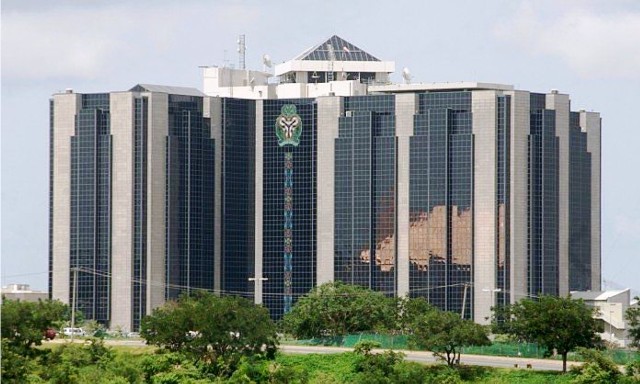
The Central Bank of Nigeria (CBN) has revised its cash withdrawal rules, discontinuing the special authorisation previously permitting individuals to withdraw N5 million and corporates N10 million once monthly, with effect from January 2026.
In a circular released Tuesday, December 2, 2025, and signed by the Director, Financial Policy & Regulation Department, FIRS, Dr. Rita I. Sike, the apex bank explained that previous cash policies had been introduced over the years in response to evolving circumstances.
However, with time, the need has arisen to streamline these provisions to reflect present-day realities.
“These policies, issued over the years in response to evolving circumstances in cash management, sought to reduce cash usage and encourage accelerated adoption of other payment options, particularly electronic payment channels.
“Effective January 1, 2026, individuals will be allowed to withdraw up to N500,000 weekly across all channels, while corporate entities will be limited to N5 million”, it said.
According to the statement, withdrawals above these thresholds would attract excess withdrawal fees of three percent for individuals and five percent for corporates, with the charges shared between the CBN and the financial institutions.
Deposit Money Banks are required to submit monthly reports on cash withdrawals above the specified limits, as well as on cash deposits, to the relevant supervisory departments.
They must also create separate accounts to warehouse processing charges collected on excess withdrawals.
Exemptions and superseding provisions
Revenue-generating accounts of federal, state, and local governments, along with accounts of microfinance banks and primary mortgage banks with commercial and non-interest banks, are exempted from the new withdrawal limits and excess withdrawal fees.
However, exemptions previously granted to embassies, diplomatic missions, and aid-donor agencies have been withdrawn.
The CBN clarified that the circular is without prejudice to the provisions of certain earlier directives but supersedes others, as detailed in its appendices.
-
Business1 day ago
Shippers Council Vows Commitment To Security At Nigerian Ports
-

 Business1 day ago
Nigeria Risks Talents Exodus In Oil And Gas Sector – PENGASSAN
-
Business1 day ago
CBN Revises Cash Withdrawal Rules January 2026, Ends Special Authorisation
-
Business1 day ago
NCDMB, Others Task Youths On Skills Acquisition, Peace
-

 News1 day ago
Tinubu Swears In Christopher Musa As Defence Minister
-
 Business1 day ago
FIRS Clarifies New Tax Laws, Debunks Levy Misconceptions
-

 online games2 days ago
How Pocket Option Works: A Complete Beginner’s Guide
-

 Women1 day ago
RIVERS NAWOJ AND PHACCIMA PARTNER TO STRENGTHEN MUTUAL GOALS