
Featured
FG Discovers 96 Financiers Of Boko Haram, ISWAP …Links 123 Companies, 33 BDCs To Terrorism

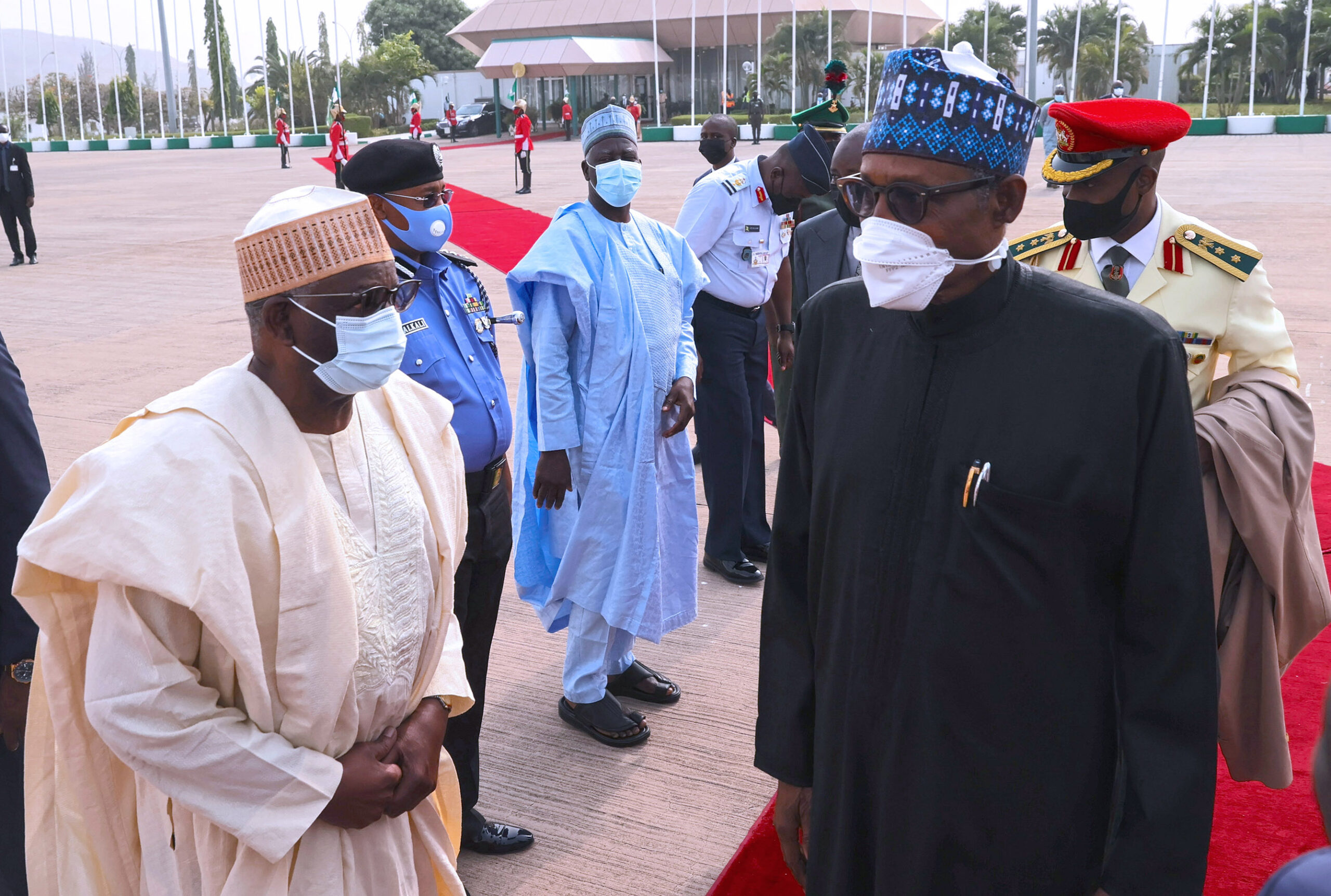
The Federal Government has confirmed uncovering 96 financiers of terrorism across the country, especially those backing Boko Haram and the Islamic State of West Africa Province (ISWAP).
This was disclosed by Minister of Information and Culture, Alhaji Lai Mohammed, during a press conference on the administration’s fight against corruption in Abuja, yesterday.
He said the “Nigerian Financial Intelligence Unit (NFIU), in 2020-2021, revealed 96 financiers of terrorism in Nigeria,” while 424 associates and supporters of the financiers were also uncovered.
Also, about 123 companies and 33 Bureau de change, were linked to terrorists in addition to 26 suspected bandits/kidnappers and seven co-conspirators who have now been identified.
According to the minister, “the analysis has resulted in the arrest of 45 suspects who will soon face prosecution and seizure of assets”.
Still, on terrorism financing, Mohammed said the NFIU had intelligence exchanges on Boko Haram, ISWAP, banditry, kidnapping, and others with 19 countries.
During the same period, 2020-2021, the organization returned fraudulently-obtained funds totalling US$103,722,102.83;£3,000; 7,695 Singapore dollar, and €1,091 to 11 countries of victims who came into the country.
The Federal Government also linked 123 companies and 33 bureaux de change to the sponsorship of Boko Haram and ISWAP.
Also, 96 financiers of terrorism have been uncovered in Nigeria.
Forty-five of the 96 terrorists’ sponsors have been arrested and would soon be charged to court.
In addition, 424 associates/supporters of the terrorism financiers are under surveillance of security agencies.
Mohammed said “For its part, the analysis by the Nigerian Financial Intelligence Unit (NFIU), in 2020-2021, revealed 96 financiers of terrorism in Nigeria, 424 associates/supporters of the financiers, involvement of about 123 companies and 33 bureaux de change, in addition to identifying 26 suspected bandits/kidnappers and seven co-conspirators.
“The analysis has resulted in the arrest of 45 suspects who will soon face prosecution and seizure of assets.”
Full text of the statement reads, “As you are aware, one of the three major policy planks of this administration is the fight against corruption, with the others of course being to tackle insecurity and also to revamp the economy. We will be having a series of thematic press conferences on these issues in the days ahead, with this one – on the fight against corruption – being the first one.
“It is common knowledge that one of the most difficult tasks for any government is to fight corruption, because when you fight corruption, corruption will fight you back! This explains why naysayers have continued to belittle or dismiss the administration’s anti-corruption efforts. Let me say here that fighting corruption is a marathon, and never a sprint. Also, investigations, arrests, prosecutions and asset forfeiture – which are the immediate, visible indices by which many measure success in tackling corruption, constitute – as important as they are – just a part of the strategies to combat corruption.
“There is also a more fundamental strategy, which I will describe as structural and governance reforms or, if you like, institutional reforms. Today’s press conference will, therefore, look at this fundamental strategy and also highlight the successes recorded in recent times by the various anti-corruption agencies, including the Economic and Financial Crimes Commission (EFCC), the Independent Corrupt Practices and Other Related Offences Commission (ICPC), the Nigerian Financial Intelligence Unit (NFIU) and the Code of Conduct Bureau (CCB).
“Gentlemen, the Buhari Administration has taken bold measures to streamline cumbersome bureaucratic processes in the implementation of government policies, check corrupt practices and ensure accountability in the implementation as well as delivery of these policies. These reforms are all inclusive, cutting across all spheres of governance and not excluding even the private sector.
“They are the Treasury Single Account (TSA), Integrated Personnel and Payroll Information System (IPPIS), Petroleum Industry Act, Financial Autonomy for State Legislature and Judiciary (2020), Whistle-Blower Policy, Assets Recovery, Justice and Law reforms, Nigeria’s membership of the Open Government Partnership as well as the various instruments at the disposal of the Federal Government to track, trace and stop the flow of illicit funds used in financing terrorist activities within Nigeria, among others. For those who may say that some of these reforms, like the TSA, predate this Administration, our response is that what’s the use of a policy that is not implemented? This Administration has implemented these reforms with fidelity, and the reforms have made a huge impact in preventing corruption.
“For example, upon assuming office in 2015, President Muhammadu Buhari operationalized the TSA, a public accounting system that enables the Government to manage its finances (revenues and payments) using a single/unified account or a series of linked accounts domiciled at the Central Bank of Nigeria (CBN). The President issued a directive to all Ministries, Departments and Agencies (MDAs) to close their accounts with Deposit Money Banks (DMBs) and transfer the funds therein to the CBN on or before 15th September 2015.
“The TSA system was launched in 2012 but failed to gain traction until President Buhari gave it a fillip. The TSA system has now been implemented in more than 90 percent of all Federal MDAs and it has resulted in the consolidation of more than 17,000 bank accounts previously spread across Deposit Money Banks in the country, and monthly savings of an average of N4 billion in bank charges.
“Also, against stiff opposition, the Buhari Administration has expanded the coverage of IPPIS. TSA and IPPIS remain an unfolding revolution in public finance in Nigeria that has incorporated transparency and accountability into the system. The use of BVN to verify the Federal Government’s payroll on the IPPIS platform has so far led to the detection of 54,000 fraudulent payroll entries. The Federal Government has also utilized the BVN system to verify beneficiaries and vendors in the Anchor Borrowers Programme (ABP), the N-Power Programme and the Home Grown School Feeding Programme (HGSFP), among others.
“The Whistle-blower Policy is an initiative of the Federal Ministry of Finance, Budget and National Planning. The policy is meant to encourage the voluntary disclosure of information about fraud, bribery and looted government funds, including financial misconduct and any other form of corruption or theft. The Whistle Blower whose information leads to recovery is entitled to 2.5 to 5% from the recovered funds. Information and tips received are usually referred to the EFCC, ICPC, and NFIU for further painstaking investigation. The policy has helped in the cleansing of IPPIS, led to compliance on TSA and enhanced the Procurement Act 2007. As at 2020, a total sum of N700billion has been recovered through the Whistle-Blower Policy.
“Then, there is the Petroleum Industry Act (2021). As you are aware, there has been a dire need for Nigeria to reform the laws of its oil & gas sector, which accounts for 90% of its foreign exchange earnings and about 65% of government’s revenue. While some of the laws had become outdated and unsuited to the 21st century, some were simply non-existent to regulate certain activities, thereby providing loopholes to be exploited by corrupt practitioners. One of such is the P&ID case in which a company registered in a foreign tax haven colluded with corrupt officials over a set-to-fail gas processing project to secure about $10billion award against the Nigerian government via an arbitration process abroad. Attempts to revamp petroleum laws by successive governments proved futile for over 20 years until President Muhammadu Buhari broke the jinx to push through the Petroleum Industry Act in 2021, through strong will and determination.
“Gentlemen, President Muhammadu Buhari signed an Executive Order in May 2020 that unequivocally granted financial autonomy to State Houses of Assembly, State Judiciaries as well as the Local Governments, as the third tier of government. The order also mandated the Accountant-General of the Federation to deduct, from source, funds due to state legislatures and judiciaries from the monthly allocation of states that fail to comply. Lack of financial autonomy for the separate arms of government at the state level is a major structural flaw that is in need of reform, and this has been addressed by the Buhari Administration. Also, the financial suffocation of LGs is a major enabler of insecurity and terrorism in the Nigerian countryside.
“Most of Nigeria’s 774 LGAs exist in rural areas where effective local governance is an existential issue. To underscore their responsibility to the people, President Buhari recently reminded the LG Chairmen of their burden of accounting for every kobo allocated to their Councils, should they fold their arms and allow the sharing to continue by the state governors.
“On Assets Recovery, the Presidential Advisory Committee Against Corruption (PACAC) has assisted anti-corruption agencies in devising clearer strategies for obtaining forfeiture of assets suspected to have been fraudulently acquired from state coffers before prosecuting suspected culprits. Part of this work has involved painstakingly reviewing existing Laws (Money Laundering Act, 2004, EFCC Act, 2004 and ICPC Act, 2000) to identify and highlight sections directly conferring powers of forfeiture on Nigeria’s anti-corruption agencies.
“This advocacy has led to a significant increase in the use of Non-Conviction Based Asset Forfeiture Mechanisms by anti-corruption agencies.
“To check terrorism financing in Nigeria, the Federal Government has deployed a plethora of tools, including the Money Laundering Act, 2004, the EFCC Act, 2004, the ICPC Act, 2000, Department of State Services (DSS) and the Nigerian Financial Intelligence Unit (NFIU) to deal with the issue of corruption, money laundering and terror financing. The ongoing harmonization of Bank Verification Numbers (BVN) with National Identification Numbers (NIN) is also a means of tracking the flow of funds within Nigeria and, by extension, tackling terror financing.
“Let me now highlight the much more-visible activities of some of the various anti-corruption agencies, all of which have been effectively carrying out their mandates. In 2021 alone, the EFCC secured a total of 2,220 convictions. That represents a 127percent increase in the number of convictions (976) recorded in 2020, and a far cry from the 195 convictions secured in 2016, the 189 in 2017, the 312 convictions in 2018, and the 1,280 recorded in 2019. The 2021 figure of 2,220 convictions represents a 98.49 per cent success rate, with only 34 cases (representing 1.51 per cent) discharged. On Monetary recoveries, in 2021 alone, the EFCC recovered a total monetary amount of N152,088,698,751.64; £1,182,519.75, 50 Emirati Dirham, 1,723,310 Saudi Riyal, 1,900 South African Rand; US$386,220,202.85; €156,246.76; 1,400 Canadian Dollars;5.36957319 Bitcoin and 0.09012 Ethereum. The last two are digital currencies.
“The ICPC has played a pivotal role in bringing about structural changes in the operations of the government, especially regarding improvements in MDAs budget utilization, better value for money, improved project completion, service delivery and higher level of anti-corruption awareness. Recall, gentlemen, that the Commission established the Constituency and Executive Projects Tracking Initiative in 2019 to ensure value for money for the Nigerian people and full execution of projects. Between 2019 and 2021, ICPC traced2,000 projects worth over N300 billion.
“During the same period, 326 contractors of abandoned projects across the six geo-political zones were forced by the Commission to return to site to complete projects worth N32.183billion. Also, the ICPC’s Assets Tracing, Recovery and Management (ATRM) project led to the recovery of cash totalling N34.346billion and US$1.62million between 2019 and 2021. Also, the Commission’s System Study and Review of personnel and capital votes of MDAs resulted in savings of N261billion to the government between 2019 and 2021. ICPC has also secured 66 convictions from the 243 cases it filed in court during the same three-year period.
“For its part, the analysis by the Nigerian Financial Intelligence Unit (NFIU), in 2020-2021, revealed 96 financiers of terrorism in Nigeria, 424 associates/supporters of the financiers, involvement of about 123 companies and 33 bureaux de change, in addition to identifying 26 suspected bandits/kidnappers and 7 co-conspirators. The analysis has resulted in the arrest of 45 suspects who will soon face prosecution and seizure of assets.
“Also, from its analysis of tax evasion and tax avoidance linked to corruption, NFIU has identified N3,909,707,678,112.43 in VAT and N3,737,918,335,785.82 in WithholdingTax due to the Government. NFIU has also sent 1,165 intelligence reports on cases of corruption, money laundering and other serious offences to 27 domestic agencies for investigation, prosecution and asset recovery. On terrorism financing, NFIU had intelligence exchanges on Boko Haram, ISWAP, banditry, kidnapping and others with 19 countries. During the same period, 2020-2021, the organization returned fraudulently-obtained funds totalling US$103,722,102.83, £3,000; 7,695 Singapore Dollar and €1,091 to 11 countries of victims who came into the country.
“There is also the Code of Conduct Bureau (CCB), which was established as an institutional response to the observed deterioration in the conduct of Public Officers, especially because these behavioural changes manifested greatly in the abuse of public office for private gains. The Bureau handles, among others, issues of asset declaration by Public Officials as well as the verification of their assets.
“In 2021, CCB issued 125,000 Assets Declaration Forms, out of which 97,201 forms were returned.
“These figures represent a 48% increase in the number of Assets Declaration forms issued and an 81% increase in submission compliance, when compared with the previous year. As part of its reforms, the CCB is ready to deploy an Online Assets Declaration Portal that will allow for enhanced storage and retrieval of data, reduce delays caused by incomplete and incorrect declarations and reduced errors, among others. In 2021, the Bureau investigated several cases involving illicit enrichment, conflicts of interest, abuse of office and ethical breaches, resulting in the filing of over 200 cases before the Code of Conduct Tribunal.
“Gentlemen, we have gone to this length to let you know that the Buhari Administration’s fight against corruption is unwavering and on course. This Administration has put in place structures that will not only check corrupt tendencies but will also make corruption unattractive and costly to those who may want to engage in it. Even the World Bank says when approaching anti-corruption at the country level, it is important to put in place ‘institutional systems and incentives to prevent corruption from occurring in the first place’, and that is exactly what we are doing with the structural and governance reforms that I have enumerated above. I want to most sincerely commend the efforts of the various anti-corruption agencies for their unwavering commitment to the fight against corruption. I also want to implore all Nigerians to join in this fight, as it is not a fight for the government alone.
“With the support of all citizens, I can assure you that we will defeat this monster that stunts development and impedes investment”.



The Rivers State Government has distributed science equipment and materials to all senior secondary schools across the state to support students during the ongoing West African Examinations Council exams and to strengthen practical learning.
Flagging off the distribution at the Rivers State Senior Secondary Schools Board premises in Port Harcourt, on Monday, the State Commissioner for Education, Dr. Peters Nwagor, said the move demonstrates Governor Siminalayi Fubara’s commitment to improving education standards in the State.
Nwagor said the materials were approved and provided by the state government specifically to boost the teaching and learning of science subjects, describing science education as the foundation for technological advancement, innovation, and national development.
“No society can compete globally without deliberate investment in science and technology,” the Commissioner stated.
He commended the governor for consistently prioritising the education sector by providing tools needed for effective teaching and hands-on learning.
The Commissioner directed principals to ensure that the equipment are used strictly for practical lessons in their schools, warning that any principal or administrator found diverting, hoarding, or selling the materials wil face disciplinary action under public service regulations.
Nwagor also warned against examination malpractice, saying any principal found aiding or encouraging malpractices will be decisively sanctioned.
“We must collectively restore the dignity and credibility of our educational system,” he said.
Also speaking, Chairman, Rivers State Senior Secondary Schools Board, Tony Egwurugwu, urged school heads to make judicious use of the materials for students’ benefit.
He thanked the State Government for providing the resources, and assured that monitoring mechanisms would be put in place to ensure the materials serve their intended purpose.
In his own remarks, a Board Member for Technical Education, Nwisabari Bani Samuel, expressed appreciation to the governor for prioritising education and acknowledged the Commissioner’s role in advancing education development in the State.
He said the distribution covers all senior secondary schools in the State and is intended to improve students’ performance in both internal and external science examinations.
Akujobi Amadi

Rivers State Governor, Sir Siminalayi Fubara, has commended workers in the State for their resilience, dedication, and invaluable contributions to development in the State.
Fubara gave the commendation during the 2026 Workers’ Day celebration at Isaac Boro Park in Port Harcourt, last Friday.
Represented by his deputy, Prof. Ngozi Nma Odu, the governor noted that Workers’ Day, which originated from the struggle for an eight-hour workday in the United States, has evolved into a global event recognising the contributions of workers to national growth and development.
He described workers as the backbone of sustainable development, saying no society can thrive without their efforts.
Fubara commended Rivers workers for their loyalty and commitment to service, noting that workers play vital roles across key sectors, including education, healthcare, infrastructure and industry.
He noted that their contributions have enhanced access to quality education and healthcare, supported job creation, and stimulated economic activities across the State.
While acknowledging the economic challenges faced by many workers, including the rising cost of living, Fubara assured that the the State Government remains committed to implementing policies that will enhance workers’ welfare and overall well-being.
The governor also hailed the bold and daring economic reforms of President Bola Tinubu which, he said, have stabilized the economy, enhanced foreign exchange liquidity, lowered inflation, and achieved significant growth in the nation’s gross domestic product.
He noted that, in addition to raising the minimum wage, the President recently approved new welfare incentives for federal civil servants.
“Our economy is on an unstoppable positive path under our President, and it can only improve further for the nation and everyone. Let us continue supporting the policies and programmes of Mr President,” he said.
Fubara highlighted the importance of workers in revenue generation and governance, noting that taxes paid by workers enable government to provide security and essential social services.
He reaffirmed the State Government’s recognition of labour as a critical partner in achieving its development blueprint, appreciating workers’ daily contributions to building a peaceful, secure, and prosperous Rivers State.
The governor urged the organised labour to use the occasion to reaffirm its commitment to the progress of the State, while continuing to advocate for democracy, social justice, and improved welfare for workers.
He also expressed gratitude to workers for their service to the State and the nation, encouraging them to remain steadfast in their contributions to development.
In his address, the State Chairman of the Nigeria Labour Congress, Comrade Alex Agwanwor, commended Fubara for his steadfastness, genuine commitment, and passion for workers in the State.
He highlighted key achievements of the administration, including the implementation of the National Minimum Wage Act, the renovation of the State Secretariat, the reopening of the Rivers State Transport Company (RTC), and the consistent payment of end-of-year bonuses to public workers.
Comrade Agwanwor noted that workers, as drivers of productivity, understand the challenges involved in building a prosperous Rivers State, stressing that they are well-equipped to contribute meaningfully to the growth and development of the State.
“We have resolved not to continue complaining and lamenting while challenges persist. Instead, we must take the initiative, step out of relative obscurity, and rediscover the mission and destiny of our dear state,” he said.
Featured
Fubara Pledges Support For Corporate Organisations In Rivers …Says PPP Business Model Responsible For NLNG’s Success


Rivers State Governor, Sir Siminalayi Fubara, has pledged the continued support of his administration for the Nigeria Liquified Natural Gas (NLNG) Limited.
Fubara gave the assurance while receiving the new Managing Director and Chief Executive Officer of the NLNG, Mr Adeleye Falade, who paid him a courtesy visit at Government House, Port Harcourt.
He assured that his administration would continue to contribute its own quota in support of the NLNG.
According to him, the success of the organisation is equally the success of the government of Rivers State and the success of the Federal Government.
“Our duty is to make sure that we support whoever is operating in our state. We are the ones here. If we don’t support you and you don’t succeed, we also will not succeed and Mr President will also not succeed.
“So, the success of your establishment is the success of our state, and overall success of Nigeria. So you can count on our support. Wherever you think we need to come in to support you, please do not hesitate to call upon us.
“You just mentioned here that your predecessor left a handover note showcasing the level of support that he got from the state. It is not going to be different in your own case. I can assure you that. I will also ensure that other units of the government will liaise with you when necessary. So even if you can’t get to me, you can always get to them and if there is anything we can do to help your establishment succeed, we will do it for you,” he said.
The governor attributed the success of the NLNG to the Public Private Partnership ( PPP) business model adopted by the Federal Government and the multinational oil companies.
The NLNG is jointly owned by Nigerian National Petroleum Corporation (NNPC) with 49%, Shell Gas B.V. with 25.6%, Total LNG Nigeria Ltd with 15%, and Eni International with 10.4%.
The partnership model allows for shared risks, costs, and expertise in the LNG sector.
The governor noted that the NLNG has not only survived the difficult business environment but has made sustained progress in the nearly three decades of its existence.
According to him, the decision of the Federal Government to allow the multinational oil companies who have the needed expertise to run the establishment while government plays a supervisory role over it has largely been responsible for its success.
“I’m very proud to say that if there is one establishment that has shown resilience, that has survived in the face of all the political issues prevalent in this country, it is the NLNG. And what is the reason? The reason is very simple. Government has no business in business. That is the truth. Leave the business for those people who can operate it. Let the government play its supervisory role to ensure that there is compliance with the laws; ensure that standards are maintained and also ensure that the right people with the needed expertise are at the helm of affairs. That’s all. I think that is the reason why we still record a lot of successes in NLNG,” he said.
In his opening remark, the new NLNG boss, Mr Adeleye Falade, who led other top officials of the company on the visit, expressed appreciation to the governor for granting them audience, and appealed to the State Government to continue to support the organisation.
“We appreciate the opportunity to meet with you and deepen this important relationship.We deeply value the support the Rivers State Government continues to extend in fostering an enabling operating environment for businesses. NLNG remains deliberate in its contribution to Nigeria’s development, and Rivers State, our primary host, continues to be central to that commitment,” he said.
Falade said the company has continued to work with its host communities to strengthen their capacity to identify, prioritise, and deliver sustainable development initiatives that create lasting impact.
According to him, communities including Amadi-ama, Abua, Ekpeye, Okrika, Kalabari, and Emohua have continued to benefit from this model.
He said that beyond community infrastructure, the NLNG has sustained investments in economic empowerment through initiatives such as Vocational Innovation and Business Empowerment Scheme (VIBES) and Micro Small and Medium Enterprise (MSME) schemes.
These, he said, were designed to support small businesses, build capacity, and stimulate local enterprise across the state.
Among officials of the company who accompanied the Managing Director were General Manager, External Relations and Sustainable Development, Dr Sophia Horsfall; Manager, Government Relations, Mr Abdul Umar; Manager, Community Relations, Dr. Yemi Adeyemi; Head of Government Relations, Mr Mike Igoni; Head of Community Liaison and Engagement, Chief Ifeanyi Umeh.
Others are Technical Assistant to Executive Leadership, Mr Hassan Saleh; Senior Media and Publicity Advisor, Mr Emma Nwatu; Government Relations Advisor, Miss Homa Nmegbu; Senior Government Relations Advisor, Mrs Kate Allison, and Audio -Visual Advisor, Mr Dawood Ahmed.
-

 Editorial3 days ago
Enough Of Xenophobic Attacks On Nigerians
-

 Education3 days ago
UNIPort Senate Grants Two-Year Amnesty to U2010–U2018 Students
-

 Nation3 days ago
RSU, Otonti Nduka Foundation Holds Centenary Conference, Unveil Book on Values in Nigeria
-

 Oil & Energy3 days ago
Rivers PETROAN Elects 12-Member Executive
-

 Sports3 days ago
Oparaodu Urges Rivers United To Win Katsina United
-
Politics3 days ago
APC Group Protests Ex–Presidential Aspirant’s Disqualification From Rivers Senatorial Race
-

 Sports3 days ago
” Nigeria’s best domestic players are not in NPFL”
-
Politics3 days ago
Reps Speaker Secures APC Return Ticket For Fifth Term