
Politics
Senate Moves To Include More States In NDDC

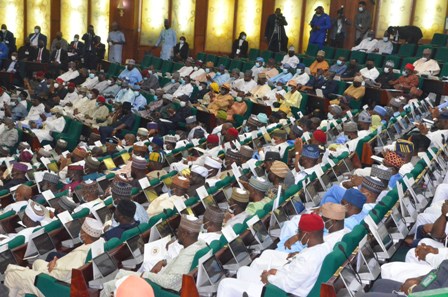
The Amendment of a bill to include Kogi, Lagos, Anambra, Gombe States and others in the Niger Delta Development Commission (NDDC) scaled second reading at the Senate on Wednesday.
The bill titled: “A bill for an Act to amend the Niger Delta Development Commission (NDDC), Act No 6, 2000 and for other related matters connected therewith, 2021”, was sponsored by Senator Adeola Solomon Olamilekan representing Lagos West Senatorial district.
Olamilekan in his lead debate submitted that the NDDC Act was activated over 21 years ago and since then, oil and gas have been discovered in Lagos, Kogi, Anambra, Gombe, Bauchi and other States, hence, the amendment would offer an opportunity for the Act to capture peculiarities of the new oil states.
In his contribution, Senator Ahmad Baba Kaita representing Katsina North Senatorial district, having supported the amendment proposal, recalled how a former GMD of NNPC told Senators previously that Nigeria would become one of the largest oil producers in the world if oil discoveries in the country were harnessed.
He said: “Thank you Mr President I remain Senator Ahmad Baba Kaita, Katsina North Senatorial district. Regarding the motion on the oil-producing States, I think what is good for the goose is good for the gander. In a state like Borno, where oil has been discovered, I remember the former Group Managing Director of NNPC arguing here that with such states coming on board, Nigeria will be one of the largest oil producers if we harness our resources.
“In this case, it is only fair for us to consider those states that produce oil because the exploration is going to affect the environment. The idea behind that motion is consequences of oil exploration.”
However, Senator George Thompson Sekibo urged Senators to treat the amendment with caution.
He advised lawmakers to find out if those states have started contributing to the Federation account through their oil, adding that exploration of oil in commercial quantity was precedent since the derivation sharing was based on the quantity of oil produced
“Mr President, I congratulate these States where they said they have discovered oil. What I want to know is whether they are of commercial quantity and whether there are being drilled out now and the money is going into the Federal government Account.
“We have not confirmed that one yet but as oil has been discovered there, we want the oil to come out of every soil in Nigeria. Are they exploring the oil? Are they refining oil there and has oil caused devastation in those States.
“Mr President, the purpose of the Niger Delta Development Commission Act is not because they found oil there but because the oil has caused so much devastation and there was a need to remedy the place.”
Senator Mathew Uroghide representing Edo North Senatorial district disagreed with the proposed amendment completely, stating that the NDDC Act was specifically meant to address environmental degradation of the Niger Delta region.
According to him, the inclusion of some northern oil states in the Act will defeat the original intention of the Act.
He said: “Thank you Mr. President. I am Senator Mathew Uroghide representing Edo South Senatorial district. I consider it a privilege to contribute to a bill being sponsored by Senator Solomon Adeola Olamilekan. I am not particularly against the sponsor of the bill, but I feel the bill must be properly presented.
“Let’s start with the name, “Niger Delta Development Commission”, NDDC. Today the area that is referred to as Niger Delta is very clear. The States that make up the Niger Delta region that the Commission is serving is very clear.
“Senator George Thompson Sekibo just mentioned the 13 percent derivation which each oil-producing States get which is a function of oil production.
“Oil production in Gombe and Bauchi and other northern States are already coming to a reality, but to take these States as the Niger Delta States is not right.
“But if there is any percentage for States that produce oil, be it Sokoto, be in Borno, of course, they should benefit, but that does not make them part of Niger Delta. To say other Sates are part of the Niger Delta makes a mockery of the original idea of the NDDC Act.
“The NDDC was created as an interventionist to remediate in degradation of the environment due to oil exploration.”
After further contributions by lawmakers, Senate President, Dr Ahmad Ibrahim Lawan put the bill to voice votes and it scaled second reading.
A public hearing was expected to be conducted for a wider consultation preparatory for its final passage into law.



The commission announced the extension in a statement issued on Saturday and signed by the National Commissioner and Chairman of its Information and Voter Education Committee, Mohammed Haruna.
According to INEC, the decision followed appeals by political parties for additional time to complete the submission process through the dedicated online portal.
“The submission window, which according to the revised Timetable and Schedule of Activities for the General Election was originally scheduled to close on Saturday, 8th August, 2026, has been extended to Tuesday, 11th August, 2026,” the commission said.
In a a related development, INEC announced the suspension of PVC collection in Osun State ahead of the August 15 governorship election.
The commission said voters who applied for replacement of lost, damaged or defaced Permanent Voter Cards would have until midnight on Sunday, August 9, to print downloadable copies of their cards.
The electoral body explained that the deadline was necessary to enable it compile data on downloaded PVCs and produce final statistics on the total number of cards collected ahead of the election.
INEC said PVC collection in Osun commenced at the Registration Area level from July 22 to 28, 2026, but was extended to July 31 following complaints about large crowds and difficulties experienced by voters at collection centres.
The exercise subsequently moved to the local government level and ran from August 1 to 7.
The commission also disclosed that replacement downloadable PVCs had been made available to voters in Odo-Otin and Ife Central Local Government Areas following the theft of cards during attacks on the two collection centres.
It stressed that the stolen cards could not be used to vote.
INEC reassured Osun residents of its preparedness for the August 15 governorship election.
“The commission reiterates that the stolen cards cannot be used to vote.
“INEC reassures the people of Osun State of its readiness to conduct a free, fair, credible and inclusive governorship election on 15th August, 2026,” the statement said.
The commission said the deadline, initially set for Saturday, 8 August, has been extended to Tuesday, 11 August 2026, following appeals from political parties for more time.
INEC also announced that the window for voters who applied to replace lost, damaged or defaced PVCs to download their replacement cards will close at midnight on Sunday, 9 August.
The move is to enable the commission compile final PVC collection figures ahead of the 15 August Osun governorship election.
INEC said replacement downloadable PVCs have also been provided to affected voters in Odo-Otin and Ife Central Local Government Areas after hoodlums carted away cards from two collection centres, stressing that the stolen cards cannot be used to vote.
The commission reaffirmed its readiness to conduct a free, fair, credible and inclusive election in Osun State.
Gov. Kefas made the remarks over the weekend at the Federal Medical Centre (FMC), Jalingo, during the flag-off of the second phase of the Renewed Hope Medical Outreach in Taraba State, organised as part of activities marking Prof. Yilwatda’s 58th birthday.
The governor commended Prof. Yilwatda for choosing to mark his birthday by providing medical care to people in need.
“What Professor Nentawe did is a powerful demonstration of what leadership should be,” Gov. Kefas said.
He assured that his administration would continue to support initiatives that complement government efforts to improve healthcare delivery and the wellbeing of residents.
Speaking at the event, Prof. Yilwatda called on Nigerian leaders to embrace the culture of giving and use their positions to touch the lives of the less privileged.
He said his decision to celebrate his 58th birthday in Taraba State was deliberate and informed by the needs of underserved communities, particularly people who face difficulties accessing healthcare because of distance and financial constraints.
According to him, the intervention followed a needs assessment and was extended across the three senatorial districts of the state.
He said the exercise commenced on August 3 at Takum General Hospital and covered the Federal University Teaching Hospital, Wukari; First Referral Hospital, Sunkani, Ardo-Kola Local Government Area; General Hospital, Bali; General Hospital, Gembu; and FMC Jalingo.
Prof. Yilwatda said the intervention provided medical services to thousands of beneficiaries, including people who required surgical procedures.
He said sustainable national development could only be achieved when strong institutions placed Nigerians at the centre of development.
“Leadership is about service,” he said, urging political and public leaders to make giving back to society an important part of their responsibilities.
He reaffirmed his commitment to serving Nigeria and its people, saying his personal vision was to make every day of his life useful to humanity.
“Every day that I live, the vision is: let it be useful to humanity,” he said.
The Taraba State Commissioner for Health, Dr. Bordiya Buma, commended the initiative, saying it was consistent with the Renewed Hope agenda and efforts to strengthen healthcare delivery in the state.
Dr Buma said the second phase followed the successful completion of the first phase, which was conducted simultaneously in six local government areas, with two LGAs selected from each of the three senatorial districts.
According to him, more than 10,000 patients were attended to during the first phase, including people with medical and surgical conditions.
He disclosed that 327 general surgeries, 71 eye surgeries and 575 dental procedures were carried out during the exercise.
The commissioner expressed appreciation to President Bola Tinubu for the Renewed Hope Medical Outreach and thanked Prof. Yilwatda for supporting the initiative and choosing Taraba State as a beneficiary.
The Minister of Health and Social Welfare, Prof. Muhammad Ali Pate, also commended Prof. Yilwatda for choosing Taraba State to mark his 58th birthday through a medical outreach.
Prof. Pate said making healthcare the centrepiece of the birthday celebration was significant because health affects everyone.
-

 News3 days ago
RSG Targets Nine Million Residents in Mosquito Net Distribution Campaign
-

 Oil & Energy3 days ago
Aiyedatiwa Signs New Electricity Bill
-

 Oil & Energy3 days ago
NLNG Commissions Research And Innovation Centre In RSU
-

 Maritime3 days ago
Marine Minister Commends President Tinubu On NPERA Bill Assent
-

 News3 days ago
KenPoly Holds Eight Convocations, August 29
-

 News3 days ago
RSG Begins Another Phase of Projects Commissioning Today
-

 News3 days ago
RMAFC Completes Revenue Sharing Review, Proposes New Pay
-

 Maritime3 days ago
NAGAFF Petitions IGP Over Alleged Maritime Police Harassment