
Sports
2022 W’Cup Qualifiers: Can S’ Eagles Feast On Wild Beasts?

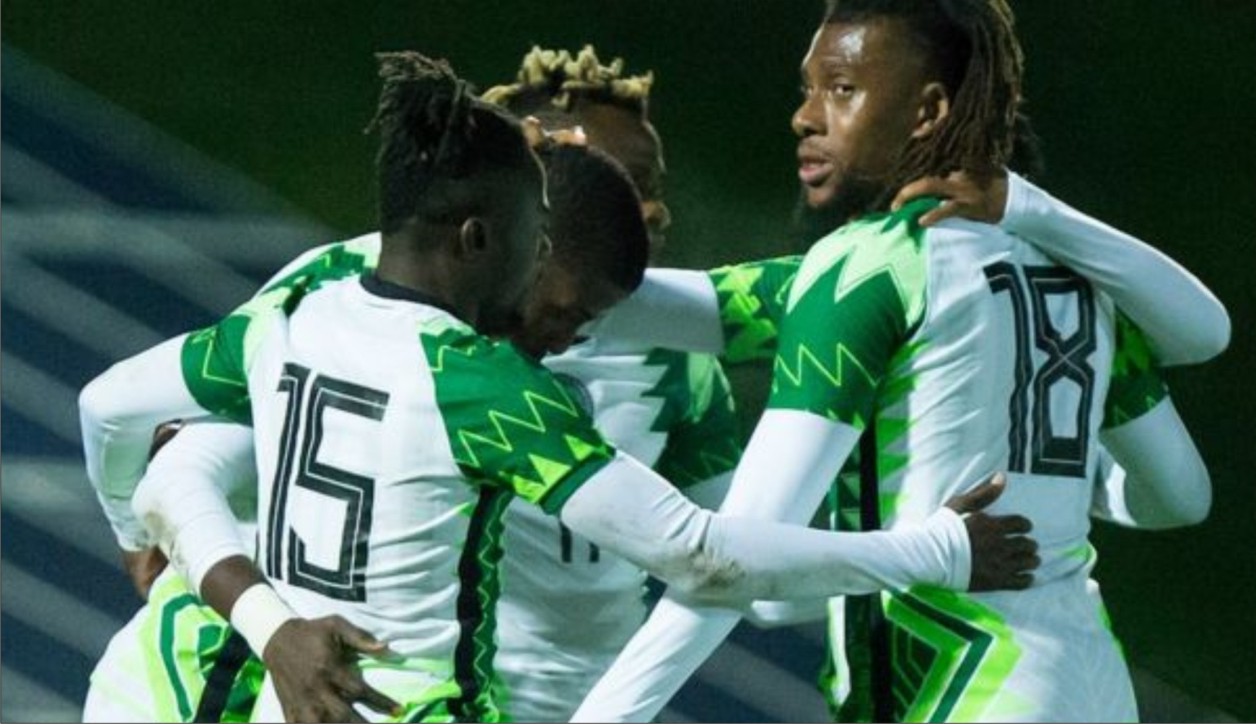
The Super Eagles of Nigeria will tomorrow at the Teslim Balogun Stadium, Lagos continue their quest for a ticket to the playoff stage of qualification for the 2022 World Cup scheduled for Qatar with a double header against the Les Fauves (Wild Beasts) of Central Africa Republic, CAR.
First, the Gernot Rohr tutored team must do the needful at home by taking the points at stake tomorrow at home before following the opponents to Duoala, Cameroon for the return leg on Sunday.
The second leg is being staged at a neutral venue because CAF did not deem CAR’s stadium fit to host the international match.
Nigeria currently leads her group on six points after two victories in as many matches, a 2-0 and 2-1 respective wins over Liberia and Cape Verde and needs to overcome the Wild Beasts in the double header to have a sure foot in the next round of the qualifiers.
On paper, the Super Eagles looks, the favourites to edge the opponents but football being what it is, must be played and decided by the actors irrespective of what the bookmakers say.
Interestingly, the Eagles seem to be enjoying a good momentum and boasts enough quality to make Nigerians celebrate over the two legs provided the coaches get their acts spot on. With the likes of Kelechi Iheanacho, the two goals hero against Liberia and irrepressible Victor Osimhen, who is also in a rich vein of form expected to lead Nigeria’s attack, the visitors may be in for some trouncing.
However, Coach Rohr and his wards have been warned to neither underrate nor take the visitors for granted in both legs of the encounter. According to ex-international and former African footballer of the year, Victor Ikpeba, “On paper it looks very clearly that we will pick the six points but we have to be very careful because football is always played on the field of play, the game does not always go according to permutations”.
For the Eagles to soar in the games, Rohr must come up with a positive strategy to get the best out of his available personnel and will have to make up for the absence of midfielder duo, Wilfried Ndidi and Alex Iwobi, who are sidelined by injuries. He must activate enough defensive and creative spark in the team for the attackers to deliver the goods, bearing in mind that the chasing pack in the group can take advantage of any stumble by the team.
By: Gabriel Nwanetanya


A well-known football pundit in the State, Chief Christopher Okonkwo has lauded the efforts and vision of the Super Eagles Coach Eric Chelle for going from one venue of the Nigeria Domestic Nigeria Professional Football League match to the other in monitoring Nigerian players, with a view to invite some exceptional good one discovered into the main stream of the Super Eagles team.
Okonkwo, who made the commendation in an interview at the Port Harcourt Club recently, described the positive move by Coach Chelle as a good step in the right direction, noting that the practice was how its been done in the past among any contracted coach assigned to tinker the Super Eagles team.
“Truly, it has been an old tradition in the country seeing any newly engaged Coach to lead the National team, visiting some our Nigeria League venues during the league matches to spot light some good talents that could be used to beef up some grey areas in the department of Eagles team”
He, however, frowned at the current situation where our coaches had continously been over depending on the use of foreign based players during invitation of players to the National camp, thereby, relegating the domestic home based league players to the background as if they have nothing much to offer to the team.
“I can vividly recall that the likes of great players in the mode of Finidi George, Taribo West, Kanu Nwankwo, Austin Okocha, Richard Owobokiri, Emmanuel Osuigwe among others started from Nigeria football league before they graduated to play in Europe through which they later invited to Super Eagles camp to represent Nigeria”
“Besides, I’m also of the view that going to secondary school football competitive games could equally serves as a a good platform to discover budding talents that could be nurtured to become great stars in near future”, Okonkwo frankly added.
Okonkwo, therefore, prayed that any football coach to be engaged by the Nigeria Football Federation (NFF) to tinker the Super Eagles should be told not to confine himself in staying in big hotel alone but to be visiting some of our local league match venues, with a view to discover some good players that can be drafted into the Super Eagles team.
“Indeed, I stand to be challenged that there some young good players in the Nigeria Professional League. If spotted and exposed, could give the some of the invited foreign based players a stiff competitive fight in securing a postion in the team”, Okonkwo emphatically stated.

Ezechukwu, one of the youngest members of the Nigerian contingent at the championship in Ghana, said her ambition was to win the 100m title in style and cap it with a new personal record.
The fresh secondary school graduate explained that she is fully focused on contributing to Team Nigeria’s medal hopes and is determined to deliver strong performances across her events.
“My main objective in Ghana is to clinch the 100m title and the 4×100m,” Ezechukwu told Tidesports source.
“Nigeria can be assured of my very best and my commitment to the Team. I would love to set a new personal best in Ghana, but anything that comes, I will take it. The spirit in the team is high, and I think we are ready to go,” she said.
Ezechukwu, who was part of Nigeria’s women’s 4x100m relay squad at the World Relays in Botswana, said the experience gained from that competition has strengthened her mindset heading into the continental championships.
She admitted that she learned valuable lessons from her previous outing, including a difficult moment during the relay where an early error affected the team’s rhythm, but said she has used the experience to improve her discipline and composure.
“The secret is just being disciplined, training hard and trusting my coach and believing in God, and the result will show,” she added.
The teenager is part of a 41-member Nigerian team comprising 24 female and 17 male athletes competing at the championships, which begin today at the University of Ghana, Legon.
Nigeria are expected to compete across multiple track and field events as they aim for a strong finish against the continent’s elite athletes.
-

 Featured1 day ago
WASSCE: RSG Distributes Science Materials To Secondary Schools
-
News1 day ago
Xenophobic Attacks: Nigerian Lives More Important Than Foreign Investment – Oshiomhole
-
Rivers1 day ago
MBA Forex Trial Adjourn To June 3, Amid Bereavement … As Court Declines Cost Application
-
News1 day ago
ActionAid Demands Probe Of Govs Using Public Funds For Campaign
-
Aviation1 day ago
Passengers Stranded As Delta Airline From Atlanta Route Back Eight Hours After
-
Business1 day ago
Customs Impound N2.35bn Cocaine, 15 Trailers of Rice
-
Politics1 day ago
2027: Bayelsa Senator Gets Critical Endorsement For Second Term
-
 Politics1 day ago
INEC Sets Rivers South-East Senatorial By-Election For June 20