
Featured
Wike’s Key Signature Projects Have Changed Rivers’ Landscape – Nsirim

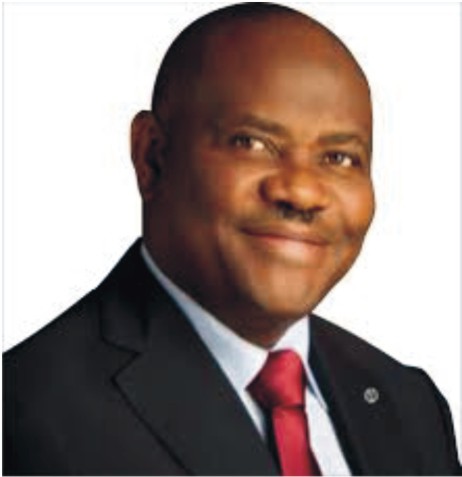
Being Text of a Speech on “Developing Media Infrastructures for Good Governance, the Example of Rivers State Government” by The Honourable Commissioner of Information and Communications, Rivers State, Pastor Paulinus Nsirim, As Special Guest of Honour/Keynote Speaker at The Rotary Club of Port Harcourt 2020-2021 Media Day on Monday April 19, 2021 at the Rotary Centre, off Trans-Amadi Industrial Way, Port Harcourt.
Excerpts.
One thing that is not in
doubt in today’s world, especially in the corporate world, is that good public relations image remains essential to achieving great results. Indeed, the fact that a public relations committee had been at the epicenter of the management of not just the activities but also image of Rotary, tells a great deal of story why publicity matters so much to the world’s longest and oldest organized social and humanitarian club.
Rotary and Rotarians may not record much success in their endeavours without publicity. It is to that extent that Rotary and the media must establish and sustain a symbiotic relationship in order to further the goals of Rotary, and most importantly, make a difference in the lives of millions of those who need help, support and assistance to keep alive hope of a better life.
It is for this reason that I wish to commend Rotary club for dedicating the month of April in their International Calendar as Magazine/Media Month. I believe it is a month for the celebration of the media for its role in bringing to the fore the good qualities of Rotary club and its activities in order to inspire the world for better living. Rotary believes that the synergy with the media has been and will continue to be of profound importance to its activities. Let me also commend the media whose advocacy and information management roles have been critical to the achievement of the core goals of Rotary in the society.
Since February 23, 1905 when Rotary was formed and its first meeting of like minds in Chicago, Ilinois in the United States of America, “the characteristics of Rotary Club and those who populate it have remained the same everywhere; the features of service, internationality, fellowship, classification of each vocation, development of goodwill and world understanding, the emphasis of high ethical standards, concern for other people, and many more descriptive qualities, which show care and compassion, respect for others, honesty and integrity, as well as patriotism, industry and hard work”.
The 4-way Test Philosophy of Rotary Club, which in 1943 was translated to the acceptance that whatever Rotarians think, say and do they must be guided by the TRUTH at all times, and must be FAIR, and naturally
seen to be so by others. Rotarians must ensure that they, whatever they think, say, or do, help in building GOODWILL and BETTER FRIENDSHIPS across the community, and by extension, the world and that their results are BENEFICIAL to all concerned.
This 4-way Test Philosophy and the roles the media play in upholding a just society, by holding leaders and government accountable at all times, clearly makes it impossible for either the media or Rotary to divorce each other, since both work for the good of the society.
Having said these, let me return to the issue of today.
Media refers to the channels of communication which are utilized for the purposes of dissemination of news, music, movies, education, promotional messages and other data. It includes physical and online
newspapers and magazines, television, radio, billboards, telephone, the internet and fax, that provide news and information to the public.
One thing that is legendary and long-standing is the power of the media in shaping society, setting agenda for public discourse and moulding public opinion. Perhaps, that explains why Thomas Jefferson (1743-1826), the third president of the United States of America and principal author of its declaration of Independence once said, that if he had to choose between “a government without newspaper or newspapers without a government, I should not hesitate a moment to prefer the later”.
According to Jefferson, “the press is the best instrument for enlightening the mind of man, and improving him as rational, moral and social being.” Jefferson’s successor, James Madison (1751-1836) corroborated this view when he said; “to the press alone, chequered as it is with abuses, the world is indebted for all the triumphs which have been gained by reason and humanity over error and oppression”.
Truly, the above statements underscore the importance of the media as it carries out its multifaceted roles of providing information education, and entertaining. Also the media acts as a public forum for the discussion of important issues. While the media also plays the role of entertainment, it acts as a watchdog for government, business and other institutions, mirroring society as it were.
Chapter 2, Section 22 of the 1999 Nigerian Constitution states clearly the role of the
media in governance. It says, “the press, radio, television and other agencies of the mass media shall at all times be free to uphold the fundamental objectives contained in this chapter and uphold the responsibility and accountability of the government to the people”.This clearly links the media to good governance.
Thus, as required by the constitution, the media which is the watch dog of society should hold public office holders accountable to the people who elected them by monitoring governance closely. Clearly, in the issues of promoting good governance, rule of law, ensuring probity and accountability, wiping out illiteracy and eradicating poverty, the media are the key factors in that strategic link.
The media provides a platform for discussion of all the checks and assessments of the activities of government by bringing public concerns and voices into the open. The media articulates citizens voices and preferences for government to use in policy formulation. They hold government accountable and provide information for the people. Thus, the media are a critical link in the accountability chain between the government and the governed.
With the existence of an unfettered and Independent press, and the spread of modern information and communication technologies, “the media are essential for democratization and guaranteeing good governance through freedom of expression, transparency, accountability, rule of law and providing a pluralist platform for political expression about controversial issues”.
Without good governance, it is difficult to attain nor guarantee social, economic and political progress, because the bedrock or pillar of any modern democracy is good governance.
However, to achieve the humongous roles of the media, there are means through which they can reach the public. This is termed media infrastructure. According to Lisa Parks, a Professor of Comparative Media Studies and Science, Technology and Society at the Massachusetts Institute of Technology, whose research focuses on satellite technologies and global Media, critical studies of media infrastructure, among others, “the word “infrastructure” surfaced in the early twentieth country “as collective term for the surbordinate parts of an undertaking: substructure, foundation,” and first became associated with permanent military installations. Since then, the terms meanings have expanded to encompass power grids and telecommunication networks, subways and freeways, sewer systems and oil pipeline.
While Critical media studies
scholars have investigated “networks” for decades, they have only recently begun to think of “infrastructures” as part of their research field.
“Work on media infrastructure has explored the material conditions in which broadcast, cable, satellite, internet and mobile telephony systems are arranged to distribute audiovisual content to sites around the world. While such systems have historically been referred to as “Telecommunication networks, “the reconceptualization of them as “media infrastructures”, signals a shift toward exploring issues of scale, difference, unevenness, rationality, labour, maintenance and repair, literacy etc.”
According to the World Bank, “Media Infrastructure can be a vital and necessary step in the media development process. “A functioning media
infrastructure is the underpinning for the rest of the media sector.
Media Infrastructure are defined as the “foundational technologies, services, facilities and outlets that are critical to the communication of information, opinion and expression.
Media Infrastructure can be classified under Networks, which includes data and communication networks such as internet or 5G mobile networks. Other aspects of media infrastructure include “Last mile”, which is the infrastructure required to deliver media to the consumers door, such as an internet connection, newspaper delivery or cable TV services.
They also include information, communication and Technology (ICT) platforms, facilities such as data centre, broadcasting centre, newsroom or modern printing press. Others are broadcast media-media that flows from a simple source to a large audience such as television networks, newspapers and radio statement. Social media and streaming media applications are part of the media infrastructure.
All aspects of media infrastructure available in the state are put to use by the Rivers State Government to promote good governance. Media infrastructure available through the Ministry of Information and Communications and its parastatals (the Rivers State Newspaper Corporation, publishers of The Tide Newspapers; Rivers State Broadcasting Corporation, Operators of Radio Rivers, Rivers State Television (RSTV), Garden City Radio and the Government Printing Press, provide channels of communication for the government to communicate to the people of the state.
Over the years, the Rivers State Government have made huge investments in these MDA’s to underscore the importance attached to them in ensuring good governance, especially in the areas of rule of law, transparency, accountability, effectiveness, consensus Oriented, equity and inclusiveness and responsiveness.
The procurement of a state-of-the art printing machine for The Tide Newspaper, outside Broadcast Van for the Garden City Radio and Radio Rivers, Placement of Rivers State Television on Satellite platforms to enhance global reach, are all aimed at reaching out to the people about government activities and also get the peoples reactions and suggestions. That is not all. Plans have reached advanced stages to completely revamp the Rivers State Newspaper Corporation, publishers of The Tide Newspaper to give the medium a competitive edge in the industry. New computer-to-plate machine, delivery vans, communication equipment and other media infrastructure to enhance its mandate will soon be delivered by the Rivers State Government. In the same vein, the Rivers State Government has set in motion plans for a hitch-free Digital Switch over in the state on July 8, 2021. What that implies is that Rivers State Television would no longer require a transmitter to broadcast to the world. It would translate to an increase in the capacity of the station by improving spectrum efficiency and providing better signal quality.
What this implies in terms of benefit to the government are enormous. Jobs will be created by manufacturers, Surface Mount Technology will be created and chipset industry would be set up, making Nigeria the only of such in West Africa, Central Africa and creating a hub. It would also create local plastics industry jobs that are needed for the gift packs for the Set Top Boxes (STBs), creation of other value added jobs and small businesses.
For the industry, this switch-over would mean massive technology transfer in terms of SMT, chipset design, PCB implementations and opening up ancillary manufacturing opportunities for other electronic devices and equipment.
The Rivers State Government would also benefit immensely from the Digital switch-over as it provides opportunity for enhanced revenue generation. The local government councils can use the STBs to collect TV and radio license fees. It also creates new ways to provide education delivered to the homes through TV and improves social interaction and creativity as communities start to develop applications for the new digital TV platform.
Aside these, the Rivers State Government under the visionary leadership of His Excellency, Nyesom Ezenwo Wike has been open to the infrastructure of the independent media in the state to ensure good governance. The Governor believes strongly that good governance can be facilitated by a strong and independent media scape.
For Governor Nyesom Wike, there is nothing to hide, but much to improve. Journalists are free to monitor, investigate and criticize the administration and he is always ready and handy to let the public through the media see and dissect his administration activities.
Rivers State Government allows the media to contribute to the participation process by the citizenry through assent or dissent or exploring aspects of issues not considered through official channels and in arenas where face-to-face participation is impossible.
As you are aware, the Rivers State Government under the pragmatic and visionary leadership of Governor Nyesom Wike has embarked on rapid infrastructure development that has changed the landscape of the state through the execution of key signature projects particularly in the area of road infrastructure, to accelerate robust economic activities within the urban centres and their environs.


The Rivers State Government has distributed science equipment and materials to all senior secondary schools across the state to support students during the ongoing West African Examinations Council exams and to strengthen practical learning.
Flagging off the distribution at the Rivers State Senior Secondary Schools Board premises in Port Harcourt, on Monday, the State Commissioner for Education, Dr. Peters Nwagor, said the move demonstrates Governor Siminalayi Fubara’s commitment to improving education standards in the State.
Nwagor said the materials were approved and provided by the state government specifically to boost the teaching and learning of science subjects, describing science education as the foundation for technological advancement, innovation, and national development.
“No society can compete globally without deliberate investment in science and technology,” the Commissioner stated.
He commended the governor for consistently prioritising the education sector by providing tools needed for effective teaching and hands-on learning.
The Commissioner directed principals to ensure that the equipment are used strictly for practical lessons in their schools, warning that any principal or administrator found diverting, hoarding, or selling the materials wil face disciplinary action under public service regulations.
Nwagor also warned against examination malpractice, saying any principal found aiding or encouraging malpractices will be decisively sanctioned.
“We must collectively restore the dignity and credibility of our educational system,” he said.
Also speaking, Chairman, Rivers State Senior Secondary Schools Board, Tony Egwurugwu, urged school heads to make judicious use of the materials for students’ benefit.
He thanked the State Government for providing the resources, and assured that monitoring mechanisms would be put in place to ensure the materials serve their intended purpose.
In his own remarks, a Board Member for Technical Education, Nwisabari Bani Samuel, expressed appreciation to the governor for prioritising education and acknowledged the Commissioner’s role in advancing education development in the State.
He said the distribution covers all senior secondary schools in the State and is intended to improve students’ performance in both internal and external science examinations.
Akujobi Amadi

Rivers State Governor, Sir Siminalayi Fubara, has commended workers in the State for their resilience, dedication, and invaluable contributions to development in the State.
Fubara gave the commendation during the 2026 Workers’ Day celebration at Isaac Boro Park in Port Harcourt, last Friday.
Represented by his deputy, Prof. Ngozi Nma Odu, the governor noted that Workers’ Day, which originated from the struggle for an eight-hour workday in the United States, has evolved into a global event recognising the contributions of workers to national growth and development.
He described workers as the backbone of sustainable development, saying no society can thrive without their efforts.
Fubara commended Rivers workers for their loyalty and commitment to service, noting that workers play vital roles across key sectors, including education, healthcare, infrastructure and industry.
He noted that their contributions have enhanced access to quality education and healthcare, supported job creation, and stimulated economic activities across the State.
While acknowledging the economic challenges faced by many workers, including the rising cost of living, Fubara assured that the the State Government remains committed to implementing policies that will enhance workers’ welfare and overall well-being.
The governor also hailed the bold and daring economic reforms of President Bola Tinubu which, he said, have stabilized the economy, enhanced foreign exchange liquidity, lowered inflation, and achieved significant growth in the nation’s gross domestic product.
He noted that, in addition to raising the minimum wage, the President recently approved new welfare incentives for federal civil servants.
“Our economy is on an unstoppable positive path under our President, and it can only improve further for the nation and everyone. Let us continue supporting the policies and programmes of Mr President,” he said.
Fubara highlighted the importance of workers in revenue generation and governance, noting that taxes paid by workers enable government to provide security and essential social services.
He reaffirmed the State Government’s recognition of labour as a critical partner in achieving its development blueprint, appreciating workers’ daily contributions to building a peaceful, secure, and prosperous Rivers State.
The governor urged the organised labour to use the occasion to reaffirm its commitment to the progress of the State, while continuing to advocate for democracy, social justice, and improved welfare for workers.
He also expressed gratitude to workers for their service to the State and the nation, encouraging them to remain steadfast in their contributions to development.
In his address, the State Chairman of the Nigeria Labour Congress, Comrade Alex Agwanwor, commended Fubara for his steadfastness, genuine commitment, and passion for workers in the State.
He highlighted key achievements of the administration, including the implementation of the National Minimum Wage Act, the renovation of the State Secretariat, the reopening of the Rivers State Transport Company (RTC), and the consistent payment of end-of-year bonuses to public workers.
Comrade Agwanwor noted that workers, as drivers of productivity, understand the challenges involved in building a prosperous Rivers State, stressing that they are well-equipped to contribute meaningfully to the growth and development of the State.
“We have resolved not to continue complaining and lamenting while challenges persist. Instead, we must take the initiative, step out of relative obscurity, and rediscover the mission and destiny of our dear state,” he said.
Featured
Fubara Pledges Support For Corporate Organisations In Rivers …Says PPP Business Model Responsible For NLNG’s Success


Rivers State Governor, Sir Siminalayi Fubara, has pledged the continued support of his administration for the Nigeria Liquified Natural Gas (NLNG) Limited.
Fubara gave the assurance while receiving the new Managing Director and Chief Executive Officer of the NLNG, Mr Adeleye Falade, who paid him a courtesy visit at Government House, Port Harcourt.
He assured that his administration would continue to contribute its own quota in support of the NLNG.
According to him, the success of the organisation is equally the success of the government of Rivers State and the success of the Federal Government.
“Our duty is to make sure that we support whoever is operating in our state. We are the ones here. If we don’t support you and you don’t succeed, we also will not succeed and Mr President will also not succeed.
“So, the success of your establishment is the success of our state, and overall success of Nigeria. So you can count on our support. Wherever you think we need to come in to support you, please do not hesitate to call upon us.
“You just mentioned here that your predecessor left a handover note showcasing the level of support that he got from the state. It is not going to be different in your own case. I can assure you that. I will also ensure that other units of the government will liaise with you when necessary. So even if you can’t get to me, you can always get to them and if there is anything we can do to help your establishment succeed, we will do it for you,” he said.
The governor attributed the success of the NLNG to the Public Private Partnership ( PPP) business model adopted by the Federal Government and the multinational oil companies.
The NLNG is jointly owned by Nigerian National Petroleum Corporation (NNPC) with 49%, Shell Gas B.V. with 25.6%, Total LNG Nigeria Ltd with 15%, and Eni International with 10.4%.
The partnership model allows for shared risks, costs, and expertise in the LNG sector.
The governor noted that the NLNG has not only survived the difficult business environment but has made sustained progress in the nearly three decades of its existence.
According to him, the decision of the Federal Government to allow the multinational oil companies who have the needed expertise to run the establishment while government plays a supervisory role over it has largely been responsible for its success.
“I’m very proud to say that if there is one establishment that has shown resilience, that has survived in the face of all the political issues prevalent in this country, it is the NLNG. And what is the reason? The reason is very simple. Government has no business in business. That is the truth. Leave the business for those people who can operate it. Let the government play its supervisory role to ensure that there is compliance with the laws; ensure that standards are maintained and also ensure that the right people with the needed expertise are at the helm of affairs. That’s all. I think that is the reason why we still record a lot of successes in NLNG,” he said.
In his opening remark, the new NLNG boss, Mr Adeleye Falade, who led other top officials of the company on the visit, expressed appreciation to the governor for granting them audience, and appealed to the State Government to continue to support the organisation.
“We appreciate the opportunity to meet with you and deepen this important relationship.We deeply value the support the Rivers State Government continues to extend in fostering an enabling operating environment for businesses. NLNG remains deliberate in its contribution to Nigeria’s development, and Rivers State, our primary host, continues to be central to that commitment,” he said.
Falade said the company has continued to work with its host communities to strengthen their capacity to identify, prioritise, and deliver sustainable development initiatives that create lasting impact.
According to him, communities including Amadi-ama, Abua, Ekpeye, Okrika, Kalabari, and Emohua have continued to benefit from this model.
He said that beyond community infrastructure, the NLNG has sustained investments in economic empowerment through initiatives such as Vocational Innovation and Business Empowerment Scheme (VIBES) and Micro Small and Medium Enterprise (MSME) schemes.
These, he said, were designed to support small businesses, build capacity, and stimulate local enterprise across the state.
Among officials of the company who accompanied the Managing Director were General Manager, External Relations and Sustainable Development, Dr Sophia Horsfall; Manager, Government Relations, Mr Abdul Umar; Manager, Community Relations, Dr. Yemi Adeyemi; Head of Government Relations, Mr Mike Igoni; Head of Community Liaison and Engagement, Chief Ifeanyi Umeh.
Others are Technical Assistant to Executive Leadership, Mr Hassan Saleh; Senior Media and Publicity Advisor, Mr Emma Nwatu; Government Relations Advisor, Miss Homa Nmegbu; Senior Government Relations Advisor, Mrs Kate Allison, and Audio -Visual Advisor, Mr Dawood Ahmed.
-

 Editorial2 days ago
Enough Of Xenophobic Attacks On Nigerians
-

 Nation2 days ago
RSU, Otonti Nduka Foundation Holds Centenary Conference, Unveil Book on Values in Nigeria
-

 Oil & Energy2 days ago
Rivers PETROAN Elects 12-Member Executive
-
Politics2 days ago
APC Group Protests Ex–Presidential Aspirant’s Disqualification From Rivers Senatorial Race
-

 Environment2 days ago
MOSOP – Tinubu Not Sincere With Ogoni People For Oil Resumption
-
Politics2 days ago
Reps Speaker Secures APC Return Ticket For Fifth Term
-

 Sports2 days ago
Oparaodu Urges Rivers United To Win Katsina United
-

 News2 days ago
Fubara, Wife Hail Tinubu’s Renewed Hope Initiative …As Over 6,800 Families Benefit From Largesse In Rivers